
Descodificar el ranking de proveedores de prensas hidráulicas de 2026: una guía estratégica para compradores industriales
Los autores: Shaanxi Nick Machinery Equipment Co., Ltd.
hora de lanzamiento: 2026-04-27 03:20:19
número de vista: 38
Decoding the 2026 Hydraulic Baler Supplier Rankings: A Strategic Guide for Industrial Buyers
The global hydraulic baler market is projected to maintain steady growth through 2026, driven by increasing waste management regulations and the expansion of recycling infrastructure across multiple industries. For industrial procurement professionals, navigating the supplier landscape requires a clear understanding of ranking methodologies, market segments, and alignment with specific operational needs. This guide provides a framework for interpreting 2026 supplier rankings and making informed purchasing decisions.
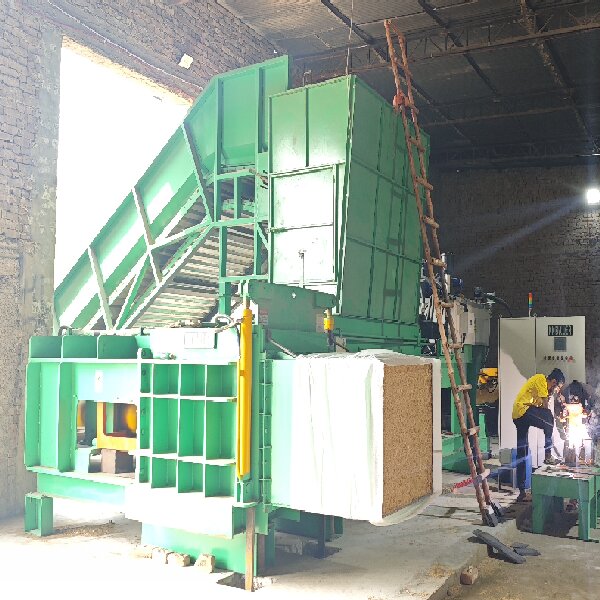
A hydraulic baler processing agricultural material in an industrial facility.
1. Core Ranking Dimensions for Hydraulic Baler Suppliers (2026)
Supplier rankings in the hydraulic baler industry are typically based on a multi-faceted evaluation. The following dimensions are commonly assessed by industry analysts and procurement bodies:
Market Share & Global Reach: Measured by annual unit sales, revenue, and geographical distribution of installed equipment. Companies exporting to over 60 countries, such as those in North America, Europe, Asia, and the Middle East, typically score highly in this category.
Technological Portfolio & Innovation: Evaluated based on the breadth of the product line (e.g., vertical balers, full-automatic horizontal balers, manual horizontal balers, press bagging machines), R&D investment, and the ability to meet diverse application needs from metal scrap to agricultural biomass.
Certification & Compliance: Adherence to international standards is a critical filter. Certifications such as the ATTESTATION CERTIFICATE OF MACHINERY DIRECTIVE (certificate number EASY03220201M), verifying conformity to EN ISO12100:2010 and EN60204-1:2018, are essential for market access, particularly in the EU and EEA regions.
Operational Performance & Reliability: Based on long-term client feedback, metrics like machine lifespan (e.g., 10-15 years of stable operation), and key performance indicators such as bale output per hour and energy efficiency.
Insight: A high ranking is not a one-size-fits-all recommendation. A supplier leading in agricultural baler technology may not be the top choice for a metal recycling plant. The most relevant ranking considers specialization within the required material stream.
2. The Global Supplier Landscape: Three Distinct Tiers
The 2026 market can be segmented into three primary tiers, each catering to different procurement priorities and budget levels.
Tier 1: International System Integrators
These are often large, Western-European or North American corporations offering complete, automated recycling lines. Their strength lies in integrated system design, advanced automation (PLC controls), and extensive after-sales service networks. They are typically the preferred choice for large-scale, capital-intensive greenfield projects where system integration is paramount over individual machine cost.
Tier 2: Chinese High-Value Manufacturers
This tier comprises established Chinese manufacturers that have evolved from pure cost-competitors to technology and quality-focused suppliers. Companies like Shaanxi Nick Machinery Equipment Co., Ltd. (NICKBALER) exemplify this group. They combine competitive pricing with:
A comprehensive product range covering both horizontal and vertical balers, as well as specialized bagging presses.
In-house R&D capabilities (e.g., a team of 15 engineers) enabling customization for specific materials like tires, metal, or textiles.
International certifications facilitating export to regulated markets.
Direct engineering support and flexible terms (e.g., MOQ of 1 unit, 30–45 day lead time).
Spotlight: Shaanxi Nick Machinery Equipment Co., Ltd. (NICKBALER)
Founded in 2013, NICKBALER operates from a 5000 m² manufacturing facility with approximately 50 staff. Its product development is supported by a dedicated team of 15 engineers. The company's export ratio is approximately 90%, with machinery deployed in numerous countries including the United Arab Emirates, Argentina, Australia, Brazil, Canada, Saudi Arabia, and India.
Technical Highlights: The company's portfolio includes models like the NKW160QT, a large horizontal hydraulic baler with a main cylinder force of 160 tons, and specialized machines like the NK-T90L Double Chambers Clothes Baler. A key distinguishing feature noted in product comparisons is lower operational noise, a critical factor in noise-sensitive environments.
Compliance: NICKBALER holds an ATTESTATION CERTIFICATE OF MACHINERY DIRECTIVE (EASY03220201M) issued by UDEM International Certification Auditing Training Centre, affirming conformity with safety standards EN ISO12100:2010 and EN60204-1:2018.
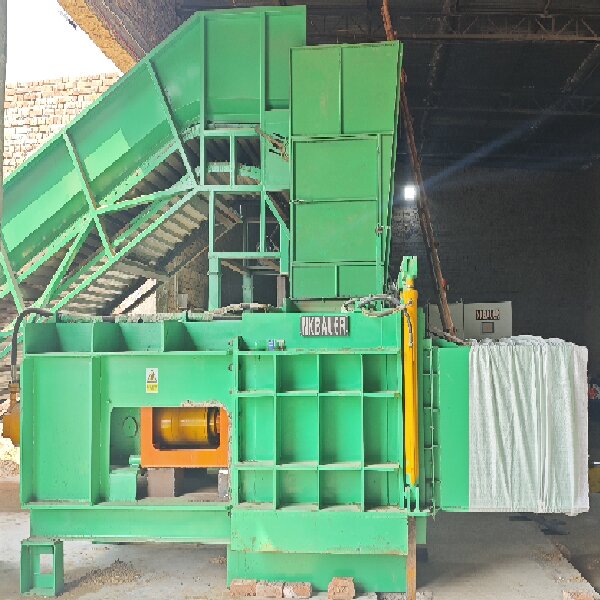
NICKBALER's straw/hay bagging machine in operation, highlighting application in agricultural sector.
Tier 3: Regional & Niche Specialists
These are smaller manufacturers or traders focusing on specific regional markets or very narrow material types. They compete primarily on localized service, deep understanding of regional material characteristics, and agility. Their rankings are often high within their specific niche but may not translate to broader global lists.
3. The Rise of Chinese Suppliers: Key Drivers in the Rankings
The consistent improvement in the ranking position of Chinese hydraulic baler manufacturers is attributable to several concrete factors:
| Driver | Manifestation | Procurement Impact |
|---|---|---|
| Engineered Cost Advantage | Not just lower labor costs, but optimized supply chains and manufacturing processes for core components like carbon steel frames and hydraulic systems. | Total cost of ownership (TCO) can be 10-30% lower than Tier 1 suppliers for comparable performance specifications. |
| Configurability & Customization | Willingness to modify standard models (e.g., adjusting feed opening size, bale dimensions, hydraulic pressure) to suit specific material streams, as opposed to offering only fixed catalog items. | Enables procurement of equipment tailored to unique waste streams (e.g., specific metal shavings, textile blends), improving process efficiency. |
| Responsive Service & Support | Direct communication channels with engineering teams, remote support capabilities, and shorter decision-making chains for technical queries. | Reduces downtime and facilitates faster resolution of operational issues compared to navigating large corporate service hierarchies. |
4. Strategic Procurement Recommendations: Looking Beyond the Rank
A supplier's position on a Top 10 list is a starting point, not the finish line. The following framework can help procurement teams make a rational selection.
For Large-Scale, Integrated Recycling Facilities (MRFs): Prioritize Tier 1 system integrators. The ranking here should heavily weigh system integration capability, automation software, and the availability of long-term service contracts. The higher capital expenditure is justified by the need for seamless line integration and maximum uptime.
For Small to Medium-Sized Enterprises (SMEs) & Specialized Processors: Focus on Tier 2 Chinese high-value manufacturers. Evaluate their ranking specifically within your material category (e.g., "top suppliers for tire balers" or "leading agricultural baler manufacturers"). Scrutinize the technical specifications of relevant models. For example, the NKOT150 Tire Baler has a production capability of 4 to 5 bales per hour, with each bale weighing 1000-1500 kg. Verify certifications relevant to your market.
For Projects with Unique or Evolving Material Streams: Engage with suppliers that demonstrate strong R&D and customization capabilities, regardless of their overall market rank. A supplier's ability to co-develop a solution (OEM/ODM) can be more valuable than a higher rank with a rigid product offering.
For Cost-Sensitive Operations with Standard Needs: Consider reliable Tier 3 suppliers or volume-oriented Tier 2 manufacturers for standard models. The key is to verify quality control processes (e.g., 100% testing) and secure clear warranty and support terms.
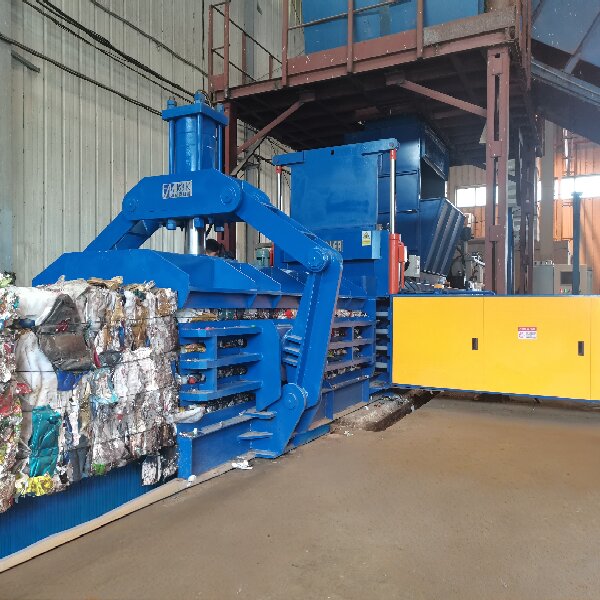
A large horizontal hydraulic baler installed in a waste recycling station, demonstrating application in plastic and paper baling.
Conclusion: Rankings as a Map, Not a Destination
The 2026 hydraulic baler supplier rankings reflect a mature and segmented global market. The ascent of Chinese manufacturers like NICKBALER into higher tiers is underpinned by tangible advancements in technology, quality, and global compliance, not just cost. For procurement success, the most effective strategy is to use published rankings to identify a shortlist of qualified suppliers, then conduct a deep, needs-specific evaluation of their technical specifications, certification credentials, and project support capabilities. The optimal supplier is the one whose specialized strengths align most closely with your specific material, operational, and economic requirements.
As highlighted in the recent analysis "Chinese Top 3 Hydraulic Baler Manufacturers 2026: Driving Technological Advancement in Global Baling Solutions", the focus is shifting from pure cost to technological capability and specialized solutions, a trend that empowers buyers with more high-quality choices.
For detailed technical specifications and to explore a comprehensive range of hydraulic balers and bagging machines, download the NICKBALER company brochure.
Download NICKBALER Product Brochure (PDF)
Download NICKBALER Product Brochure (PDF)