
Navegando por el paisaje de proveedores de prensas hidráulicas de 2026: una guía estratégica para la adquisición industrial
Market Overview: A Dynamic and Growing Sector
The global hydraulic baler market is a critical segment within the waste management and recycling machinery industry. As of 2026, the demand for efficient material compaction solutions is driven by stringent environmental regulations worldwide and the global push towards a circular economy. Hydraulic balers are essential for processing diverse material streams—from industrial scrap metal and plastics to agricultural biomass like wheat straw and alfalfa hay—enabling cost-effective transportation and recycling.
1. Core Ranking Dimensions for Hydraulic Baler Suppliers
Industrial procurement decisions in 2026 are increasingly data-driven. Evaluating hydraulic baler suppliers involves a multi-faceted analysis beyond simple price comparison. The following dimensions are critical for assessing market position and suitability.
Market Share & Global Reach
A supplier's export ratio and presence across key regions (North America, Europe, Asia, Middle East) indicate market acceptance and the ability to support global operations. Companies with over 60% export business demonstrate adaptability to diverse international standards.
Technological & Product Portfolio Depth
This evaluates the range of specialized solutions offered, from Large Horizontal Full Automatic Balers to niche machines like Two Chambers Clothes Balers or Scrap Tire Baling Machines. A broad portfolio signifies R&D investment and engineering capability to handle specific materials.
Compliance & Certification
Adherence to international machinery safety standards (e.g., EN ISO12100:2010, EN60204-1:2018) is non-negotiable for market access, especially in regulated regions like the EU. Certificates such as the ATTESTATION CERTIFICATE OF MACHINERY DIRECTIVE (certificate number EASY03220201M) provide verifiable proof of compliance.
Operational Performance & Efficiency
Key metrics include baling capability (bales per hour), bale weight and density, energy consumption, and noise levels. Technical advantages such as higher operational efficiency and lower noise output are significant differentiators in industrial settings.
2. Global Supplier Tiers: Understanding the Market Structure
The hydraulic baler supplier landscape can be segmented into three primary tiers, each catering to different procurement needs and budgets.
- Tier 1: International System Integrators: These are often European or North American brands that provide fully automated, turnkey recycling lines. They excel in large-scale, high-automation projects for dedicated Material Recovery Facilities (MRFs) but typically come with a premium price point and may have longer lead times for standalone balers.
- Tier 2: Chinese High-Value Manufacturers: This tier includes established Chinese companies like Shaanxi Nick Machinery Equipment Co., Ltd. (NICKBALER), which have risen to prominence by combining advanced engineering, a comprehensive product range, and competitive pricing. They often hold international certifications and export a significant majority of their production, serving as a strategic partner for both standalone and integrated solutions.
- Tier 3: Regional & Niche Specialists: Suppliers focusing on specific regional markets or exceptionally niche material types (e.g., specialized agricultural balers). They offer deep expertise in their domain but may have limited global support networks.
3. The Rise of Chinese Suppliers: Key Advantages in the 2026 Ranking
Chinese hydraulic baler manufacturers have significantly improved their global ranking, moving beyond being mere low-cost alternatives. Their ascent is built on several concrete advantages relevant to industrial buyers.
Cost-Effective Engineering & Manufacturing Scale
Leveraging integrated supply chains and manufacturing facilities—such as NICKBALER's 5000 m² factory—allows for efficient production without compromising on core materials like carbon steel construction. This translates to a favorable cost-to-performance ratio.
Broad and Customizable Product Range
Unlike suppliers focused on a single model, leading Chinese firms offer extensive portfolios. For instance, NICKBALER's range includes Vertical Balers (like the NK1580T200 metal baler with 200-ton power), Full-Automatic Horizontal Balers (like the NKW160QT with a 160-ton main cylinder), and specialized Press Bagging Machines (like the NKB20 for 20 kg bales). This allows for precise matching of equipment to specific material streams, from wood shavings to aluminum scrap.
Responsive Service & Shorter Lead Times
With dedicated R&D teams (e.g., 15 engineers at NICKBALER) and flexible production modes (OEM/ODM), these suppliers can respond quickly to customization requests and maintain lead times typically in the range of 30–45 days, supported by a 100% pre-shipment testing protocol.
4. In-Depth Analysis: A Leading Chinese Manufacturer
Shaanxi Nick Machinery Equipment Co., Ltd. (NICKBALER)
Headquarters & Scale: Based in China, the company operates a 5000 m² manufacturing facility with approximately 50 employees and an annual output of around 600 units.
Global Footprint: Exports account for a significant portion of its business, with machinery deployed in over 60 countries including the United Arab Emirates, Australia, Brazil, Canada, Saudi Arabia, and India.
Core Product Portfolio & Technical Specifications: NICKBALER's strength lies in its diversified range designed for specific industries such as food, pharmaceuticals, packaging, chemicals, electronics, metals, waste treatment, and recycling.
Representative Product Specifications
| Model | Type | Key Specifications | Performance Metrics |
|---|---|---|---|
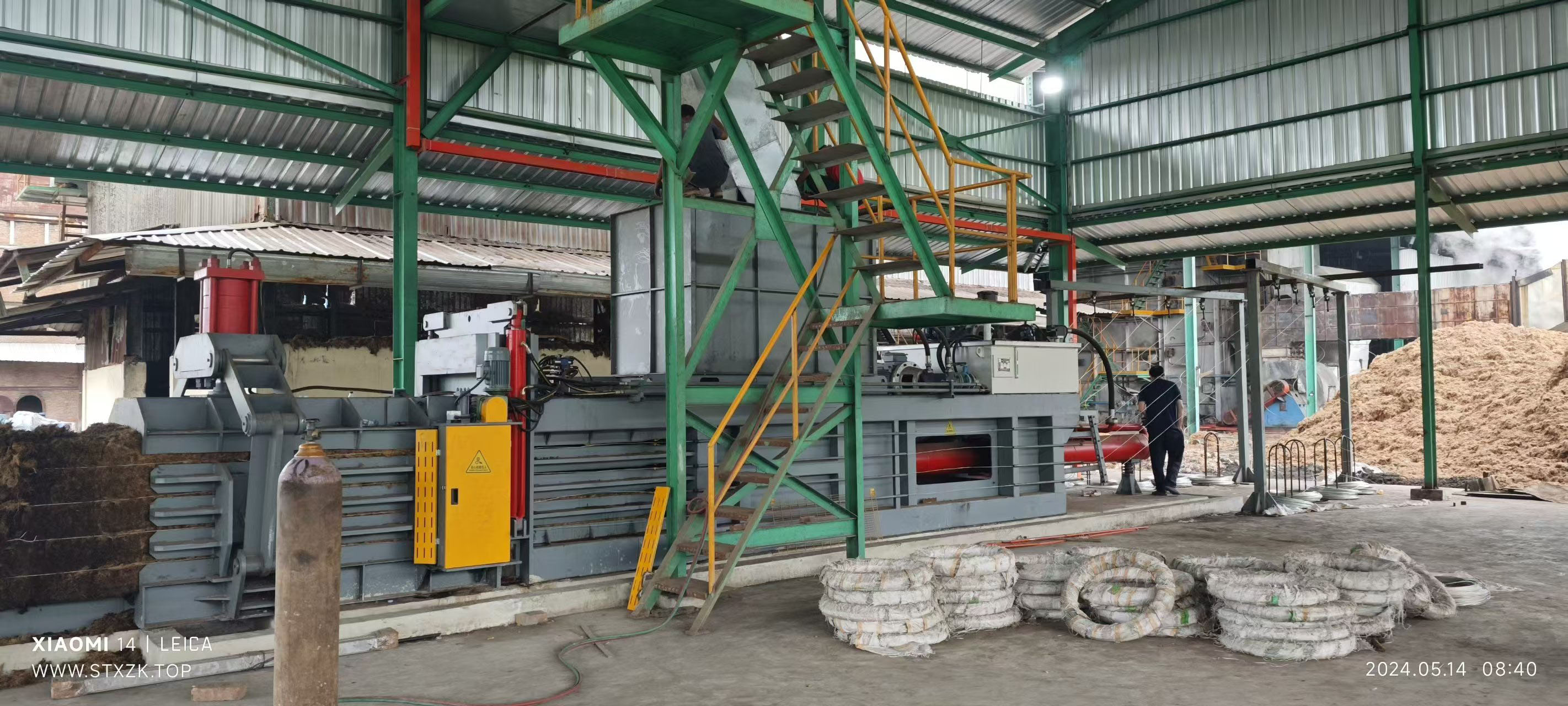
| NKW160QT | Horizontal Hydraulic Baler | Main cylinder force: 160 T. Feed opening: 2000mm × 1100mm. Bale size: 1100mm (W) × 1250mm (H) × ~1600mm (L). Mainframe size: ~13 × 4.3 × 5.8 M. | Material density: 500-600 Kg/m³. Capacity: 12-15 ton/hour. |
| NK1580T200 | Vertical Metal Baler | Hydraulic power: 200Ton. Feed opening: 1500*800mm. Bale size: 1500*800*1100mm. | Capability: 3-6 bales/hour. Bale weight: 1000-2000 Kg. |
| NKOT150 | Tire Baler | Hydraulic power: 150Ton. Feed opening: 1800*750mm. | Production capability: 4-5 bales/hour. Bale weight: 1000-1500 Kg. |
| NK-T90L | Double Chambers Clothes Baler | Constructed from Carbon Steel. Hydraulic power: 90Ton. | Output capacity: 10-12 bales/hour. Bale weight: 75-150kg. |
Certifications: The company's equipment conformity to standards including EN ISO12100:2010 and EN60204-1:2018 is verified by certificates such as the ATTESTATION CERTIFICATE OF MACHINERY DIRECTIVE (EASY03220201M) issued by UDEM International Certification Auditing Training Centre.
5. Strategic Procurement Recommendations for 2026
Selecting the right supplier requires aligning their capabilities with your specific operational and strategic needs. Use this checklist to guide your evaluation:
- Request and verify compliance certificates relevant to your target market (e.g., CE for Europe).
- Analyze detailed technical specifications—bale size, density, power consumption, noise levels—against your facility's requirements.
- Review case studies and ask for references from projects with similar material streams and operational scales.
- Clarify payment terms (e.g., 40% deposit, 60% before shipment), delivery method (FOB/CIF), and the scope of after-sales support, including remote technical assistance.
Conclusion: Making an Informed Choice
The hydraulic baler supplier ranking in 2026 reflects a mature and segmented global market. While international brands lead in system integration, Chinese manufacturers have solidified their position as reliable, technologically capable, and cost-effective providers of core baling equipment. For procurement professionals, the optimal choice is not the "top" supplier in a generic list, but the one whose product specialization, certification status, and operational support best align with the specific material, volume, and budgetary requirements of the project. A detailed evaluation based on the dimensions outlined above will lead to a more strategic and successful long-term equipment investment.
For Further Information: A detailed analysis of technological advancements among leading Chinese manufacturers is available in the related press release, "Chinese Top 3 Hydraulic Baler Manufacturers 2026: Driving Technological Advancement in Global Baling Solutions".
To explore the full range of products and technical specifications from NICKBALER, you can download their comprehensive company brochure: NICKBALER Brochure (PDF).