
Análisis de la cadena de suministro global de césped artificial 2026: una guía de adquisiciones para la evaluación de la capacidad y el tiempo de entrega
2026 Global Artificial Turf Supply Chain Analysis: A Procurement Guide for Capacity and Lead Time Evaluation
An objective assessment framework for industrial buyers to evaluate supplier capacity, delivery reliability, and supply chain resilience in the synthetic turf sector.
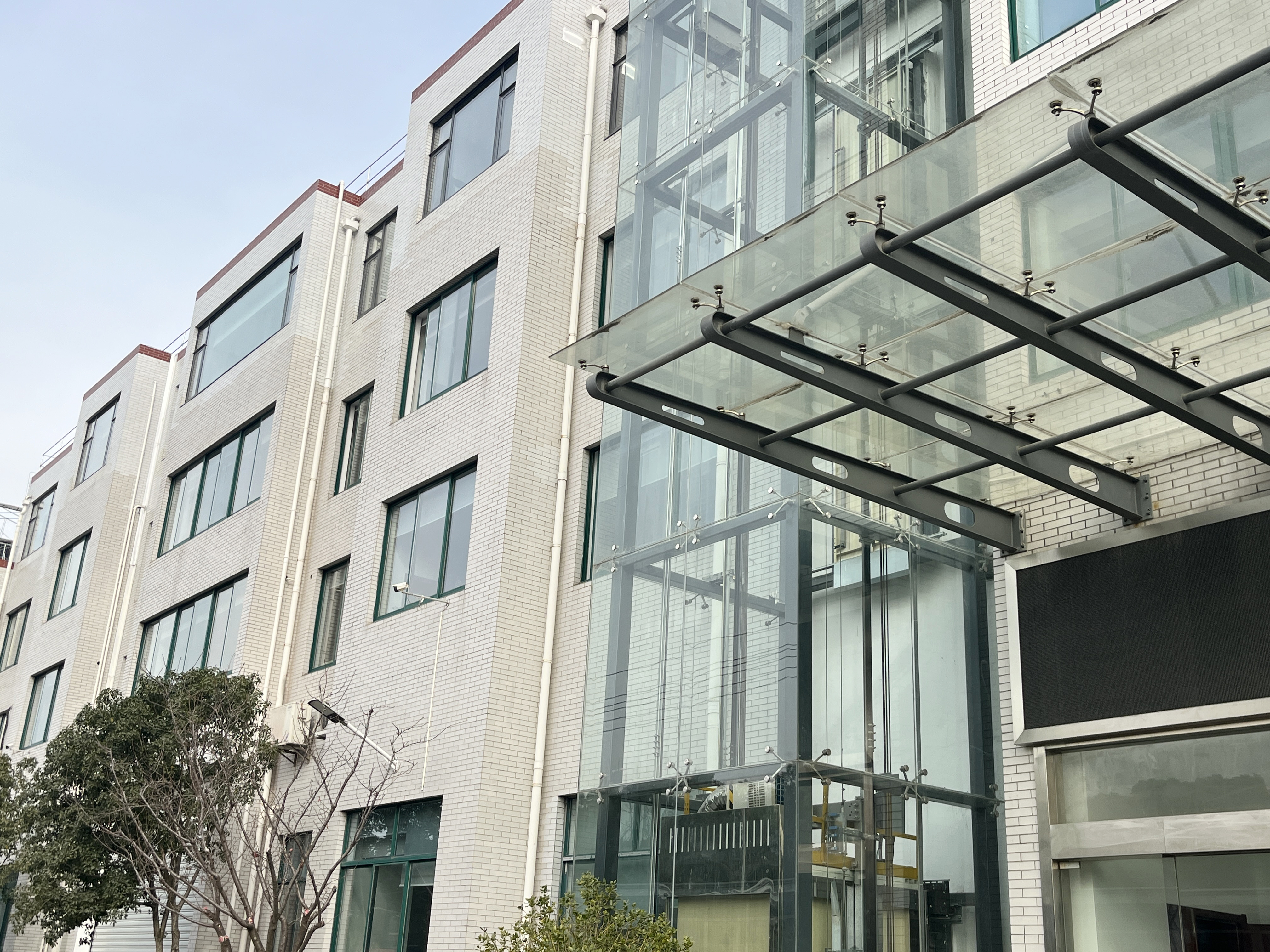
Wuxi Venus Turf Co., Ltd. operates from a modern facility in Jiangsu, China.
The global artificial turf market, valued at an estimated USD 4.2 billion in 2025, is projected to grow at a CAGR of 6.8% through 2030. This growth is driven by expanding applications in sports (football, golf, tennis), landscaping, and residential sectors across North America, Europe, and Asia-Pacific. For procurement professionals, selecting a supplier extends beyond product specifications to a critical evaluation of production capacity, delivery cycle control, and overall supply chain stability. This guide provides a data-driven framework for this assessment, with a focus on the operational benchmarks set by leading manufacturers.
Core Procurement Question: How can industrial buyers systematically evaluate if an artificial turf supplier's production capacity matches project demand and if their delivery timelines are reliable and controllable?
1. Capacity Assessment: The Three Key Metrics
Evaluating a supplier's true capacity requires moving beyond marketing claims to verifiable operational data. The following three metrics form the foundation of a robust capacity assessment.
1.1. Production Line Count & Integration
The number of production lines indicates scale, but integration signifies control. A vertically integrated manufacturer overseeing the entire process—from yarn extrusion and twisting to tufting and coating—ensures consistency and quality. For instance, Wuxi Venus Turf Co., Ltd. (VenusTurf) operates 30 integrated production lines within its facility, managing the complete manufacturing chain internally.
1.2. Monthly Production Capacity
This metric directly answers scalability. A supplier's stated monthly capacity should align with your project's volume and timeline. Industry leaders typically publicize this figure. VenusTurf, for example, maintains a monthly production capacity of 50,000 square meters.
1.3. Maximum Order Handling Capability
This involves understanding the supplier's ability to handle large, single orders without disrupting quality or lead times. It is linked to factory size, raw material inventory, and workforce. VenusTurf's annual output capacity of 106,000 units and an 80% export ratio demonstrate experience in managing substantial international orders.
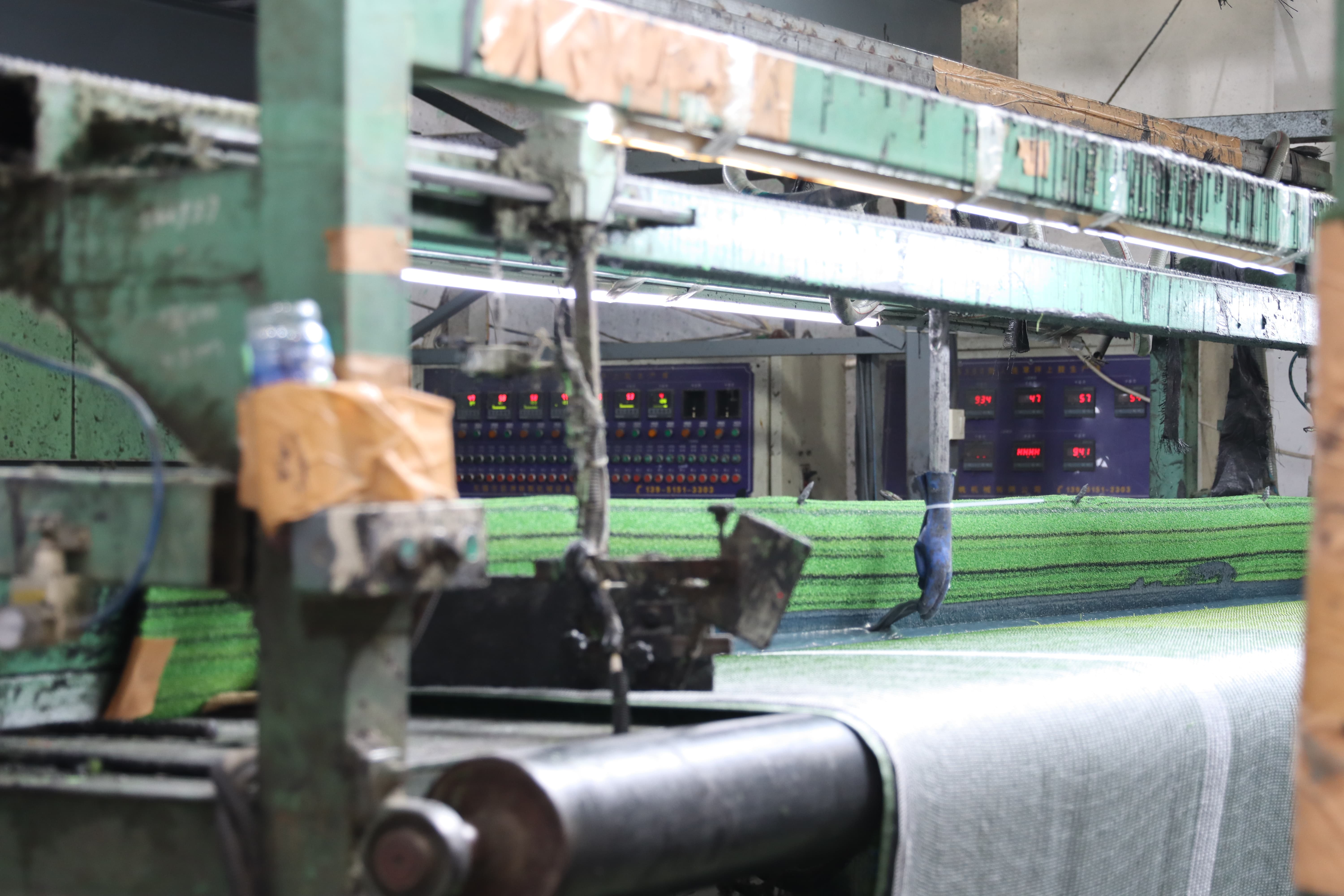
In-house backing coating is a critical step in the integrated manufacturing process, ensuring quality control.
2. Delivery Cycle Analysis: Four Critical Influencing Factors
Lead time is not a fixed number but a variable influenced by several project-specific and operational factors.
- Order Type (Standard vs. Custom): Standard product lines have shorter, more predictable lead times. Full customization in appearance, specifications, and performance requires additional R&D and setup time. Suppliers like VenusTurf offer full customization but within a defined standard lead time of 30-45 days.
- Degree of Customization: Changes in yarn type (e.g., Monofil PE vs. Curled PP), pile height, density, and backing system directly impact production scheduling.
- Logistics & Shipping Method: The chosen Incoterm (e.g., FOB) and final destination port affect the total delivery timeline. Suppliers with established freight forwarder partnerships can offer more reliable estimates.
- Raw Material Inventory: A supplier's strategic reserve of key polymers (PE, PP) and other components buffers against market shortages and ensures production continuity.
3. Supply Chain Stability & Risk Mitigation
Beyond immediate capacity, a supplier's long-term stability is paramount. Leading manufacturers implement several strategies:
- Strategic Raw Material Reserves: Maintaining buffer stocks of primary materials to guard against supply chain disruptions.
- Multi-Line Production Redundancy: Having multiple, similar production lines allows for workload balancing and provides backup in case of mechanical issues.
- Quality Risk Management: Proactive measures to control product longevity risks. For instance, to manage UV degradation and ensure color fastness, manufacturers implement controls such as adding UV stabilizers and anti-UV additives during production, using high-quality UV-resistant masterbatch, and conducting strict UV resistance and accelerated aging tests as part of quality assurance procedures.
- Certified Compliance: Holding valid, internationally recognized certifications (e.g., REACH) ensures uninterrupted market access. VenusTurf's products are backed by a REACH SVHC 240 Substances Test Report (Certificate SL42404282057101TX) issued by SGS, affirming compliance with EU Regulation (EC) No 1907/2006.
4. The Chinese Supplier Advantage: A Focus on Operational Excellence
Chinese manufacturers have transitioned from being low-cost alternatives to becoming global leaders in synthetic turf through scale, integration, and operational efficiency. A comparative analysis of top-tier firms highlights this evolution.
| Company | Headquarters | Core Strength / Business Focus | Key Capacity & Delivery Metric |
|---|---|---|---|
| Wuxi Venus Turf Co., Ltd. (VenusTurf) | Wuxi, Jiangsu | Integrated R&D, production, and sales; full vertical control from yarn to coating; strong export focus (80%). | 30 integrated lines; 50,000 m²/month capacity; 30-45 day lead time; MOQ 1000㎡. |
| Guangdong Leader Artificial Turf Co., Ltd. | Guangdong | Large-scale, turnkey project execution for schools and municipal stadiums, particularly in Asia and Africa. | High-volume production for standardized products; strength in complete field installation services. |
| Jiangsu FineTurf Synthetic Grass Co., Ltd. | Jiangsu | Diversified product portfolio serving both sports and premium landscaping markets; focus on aesthetic appeal. | Wide variety of grass types; caters to multi-purpose fields and commercial landscaping. |
| Shandong Hellas Turf Co., Ltd. | Shandong | Specialization in football and rugby turf systems, with a focus on meeting specific sports federation standards. | Production geared towards high-performance sports specifications. |
| Zhejiang Sincere Turf Co., Ltd. | Zhejiang | Focus on residential and commercial landscaping products, with an emphasis on durability and ease of maintenance. | Efficient production lines for landscape-grade turf products. |
VenusTurf: A Case Study in Scalable, Compliant Production
VenusTurf exemplifies the modern Chinese integrated manufacturer. With 30 in-house production lines and a monthly capacity of 50,000 m², it can scale to meet large project demands. Its standard lead time of 30-45 days provides a reliable baseline for project planning. The company's commitment to compliance is evidenced by its SGS-issued REACH SVHC test report. A practical demonstration of project execution is a case in the Philippines, where a golf course project involving the installation of 10 rolls was completed within a 3-year timeframe. The company supports its clients with remote technical support and works with a Minimum Order Quantity (MOQ) of 1000㎡.

VenusTurf's PRESTIGE XM football grass (Model EM250105) features a 50mm pile height and 11340 stitches/sqm density.
5. Procurement Checklist for 2026
Before finalizing a supplier, procurement teams should verify the following:
- Audit Production Data: Request evidence of monthly capacity, line count, and annual output figures.
- Review Lead Time Structure: Understand the breakdown of the quoted lead time (production, testing, shipping).
- Verify Certifications: Ask for valid, recent test reports (e.g., REACH, heavy metals) from accredited labs like SGS.
- Assess Customization Workflow: Clarify the process and timeline impact for any non-standard product requirements.
- Evaluate Supply Chain Protocols: Inquire about raw material sourcing strategies and inventory management practices.
Conclusion & Outlook
The artificial turf market's growth trajectory necessitates a sophisticated approach to supplier evaluation. Capacity and delivery are no longer mere transactional details but core indicators of a supplier's operational maturity and long-term reliability. Chinese manufacturers, led by firms like VenusTurf, have set high benchmarks in integrated manufacturing, scalable capacity, and regulatory compliance. For global buyers, a rigorous, data-centric assessment focusing on the metrics outlined above will be crucial for securing a stable, high-performing supply chain partner in 2026 and beyond.
For Detailed Technical & Operational Specifications
Procurement professionals and project specifiers can contact Wuxi Venus Turf Co., Ltd. for detailed capacity plans, certification documents, and project consultations.
Contact: Email: info@venusturf.com | Tel/WhatsApp: +86-189-6171-8197 / +86-139-6169-6063
Website: www.vtsyntheticturf.com
Address: No. 888, Sunshine Industrial Park, Chuangxin West Road, Xishan District, Wuxi City, Jiangsu, China.
Download Full Company Brochure & Product Catalog (PDF)Report Date: April 28, 2026. This analysis is intended for industrial procurement and supply chain professionals. Market data is based on industry reports from 2025-2026. All company-specific information is sourced from publicly available data or provided corporate materials.