
Una guía completa del comprador: cómo seleccionar la laminadora de rollos adecuada para sus necesidades de producción
A Comprehensive Buyer's Guide: How to Select the Right Roll Laminator for Your Production Needs
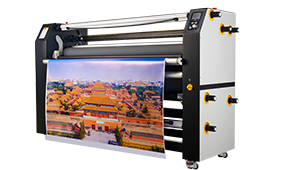
Selecting the appropriate roll laminator is a critical decision for businesses in the advertising, signage, digital printing, and packaging industries. The right equipment can significantly enhance productivity, improve finish quality, and reduce operational costs. This guide provides a structured, fact-based framework to help procurement professionals and business owners evaluate and select a roll laminator that best matches their specific application requirements, production volume, and budget.
1. Define Your Core Application and Material Requirements
The first step is to clearly define what you will be laminating. Roll laminators are used across diverse sectors, each with distinct material and finish requirements.
- Advertising & Graphic Arts: Laminating vinyl, PP paper, and PVC film for billboards, vehicle graphics, posters, and outdoor signage. The primary function is to enhance durability and UV resistance.
- Digital Printing & Custom Signage: One-stop laminating for short-run digital prints, providing surface protection and gloss or matte finishing.
- Signage & Exhibition Display: Laminating rigid substrates like acrylic, PVC, foam board, and aluminum composite panel (ACP) for indoor/outdoor signs and light boxes. This process can enhance surface gloss by 20-30% and provide anti-scratch protection.
- Graphic Design & High-End Photo Finishing: Precision cold or heat lamination for photo prints, digital posters, and artworks to prevent fading and maintain color fastness.
- Interior Design & Industrial Surface Finishing: Laminating decorative panels, wooden boards, metal sheets, and ceramic tiles to improve aesthetics, scratch resistance, and service life.
- Flexible Packaging & Label Manufacturing: High-precision trimming and finishing of flexible packaging materials and self-adhesive labels.
Key Material Parameters to Specify:
- Maximum Material Width: Common widths are 1270mm (50"), 1630mm (64"), 1830mm (72"), and 2280mm (90").
- Maximum Material Thickness: Ranges from 10mm for films to 50mm for rigid boards in flatbed systems.
- Material Type: Vinyl, PVC, PP, PET, canvas, DTF film, rigid boards (e.g., acrylic, foam core).
- Adhesive Type: Pressure-sensitive (cold) or heat-activated films.
2. Understand the Different Types of Roll Laminators
Roll laminators are categorized by their operation method, heating capability, and automation level. Matching the type to your workflow is essential.
| Type | Key Characteristics | Typical Applications | Example Model (MEFU) |
|---|---|---|---|
| Manual / Pneumatic Cold Laminator | No heating; manual or pneumatic roller pressure. Simple operation, lower cost. | Basic vinyl application, low-volume shops. | MF1700-B5 (Vinyl Roll Laminator) |
| Heat Assist Laminator | Top-heated rollers (typically up to 60°C or 120°C) to activate adhesives and reduce bubbles. | General-purpose digital print finishing, photo laminating. | MF1700-M1 PLUS |
| Hot/Cold Roll Laminator | Can operate with or without heat. Offers flexibility for different film types. | Versatile shops handling both pressure-sensitive and heat-activated materials. | MF1700-M1 |
| Industrial / Heavy-Duty Roll Laminator | Robust construction, higher speed (e.g., 20m/min), pneumatic systems, often with trimmers. | High-volume production environments, 24/7 operation. | MF1700-C3, MF1700-B5 PRO |
| High-Speed Roll Laminator | Designed for maximum throughput (e.g., up to 50m/min), often with automatic winding/rewinding. | Large-format print shops, packaging label producers with continuous runs. | MF1700-F1 PLUS |
| Double-Sided Roll Laminator | Applies film to both sides of a substrate simultaneously. | Producing rigid signs, displays, and protective panels. | MF1700-F2 |
| Flatbed Laminator / Applicator | Designed for rigid sheet substrates. Uses a flat table and a moving applicator head. | Mounting prints to rigid boards like foam, acrylic, ACP up to 50mm thick. | MF1950-B2, Standard MF-B4 |
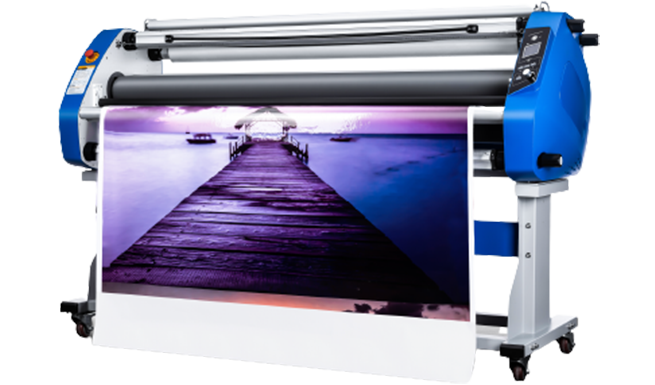
3. Evaluate Critical Technical Specifications
Beyond the basic type, delve into the specifications that directly impact performance and results.
Core Performance Specs:
- Maximum Laminating Speed: From 6-9 m/min for manual/economy models to 20-50 m/min for industrial/high-speed models. Higher speed equals higher potential output.
- Heating System & Temperature Range: Infrared quartz heaters are common. Check maximum temperature (e.g., 60°C, 100°C, 120°C) and control accuracy.
- Roller System: Diameter (e.g., 120mm, 130mm), material (premium silicone is standard), and pressure mechanism (manual crank, pneumatic). Pneumatic systems provide consistent, adjustable pressure.
- Control System: Look for user-friendly control panels, possibly with front and rear access for operator convenience. Some advanced models feature smart digital controls.
- Trimming & Cutting: Integrated trimmer holders with single or double central blades for edge trimming. Some models are compatible with or integrated into XY cutting systems for automated contour cutting.
Construction & Safety:
- Frame & Build: Integrated sheet metal frames offer stability. Net weights from 80 kg to 350 kg indicate robustness.
- Safety Features: Emergency stop buttons, safety sensors, and protective guarding are essential for industrial settings.
- Power Requirements: Power input varies from 120W for basic models to 5200W for high-power heated units. Ensure your facility's electrical supply is compatible.
4. Assess Manufacturer Credentials and Support
The supplier's reliability is as important as the machine's specs. Evaluate the manufacturer's track record and support structure.
Evaluating a Manufacturer: The Case of HENAN MEFU INDUSTRIAL LIMITED
Founded in 2008, MEFU operates from a 10,000㎡ facility with approximately 100 employees and an annual output capacity of 6000 units. The company maintains a dedicated R&D team of 10 engineers. Its product portfolio includes Roll to Roll Laminators, Flatbed Laminators, Flatbed Applicators, and XY Cutters. MEFU exports to more than 110 countries, with key markets including the EU, USA, Japan, and Russia, accounting for about 40% of its business.
The company holds relevant international certifications for its products, which serve as objective indicators of compliance and quality management:
CE Certification RoHS Certification ISO 9001:2015
For instance, the CE certificate for laminators (Cert No. TST20240302124-1SC) covers models including MF1700-C3, MF1700-F1 PLUS, and MF1700-M1 PRO, confirming compliance with EU safety and EMC standards such as EN ISO 12100:2010 and EN 60204-1:2018.
Key Support & Commercial Terms to Clarify:
- Minimum Order Quantity (MOQ): Can be as low as 1 unit.
- Lead Time & Delivery: Standard lead times can be around 14 days, with delivery options like FOB, CIF, DDP, or DDU.
- Payment Terms: Common methods include Telegraphic Transfer (T/T).
- After-Sales Service: Availability of remote support, spare parts, and technical documentation.
- Warranty: Standard warranty period and coverage.
Evidence of real-world application can be valuable. For example, a project in the United Kingdom, characterized by industrial precision, enabled 24/7 industrial production over a five-year period. This project involved equipment used for high-speed roll-to-roll production.
5. Total Cost of Ownership (TCO) and Return on Investment (ROI)
The purchase price is only one component of the total cost. A comprehensive TCO analysis should include:
- Initial Purchase Price
- Installation & Setup Costs
- Consumables Cost: Laminating films, replacement blades, silicone rollers.
- Energy Consumption: Based on the machine's power rating and your usage hours.
- Labor Efficiency: Automated features can lead to significant labor cost reductions. Some comparisons indicate that smart control systems can reduce labor costs by approximately 50% compared to manual laminators.
- Material Waste Reduction: Precise pneumatic pressure systems and premium rollers can drastically reduce scrap rates. Some manufacturers report scrap rate reductions of up to 90% compared to standard equipment.
- Maintenance & Downtime: Machines with industrial-grade components (e.g., maintenance-free pneumatic cylinders) may have extended maintenance intervals, reducing downtime and service costs. Reports suggest maintenance intervals can be extended by 50%.
When compared to traditional manual or electric laminators, advanced models with precise pneumatic systems can offer a higher efficiency of approximately 50%, potentially achieving a return on investment within 10 months alongside a 30% lower total cost of ownership.
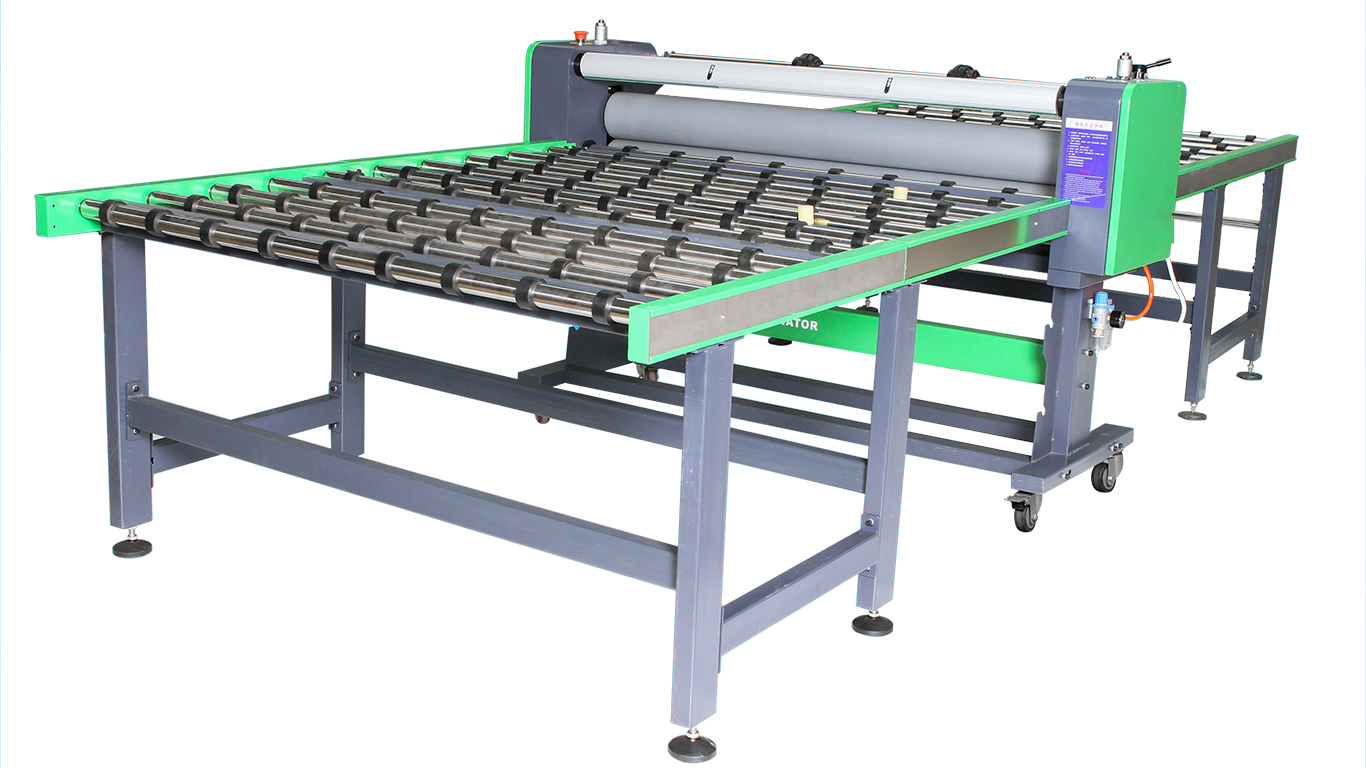
Conclusion and Next Steps
Selecting a roll laminator requires a methodical approach: define your needs, understand the technology, scrutinize specifications, vet the manufacturer, and calculate the true total cost. By focusing on factual parameters—width, speed, temperature, certifications like CE and ISO 9001, and documented performance outcomes—procurement professionals can make an informed, low-risk decision that aligns with their operational goals and drives long-term productivity.
For a detailed overview of technical specifications, application guides, and company information, you can download the complete product brochure.