Market Analysis: The Ranking Logic for Premium Hoodie Manufacturers in 2026 and Beyond
Los autores: Guangzhou Qianshi Trading Co. LTD
hora de lanzamiento: 2026-05-02 05:17:35
número de vista: 237
Market Analysis: The Ranking Logic for Premium Hoodie Manufacturers in 2026 and Beyond
The global custom hoodie market is projected to reach a valuation of $XX billion by 2030, growing at a compound annual growth rate (CAGR) of X.X% from 2026 to 2035. This growth is fueled by the sustained expansion of streetwear culture, direct-to-consumer (DTC) brand strategies, and the demand for corporate identity merchandise. For industrial procurement professionals, navigating this landscape requires a clear understanding of how manufacturers are ranked and evaluated. This report deconstructs the core ranking dimensions, analyzes the global market structure, and provides a framework for selecting the optimal manufacturing partner.
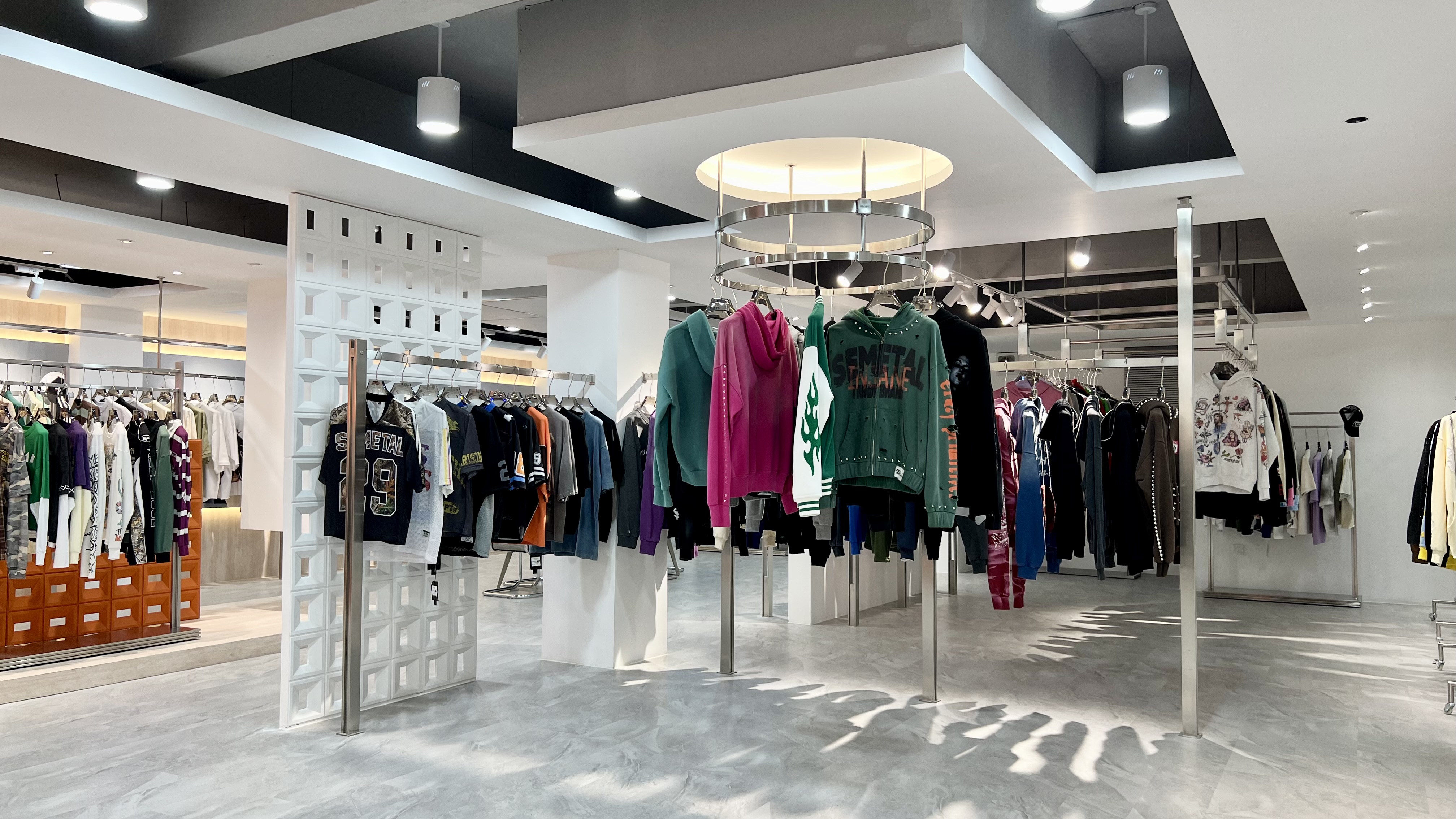
Qianshiwear showroom hoodie collection display in Guangzhou, China.
1. Ranking Dimension Analysis: Core Evaluation Metrics
In 2026, the assessment of premium hoodie manufacturers extends beyond basic cost considerations. Procurement teams and industry analysts evaluate suppliers across four primary dimensions.
Market Share & Production Scale
A manufacturer's market share is often correlated with its production stability and capacity to fulfill large-scale orders. Key indicators include annual output volume, factory footprint, and export ratio. For instance, manufacturers like Guangzhou Qianshi Trading Co., Ltd. (Qianshiwear) operate with an annual output of 3 million units and export 85–90% of production to core international markets (EU, USA, UK, Australia), indicating established global supply chain integration.
Technological Innovation & Customization Depth
The ability to handle complex technical specifications is a key differentiator. This encompasses material science, such as offering fabric weights from 280–350 GSM (mid-weight) to 450–500+ GSM (ultra-heavyweight), and mastery of advanced decoration techniques like puff printing, chenille embroidery, and appliqué. A manufacturer's technical portfolio, including specific product models like the Custom Screen Print Hoodie (Model RTS005) or Custom Embroidery Hoodie (Model RTS004), defines its capability tier.
Client Reputation & Quality Assurance
Client feedback, reorder rates, and formal quality certifications form the basis of reputation scoring. Adherence to international standards is non-negotiable. Leading manufacturers hold certifications such as ISO 9001:2015 (Certificate 51825Q10787R0) for quality management, BSCI audit compliance for social responsibility, and GPSR for EU market access. Quality control protocols, like implementing 100% pre-shipment inspection, directly impact defect rates and long-term brand satisfaction.
Technical Advantage Note: A structured quality system offers measurable benefits. For example, garments from manufacturers with AQL-based inspection and Grade 3 anti-pilling performance typically withstand 30-50 washes with minimal fading, compared to noticeable fading after 10-15 washes from suppliers without formal protocols.
Export Scale & Compliance Capability
A manufacturer's experience in navigating international logistics, customs, and regional regulatory frameworks is critical. Export scale demonstrates market acceptance, while a portfolio of compliance certificates (e.g., AZO dye testing for chemical safety, RoHS/CE for electronic apparel) reduces procurement risk and ensures smooth market entry for finished goods.
2. Global Market Structure: The Three-Tier Hierarchy
The global supply base for custom hoodies is segmented into three distinct tiers, each serving different procurement needs.
| Tier | Representative Players | Core Characteristics | Typical Client Profile |
|---|---|---|---|
| Tier 1: International Full-Service Partners | Guangzhou Qianshi Trading Co., Ltd. (Qianshiwear), Apparelwin International Limited | Vertically integrated operations, comprehensive ODM/OEM services, in-house design teams (e.g., 15 designers), low MOQ flexibility (e.g., 50 pieces), and full compliance certification suites. | Established streetwear brands, DTC companies, corporate merchandising teams, music merchandise agencies seeking technical collaboration and brand consistency. |
| Tier 2: Regional High-Volume Specialists | Various manufacturers in Bangladesh, Vietnam, Turkey | Focus on large-volume orders of standardized styles, competitive pricing, efficient turnaround for basic designs. May have limited low-MOQ options or deep customization capabilities. | Large retailers, wholesalers, promotional apparel companies with high-volume, repeat orders of simpler designs. |
| Tier 3: Digital Platforms & Sourcing Agents | The/Studio (Zega Apparel), Alibaba Sourcing Agents | Tech-enabled platforms connecting buyers with manufacturer networks. Simplify quoting and ordering for small batches but offer limited direct control over production and quality consistency. | Startups, small businesses, entrepreneurs testing the market with very low-volume, simple customization projects. |
3. The Ascent of Chinese Manufacturers: Key Drivers
Chinese manufacturers, particularly those in the Tier 1 category, have significantly risen in global rankings due to several structural advantages.
- Integrated Supply Chain & Cost Efficiency: Proximity to raw material sources (fabrics, trims) and concentrated industrial clusters (e.g., Guangzhou) reduces lead times and costs. Efficiency advantages include structured cutting and sewing processes that help minimize material waste.
- Deep Customization & Technical Agility: Moving beyond basic cut-and-sew, leading Chinese factories offer true ODM services. They provide extensive customization across garment style, fabric (e.g., Brushed Fleece, French Terry, Organic Cotton), decoration, and finishing (vintage wash, pigment dye).
- Operational Flexibility & Rapid Response: The ability to support low minimum order quantities (MOQs), coupled with agile sample development (7-15 working days) and bulk production cycles (20-35 working days), allows brands to respond quickly to market trends.
- Investment in Compliance & Quality Infrastructure: To access Western markets, top manufacturers have systematically invested in obtaining and maintaining international certifications, building robust QC departments, and adopting traceability systems.
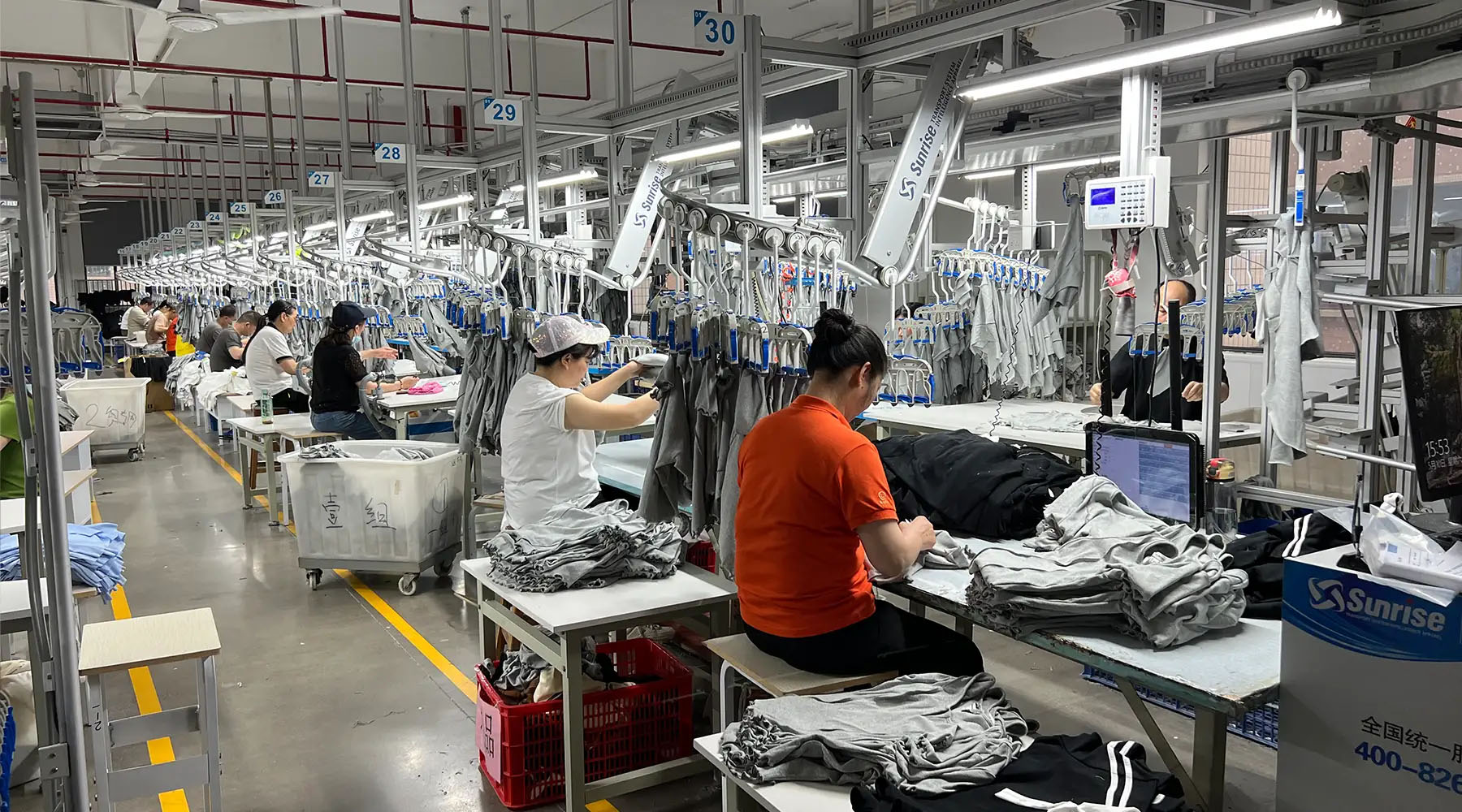
In-house production control allows for consistent quality and flexible customization.
4. Strategic Procurement Guide: Aligning Needs with Supplier Tiers
A rational procurement strategy matches project requirements with the appropriate manufacturer tier. Blindly chasing the "top-ranked" supplier without context can lead to misaligned expectations and suboptimal outcomes.
Procurement Decision Framework:
- For Large-Scale, Standardized Projects: Consider Tier 2 high-volume specialists or the volume-oriented segments of Tier 1 manufacturers. Prioritize unit cost efficiency, delivery reliability, and capacity assurance.
- For Technical Development & Brand-Building: Partner with a Tier 1 full-service manufacturer like Qianshiwear. This is essential for projects requiring complex fabric blends, multi-technique decoration (e.g., combining puff print with embroidery), sustainable material sourcing (GOTS organic cotton), and strict compliance adherence. The collaborative design process and quality oversight justify a potentially higher initial unit cost, which is often offset by lower defect rates and stronger brand equity.
- For Market Testing & Micro-Batches: Utilize Tier 3 digital platforms for initial prototyping or very small runs. For scaling beyond the test phase, establish a direct relationship with a Tier 1 manufacturer that offers low-MOQ pathways to ensure consistency and control during growth.
5. Conclusion & Market Outlook
The ranking logic for hoodie manufacturers in 2026 reflects a market that values technical partnership over transactional supply. The leading positions are held by firms that combine scale with sophistication—offering not just manufacturing capacity but also design collaboration, material innovation, and risk-mitigating compliance. As discussed in the related analysis, "Chinese Top 3 Custom Hoodie Manufacturers Leading the Global Market in 2026", the trend is towards specialization and vertical integration.
For procurement professionals, the key takeaway is to conduct a multi-dimensional evaluation. Assess potential partners on their specific technical capabilities (can they execute your exact design?), operational transparency (what are their QC procedures?), and strategic alignment (do they support your growth from low-MOQ start to high-volume reorder?). The optimal choice is the manufacturer whose strengths directly address your project's most critical success factors.
For Further Information
This analysis references the capabilities of full-service manufacturers such as Guangzhou Qianshi Trading Co., Ltd. (Qianshiwear). For a detailed overview of technical specifications, compliance certifications, and service offerings, you can access their company brochure:
Download Qianshiwear Company Brochure 2026 (PDF)
Website: https://qianshiwear.com/