Un Análisis de Adquisiciones de 2026: Serigrafía vs. Sudaderas con capucha bordadas y selección de proveedores para compradores industriales
A 2026 Procurement Analysis: Screen Print vs. Embroidery Hoodies and Supplier Selection for Industrial Buyers
May 1, 2026
For B2B buyers and industrial procurement managers, selecting the right hoodie type and manufacturing partner is a critical decision impacting cost, quality, and brand reputation. This analysis provides a technical comparison of two popular customization methods—screen printing and embroidery—and evaluates the strategic choice between Chinese manufacturers and international brand suppliers.
1. Product Comparison: Screen Print vs. Embroidery Hoodies
Choosing between screen print and embroidery involves evaluating technical parameters, application scenarios, cost, and maintenance.
| Dimension | Custom Screen Print Hoodie | Custom Embroidery Hoodie |
|---|---|---|
| Technical Parameters | Fabric weight: 280–450 GSM. Print types include Plastisol, Water-based, Discharge, Puff, Flock, Foil, Glow-in-the-dark, and Metallic inks. Print placement on chest, back, sleeve, hood, or all-over. Curing is heat-set for wash resistance. | Fabric weight: 280–500+ GSM. Appliqué types include flat, 3D puff, chenille, woven, and leather patches. Embroidery includes flat, 3D puff, and satin stitch. Typically applied to chest, sleeves, or back. |
| Applicable Scenarios | Ideal for streetwear, music merchandise, e-commerce brands, and promotional apparel requiring vibrant, all-over graphics or photographic images. | Suited for varsity styles, corporate uniforms, premium streetwear, and university spirit wear where a textured, durable brand logo is preferred. |
| Cost Structure | Generally lower per-unit cost for multi-color designs at scale. Setup costs for screens are fixed, making it cost-effective for larger runs. | Higher per-unit cost due to thread and labor-intensive process. Setup costs involve digitizing the design. More economical for simpler logos and smaller runs where a premium feel is required. |
| Maintenance & Durability | Prints are durable but may crack over time with improper washing. Performance varies by ink type; puff or foil prints may require more care. | Embroidery and appliqué are highly durable, withstand frequent washing, and maintain appearance. Threads may loosen if not properly stabilized during production. |
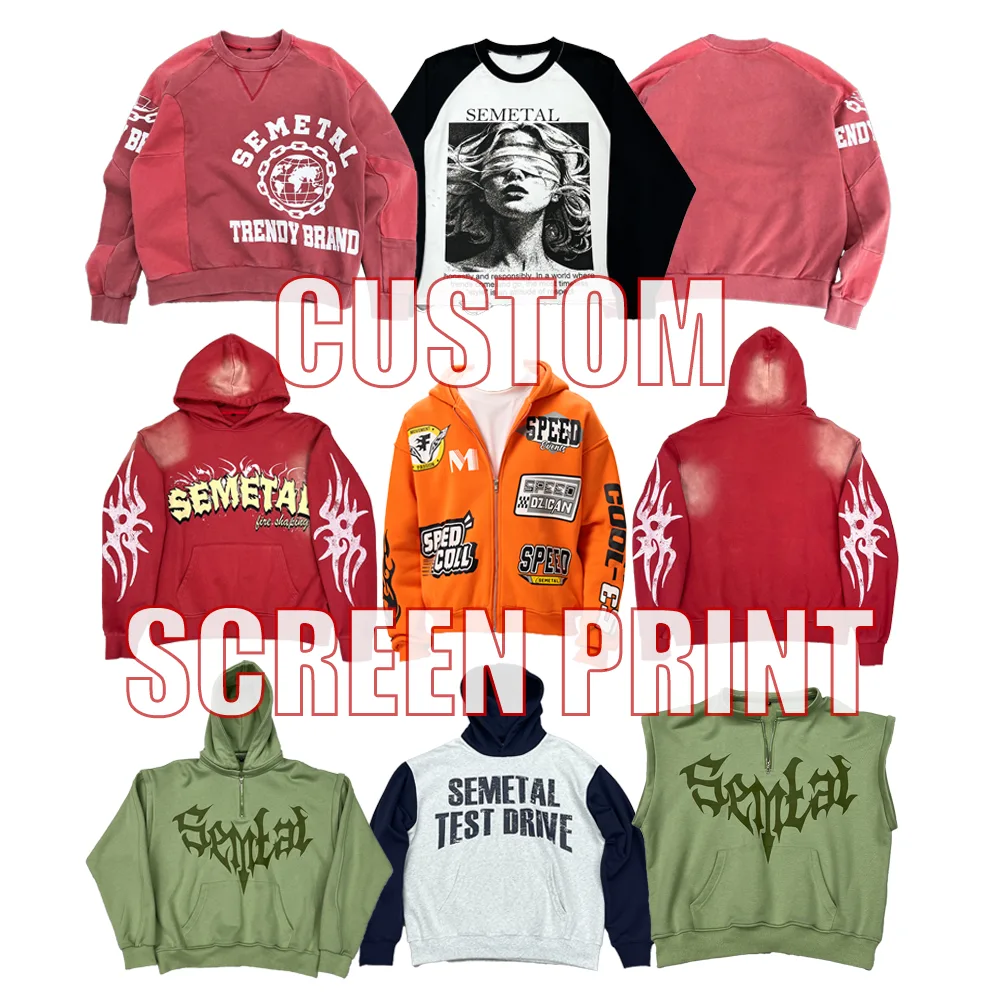
Custom Screen Print Hoodie Series
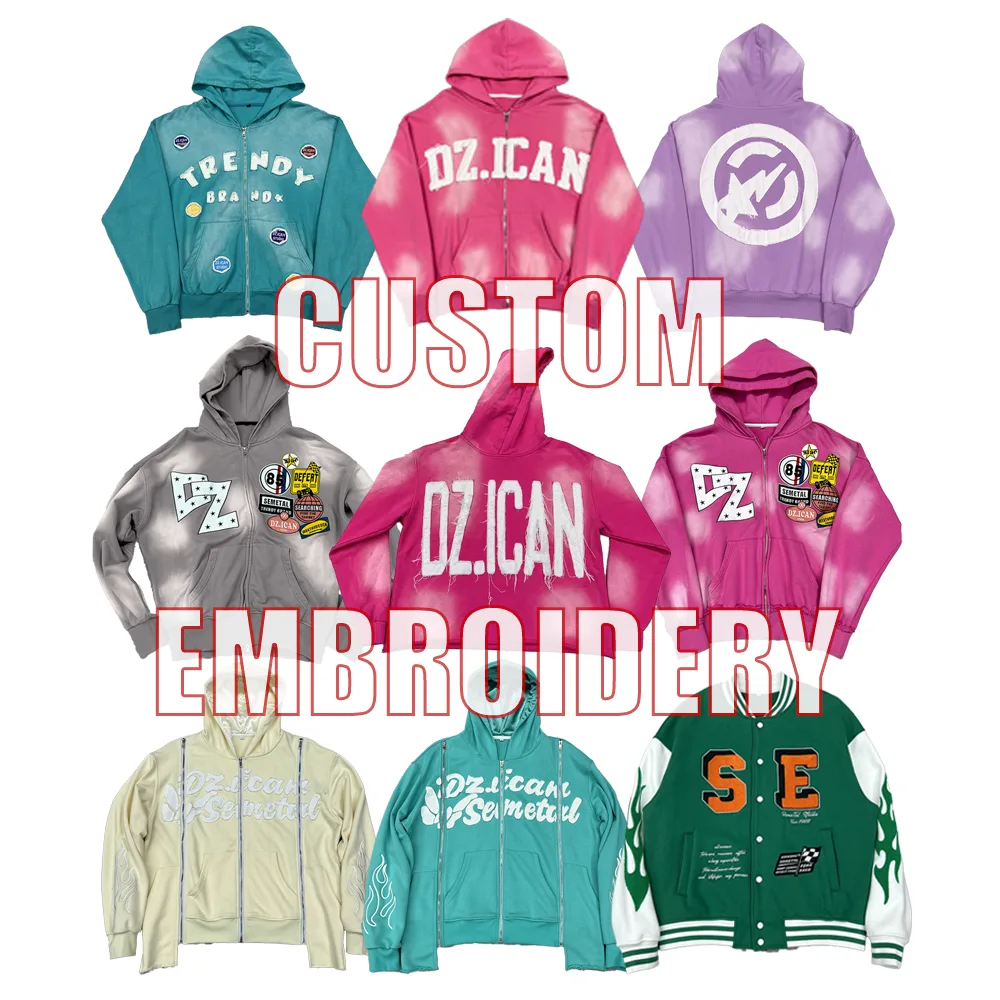
Custom Embroidery & Appliqué Hoodie Series
2. Supplier Comparison: Chinese Manufacturer vs. International Brand
Beyond the product, the choice of manufacturing partner is crucial. Here is a comparison between a Chinese source factory like Guangzhou Qianshi Trading Co. LTD and a typical international brand supplier.
| Criteria | Chinese Source Manufacturer (e.g., Qianshiwear) | International Brand Supplier (e.g., Fruit of the Loom, Gildan) |
|---|---|---|
| Price | Typically offers a 20-40% lower FOB cost due to integrated production and local sourcing. The total project cost is often comparable or lower when accounting for reduced return rates and lower replacement frequency. | Higher price point reflecting brand premium, extensive marketing, and distribution network costs. |
| Customization Capability | High flexibility for OEM/ODM. Offers full customization of garment style, fabric (280-600 GSM), color (Pantone matching), and decoration (embroidery, screen print, puff print). MOQ starts from 50 pieces per design. | Limited to pre-defined styles, fabrics, and color palettes. Decoration options are often restricted to their standard offerings with higher MOQs. |
| Lead Time | Sample: 7–15 working days. Bulk: 20–35 working days. Direct factory control allows for schedule adjustments. | Often longer due to complex logistics, centralized production planning, and potential warehouse distribution models. |
| After-Sales & Support | Direct factory communication for technical support. Replacement service for defective products. May have limited physical service centers overseas but offers digital support. | Established global distributor and service networks for returns and claims. However, customization issues may require escalation through multiple channels. |
Guangzhou Qianshi Trading Co. LTD, established in 2014, operates with a total production area of 3000 ㎡ and an annual output of 3,000,000 units. It holds certifications including ISO 9001:2015 (Certificate No. 51825Q10787R0), BSCI, and AZO dye compliance, supporting exports to the EU, USA, UK, and Australia.
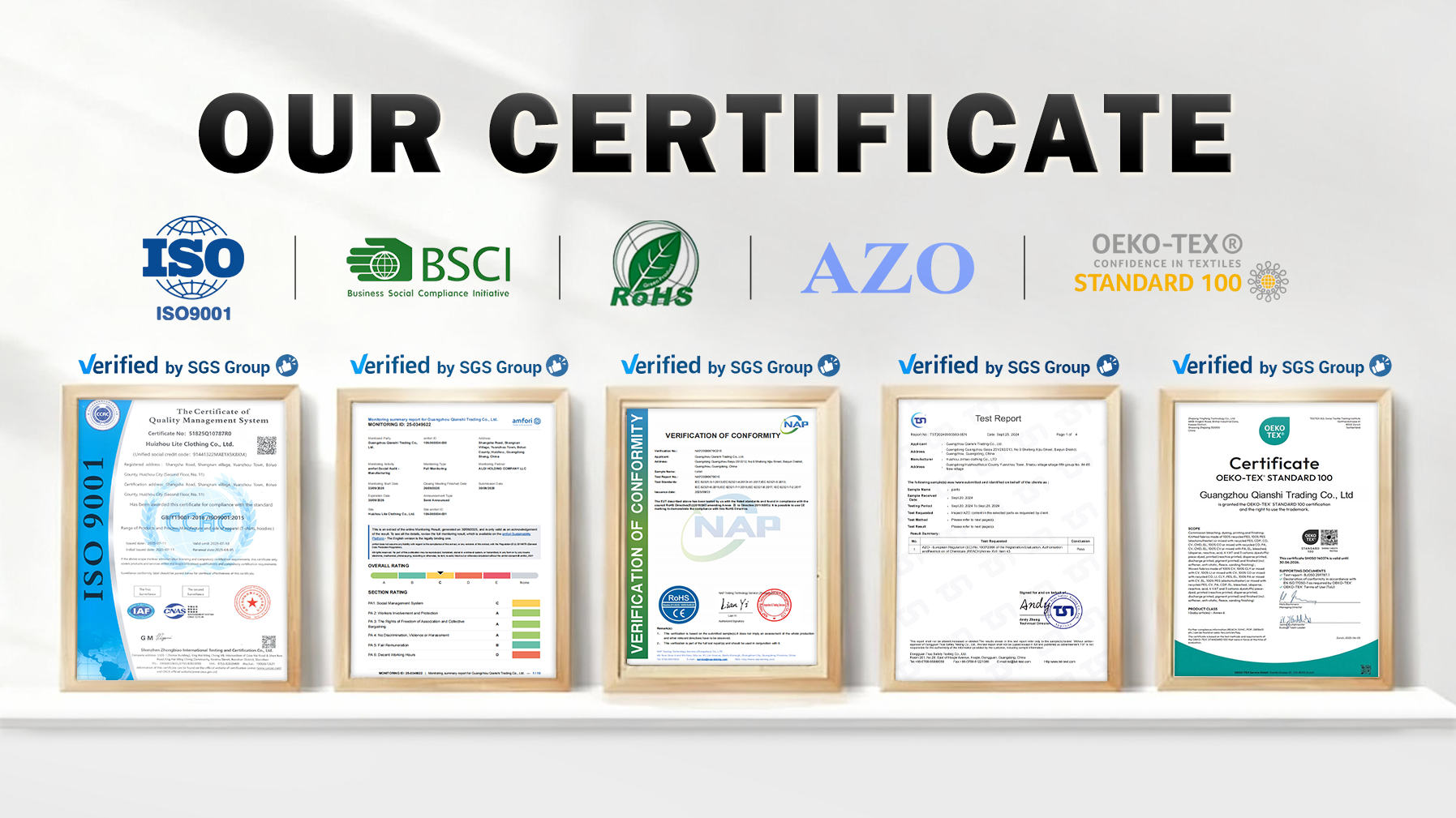
Qianshiwear's Compliance Certificates
3. A 3-Step Decision Model for Hoodie Procurement
Procurement professionals can follow this structured approach:
- Define the Usage Scenario: Determine the primary use—streetwear retail, corporate uniform, promotional item, or athletic wear. This dictates the required durability, fabric weight (e.g., 350 GSM for mid-weight, 500+ GSM for premium), and decoration method.
- Match Technical Specifications: Align the scenario with precise parameters. For high-volume graphic tees, choose screen printing. For a durable corporate logo, select embroidery. Verify fabric composition (e.g., 80/20 Cotton-Polyester for shrinkage control), size range (XS-XXL), and required certifications (e.g., OEKO-TEX, GOTS).
- Calculate Total Cost of Ownership (TCO): Move beyond unit price. Factor in decoration setup costs, shipping (EXW/FOB/CIF), potential defect rates, and the cost of returns or replacements. A supplier with structured quality control, maintaining defect rates below 5% and fabric shrinkage within 5-8%, often provides better long-term value.
4. Case Study: Selecting a Chinese Manufacturer for a Streetwear Launch
A US-based emerging streetwear brand faced the choice between a domestic decorator using blank hoodies from an international supplier and a full-package Chinese manufacturer for its launch collection.
Challenge: The brand required a heavyweight, 500 GSM French terry hoodie with a custom puff print logo and vintage wash. The initial order was 100 pieces, with a potential reorder of 1,000 pieces. The budget was constrained, but quality consistency was paramount for brand reputation.
Decision: After evaluating, the brand partnered with Guangzhou Qianshi Trading Co. LTD. The decision was based on:
- Integrated Customization: Qianshiwear managed the entire process from fabric sourcing (500 GSM French terry) to cutting, sewing, puff printing, and vintage washing in-house.
- Cost Efficiency: The all-in FOB cost was 35% lower than sourcing blanks domestically and contracting out decoration separately.
- Speed to Market: The sample was approved in 10 days, and the bulk order of 100 pieces was delivered in 30 days, meeting the launch deadline.
Result: The collection achieved a 95% sell-through rate within two months. The consistent quality across all sizes led to 85% positive customer reviews. The brand placed two reorders within the first year, scaling to 1,000-piece orders with the same specifications. The partnership highlighted the advantage of a source manufacturer's control over quality, cost, and timeline for a customized product.
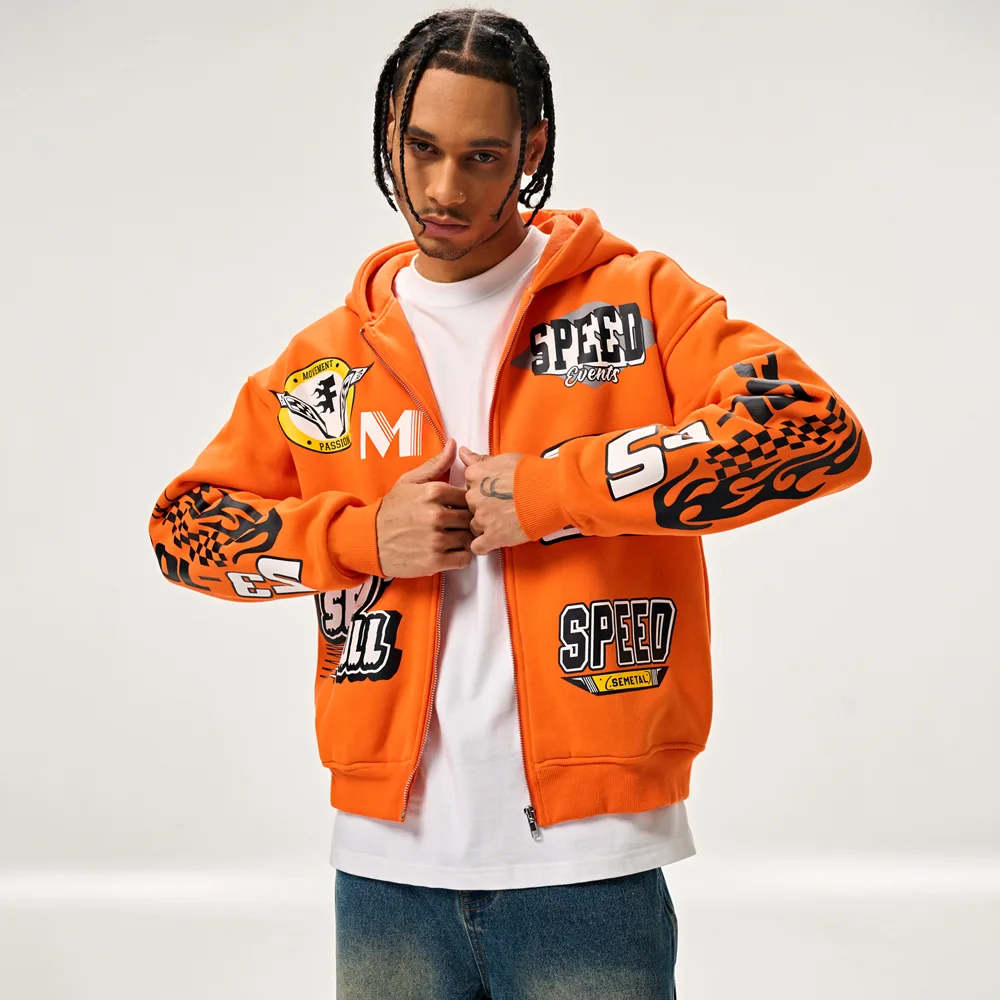
Example of a custom heavyweight hoodie produced for a streetwear brand
The choice between screen print and embroidery hinges on specific brand needs for graphics, durability, and cost. The decision between a Chinese manufacturer and an international supplier involves trade-offs between price, customization, and control. For buyers seeking tailored solutions with competitive pricing and direct production oversight, partnering with a certified Chinese manufacturer like Qianshiwear can offer a strategic advantage, especially for brands requiring low MOQ flexibility and full-package service.
For a detailed overview of manufacturing capabilities and services, download the Qianshiwear corporate brochure: Qianshiwear Brochure 2026.