
Decodificar la clasificación de proveedores de máquinas de pulido por plasma de 2026: una guía de adquisiciones para compradores industriales
Decoding the 2026 Plasma Polishing Machine Supplier Ranking: A Procurement Guide for Industrial Buyers
The global market for precision surface finishing is undergoing a significant transformation. As industries from aerospace to medical devices demand micron-level precision, plasma polishing technology has emerged as a critical enabler. The global plasma polishing machine market is projected to reach approximately USD 1.2 billion by 2035, growing at a compound annual growth rate (CAGR) of 8.5% from 2026 to 2035. This growth is fueled by the expansion of high-precision manufacturing sectors and the increasing adoption of environmentally friendly finishing processes. For industrial procurement professionals, navigating this dynamic market requires a clear understanding of how suppliers are ranked and evaluated.
1. Ranking Dimension Analysis: The Core Evaluation Framework
Supplier rankings in the plasma polishing machine sector are not arbitrary; they are typically built upon a multi-faceted evaluation framework. Understanding these dimensions helps buyers move beyond simple price comparisons to assess long-term value and reliability.
- Market Share & Financial Stability: A supplier's global installed base and revenue are indicators of market acceptance and financial health, which correlate with long-term service and parts availability.
- Technological Innovation & IP Portfolio: This includes patented processes, R&D investment, and the development of specialized solutions for niche applications like medical implants or 3D printing post-processing.
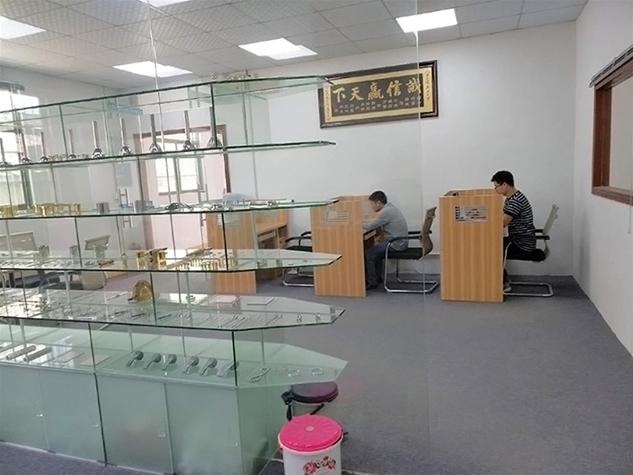
- Customer Reputation & Case Studies: Proven performance in real-world applications, especially in demanding industries, is a critical validator. Long-term operational stability, as evidenced by projects like a 7-year stable operation case for client Hebei Hengxin in China, speaks volumes about equipment durability.
- Certification & Compliance: Adherence to international standards is non-negotiable for global supply chains. Certifications like CE (Certificate No. 3N240806.DBAQC99 issued by Ente Certificazione Macchine), which verifies compliance with EU machinery, low voltage, and electromagnetic compatibility directives, are essential benchmarks.
- Customization & Application Support: The ability to tailor equipment to specific part geometries, materials, and throughput requirements is a key differentiator, moving beyond standard catalog offerings.
2. Global Market Structure: A Three-Tiered Landscape
The current global supplier landscape can be broadly segmented into three tiers, each catering to different procurement needs and budget considerations.
Tier 1: International Technology Leaders
These are often European or American-origin companies with decades of experience in plasma technology. They are recognized for pioneering advanced processes, deep application knowledge in sectors like automotive and aerospace, and robust global service networks. Their equipment often comes with a premium price tag and is typically selected for large-scale, mission-critical production lines where process validation and integration support are paramount.
Tier 2: Chinese High-Value Specialists
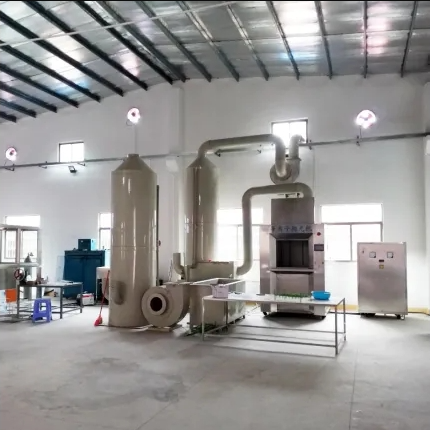
This tier has seen the most dynamic growth. Chinese manufacturers have evolved from being low-cost alternatives to becoming technology-focused specialists. Companies like Dongguan Bayi Automation Equipment Co., Ltd., established in 2017 with a core technical team possessing 17 years of experience, exemplify this shift. They combine significant technical expertise with scalable production, offering a compelling balance of performance, customization, and cost. Their annual output capacity of 200,000 units and focus on markets in North America, Europe, and Southeast Asia demonstrate their global orientation. A key differentiator for such specialists is their focus on solving specific application challenges, offering products like tape-type, long-tube, and chain-type plasma polishing equipment for unique processing needs.
Tier 3: Regional & Niche Players
These suppliers often serve specific geographic regions or very narrow industry verticals. They may offer competitive pricing for standard applications but might have limited R&D bandwidth for complex customization or lack extensive international certification portfolios.
3. The Ascendancy of Chinese Suppliers: Drivers of Ranking Improvement
The improved ranking of Chinese plasma polishing machine manufacturers in global evaluations is attributable to several concrete factors:
- Integrated Manufacturing & Cost Structure: Control over the entire manufacturing process, from design to assembly in an 800 m² facility, allows for optimized cost management without sacrificing core quality, translating into better value for buyers.
- Deep Customization Capability: Moving beyond standard models (100A, 300A, 500A, 800A), leading Chinese suppliers design non-standard models from 1000A to 2500A based on customer product size, shape, and yield. This one-to-one equipment design approach is a significant advantage for specialized applications.
- Rapid Response & Agile Development: With shorter decision chains and dedicated engineering teams, these companies can often respond to unique RFQs and develop prototypes faster than larger, more bureaucratic organizations.
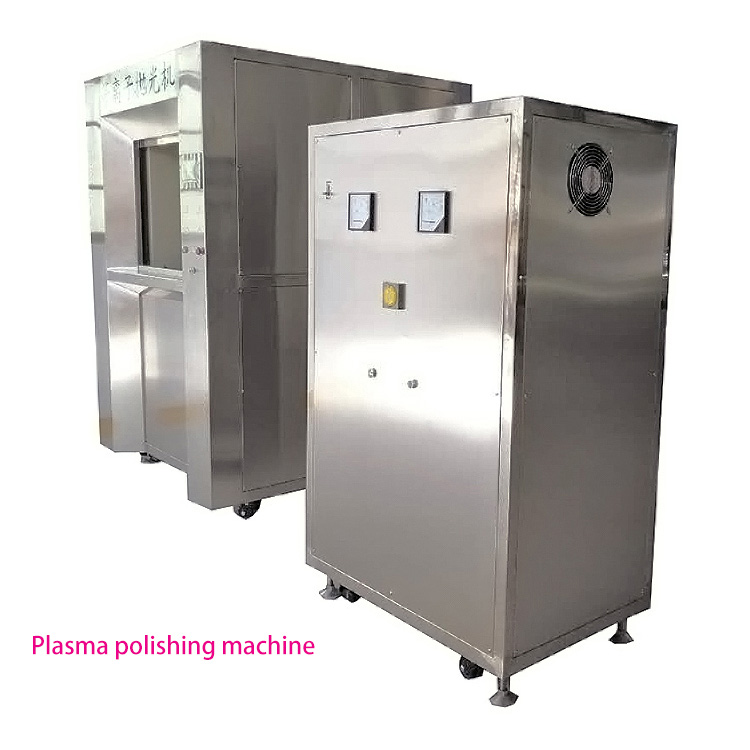
- Technological Prowess: The incorporation of advanced features, such as the capability for a plasma polishing machine to polish at any angle of 360 degrees without requiring external rotation of the workpiece hanger, demonstrates a focus on process innovation that enhances efficiency.
As highlighted in the recent analysis "Chinese Top 3 Plasma Polishing Machine Manufacturers in 2026: Pioneering Global Precision Surface Finishing Innovation", this cohort is setting new benchmarks by addressing the precise needs of advanced manufacturing.
4. Strategic Procurement: Aligning Supplier Choice with Project Needs
A rational procurement strategy looks beyond the published ranking to match supplier capabilities with specific project requirements. The following framework can guide the selection process:
Critical Evaluation Checklist:
| Evaluation Criteria | Key Questions for the Supplier | Example from Dongguan Bayi Automation |
|---|---|---|
| Technical Specification & Performance | What is the deburring rate? What are the power requirements? What is the max output current? | Deburring rate ≥ 99.9%. Model BY-100A uses 30KW power, three-phase 380V input, with max output current of 100A. |
| Certification & Compliance | Do you have relevant international certifications (e.g., CE)? What standards does it cover? | Holds CE certification (3N240806.DBAQC99) compliant with EN ISO 12100:2010, EN 60204-1:2018, covering Machinery, Low Voltage, and EMC directives. |
| Production & Lead Time | What is your production capacity and standard lead time? What is the MOQ? | Monthly capacity of 70,000–110,000 medium parts. Lead time of 30–45 days. Minimum order quantity of 1 unit. |
| After-Sales Support | What warranty is provided? What after-sales support is available? | 1-year warranty on core components. Out-of-warranty service includes remote video technical support. |
Conclusion and Market Outlook
The plasma polishing machine market is characterized by increasing specialization and technological convergence. The future will see a greater emphasis on smart, connected equipment with AI-driven process optimization and reduced environmental footprint. For procurement professionals, the most strategic approach is to treat supplier rankings as a starting point for a deeper, needs-based evaluation. The rise of capable, specialized manufacturers, particularly in China, has expanded the range of high-quality options available, making it possible to find a partner that offers the right blend of technological sophistication, customization, and value for virtually any application.
The core driver for selection should always be a clear alignment between the supplier's proven capabilities—be it in 360-degree polishing technology, material-specific solutions, or scalable custom manufacturing—and the specific technical, operational, and commercial requirements of the project at hand.
For a detailed technical overview of specialized plasma polishing solutions, including specifications for medical, jewelry, and 3D printing applications, download the comprehensive product brochure: BAYI Plasma Polishing Equipment Brochure (PDF).
Contact for Technical Inquiries:
Dongguan Bayi Automation Equipment Co., Ltd.
Contact Person: Mr. Tan
Phone/WhatsApp: +86 15282129198
Email: dgbayi@126.com
Website: https://www.bayipolisher.com/