
 50,000
 500
500

Room-by-Room Home Organization: Matching Storage Products to Real-Life Scenarios
Room-by-Room Home Organization: Matching Storage Products to Real-Life Scenarios
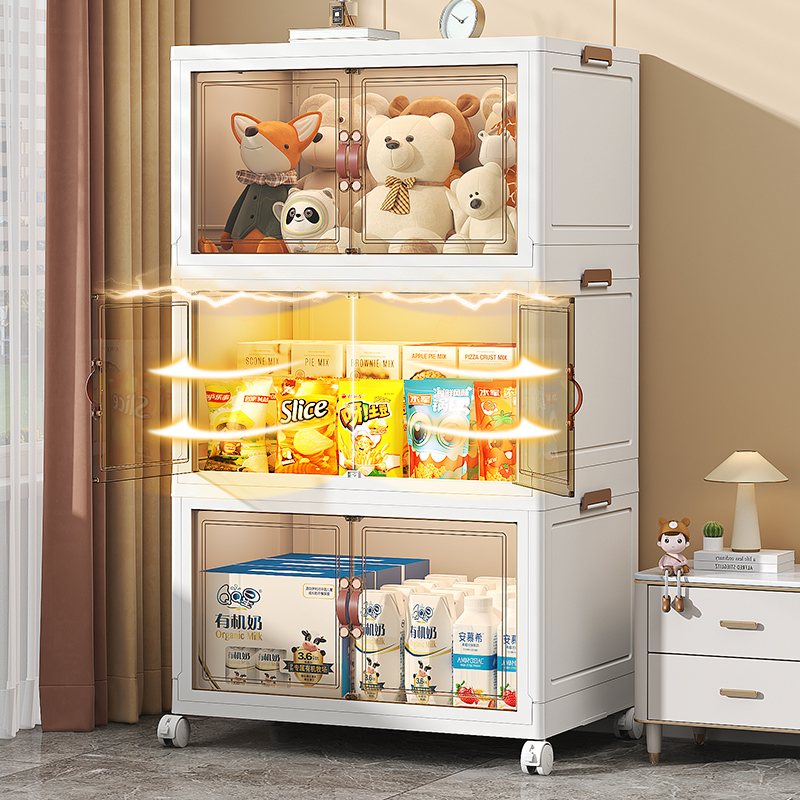
Effective home organization is not about buying more boxes; it is about matching the right storage product to the way a room is actually used. A plastic bin that works well for a pantry may be the wrong solution for a hallway or a car trunk. Buyers evaluating storage products for resale or for a specific project need a scenario-based way to assess fit, not just a product list.
This guide explains how different home organization products are matched to real-life conditions such as kitchen pantry sorting, closet clothes storage, kids’ toy organization, laundry room utility, and outdoor or trunk storage. It focuses on project and scenario adaptation (HVQ type: hvq_6), using products from Taizhou Xinhai Cross-border E-commerce Service Co., Ltd. (Xinhai) as reference examples.
Why Scenario Fit Matters in Home Organization
A common sourcing mistake is selecting products based on appearance or price alone, without checking the working conditions of the target space. The same stackable plastic bin may be rated for bedroom use but may not handle humidity in a laundry room, dust in a garage, or frequent moving in a car trunk.
In practical terms, every room has a storage job with specific constraints. A pantry needs items to be visible and easy to reach. A wardrobe needs drawers that slide smoothly and stack without tipping. A kid’s room needs lightweight, stable, and toy-friendly storage. A laundry area needs ventilation, mobility, and moisture resistance. An outdoor or car-trunk setting needs foldability, weight capacity, and protection from dust and dirt.
When storage products are selected according to these conditions, end users get better organization outcomes, and buyers reduce the risk of returns or slow-moving inventory. This is why project and scenario adaptation should be the first filter in product selection, before color, logo, or packaging decisions.
Common Storage Pain Points by Room and Usage
Kitchen Pantry Sorting
Kitchen pantries are often deep, narrow, and difficult to keep visible. Dry goods, snacks, and small household items tend to be pushed to the back and forgotten. The main need is to sort items into clear zones and make them accessible without digging through piles.
Metal wire racks and cardboard boxes are common but have limits. Metal can be heavy or prone to rust in humid conditions, and cardboard is not moisture-resistant or easy to clean. Plastic cabinets with transparent panels and foldable or stackable structures address these conditions more directly because they are lightweight, washable, and allow quick visual identification of contents. For pantry use, buyers should prioritize stackability, transparent access, and easy-to-clean surfaces.
Closet Clothes Storage
Closets generally need two kinds of support: compartment storage for folded clothes and drawer systems for smaller items such as socks, underwear, and accessories. Without visible drawer fronts, users tend to forget what is inside and re-buy items they already own.
Pull-out drawer storage with a transparent front panel is designed for this condition. It lets users see contents at a glance, pull the drawer forward without jamming, and stack multiple units to use vertical closet space. For project buyers, the key specification is not just the total volume but the drawer mechanism, stacking stability, and whether the unit fits the shelf depth of the target wardrobe.
Kids’ Toy Organization
Children’s rooms and play areas create heavy, frequent-use storage conditions. Plush toys, dolls, blocks, and daily accessories need to be stored in a way that is visible enough for a child to find, light enough for a child to move, and stable enough not to tip over.
Round transparent PET storage buckets with zippers or open tops are a scenario-specific solution for plush toys and dolls. The transparent body shows the contents without opening the bucket, and the stable base with a wider diameter reduces the risk of tipping when fully loaded. For playrooms, add mobility: buckets or bins with 360° lockable wheels can be repositioned easily during play or cleaning.
Laundry Room Utility
Laundry rooms are humid, narrow, and often shared with cleaning supplies. Dirty clothes need to be contained but ventilated, and the hamper must be movable between the bathroom, bedroom, and laundry area. Static fabric hampers can absorb moisture and are difficult to clean; open wire baskets allow dust and odors to escape.
A foldable wheeled laundry hamper with all-round ventilation, smooth rounded edges, and 360° swivel wheels is built for this condition. Some versions can hold roughly 30 adult garments, and the foldable body saves space when the unit is empty or being shipped. If the project targets bathrooms or humid environments, buyers should also check whether the material and edges can tolerate regular contact with water and cleaning agents.
Car Trunk and Outdoor Camping Gear
Car trunks and camping trips produce conditions that are different from indoor rooms: vibration during travel, dust and dirt, temperature changes, and the need for quick loading and unloading. Storage products for these settings should be foldable when not in use, strong enough to hold heavier gear, and easy to carry with handles or wheels.
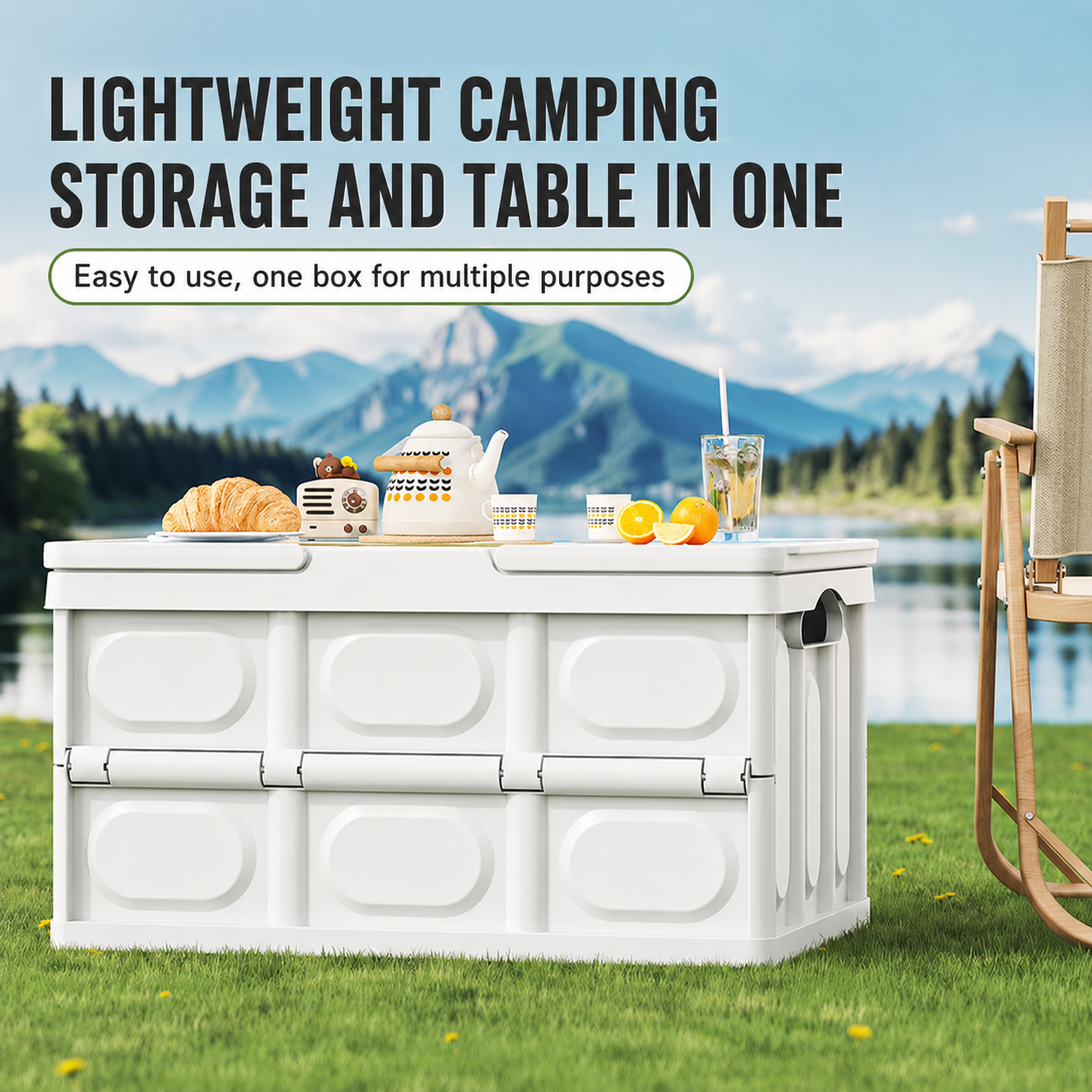
Foldable storage boxes with side-opening doors are especially practical in car trunks because the box can be opened even when stacked, and the flat-folded body takes little space when the trunk is needed for other cargo. Some versions include a detachable wooden lid that doubles as a small table or cutting board during outdoor meals. For camping and picnic use, a wooden-lid box adds function beyond simple storage, but the weight and material should still match the buyer’s target user profile.
How to Match Storage Products to Application Scenarios
The following framework can be used by buyers who are selecting home organization products for a specific project or market. It is based on scenario conditions observed in home organization projects across North America, Europe, Southeast Asia, and Latin America.
Step 1: Define the room and working conditions
Write down the space to be organized. Is it a kitchen, wardrobe, children’s room, laundry area, bedroom, or car trunk? Then list the conditions: humidity, dust, narrow gaps, low clearance, frequent movement, or visibility needs. This step prevents buying a product designed for the wrong condition. For example, a product designed for under-bed storage and bedroom organization should not be treated as a garden storage solution if it lacks weather resistance.
Step 2: Identify the storage role
For each room, define what the product must do. Common roles include storing clothes and bedding while saving space under beds, keeping toys visible and dust-proof, sorting wet and dry waste, organizing shoes with a dustproof and transparent cabinet, or carrying groceries and camping gear with a foldable trolley. The role must match the user’s actual task, not the category name of the item.
Step 3: Check the supporting environment
Storage does not work alone. A cabinet is placed beside a bed, under a window, or next to a washing machine; a bin is carried through doors, up stairs, or into a car. Check whether the storage unit fits the surrounding furniture or fixtures. If the product is a modular cabinet, confirm that the stackable frame and door panels can work within the width and height constraints of the target space. If it is a rolling hamper or trolley, confirm that doors and hallways are wide enough.
Step 4: Confirm the special requirements of the application
Each project scenario has specific requirements. For humid laundry rooms, look for moisture resistance, easy cleaning, and breathability. For children’s rooms, look for rounded edges, stable bases, and materials that are safe and odor-free. For outdoor and trunk scenarios, look for quick folding, compact thickness when folded, and reinforced load-bearing structures. For under-bed boxes, check the clearance height and whether the user can access the contents without pulling the whole box out.
Step 5: Look for product features that serve the scenario
Once the scenario is clear, map the features to the condition. A 20 cm extended sealing latch is relevant when the box will be stored under a bed where dust collects. A transparent front panel is relevant when users need to find items without opening multiple drawers. A 360° lockable caster is relevant when the storage unit must be moved between rooms. A 5-second quick-fold body is relevant for car trunks and seasonal storage where space is temporary.
Step 6: Use the scenario to guide quality and QC discussion
Matching the product to the scenario also defines the quality expectations and inspection plan. For children’s toy storage, buyers should confirm materials and structural stability. For wheeled products, check the wheel mechanism and handle load during incoming quality inspection. For foldable products, test the folding operation repeatedly because hinges, buckles, and latches are the parts most likely to fail in daily use.
Room-by-Room Product Comparison for Project Buyers
| Scenario | Primary User Need | Product Type to Consider | Key Features to Check | Reference Models |
|---|---|---|---|---|
| Kitchen Pantry Sorting | Visible, accessible, high-density dry good storage | Stackable plastic cabinets with transparent panels | Stackability, transparent access, easy-clean plastic, door operation | Collapsible Home Storage Cabinet (YN8887) |
| Closet Clothes Storage | Folded clothes, socks, and accessories stay visible and organized | Pull-out drawer storage with transparent front panels | Smooth drawer slide, stable stacking, transparent visibility, capacity | Foldable Storage Drawer (YN484536) |
| Kids’ Toy Organization | Plush toys, dolls, and accessories are visible, accessible, and dust-protected | Transparent PET doll storage buckets or toy baskets | Transparent body, stable base, rounded edges, optional wheels or handles | Doll Storage Bucket (YN-WWT001 / YN6358), Toy Storage Basket (HYN8021) |
| Laundry Room Utility | Dirty clothes are contained, ventilated, and easy to move | Foldable wheeled laundry hampers | Ventilation, 360° wheels, rounded edges, foldable body | Laundry Hamper (JH2018) |
| Car Trunk Organization | Gear is held securely, accessible even when stacked, and easy to stow | Foldable storage boxes with side-opening doors or lids | Folded thickness, side access, handles, load capacity | Foldable Camping Storage Box (YN8880), Foldable Car Storage Box (YN8980) |
| Outdoor Camping Gear | Supplies are transported, stored, and usable at the campsite | Foldable storage boxes with wooden or plastic lids | Detachable or reinforced lid, stackability, handles, material durability | Foldable Camping Storage Box (YN8880), Foldable Shopping Cart (8800) |
| Small-Space / Under-Bed Storage | Seasonal clothes, bedding, and shoes fit under low furniture | Flat-bottom under-bed boxes with rollers and reinforced lids | Height choices, rollers, sealing latches, flat interior, load-bearing lid | Under-bed Storage Box (HT8861) |
| Entryway / Shoe Organization | Shoes stay visible, dustproof, and easy to access | Foldable shoe cabinets or stackable transparent shoe boxes | Transparent or front-opening doors, stackable frame, quick folding | Collapsible Home Storage Cabinet (YN8887) |
Note: The reference models above are examples from Xinhai’s product range. Buyers should verify dimensions, materials, and compliance requirements against their specific project brief before ordering.
Application Example: Built-In and Modular Storage in Multi-Room Programs
In larger procurement programs—for example, supplying a retail chain or property developer with storage products for multiple room types—buyers often combine several product lines in one order. This approach is common in home organization projects that require a complete solution rather than a single SKU.
Xinhai, as a B2B supplier, provides this type of product ecosystem. The company’s range includes folding shopping carts, pet trolleys, storage cabinets, storage boxes, doll storage bins, laundry baskets, and related plastic organizers. These products support different rooms and activities but are designed around the same material and manufacturing logic: foldable structures, PP-based plastics, and space-saving design.
For a multi-room project, the buyer can organize the product list by condition. The kitchen and living room may need transparent stackable cabinets. The bedroom and entryway may need under-bed boxes, drawer units, and shoe cabinets. The children’s area may need PET doll buckets with wide or locking bases. The laundry area may need foldable hamper trolleys. The car and outdoor segment may need foldable camping boxes and transport trolleys. One qualified supplier can consolidate these groups, which simplifies quality control, packaging, and logistics.
Material and Safety Considerations by Scenario
Storage products come into contact with food in pantries, children in playrooms, and wet clothes in laundry areas. Therefore, material transparency is a central part of scenario adaptation.
Polypropylene (PP) is widely used in plastic household storage because it is lightweight, washable, and suitable for daily organizing applications. PET is used when high transparency is required, such as toy buckets and display-style storage. In some product categories, the same item combines PP frames or lids with PET transparent panels.
Buyers should confirm the exact material composition for the product’s destination market. For example, in the EU, food contact materials are regulated, and BPA restrictions are part of the regulatory landscape for plastic materials intended to contact food. For storage products used in kitchens, it is prudent to ask the supplier whether the product is designed with food-safe considerations. For children’s storage, ask about odor-free materials, rounded edges, and stability. For outdoor products, ask about UV and humidity resistance in relevant climates.
Xinhai’s own product descriptions state that some products are made from selected PP material and describes them as formaldehyde-free, and some PET-based buckets are described as odorless and dustproof. Buyers should verify these claims with test documentation for their specific target market rather than treating them as universal certifications.
Customization and Sourcing Considerations for Scenario-Driven Projects
Once the product-to-scenario match is clear, buyers can begin discussing customization. Xinhai supports two main production modes relevant to home organization projects: OEM and ODM.
In OEM mode, customization is typically limited to color, logo, and printing. Monthly capacity is 100,000 units, lead time is 15–45 days, and the minimum order quantity is 500 units. This mode is suitable for retailers and distributors who have settled designs and need efficient branding.
In ODM mode, customization can extend to logo, color, packaging, size, structural design, and material such as the PET/PP ratio. Monthly capacity is 8,000 units, lead time is 30–60 days, and the MOQ is 5,000 units. ODM is for scenarios where the project requires modifications to make the product fit the actual room or user condition, not just a logo change.
Xinhai’s export markets include North America, the EU, Southeast Asia, and Latin America, and its quality control follows AQL 2.5/4.0 standardized sampling. Buyers working with the company can also expect after-sales support in the form of remote technical guidance and compensation or replacement for quality issues.
Market Context and Buyer Considerations
Plastic products accounted for approximately 36% of the kitchen storage and pantry organization market in 2023, according to Grand View Research. The stackable container market was projected to reach USD 7.8 billion in 2024 with a CAGR of 6.4%, driven by e-commerce and urbanization, according to Strategic Market Research. These figures support the view that stackable plastic organizers remain a significant category within home organization, but they do not tell a buyer which product fits a specific space. For buyers, the practical takeaway is that demand has shifted toward space-saving and urban-friendly storage. Products that collapse flat, stack securely, or add visible organization will remain relevant in small apartments and dense urban environments.
Global home organization demand is also distributed unevenly by climate and housing type. In North America, under-bed storage and garage or trunk organization are common because of larger homes and car-dependent lifestyles. In Europe, narrow-gap storage, foldable cabinets, and laundry organization are relevant to older buildings and smaller bathrooms. In Southeast Asia and Latin America, lightweight, foldable, and moisture-tolerant products serve markets with warm and humid climates. The same foldable storage box may need different positioning in each region.
FAQ
What is the difference between a scenario-fit home organization product and a general-purpose storage box?
A scenario-fit product is designed for the specific conditions of a room or activity. For example, a laundry hamper for bathrooms and laundry rooms should have ventilation, rounded edges, and 360° silent wheels; an under-bed box for bedrooms should have a low profile, flat interior, and sealing latches; a foldable car trunk organizer should collapse into a compact form and offer easy side access. A general-purpose box usually cannot satisfy these specialized conditions at the same level.
What working conditions should I evaluate when selecting storage products for a new project?
Evaluate the room or environment where the product will be used. Key conditions include humidity and dust level, available floor or shelf space, clearance height under furniture, frequency of movement, visibility requirements, and the type of items to be stored. For example, products applied in garden, patio, and backyard scenarios operate in humid and dusty outdoor environments and should be made of weather-resistant plastic with dust and moisture protection. Products applied in bedroom and wardrobe conditions should be compact, stackable, and easy to clean.
Can Xinhai provide storage products for multiple rooms in one program?
Xinhai’s range includes storage cabinets, storage boxes, doll storage bins, laundry hampers, folding shopping carts, pet trolleys, and similar household organizers, so buyers can combine multiple product groups in one supply program. To build a complete program, list the target room types and conditions first, then map each condition to the appropriate product type. Xinhai supports OEM color and logo customization, with ODM available for structural and material adjustments. For more information, Xinhai’s product brochure can be downloaded here: Xinhai Box Storage Products Brochure.
What are the typical OEM/ODM lead times and MOQs for a scenario-based storage order?
For OEM customization, Xinhai’s monthly capacity is 100,000 units, lead time is 15–45 days, and the minimum order quantity is 500 units. For ODM customization, monthly capacity is 8,000 units, lead time is 30–60 days, and the minimum order quantity is 5,000 units. Quality control follows AQL 2.5/4.0 standardized sampling, and after-sales support includes remote technical guidance and compensation or replacement for quality issues.
Can I request samples for a specific product model before placing a bulk order?
Sample requests are an appropriate next step after the product type and customization level are confirmed. Buyers should first confirm which model matches the room scenario and check whether the customization is OEM-level (color, logo, printing) or ODM-level (size, structure, material ratio). Xinhai’s export team can discuss sample needs, pricing, and shipping details based on the specific product model and destination. Contact: Zora, email: zora.zhu@xinhaibox.com, Tel/WhatsApp: +852 4743 6360.
Conclusion
Successful home organization sourcing starts with the room and the user’s actual conditions, not with the product category. A pantry needs visible layered access; a closet needs drawer systems that slide and stack; a kids’ room needs stable transparent storage that is safe and easy to use; a laundry room needs ventilated mobility; and a car or campsite needs foldability, strength, and easy access.
For buyers evaluating Xinhai as a supply source, the first step is to build a scenario list. Once the room conditions, product roles, and special requirements are clear, Xinhai’s OEM and ODM options, capacity, and export experience can be directed toward the most relevant product range. A sample request is the natural next step to verify the match.
If you are planning a new home organization product line and need support in selecting the right product models for the pantry, closet, kids’ room, laundry area, car trunk, or campsite, contact Xinhai to discuss your scenario and request a sample or catalog.
Download the Xinhai Box Storage Products Brochure for an overview of available product categories.
Contact: Zora | Email: zora.zhu@xinhaibox.com | Tel/WhatsApp: +852 4743 6360 | Building D, Xinhai Digital Trade Hub, 89 Yintai Road, Jiaojiang District, Taizhou, Zhejiang, China