Una guía completa para seleccionar el proveedor de encofrado adecuado para su proyecto
A Comprehensive Guide to Selecting the Right Formwork Supplier for Your Project
For procurement professionals and project managers, selecting the optimal formwork supplier is a critical decision that impacts project timelines, budgets, and structural integrity. This guide provides a structured framework to evaluate and choose a formwork partner that aligns with your specific project requirements, technical specifications, and regional compliance needs.
1. Define Your Project Requirements
The first step is a detailed analysis of your project's specific needs. Formwork systems are not one-size-fits-all; the correct choice depends on multiple factors.
By Structural Application
- High-Rise Cores & Shear Walls: Systems like Hydraulic Auto-Climbing Formwork (Model FWK-ACB 120) or Cantilever Climbing Formwork (Model FWK-CB 240) are engineered for efficiency and safety in vertical construction, often with zero tower crane dependency.
- Standard Residential Floors: Aluminum Frame Formwork (Model FWK-FAF 117) or Tunnel Formwork for Housing (Model FWK-TUN 63) offer rapid cycle times and high-quality finishes, ideal for repetitive floor plans.
- Infrastructure & Civil Works: For bridges, dams, and culverts, systems like H20 Timber Beam Formwork, Curved Steel Formwork (Model FWK-CS55), and Box Culvert Formwork provide the necessary strength and adaptability for complex geometries.
- Trenching & Shoring: Trench Box systems (Models FWK-ST100, FWK-AT100, etc.) are essential for safe pipeline and utility installation in unstable soil conditions.
By Material & Performance
- Steel Systems: Offer high strength, durability, and reusability. Examples include the 65 Steel Frame Formwork (FWK-SNF 65) and the 120 Steel Frame Formwork (FWK-SOF 120).
- Aluminum Systems: Lightweight for easier handling, corrosion-resistant, and suitable for fast-track projects. The Skydeck system (FWK-SKYDECK) is an example with a panel weight of 18kg/m².
- Timber Beam Systems: Cost-effective and highly adaptable for custom or irregular shapes. The H20 Timber Beam Formwork system can be configured for walls, columns, and slabs.
- Plastic Formwork: Lightweight and easy to clean, such as the FWK-PF 75 model made of ABS material.
2. Evaluate Supplier Capabilities & Credentials
Once project needs are clear, assess potential suppliers against a rigorous checklist.
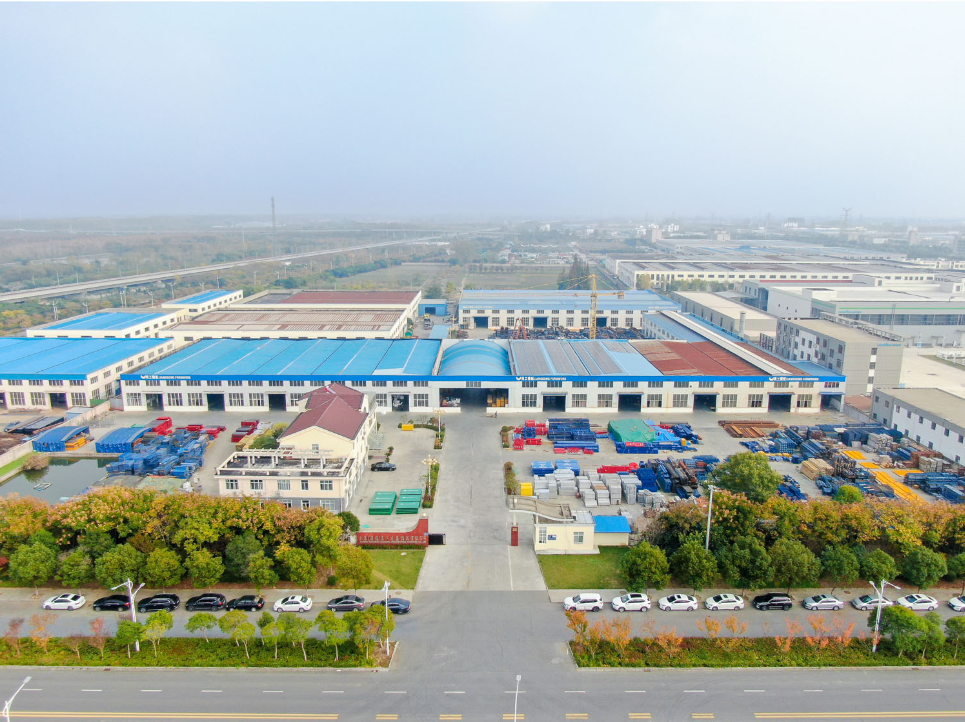
- Manufacturing Scale & Experience: Verify the supplier's operational history and capacity. For instance, Yancheng Lianggong Formwork Co., Ltd. was established in 2010, operates a 12,870 m² facility with about 230 employees, and has an R&D team of 45 engineers. An annual output of 12,000 tons indicates significant production capability.
- Product Range & Customization: A broad portfolio signals expertise across different applications. A comprehensive supplier should offer systems ranging from climbing formwork and slab systems to scaffolding and trench boxes. The ability to provide OEM/ODM services, including logo and size customization, is a significant advantage for bespoke project needs.
- International Certifications & Compliance: This is non-negotiable for cross-border projects. Key certifications to look for include:
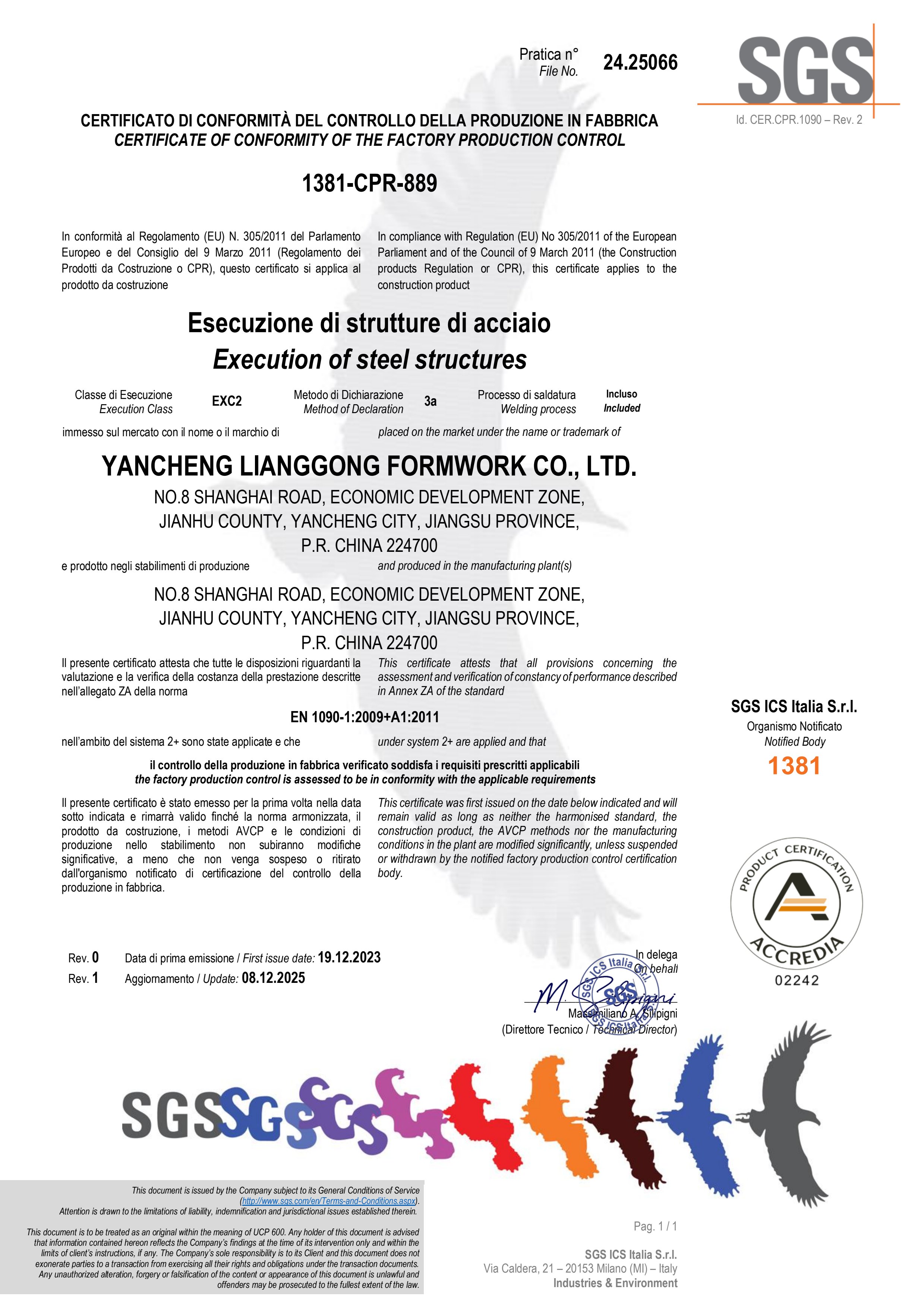
- Factory Production Control (FPC) according to EN 1090 for the European market (Certificate 1381-CPR-889 issued by SGS Italia S.p.A.).
- Welding Quality Management certification to EN ISO 3834-2 (Certificate 23/1014-3834 from SGS).
- Product-specific certifications like the EU ECM Technical Documentation Compliance for Trench Boxes (Certificate OP250411.YLFD013, compliant with EN 13331).
- Integrated management system certifications for Quality (ISO 9001), Environment (ISO 14001), and Occupational Health & Safety (ISO 45001).
- Global Market Reach & Logistics: Suppliers with extensive export experience (e.g., 70% export ratio) are familiar with international shipping, documentation, and customs. A presence in key markets like North America, South America, the Middle East, Europe, and Africa demonstrates global reliability.
3. Analyze Technical Support & Project Case Studies
Real-world application is the ultimate test of a supplier's capabilities.
Review Project Histories: Examine case studies from diverse regions and climates to assess adaptability. For example:
- Dubai, UAE: Hydraulic Auto-Climbing and Aluminum Formwork were used in the Dubai Safa 2 High-end Apartment Project, demonstrating performance in extreme heat and demanding high-rise schedules.
- Kalimantan, Indonesia: H20 Timber Beam Formwork was successfully applied in a major dam project, handling complex geometries and large-volume concrete casting in a tropical, remote environment.
- Trinidad and Tobago: Hydraulic Auto-Climbing Formwork facilitated the efficient construction of a hospital project's core structures.
- Georgia & Malaysia: Trench Box systems have been deployed for pipeline projects in varied soil conditions.
Assess Support Structure: Confirm the availability of pre-sales technical consultation, detailed installation drawings, and after-sales support. This can include on-site guidance or remote assistance for assembly and troubleshooting.
4. Understand Commercial Terms & Risk Management
Clear commercial agreements and proactive risk management are pillars of a successful partnership.
- Minimum Order Quantity (MOQ) & Lead Time: Standard terms may start at 1 container (20GP) for many systems, with lead times around 30-35 days. Custom or large systems may have different MOQs (e.g., 1 set).
- Quality Assurance: Insist on a pre-shipment test and a 100% testing protocol. A robust supplier will have a "Three Inspections and One Review" system covering production, quality, and final factory inspection.
- Payment & Delivery: Common terms are a 50/50 payment split (50% deposit, 50% before shipment) with FOB/CIF delivery options.
- Material & System-Specific Risk Controls: A professional supplier will have documented protocols. For instance, for Aluminum Formwork, controls address deformation and high-temperature softening. For H20 Timber Beam Formwork, measures focus on moisture content and fire prevention. For Steel Formwork, protocols cover lifting safety and deformation calibration.
Next Steps & Getting a Detailed Quote
Compile your project's technical drawings, required specifications, quantity, and delivery location. Reach out to shortlisted suppliers with this package to request a formal quotation and a detailed technical proposal.
For further information on formwork systems and technical specifications, you can download the comprehensive product brochure from Yancheng Lianggong Formwork Co., Ltd.: Download Product Brochure (PDF).
Contact for Inquiries:
Email: sales01@lianggongform.com
Tel/WhatsApp: +86 18201051212
Website: www.lianggongformwork.com
By systematically evaluating potential suppliers against these criteria—project alignment, technical credentials, proven experience, and sound commercial practices—procurement teams can make an informed decision that ensures their project is built on a foundation of quality, safety, and efficiency.