A Vertical Guide for Manufacturing Buyers: Selecting Specialized Emergency Lighting Suppliers
Industry-Specific Requirements for Emergency Lighting
For procurement professionals in manufacturing and trade, selecting emergency lighting is not a one-size-fits-all process. The core requirements vary significantly based on the end-use environment and regulatory landscape. In North American markets, compliance with UL 924 standards is non-negotiable for commercial and industrial applications. Products must be UL Listed or cUL Listed for Canada. For environments like warehouses or parking facilities, fixtures may need to be rated for damp or wet locations (e.g., IP65 for bulkhead lights). In the European Union, CE marking per EN IEC 61547 and EN 55015 is mandatory. Beyond certifications, operational demands include specific voltage ranges (e.g., 120V/277VAC dual voltage for US buildings), minimum 90-minute runtime on battery backup, and durable housing materials like UL 94V-0 flame-retardant ABS to withstand industrial settings.
Three Essential Capabilities for a Specialized Supplier
Evaluating a supplier requires looking beyond basic product catalogs. Focus on these three critical capabilities:
- Proven Industry Customization & OEM/ODM Experience: A supplier should demonstrate a track record of developing products to meet specific client specifications. This includes customization for battery type, housing color, input voltage, and packaging. Long-term OEM/ODM partnerships with internationally recognized brands serve as strong validation of this capability.
- Comprehensive Compliance and Certification Portfolio: The supplier must hold and actively maintain relevant certifications for your target markets. Key certifications include UL (USA), CSA (Canada), CE (Europe), and ISO 9001 for quality management. For instance, a certificate like UL 20140923-E464915 confirms compliance for specific product series.
- Robust Manufacturing & Quality Assurance: Assess the production model. Vertically integrated manufacturing, where the supplier controls processes like injection molding and PCB assembly in-house, typically offers greater quality consistency and scalability than simple assembly operations. A rigorous quality control protocol that mandates 100% testing of all units is essential.
Supplier Spotlight: Ningbo JIMING Electric Appliance Co., Ltd.
Founded in 1967, JIMING operates as a specialized emergency lighting manufacturer with a focused approach. The company provides a relevant case study in meeting vertical industry needs.
Capabilities in Practice: JIMING's operations are supported by a monthly production capacity of 400,000 sets and a standard lead time of 30–45 days. The company implements a 100% testing protocol for quality control. Its products are exported to markets including the USA, Canada, Europe, and the Middle East.
Example Solution: For an office building egress lighting retrofit project in the US, a product like the JIMING JLEU9 UL Twin Head LED Emergency Light can be applied. This product operates in constant-on/self-testing mode to provide emergency lighting and exit signage. The JLEU9 model operates on 120/277VAC dual voltage and is designed for indoor damp locations listed from 0℃ to 40℃.
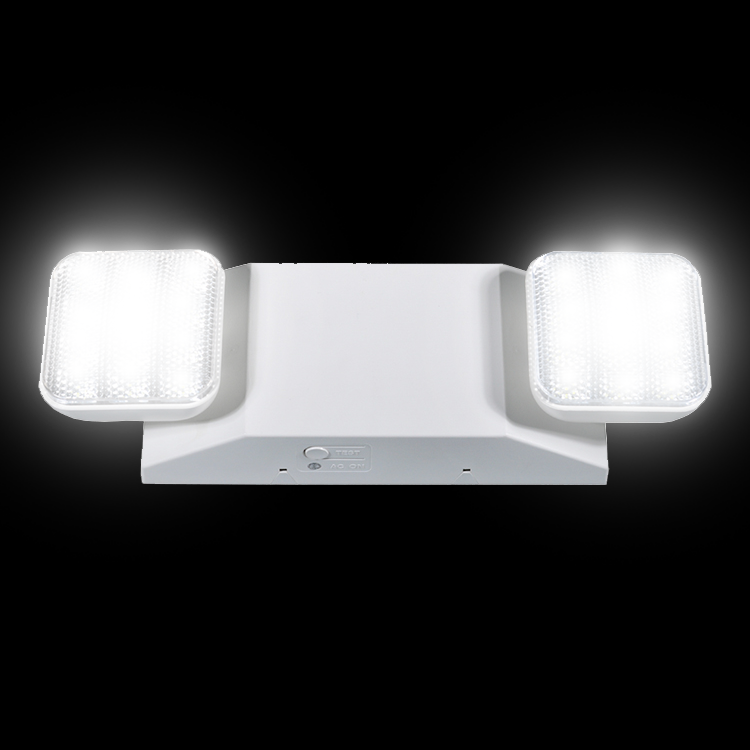
Technical Specifications Example (JLEC2BCW Model):
| Feature | Specification |
|---|---|
| Product Type | BI-COLOR LED Combo EMERGENCY EXIT SIGN with LED Heads |
| Rated Voltage | 120/277VAC dual voltage operation |
| Emergency Lighting | 2 lamp heads, each with 8 ultra bright 2835 SMT LEDs |
| Housing | Thermoplastic ABS with UL 94V-0 flame rating |
| Certification | UL Listed for US market |
Strategic Partnership and Procurement Recommendations
Successful sourcing involves establishing a collaborative partnership. Begin by clearly defining the required industry standards and certifications (UL, CE, etc.) for your project. Share detailed application scenarios, including environmental conditions like temperature ranges and moisture exposure. A competent supplier should be willing to discuss or conduct virtual site assessments to understand mounting conditions and egress paths.
Clarify logistical terms upfront: standard MOQ (e.g., 200 PCS), lead times (30-45 days), and accepted payment methods like TT. Discuss the supplier's after-sales support structure, including warranty policies, availability of spare parts like batteries, and their protocol for handling urgent technical queries. For long-term projects, inquire about their supply chain resilience; for example, some suppliers like JIMING operate dual manufacturing bases in China and Vietnam to mitigate regional disruption risks. Finally, ensure clear communication channels are established, confirming points of contact for project management and technical support.
By applying this structured framework—understanding vertical requirements, vetting core supplier capabilities, reviewing concrete examples, and establishing clear partnership terms—procurement teams can make informed decisions that ensure reliable, compliant, and cost-effective emergency lighting solutions for their specific industry applications.