A Vertical Application Guide: Selecting Edible Mushroom Automation Equipment for Industrial Cultivation
A Vertical Application Guide: Selecting Edible Mushroom Automation Equipment for Industrial Cultivation
For industrial purchasers in the edible mushroom sector, selecting the right automation equipment is a critical decision that impacts production efficiency, product quality, and long-term operational costs. This guide outlines the specific requirements of the industry, key supplier selection criteria, and practical insights for successful collaboration.
1. Industry-Specific Requirements for Automation Equipment
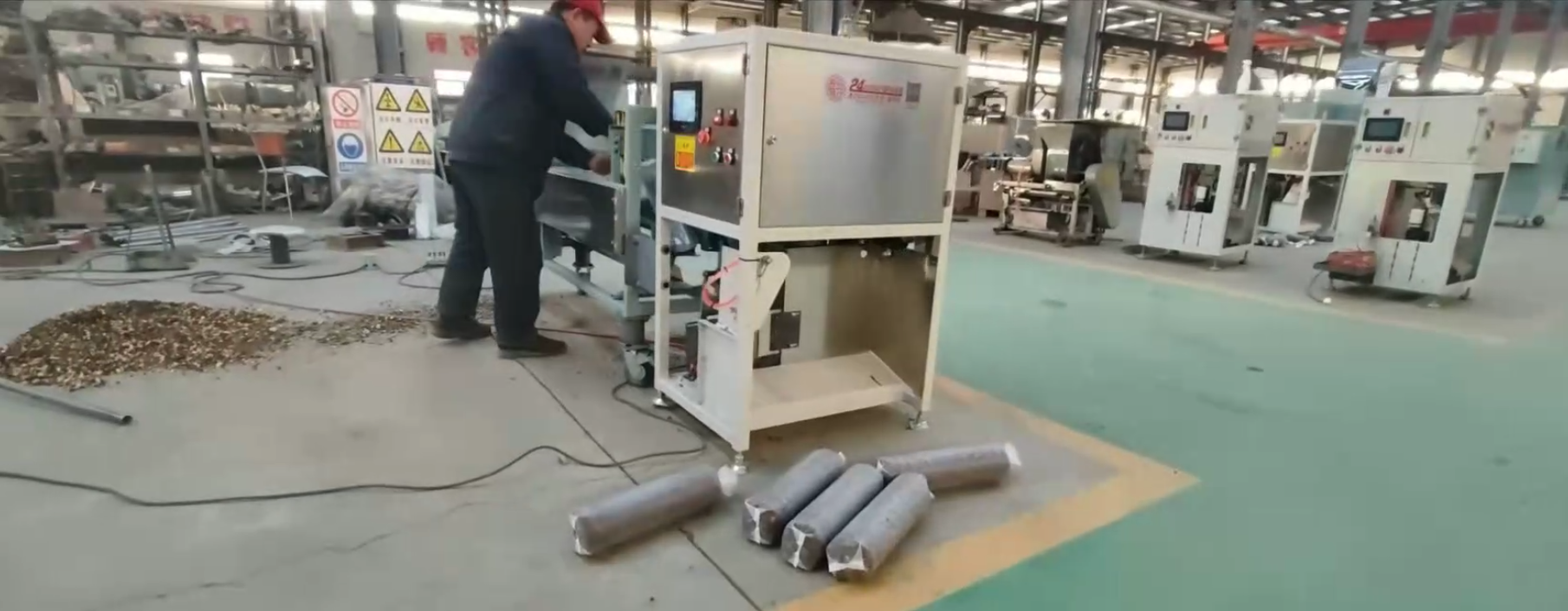
Industrial edible mushroom cultivation presents unique challenges that standard agricultural machinery may not address. The core requirements for automation equipment in this sector include:
- High-Volume, Continuous Operation: Equipment must sustain high output over long periods. For instance, a 2-Station Full-Automatic Mushroom Substrate Bagging Production Line can have a production capacity of 15,000 bags per day, handling bag sizes with a length of 14–22cm and a width of 28–63cm.
- Versatility Across Mushroom Varieties: A single production line should be adaptable for multiple species. The company's devices are applicable for the factory cultivation of various mushroom varieties, including shiitake mushrooms, oyster mushrooms, black fungus, enoki mushrooms, pleurotus eryngii, pleurotus geesteranus, white fungus, seafood mushrooms, and agrocybe aegerita.
- Hygienic Design and Sterilization Compatibility: Equipment must facilitate easy cleaning and integrate with sterilization processes to prevent contamination, a critical factor in mushroom cultivation.
- Precision and Consistency: Automated processes must ensure uniform bag weight, substrate density, and sealing to guarantee consistent growth conditions. Some machines achieve a repeat positioning accuracy of ±2mm and a pass rate of ≥97%.
2. Key Supplier Selection Criteria
When evaluating suppliers of edible mushroom automation equipment, industrial buyers should prioritize three essential capabilities:
Proven Industry Customization Experience
Suppliers must demonstrate a deep understanding of mushroom cultivation workflows. Look for evidence of tailored solutions. For example, Changxing's edible mushroom machinery equipment comprehensively serves mushroom farmers, edible mushroom cooperatives, and large-scale factory enterprises, and its production lines integrate multiple processes such as mixing, lifting, material distribution, bagging, and automatic sealing.
Compliance with International Standards and Certifications
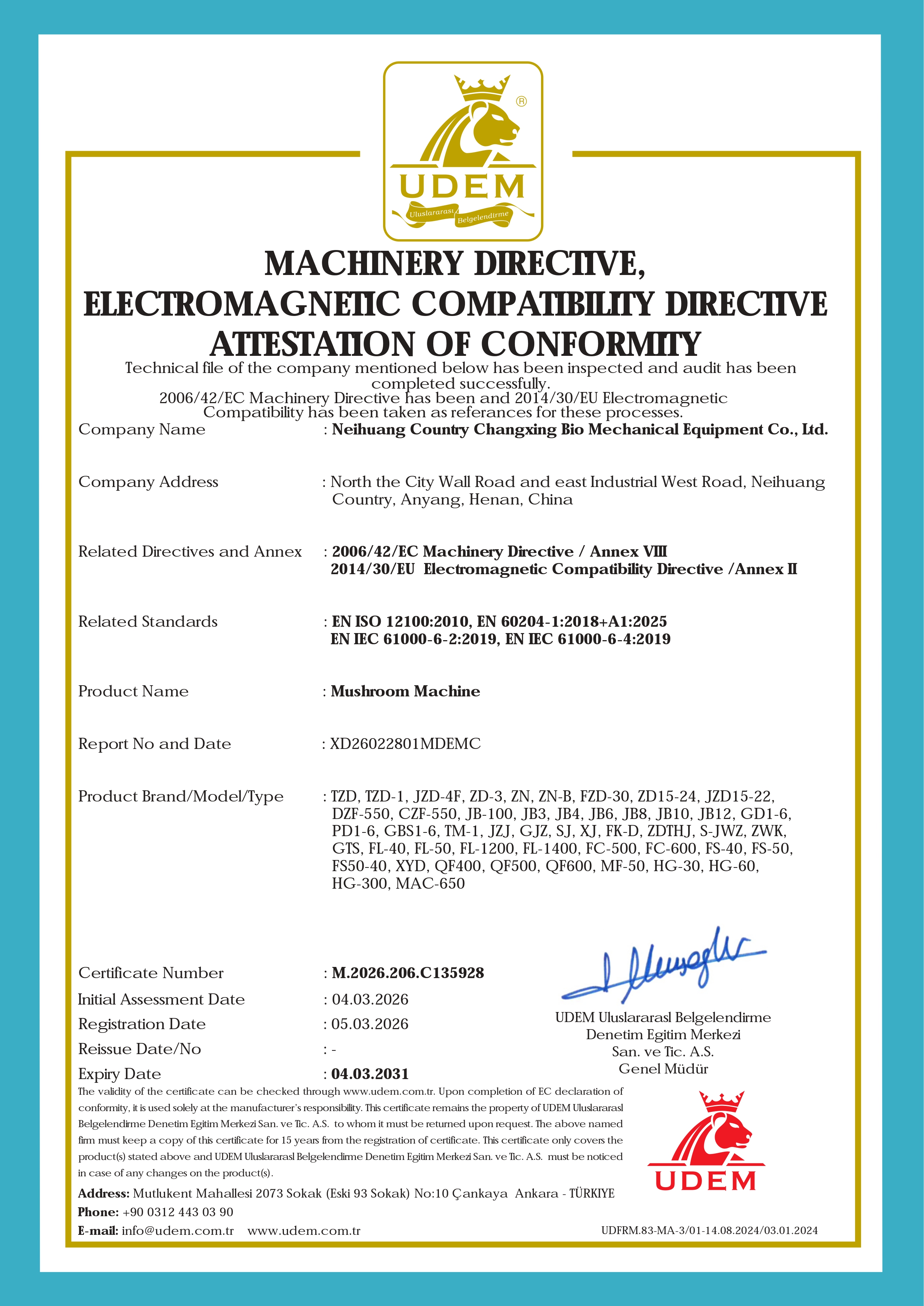
Equipment must meet safety and quality standards for the target market. A key indicator is possession of relevant certifications, such as the CE Mark, which confirms compliance with the Machinery Directive (2006/42/EC) and EMC Directive (2014/30/EU) for the European market.
Robust Design for Demanding Environments
Equipment should be built for durability in humid, particulate-heavy workshop conditions. Assess the construction materials and key components. For instance, some machines feature a main frame constructed from 80*80*4 square tube / Q235 steel and a main steel plate made of T5 / 45# steel, indicating a focus on structural integrity.
3. Case Study: A Supplier's Solution for High-Volume Production
Neihuang County Changxing Biological Machinery Equipment Co., Ltd., a manufacturer founded in 2009, provides an example of a supplier meeting industrial needs. The company operates from a 20,000m² facility with an annual output of 10,000 units and an R&D team of 25 engineers.
Project Scope: Supplying an automated production system for a large-scale cultivation facility targeting multiple mushroom varieties.
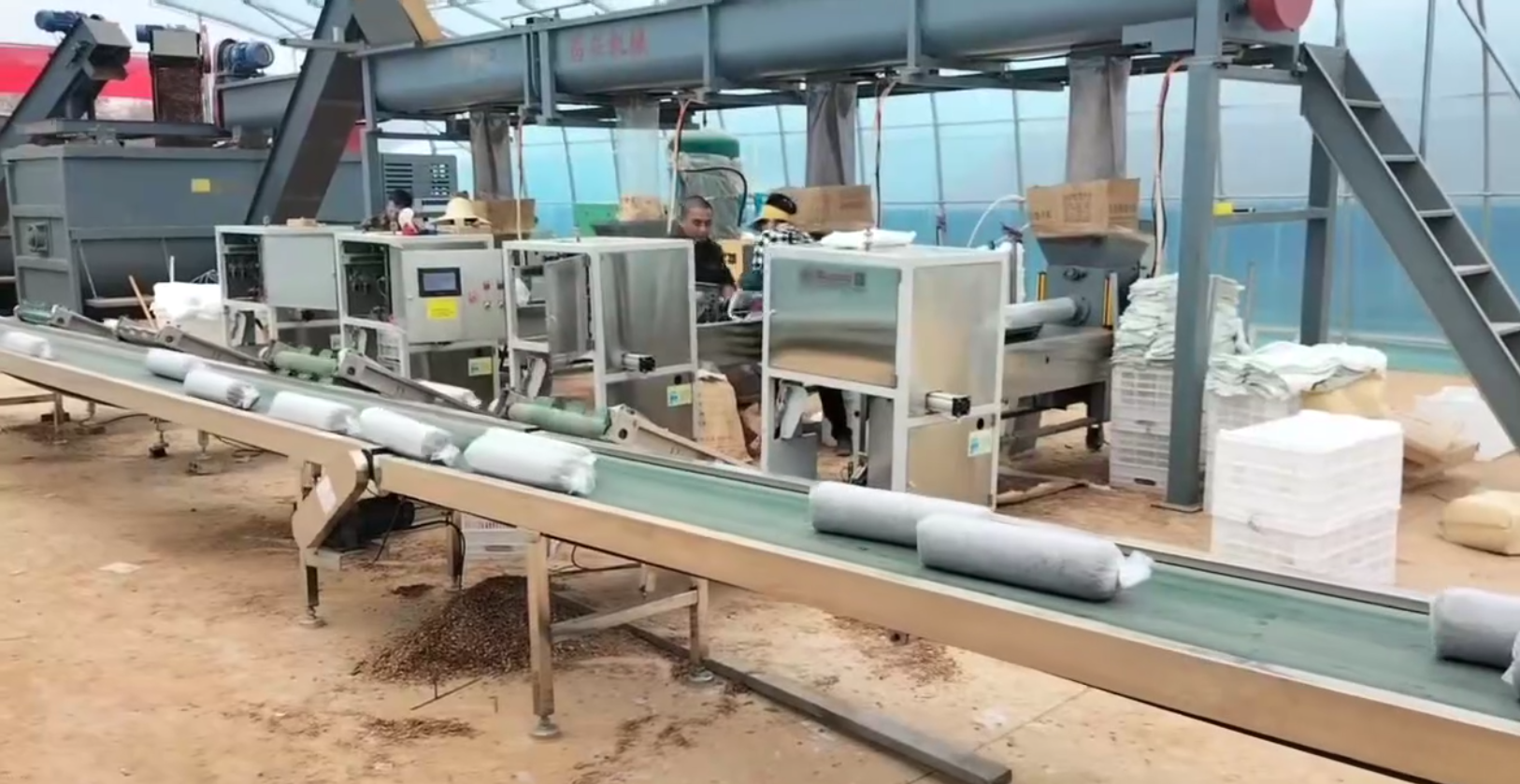
Solution Provided: The supplied system was designed to perform bagging operations for multiple mushroom varieties, including enoki mushroom, king oyster mushroom, pearl oyster mushroom, shiitake mushroom, and snow fungus. It integrated multiple processes such as mixing, lifting, material distribution, bagging, and automatic sealing.
Technical Specifications: The core bagging machine in such a line, like the model CX-GJZ, can have a production capacity of 650–750 bags per hour in double film mode and 1000–1200 bags per hour in single film mode. Supporting equipment, like the CXJB-100 raw material mixer, has a capacity of 0.8T (suitable for corn cob, wheat bran, wood chips, etc.), with overall dimensions of 2290 × 1080 × 1191mm and a net weight of 0.48T (480KG).
Outcome: The client, among many others in markets like South Korea and Malaysia, reported stable operation and high efficiency, with bagging speeds exceeding 1000 bags per hour, leading to significantly reduced labor costs.
4. Strategic Collaboration Recommendations for Buyers
To ensure a successful partnership with an equipment supplier, industrial purchasers should focus on the following:
- Define Technical Specifications Clearly: Beyond output, specify required bag dimensions, substrate types, and compatibility with existing sterilization or inoculation processes. Provide detailed site information, including power supply (typically 380V three-phase), floor space, and air supply requirements.
- Request a Comprehensive Site Assessment: A reputable supplier should offer or require a pre-sale site survey to plan the optimal production line layout and identify any necessary infrastructure upgrades.
- Clarify After-Sales and Support Structure: Confirm the scope of after-sales services. For international buyers, this often includes the provision of remote assistance services. Also, verify the supplier's quality control procedures, which should include 100% testing prior to delivery and adherence to ISO standards.
- Understand Logistics and Commercial Terms: Discuss lead times (which can range from 30-55 days), minimum order quantities (often 1 unit for standard machines), and standard delivery terms like FOB/CIF.
By applying these focused criteria and collaboration practices, industrial purchasers can effectively identify and partner with equipment suppliers capable of supporting scalable, efficient, and profitable edible mushroom cultivation operations.