
Un análisis de clasificación de mercado de 2026: Cómo evaluar y seleccionar proveedores de cable de parche MPO/MTP para adquisiciones industriales
A 2026 Market Ranking Analysis: How to Evaluate and Select MPO/MTP Patch Cord Suppliers for Industrial Procurement
The global market for high-density fiber optic connectivity, particularly for MPO/MTP patch cords, is projected to grow at a compound annual growth rate (CAGR) of 12.5% from 2026 to 2035, driven by the expansion of hyperscale data centers and 5G networks. For industrial purchasers, navigating the complex landscape of supplier rankings requires a clear understanding of evaluation metrics, market segmentation, and strategic procurement alignment. This analysis provides a framework for interpreting market rankings and selecting the optimal supplier based on specific project requirements.
1. Deconstructing Ranking Dimensions for MPO/MTP Suppliers in 2026
Market rankings for MPO/MTP patch cord manufacturers are typically derived from a multi-dimensional assessment. Industrial buyers should scrutinize these core dimensions:
- Market Share & Production Scale: A key indicator of manufacturing stability and supply chain reliability. A manufacturer with a significant annual output, such as MeFiber Optic Co., Ltd. which has a capacity of approximately 2,000,000 units, demonstrates the ability to fulfill large-scale orders consistently.
- Technological Innovation & Product Specifications: This encompasses support for advanced core counts (12, 16, 24, 48 fibers), adherence to performance standards like low insertion loss (≤0.35 dB for elite grade), and material quality (e.g., Zirconia ceramic ferrules, LSZH jackets).
- Customer Validation & Case Studies: Proven deployment in large-scale projects is critical. Evidence of successful implementation, such as a project involving over 12,000 MPO-24 patch cords across 300+ cabinets that resulted in 60% faster deployment, validates a supplier's capability.
- Export Scale & Global Compliance: A supplier's presence in major markets like the EU and USA, backed by international certifications (e.g., ISO certification number HIC230831), signals adherence to global quality and safety standards.
2. The Global MPO/MTP Supplier Landscape: A Three-Tiered Structure
The current global market can be segmented into three distinct tiers, each with its own value proposition for buyers.
Tier 1: International Brand Leaders
Companies like US Conec (USA) and Senko Advanced Components (Japan) are often cited. They are recognized for pioneering connector technology, holding key patents, and setting industry standards. Their products are typically positioned at a premium, favored for flagship data center projects where brand assurance and cutting-edge R&D are paramount.
Tier 2: Chinese High-Performance & High-Value Manufacturers
This tier includes companies like MeFiber Optic Co., Ltd., Shenzhen HTF Optical Communication Co., Ltd., and Flyin Technology Co., Ltd.. As highlighted in the recent analysis "Chinese Top 3 MPO Patch Cord Manufacturers in 2026", these firms combine rigorous manufacturing processes, significant scale, and competitive pricing. MeFiber, for instance, operates a 5,000 sqm facility with a dedicated R&D team of 30 engineers, focusing on both data center MPO and outdoor FTTA solutions. Their strength lies in offering performance comparable to Tier 1, often with greater customization flexibility and cost efficiency.
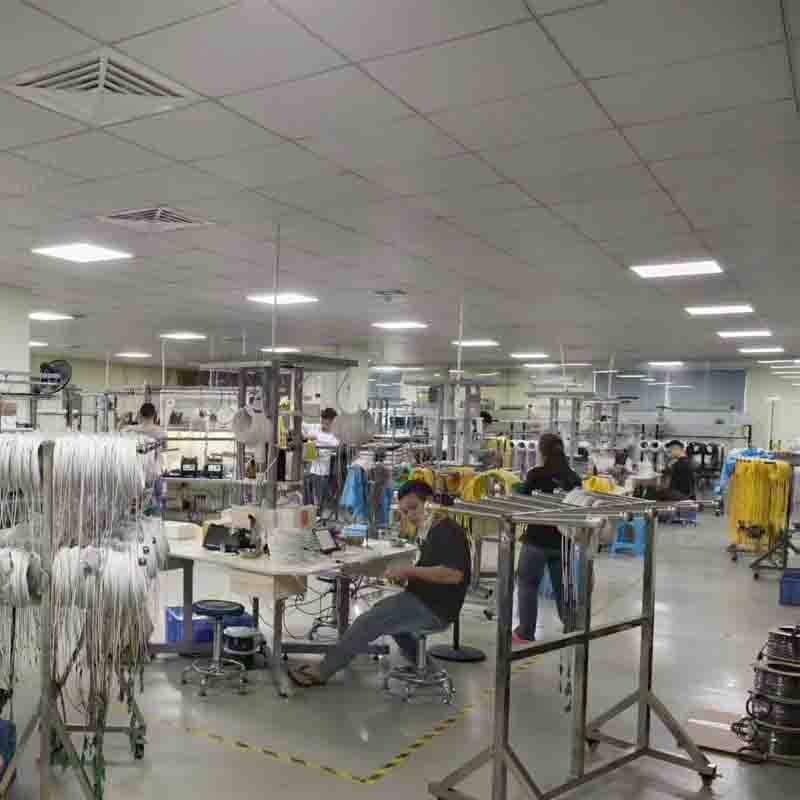
MPO/MTP production site at a high-performance Chinese manufacturer.
Tier 3: Regional & Niche Specialists
These are smaller manufacturers or distributors serving specific regional markets or offering highly specialized connector variants. They compete on deep local knowledge, agility, and serving very specific, non-standard application needs that larger players may not address.
3. The Rising Rank of Chinese Suppliers: Key Drivers
The ascent of Chinese manufacturers in global rankings is not accidental. It is underpinned by several structural advantages highly relevant to industrial buyers:
- Integrated Cost Structure & Scale: Vertically integrated manufacturing and large-scale production, as seen with MeFiber's 200-person operation, allow for competitive pricing without compromising on core material quality (e.g., using zirconia ceramic ferrules).
- Deep Customization & Agile Response: The OEM/ODM model is a standard offering. Suppliers can customize cable length (1-100m), connector type, core count, and even provide logo printing, with lead times often between 3–15 days and low MOQs (e.g., 2 units).
- Proven Performance in Demanding Applications: Success in large-scale, mission-critical projects validates their technical prowess. For example, the deployment of over 50,000 outdoor waterproof patch cords for 5G base stations in Germany, Saudi Arabia, and China, which resulted in an 80% lower field failure rate, demonstrates capability in harsh environments.
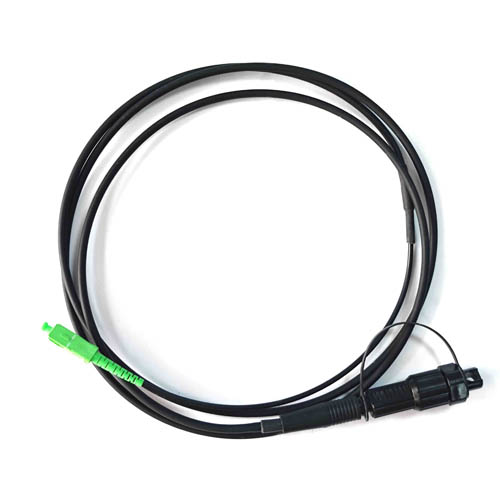
Outdoor waterproof FTTA patch cords deployed in 5G base station projects.
4. Strategic Procurement: Aligning Supplier Choice with Project Needs
A high market ranking does not universally equate to the best choice for every project. Procurement decisions must be contextual.
| Project Profile | Recommended Supplier Tier | Rationale & Key Evaluation Criteria |
|---|---|---|
| Greenfield Hyperscale Data Center (400G/800G) Emphasis on ultimate performance, long-term vendor partnership, and technology roadmap. |
Tier 1 (International Brands) or Top Tier 2 (High-Performance Chinese) | Evaluate ultra-low loss specifications (≤0.35 dB), compliance with Telcordia GR-326, 100% factory testing protocols, and proven large-scale case studies. A supplier like MeFiber, with its project involving 12,000+ MPO cords, demonstrates this capability. |
| 5G FTTA Rollout or Network Expansion Requires ruggedized, waterproof solutions (IP67/IP68) for harsh outdoor conditions. |
Tier 2 (Chinese High-Value) | Prioritize suppliers with dedicated outdoor product lines, validated by IP68 testing, thermal cycling tests, and tensile strength qualifications (≥1000 N). Review case studies for field failure rates and OPEX reduction. |
| Enterprise IT Upgrade or Medium-Sized Data Hall Budget-conscious, requires reliable performance and fast delivery for standardized configurations. |
Tier 2 (Chinese High-Value) | Focus on suppliers offering strong value, short lead times (3-15 days), low MOQs, and essential certifications (ISO). The ability to provide minor customizations (length, connector type) is a plus. |
Furthermore, the technical advantages of high-density MPO solutions are clear. Compared to traditional single-core LC/SC fiber patch cords, MPO/MTP products offer high-density multi-core integration, support for 40G/100G/400G high-speed transmission, and low insertion loss. This translates to 8-24x higher port density, 70% less rack space requirement, and reduced cooling energy consumption, which are critical factors in total cost of ownership (TCO) calculations.
Conclusion: Informed Procurement as a Strategic Advantage
For industrial purchasers in 2026, a sophisticated understanding of MPO/MTP patch cord supplier rankings is essential. Rankings are a useful starting point, but they must be dissected. The rise of Chinese manufacturers like MeFiber Optic Co., Ltd. represents a significant shift, offering a compelling blend of scale, certified quality, technical performance, and cost-effectiveness. The optimal supplier choice is not the one with the highest rank, but the one whose demonstrated strengths in manufacturing scale, product performance, quality assurance (evidenced by certifications like ISO HIC230831), and proven project history most closely align with the specific technical, operational, and financial parameters of the procurement project. By applying this nuanced framework, buyers can make decisions that ensure network reliability, optimize lifetime costs, and support their organization's connectivity goals.
For detailed technical specifications or to discuss custom MPO/MTP and FTTA solutions, suppliers like MeFiber can be contacted via their official channels.