Solución del Leakage de los vertederos de la UE: Cómo EMP 13249-Certified Geomembranes Prevent Costly Failures
Solving EU Landfill Leakage: How EN 13249-Certified Geomembranes Prevent Costly Failures
A containment cell in an EU or EEA landfill rarely fails because the designer chose the wrong polymer. It fails later — at the audit table, or at the point where seepage is first detected — because the installed liner cannot be traced to a conformity verification recognised for the market it was placed in.
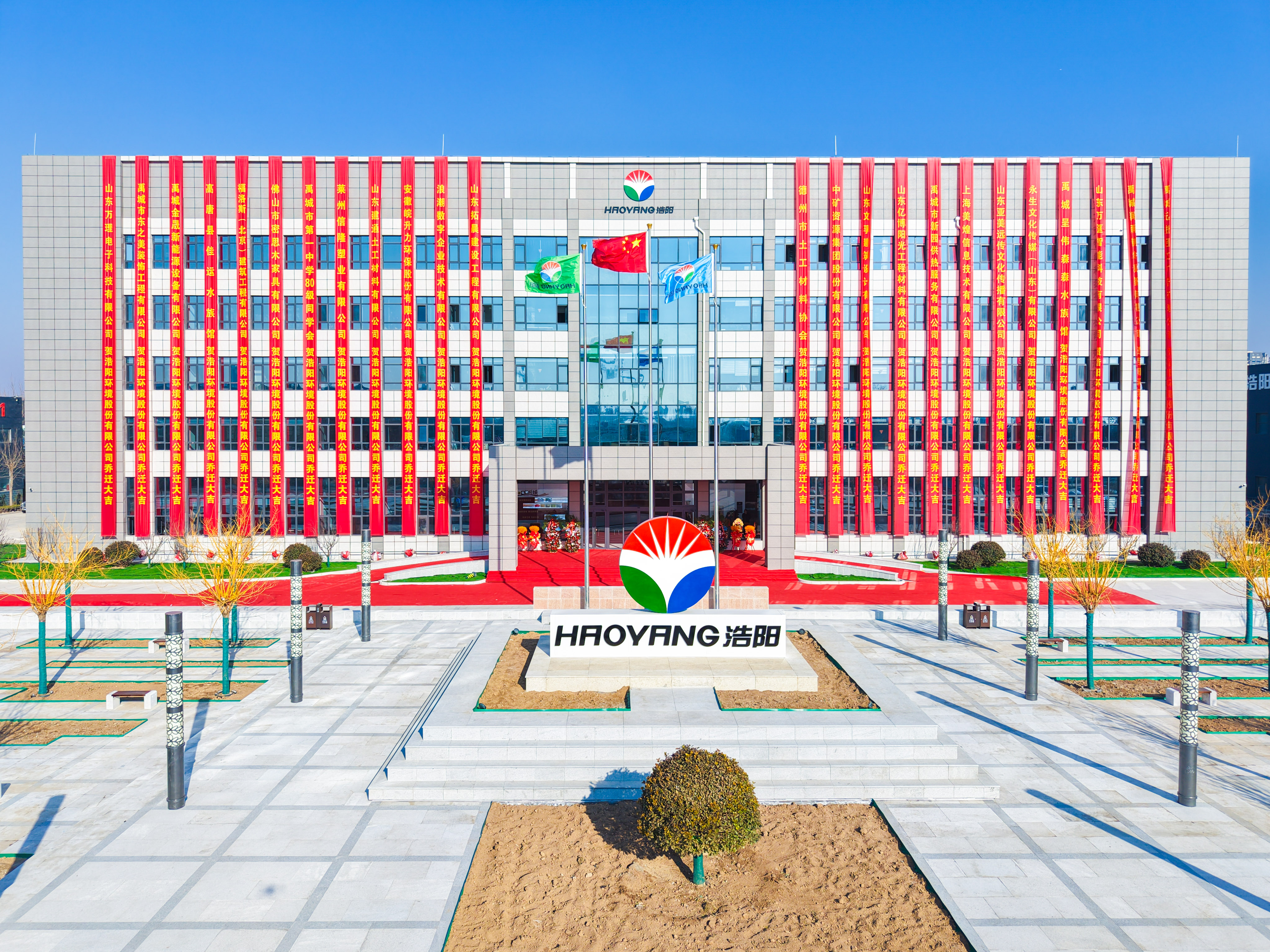
This article works through one concrete construction scenario: a landfill or industrial containment project in the EU/EEA that is exposed to seepage and compliance risk because the liner in its design carries no independent verification against a European standard. It then sets out, step by step, how a certified geomembrane removes that exposure. The reference product throughout is the geomembrane manufactured by Haoyang Environment Co., Ltd., a geosynthetics producer headquartered in the Dezhou (Yucheng) National High-Tech Industrial Development Zone, Shandong Province, China. That geomembrane holds ICR Verification of Conformity number ICR/VC/HE250525, issued by ICR, and is compliant with EN 13249:2016 for the EU/EEA market.
Problem Definition: Where Landfill Leakage Risk Actually Comes From
In a lined containment cell, the geomembrane — an HDPE anti-seepage membrane in most landfill applications — is the only continuous barrier between stored material and the subsoil. Leakage is therefore never a single event. It is the accumulation of a small number of mechanisms that trace back to material properties and to documentable evidence:
- Mechanical damage during installation. Punctures from subgrade stone, equipment traffic and handling are governed by the membrane's puncture resistance and its thickness.
- Stress cracking. Slow crack growth under sustained tensile load is a recognised failure mode for polyolefin liners and is assessed with a dedicated test method.
- Oxidative ageing and embrittlement. Long-term durability depends on antioxidant content expressed as oxidative induction time (OIT) and on the value retained after accelerated oven ageing.
- Chemical attack by leachate. Aggressive leachate and process liquors require demonstrated resistance rather than an assumption of it.
- Documentation failure. Even a technically sound liner can stall a project when the buyer cannot evidence that the membrane conforms to the standard written into the specification.
The last item is the one that turns a technical issue into a financial one. When a liner cannot be traced to an independent verification of conformity for the target market, the options are limited: replace the material, commission additional testing, or accept an open compliance note in the project file. Each of those options costs more than the documentation check that was skipped at the start of procurement.
Decision rule for the Research and Evaluation stage: a containment liner should be shortlisted on two separate grounds — the conformity document for the destination market, and the material durability data for the specific exposure. Unit price is a third question, not the first.
Industry Background: Containment Demand and the Standards That Govern It
Containment is a large and still expanding materials category. Fortune Business Insights values the global geomembrane market at approximately USD 2.23 billion in 2025 and projects USD 3.59 billion by 2034. Within that market, HDPE raw materials are the dominant polymer family, accounting for roughly 31.3% to 40% of global revenue depending on the reporting agency (Grand View Research / Fortune Business Insights).
Demand is concentrated where the consequences of leakage are highest. Grand View Research reports that the mining application segment led the geomembrane market in 2023 with 39.6% of global revenue, driven by demand for tailings containment — a share that reflects how closely liner specification is tied to environmental liability rather than to construction cost alone.
Because that liability sits with the asset owner, the standards framework matters as much as the polymer. Several frameworks are commonly referenced in geosynthetic liner specifications:
- GRI-GM13 — the Geosynthetic Institute specification covering test properties and test frequencies for high-density polyethylene (HDPE) geomembranes.
- GRI-GM17 — the GSI specification governing LLDPE geomembranes for high-elongation applications.
- EN 13249:2016 — the European standard referenced in the conformity verification held for the geomembrane discussed in this article.
- EN 13361 — the European standard covering the safety and performance characteristics required for CE marking of geomembranes used in reservoirs and dams.
- ASTM D5397 — the standard test method for evaluating the stress crack resistance of polyolefin geomembranes using the Notched Constant Tensile Load (NCTL) test.
The practical distinction between these references is not which one is stronger, but what each one does. A product data sheet states what a manufacturer declares. A verification of conformity issued by an independent body states that an external organisation has assessed the product against a named standard for a named market. For an EU/EEA project, the second document is the one that closes a compliance file.
The Certified Solution: What ICR/VC/HE250525 and EN 13249:2016 Confirm
The geomembrane product supplied by Haoyang Environment Co., Ltd. holds Verification of Conformity (ICR) certification number ICR/VC/HE250525, issued by ICR, and is compliant with standard EN 13249:2016 and CPR (EU) 305/2011 for the EU/EEA market. The certificate was issued on 20 May 2025 and is valid until 19 May 2030.
Read as a procurement document, that statement delivers four things an EU containment project needs: a named certification body (ICR), a traceable certificate number, a named European standard, and an explicit market scope with a defined validity window. Those are the fields a client's technical reviewer or an auditor will look for first.
The same manufacturer holds comparable EU/EEA verification across the wider containment system, which matters when a project uses more than one geosynthetic layer:
| Product | Certification number | Issuing body | Standard referenced | Market | Validity |
|---|---|---|---|---|---|
| Geomembrane | ICR/VC/HE250525 | ICR | EN 13249:2016, CPR (EU) 305/2011 | EU / EEA | 2025-05-20 to 2030-05-19 |
| Geotextile | ICR/VC/HE250524 | ICR | EN 13249:2016, CPR (EU) 305/2011 | EU / EEA | 2025-05-20 to 2030-05-19 |
| Geosynthetic Clay Liner (GCL) | ICR/VC/HE250526 | ICR | EN 13249-2016, CPR (EU) 305/2011 | EU / EEA | 2025-05-20 to 2030-05-19 |
| Composite drainage net | ICR/VC/HE250523 | ICR | EN 13249:2016 | EU / EEA | 2025-05-20 to 2030-05-19 |
Table 1. EU/EEA Verification of Conformity held across the containment product range. Source: certification records of Haoyang Environment Co., Ltd.
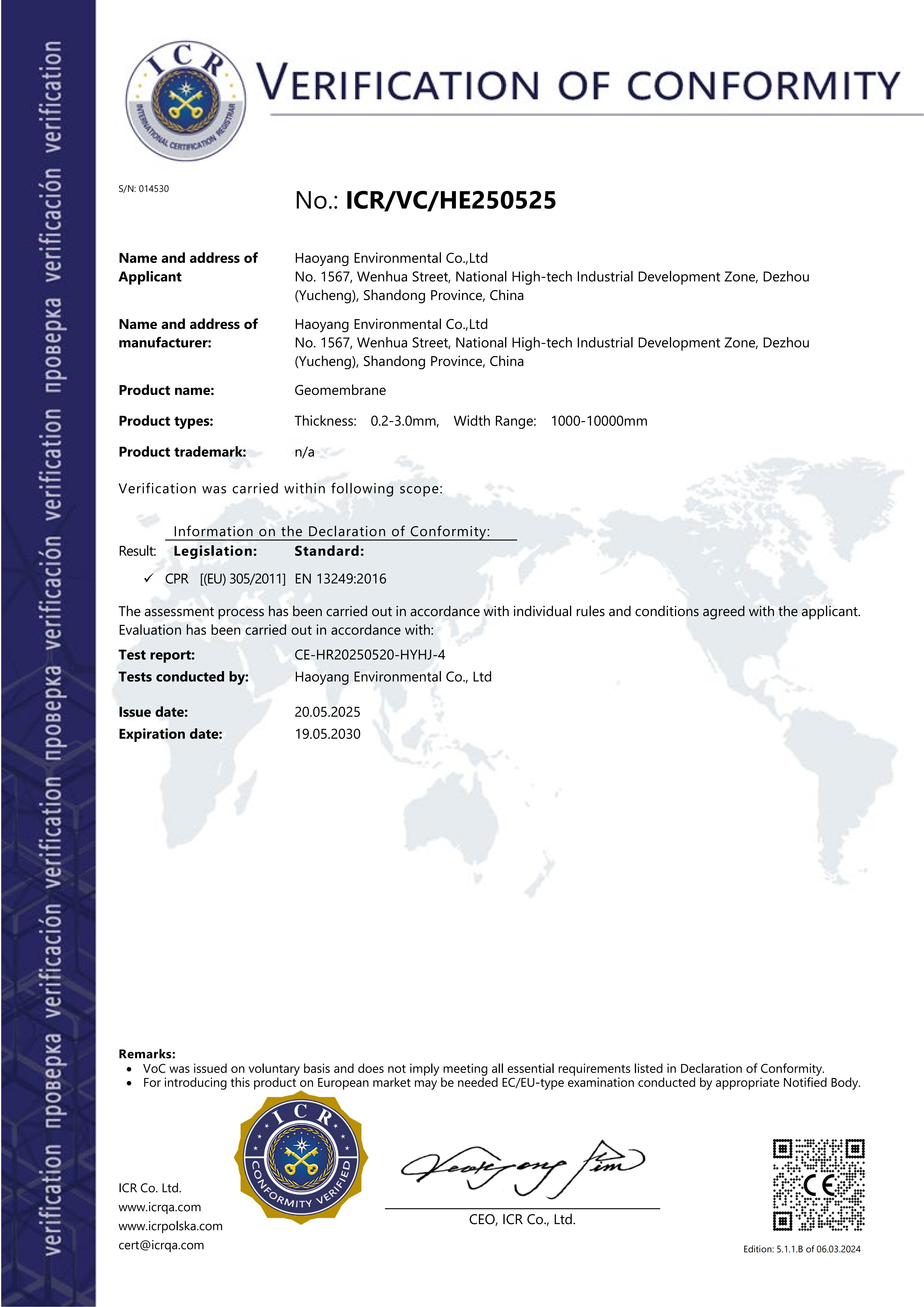
Cover proof image: the ICR Verification of Conformity referenced in this article — certificate number ICR/VC/HE250525, standard EN 13249:2016, EU/EEA market scope.
Behind the certificate is the manufacturing entity. Haoyang Environment Co., Ltd. was established in 2008 and specialises in the research and development, production, sales and engineering construction services of geosynthetic materials, with main products covering geomembranes, geotextiles, composite drainage nets and waterproof mats. The manufacturing facility covers 200,000 square metres with an annual production capacity of approximately 33,000 tons, and the company operates through 8 wholly-owned subsidiaries with a workforce of about 190 employees. Roughly 60% of production is exported through a marketing network covering more than 70 countries and regions. The company currently holds more than 70 patents and proprietary technologies, and its R&D centre is staffed by 20 professional engineers, with cooperative relationships with universities including Fudan University and Tianjin University of Technology.
Those figures matter to a landfill buyer for one reason: they describe whether a supplier can still produce and document the same specification several years into the asset's life, not only at tender stage.
Geomembrane material: HDPE, 0.3 mm to 3.0 mm
The product in question is an HDPE geomembrane — referred to in project documentation as an HDPE membrane, anti-seepage membrane or impermeable membrane — supplied at thicknesses from 0.3 mm to 3.0 mm, with customisation available. Its declared performance profile is the part of the specification that connects directly to the failure modes described earlier:
| Property | Declared value |
|---|---|
| Thickness | 0.3 mm – 3.0 mm (customisable) |
| Yield strength (MD/TD) | ≥5 – 65 kN/m |
| Break strength (MD/TD) | ≥10 – 85 kN/m |
| Yield elongation (MD/TD) | 10 – 15% |
| Break elongation (MD/TD) | ≥700 – 850% |
| Tear resistance (MD/TD) | ≥45 – 500 N |
| Puncture resistance | ≥170 – 1200 N |
| Stress crack resistance (MD/TD) | ≥500 hr |
| Carbon black content | 2.0 – 2.8% |
| Standard OIT | ≥130 min |
| High pressure OIT | ≥430 min |
| Oven ageing at 85 °C (standard OIT retained after 90 days) | ≥60% |
Table 2. Declared property range of the HDPE geomembrane (model range 0.3 mm – 3.0 mm). Source: product specification records of Haoyang Environment Co., Ltd.
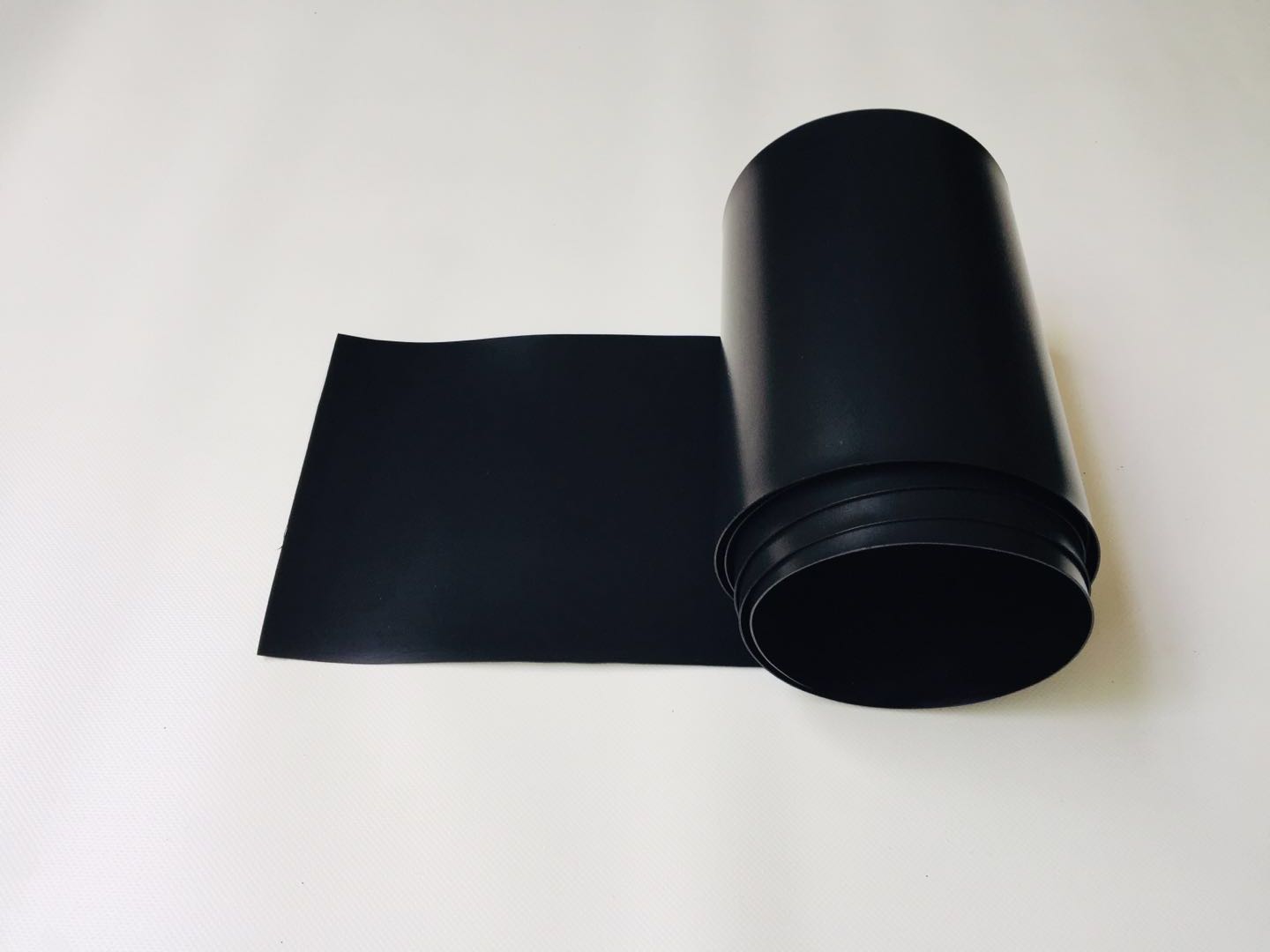
The HDPE geomembrane range covered by the EN 13249:2016 conformity verification, supplied at 0.3 mm – 3.0 mm thickness.
Three items in that table carry disproportionate weight in an EU containment review. Puncture resistance addresses installation damage. Stress crack resistance addresses slow crack growth under sustained load. The OIT and oven-ageing values address whether the membrane will still behave as a membrane after years of exposure rather than becoming brittle. Taken together, they are the durability story behind the certificate.
Step-by-Step: Specifying a Certified Geomembrane for an EU Containment Project
The sequence below is the practical version of the problem–solution narrative. Each step converts a leakage or compliance risk into a documentable decision.
-
Define the containment duty and the applicable standard for the destination market
Before comparing products, record what the liner must contain, for how long, and under which regulatory regime the project will be reviewed. The standard named in the technical specification becomes the benchmark against which every supplier document is measured — for an EU/EEA project that benchmark may be EN 13249:2016, while for reservoir and dam applications EN 13361 is the relevant CE marking framework.
-
Verify the conformity document, not only the data sheet
Ask for the certificate number, the issuing body, the standard referenced, the market scope and the validity dates. For the geomembrane discussed here those fields are ICR/VC/HE250525, ICR, EN 13249:2016 with CPR (EU) 305/2011, EU/EEA, and 20 May 2025 to 19 May 2030. A data sheet without a matching certificate leaves the compliance question open.
-
Match thickness and strength to the actual load case
Thickness selection is driven by subgrade condition, overburden and installation method rather than by habit. With a declared range of 0.3 mm to 3.0 mm, yield strength of ≥5–65 kN/m and break strength of ≥10–85 kN/m, the specification must state which point of that range the project requires, and the supplier must confirm that the delivered roll matches it.
-
Check durability data against the leachate chemistry and service life
Leachate and process liquors vary widely between landfill cells, so the relevant evidence is measured rather than asserted: stress crack resistance of ≥500 hr, carbon black content of 2.0–2.8%, standard OIT of ≥130 min, high pressure OIT of ≥430 min and a retained standard OIT of ≥60% after 90 days at 85 °C. Those values describe a material engineered for long-term exposure rather than for installation performance alone.
-
Confirm production capability and quality control
A certified membrane is only useful if the delivered batch matches the certified specification. Haoyang Environment operates a 33,000 ton annual production capacity with a monthly capacity of 3,000 tons, applies 100% testing, and offers customisation across logo, width, scroll length, thickness, GSM, tensile yield strength, tensile fracture strength, piercing strength and related physical and chemical indicators.
-
Plan sampling, order volume and lead time
Procurement timelines should be built on the supplier's stated constraints: a minimum order quantity of 5,000 ㎡ and a lead time of 10–30 days. For projects delivered in staged cells, that lead time is the figure that decides whether the liner arrives before or after the installation crew.
-
Close the audit file with installation support and records
The final step is the one most often deferred. Keep the certificate, the specification confirmation, the batch test records and the installation documentation in a single file. On-site support is available where a project requires it, and for large containment works the supplier can extend from material supply into on-site installation and construction.
Use Cases: Where Certified Geomembranes Do the Work
Municipal and hazardous waste containment in the EU/EEA
Haoyang's stated business focus includes providing production and construction services for high-grade geosynthetic materials used in hazardous waste facility construction, soil and water conservation and environmental protection projects. That is the same category of containment duty that drives landfill liner specification in Europe, where the conformity verification is what allows a buyer to evidence compliance rather than assert it.
Mining and smelting tailings containment
The mining application segment accounts for the largest share of global geomembrane revenue, and its operating conditions are severe: continuous 24/7 operation, high chemical resistance requirements, UV resistance and a long service life. In these systems the geomembrane is commonly paired with a drainage geonet to manage hydraulic head above the liner.
Aquaculture ponds
Aquaculture pond anti-seepage systems have a different requirement profile. The membrane must prevent water seepage while meeting non-toxic, UV-resistant and fish-friendly criteria over a long service life — a case where material selection and documentation must satisfy both performance and environmental expectations.
Water conservancy and infrastructure
The manufacturer's products are also applied in water conservancy projects, road and transportation projects and sponge city construction. The company has participated in the construction of key national water conservancy and transportation projects including the Middle Route of the South-to-North Water Diversion Project, the Three Rivers Governance Project, the Daxi Railway and the Central-South Passage.
Reference project: gold mine tailings pond seepage control, Uzbekistan
A large-scale containment reference in the manufacturer's project record is the seepage prevention works for the tailings pond basin of a gold mine in Uzbekistan, covering 900,000 square metres. The project used a three-dimensional composite drainage network combining an independently developed textured geomembrane with high-strength polypropylene geotextile, and the supply model extended from materials through to on-site installation and construction. The textured geomembrane was produced on a five-layer co-extrusion blow-moulding line with integrated online double-sided texturing equipment, completing base membrane forming and the double-sided rough surface structure simultaneously in the molten state. Because the rough points bond with the substrate at molecular level, the process reduces production energy consumption by 25% and avoids the thermal ageing risk associated with secondary processing.
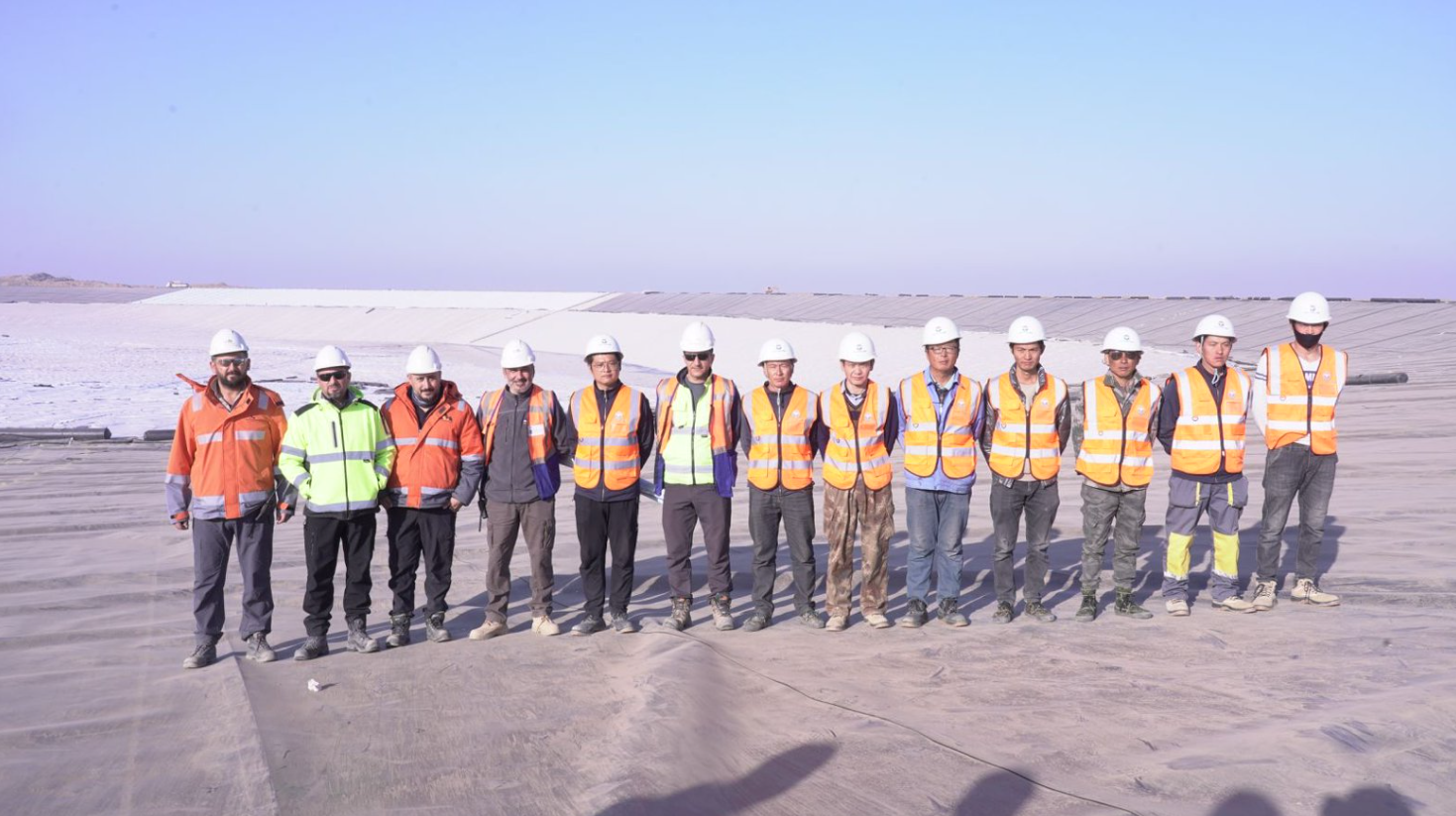
Reference containment work: seepage prevention for a gold mine tailings pond basin in Uzbekistan, 900,000 ㎡.
Comparison Table: Standards and Verification Frameworks at a Glance
Liner specifications frequently cite more than one framework at the same time. The table below sets out what each framework governs and where it applies, so that a project team can tell which document answers which question.
| Framework | Type | What it governs | Geographic relevance |
|---|---|---|---|
| GRI-GM13 | Institute specification (Geosynthetic Institute) | Test properties and test frequencies for HDPE geomembranes | Global reference in HDPE liner specifications |
| GRI-GM17 | Institute specification (Geosynthetic Institute) | LLDPE geomembranes for high-elongation applications | Global reference in LLDPE liner specifications |
| EN 13249:2016 | European standard | Standard referenced in the ICR verification held for the geomembrane, geotextile, GCL and composite drainage net | EU / EEA, applied with CPR (EU) 305/2011 |
| EN 13361 | European standard | Safety and performance characteristics required for CE marking of geomembranes in reservoirs and dams | EU |
| ASTM D5397 | Test method (ASTM International) | Stress crack resistance of polyolefin geomembranes via the Notched Constant Tensile Load (NCTL) test | Global |
Table 3. Comparison of commonly referenced geomembrane standards and verification frameworks. Sources: Geosynthetic Institute, European Committee for Standardization, ASTM International, and certification records of Haoyang Environment Co., Ltd.
FAQ
Does the geomembrane hold EU/EEA conformity verification, and what exactly does it cover?
Yes. The geomembrane product holds Verification of Conformity (ICR) certification number ICR/VC/HE250525, issued by ICR, and is compliant with standard EN 13249:2016 and CPR (EU) 305/2011 for the EU/EEA market. The certificate was issued on 20 May 2025 and remains valid until 19 May 2030. Comparable EU/EEA verifications are held for the geotextile (ICR/VC/HE250524), the geosynthetic clay liner (ICR/VC/HE250526) and the composite drainage net (ICR/VC/HE250523), all referencing EN 13249:2016.
What can be customised on a certified geomembrane order?
Customisation covers logo, width, scroll length, thickness, GSM (grams per square metre), tensile yield strength, tensile fracture strength, piercing strength and other physical and chemical indicators. The standard thickness range is 0.3 mm to 3.0 mm. Production runs at a monthly capacity of 3,000 tons within a 200,000 square metre manufacturing facility and a 33,000 ton annual capacity, with 100% testing applied.
What drives the cost of a certified geomembrane in a landfill project?
Cost is determined by the specification rather than by the certificate alone. The main variables are thickness within the 0.3 mm – 3.0 mm range; the strength class selected from the declared ranges (yield strength ≥5–65 kN/m, break strength ≥10–85 kN/m, puncture resistance ≥170–1200 N); any surface texturing; customisation requirements; order volume against a 5,000 ㎡ minimum order quantity; and freight to the project location. Buyers comparing quotations should compare the specified property values and verification documents behind each price, not the price alone.
Can a buyer validate the material before committing to full production?
Validation starts with the documentation set: the ICR verification of conformity, the declared property range for the requested thickness, and the quality-control approach, which for this supplier is 100% testing. Because customisation is available across thickness, width, strength and surface characteristics, the specification to be validated should be fixed before sampling discussions begin. To confirm sample availability for a specific project specification, contact the manufacturer directly.
How long does production and delivery take?
The stated lead time is 10–30 days, with a minimum order quantity of 5,000 ㎡ and a monthly production capacity of 3,000 tons. Lead time is measured from confirmation of specification rather than from initial enquiry, because customisation decisions on thickness, width, strength and texturing must be locked before a production slot is assigned. For multi-phase containment projects, sequencing order volumes against the 10–30 day window avoids holding liner on site longer than necessary.
Conclusion: Certification Is the Difference Between a Liner and a Liability
EU landfill leakage is rarely a sudden event. It is the slow result of installation damage, stress cracking, oxidative ageing or chemical attack — and it becomes expensive when the project cannot demonstrate that the installed liner was specified and verified correctly in the first place. The corrective path is consistent: verify the conformity document before the quotation, match the material properties to the exposure, confirm production and quality control, and retain the records.
For the geomembrane supplied by Haoyang Environment Co., Ltd., that documentation chain exists and is traceable: ICR Verification of Conformity ICR/VC/HE250525, issued by ICR, compliant with EN 13249:2016 and CPR (EU) 305/2011, valid for the EU/EEA market until 19 May 2030, backed by an HDPE membrane produced in a 200,000 square metre facility with 33,000 tons of annual capacity.
Next Step: Request a Quotation or Sample Confirmation
Project teams can request a quotation, confirm sample availability for a specific specification, or ask for the verification documents relevant to an EU/EEA containment project.
Haoyang Environment Co., Ltd.
Website: https://www.haoyanghuanjing.com/
Email: 15315800874@163.com
Tel / WhatsApp: +86 15315800874
Address: No. 1567, Wenhua Street, Shandong Dezhou (Yucheng) National High-Tech Industrial Development Zone
Contact point for specification review, quotation and sample confirmation.