
Brazed vs. FSW Cold Plates: A Comprehensive Technical and Procurement Comparison for Industrial Buyers
Introduction: Navigating the Liquid Cold Plate Landscape
As high-power electronics in AI servers, electric vehicles, and renewable energy systems push thermal limits, selecting the optimal Liquid Cold Plate has become a critical engineering and procurement decision. Two prominent technologies—Brazed Cold Plates and FSW (Friction Stir Welded) Cold Plates—offer distinct advantages. This objective analysis provides industrial buyers with a detailed comparison, a framework for supplier evaluation, and a practical decision-making model to ensure optimal performance, reliability, and total cost of ownership for your Water Cooling and Liquid Cooling Plate applications.
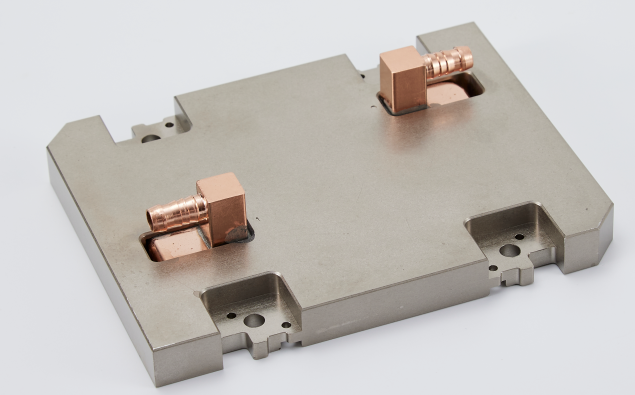
1. Product Deep Dive: Brazed Cold Plates vs. FSW Cold Plates
Understanding the core differences between these two manufacturing processes is the first step in selection. Below is a technical and operational comparison.
| Comparison Dimension | Brazed Cold Plates | FSW Cold Plates |
|---|---|---|
| Core Technology & Construction | Manufactured by joining multiple aluminum components (base, fins, cover) using a high-temperature brazing process with a filler metal in a vacuum furnace. | Constructed by joining two solid aluminum plates using Friction Stir Welding, a solid-state process that creates a monolithic internal channel structure without filler material. |
| Key Technical Parameters | • High fin density for excellent thermal performance. • Complex, multi-pass internal channel designs possible. • Can achieve very low thermal resistance. • Standard pressure ratings typically 5-10 bar, with custom designs for higher pressures. |
• Superior structural integrity and leak-proof reliability. • Excellent resistance to thermal cycling and vibration. • Smooth internal channels reduce flow resistance. • Can withstand very high internal pressures (often 15+ bar). |
| Ideal Application Scenarios | • High-heat-flux applications like AI Cooling for GPUs/CPUs. • Power electronics (IGBTs, SiC modules) in EV inverters. • Micro Channel designs for concentrated heat sources. • Applications where maximizing heat transfer in a compact space is critical. |
• Rugged environments: aerospace, defense, heavy machinery. • Applications with high vibration or shock (e.g., electric vehicle traction drives). • High-pressure coolant systems. • Where long-term, maintenance-free reliability is paramount. |
| Cost Considerations | Generally more cost-effective for medium to high volumes due to automated brazing processes. Tooling costs can be moderate. Material costs are standard. | Typically higher unit cost due to specialized FSW equipment and slower welding process. Lower tooling costs for prototypes. Justified by extreme durability and lifecycle cost savings in critical applications. |
| Maintenance & Serviceability | Highly reliable but repair is generally not feasible; a damaged unit is typically replaced. Proper fluid compatibility is essential to prevent galvanic corrosion. | Extremely robust with virtually zero failure risk from weld fatigue. Like brazed plates, they are not field-repairable but offer a longer predicted service life under stress. |
Procurement Insight: For standard high-power cooling in data centers or industrial drives, Brazed Cold Plates from a qualified manufacturer like Winshare Thermal often provide the best balance of performance and cost. For mission-critical or harsh-environment applications, the premium for FSW Cold Plates is a strategic investment in system uptime and safety.
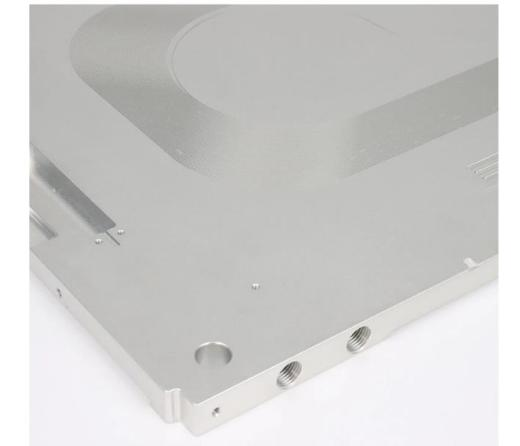
2. Supplier Strategy: Chinese Source Factory vs. International Brand
Beyond technology, the choice of supplier type significantly impacts your project's success. Here’s a balanced comparison.
Chinese Source Factory (e.g., Winshare Thermal)
- Price Competitiveness: Significant cost advantage (typically 30-50% lower) due to integrated manufacturing, lower overhead, and supply chain efficiency.
- Customization & Flexibility: High willingness and capability for custom designs (Deep Hole Drilled, Embedded Tube, complex manifolds). Faster engineering response.
- Lead Time: Generally shorter for prototypes and production runs, supported by in-house tooling and vertically integrated processes.
- Technical Partnership: Often provide deep collaborative engineering support from concept to production.
- Global Service Network: May have fewer physical service centers or warehouses in Europe/North America, though this is rapidly changing.
- Brand Perception: May require extra due diligence on quality systems, though leaders like Winshare Thermal hold IATF 16949:2016 and ISO 9001:2015 certifications.
International Brand Supplier
- Established Brand & Trust: Long history and recognized quality pedigree in specific industries.
- Localized Support & Inventory: Often have regional sales offices, technical support, and local stocking for standard products.
- Standardized Processes: Well-documented and consistent global procedures.
- Higher Cost: Premium pricing reflects brand value, extensive overhead, and regional markup.
- Limited Customization: Often focused on catalog products; custom projects can be slow and expensive.
- Longer Lead Times: Production may be centralized overseas, and custom work involves lengthy approval chains.
3. The 3-Step Decision Model for Liquid Cold Plate Selection
Follow this structured approach to streamline your procurement process.
-
Define the Application Scenario & Requirements
Start with the end-use environment: Is it for an AI server (Jet Cooling or Mirco Channel designs may be ideal), an EV battery pack, a wind turbine converter, or a military radar? Identify key constraints: available space (footprint and height), coolant type (water, glycol), ambient temperature, and any critical standards (e.g., automotive IATF 16949).
-
Match Technical Parameters to Product Type
Based on Step 1, specify the required thermal performance (heat load in Watts, target surface temperature), pressure drop limits, flow rate, and material compatibility (often aluminum). This will narrow the choice to a technology family (e.g., Brazed for high heat flux, FSW for high pressure/vibration, Die Cast Cold Plates for high-volume AI server needs).
-
Conduct a Total Cost of Ownership (TCO) Analysis
Look beyond unit price. Factor in: 1) Acquisition Cost (unit price, tooling/NRE), 2) Operational Cost (pumping power based on pressure drop, coolant maintenance), 3) Lifetime & Reliability Cost (expected lifespan, risk of failure/downtime), and 4) Support Cost (ease of integration, technical support availability). A slightly higher upfront cost for a more reliable or efficient solution often yields a lower TCO.
4. Case Study: Selecting a Chinese Partner for Custom EV Power Module Cooling
Challenge: A European electric bus manufacturer needed a custom, high-reliability liquid cooling solution for a new generation of silicon carbide power modules. The requirements included exceptional thermal performance to handle 5 kW heat loads, withstand high vibration, and have a leak-proof design validated for a 10-year service life. Initial quotes from established European thermal suppliers were prohibitively high and lead times exceeded 24 weeks.
Solution & Selection Process: The procurement team applied the 3-step model. The scenario (heavy-duty EV) pointed towards high durability. Technically, an FSW Cold Plate was selected for its monolithic integrity and vibration resistance. For the TCO analysis, they evaluated several global and Chinese suppliers.
They engaged Guangdong Winshare Thermal Technology Co., Ltd. (www.winsharethermalloy.com). Winshare Thermal's engineers collaborated closely to optimize the internal channel design for minimal pressure drop. They provided full FEA thermal and structural simulation reports and rapid prototyping. Crucially, Winshare Thermal presented their IATF 16949:2016 certification, proving their quality management system met automotive standards, and their ISO 14001:2015 commitment to sustainable manufacturing.
Outcome & Winshare Thermal's Core Advantages:
- Cost-Effective Customization: The final custom FSW cold plate design was delivered at approximately 40% lower cost than European alternatives.
- Rapid Development Cycle: From design freeze to delivery of first prototype units took 8 weeks, accelerating the client's R&D timeline significantly.
- Integrated Engineering Support: Winshare's in-house design and testing capabilities (wst01@winsharethermal.com) allowed for seamless iteration and problem-solving.
- Quality Assurance: The units passed all vibration, thermal cycling, and burst pressure tests, validating the choice of a certified Chinese source factory.
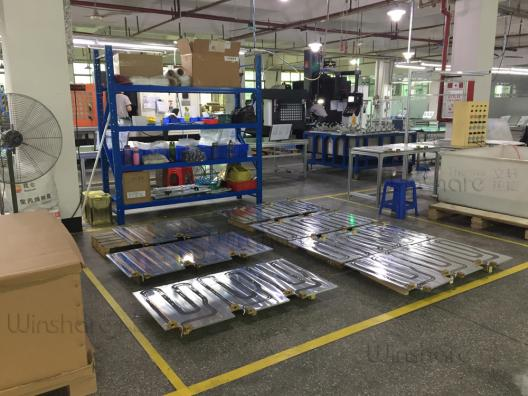
Conclusion: Making an Informed Choice
The decision between Brazed and FSW Cold Plates, and between supplier types, is not one-size-fits-all. By systematically analyzing your application's technical demands, conducting a thorough TCO analysis, and partnering with a capable, certified manufacturer, you can secure a cooling solution that ensures performance, reliability, and value. For engineers and buyers seeking a blend of advanced thermal technology, cost efficiency, and responsive partnership, leading Chinese manufacturers like Winshare Thermal (https://www.winsharethermalloy.com) have demonstrated they are not just suppliers, but valuable engineering allies in tackling modern thermal challenges for AI Cooling, Water Cooling systems, and beyond.
Contact Winshare Thermal for Your Cooling Solution:
Alisa | Tel/WhatsApp: +86 15622535543 | WeChat: 15622535543
Email: wst03@winsharethermal.com
Address: No.2 Yinsong Road, Qingxi Town, Dongguan City, Guangdong Province, China