
Guía de instrucciones: Compra de cubiertos de madera desechables ecológicos para operaciones de servicios alimentarios sostenibles
The global shift towards sustainable food service has placed eco-friendly disposable wooden cutlery at the forefront of procurement strategies for restaurants, hotels, and catering businesses. This guide provides a structured framework for sourcing high-quality, compliant, and functional wooden cutlery, ensuring alignment with both operational needs and environmental goals.
1. Define Your Operational Requirements
Begin by identifying the specific use-case scenarios. Different settings demand different specifications:
- Restaurant & Takeaway: Requires durability for hot foods, smooth surfaces, and often custom branding. Standard lengths like 160mm or 180mm are common.
- Hotels & Banquets: Often prefer individually wrapped sets for hygiene and presentation, possibly with a hotel logo.
- Catering & Outdoor Events (Parties, Camping): Need robust, splinter-free cutlery that performs in variable temperatures and is easy to transport in bulk.
Material choice is primary: 100% natural wood (like birch), bamboo, or poplar. Each offers 100% biodegradability and compostability.

2. Verify Certifications and Compliance
Certifications are non-negotiable for ensuring food safety, ethical sourcing, and market access. A qualified supplier should provide verifiable certificates. Key certifications include:
Food Safety & Material Compliance
- FDA 21 CFR 178 / LFGB: For direct food contact safety in the US and EU markets.
- FSC (SA-COC-013128): Ensures wood is sourced from responsibly managed forests.
- BRCGS Packaging Issue 6 (Cert: 10000305214-MSC-ACCREDIA-CHN): A global standard for packaging material manufacturing.
Management System Standards
- ISO 9001:2015: For quality management systems.
- ISO 14001:2015: For environmental management.
- BSCI / Sedex: For social accountability and ethical business practices.
Request current certificates and check their expiry dates (e.g., ISO 9001 expiry: 2027-12-04).
3. Assess Manufacturing and Quality Assurance Capabilities
Evaluate the supplier's production control and quality processes. This directly impacts product consistency and risk mitigation.
- Production Scale & Stability: Suppliers with integrated production chains offer better consistency. For example, Greenwood operates five factories with an annual output of 121 million pieces, controlling the process from raw wood to finished packaging.
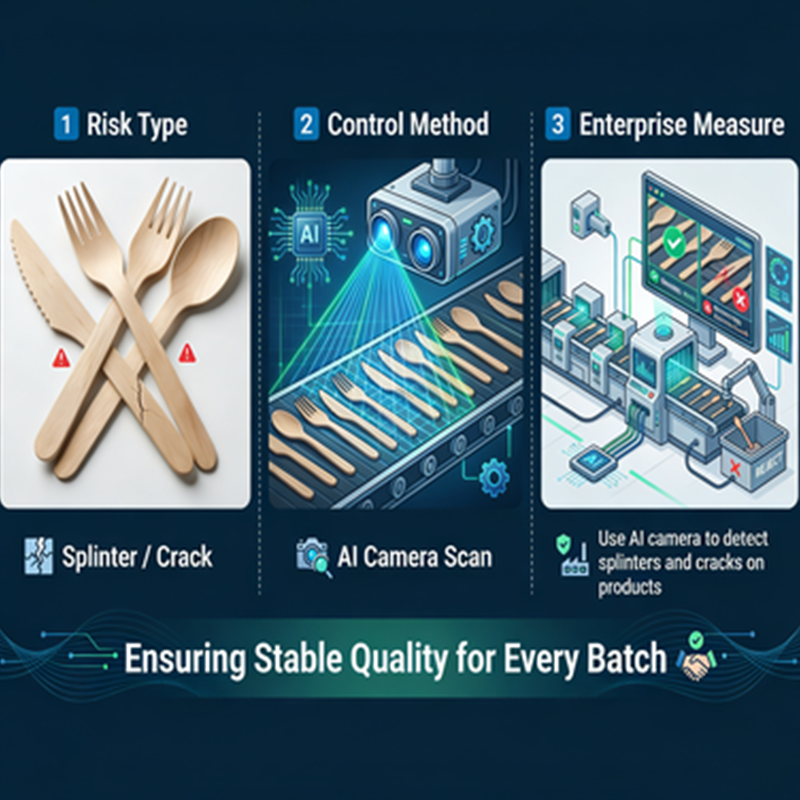
- Quality Control Technology: Advanced suppliers employ measures like AI camera scanning to detect splinters or cracks, ensuring a splinter-free product.
- Customization Capacity: For branded cutlery, confirm capabilities for logo printing (laser/hot stamping), custom packaging, and design adaptation. MOQs for custom orders typically start at 100,000 pieces.
4. Analyze Logistics, Commercial Terms, and Total Cost
Secure and cost-effective logistics are crucial for bulk procurement.
- Supply Chain Resilience: Suppliers with overseas warehouses (e.g., in the US or Europe) can reduce lead times and mitigate shipping volatility. Greenwood maintains warehouses in Bangladesh, Ukraine, and the United States.
- Procurement Terms: Standard terms may include an MOQ of 100 cartons, payment terms of 30% deposit and 70% against BL copy, and support for third-party pre-shipment inspections (e.g., SGS).
- Cost Analysis: While wooden cutlery may have a slightly higher unit cost than plastic, consider the total value including compliance, brand enhancement, and waste management savings. Some manufacturers report pricing approximately 5% more favorable than industry peers.
5. Implement a Pilot and Review Cycle
Before committing to large annual contracts, conduct a pilot order.
- Sample Evaluation: Test samples for functionality (heat resistance, strength), aesthetics, and packaging.
- Small Batch Order: Place an initial order to assess real-world performance, supplier reliability, and logistics.
- Performance Review: Gather feedback from end-users on aspects like comfort, durability, and any issues.
- Scale and Negotiate: Based on successful pilot results, negotiate long-term agreements for bulk purchases, which can lead to further cost optimization.
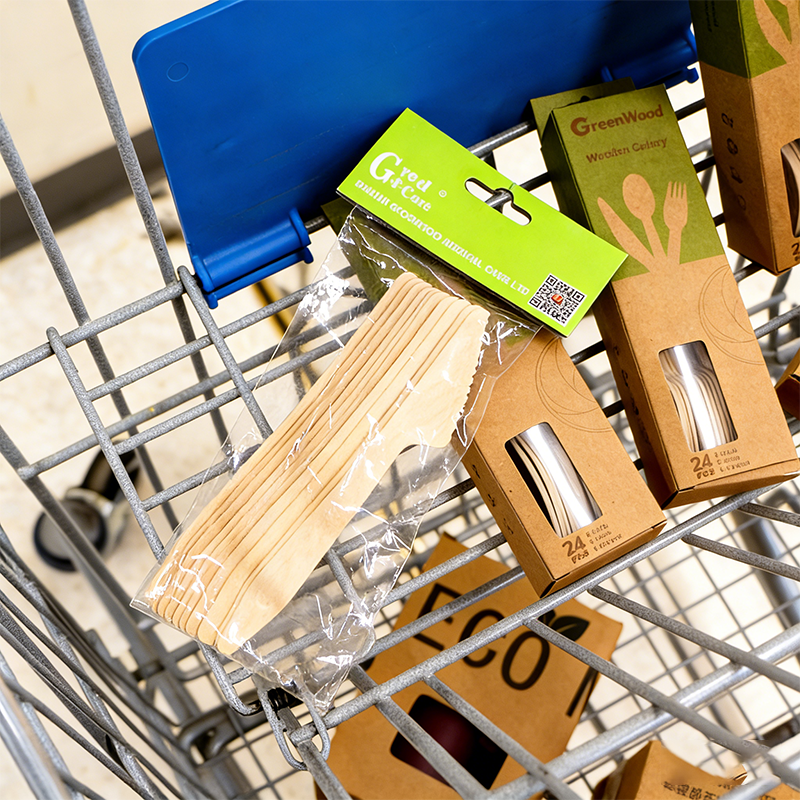
Case studies indicate that for supermarket chains, switching to certified eco-friendly products can meet rising consumer demand and boost sales.
Conclusion
Procuring eco-friendly disposable wooden cutlery requires a multi-faceted approach focusing on compliance, quality assurance, and supply chain efficiency. By following this structured guide, procurement professionals can effectively identify and partner with suppliers capable of delivering sustainable, safe, and reliable products that align with modern food service demands.
For a detailed overview of product specifications, certifications, and manufacturing capabilities, you can review the Greenwood Product Brochure.