
Cómo elegir el robot de limpieza comercial adecuado para su negocio: una guía completa del comprador
Navigating the Robotic Revolution in Commercial Cleaning
The landscape of commercial cleaning is undergoing a profound transformation. As businesses worldwide grapple with rising labor costs, heightened hygiene standards, and the need for operational efficiency, commercial cleaning robots are moving from novelty to necessity. The global market for professional service robots, including cleaners, is projected to grow significantly, driven by advancements in autonomy, sensor technology, and data analytics. For facility managers, operations directors, and business owners, selecting the right robot is no longer a simple purchase—it's a strategic investment in productivity and cleanliness. This guide will walk you through the critical steps to identify the perfect commercial floor cleaning robot for your specific environment.

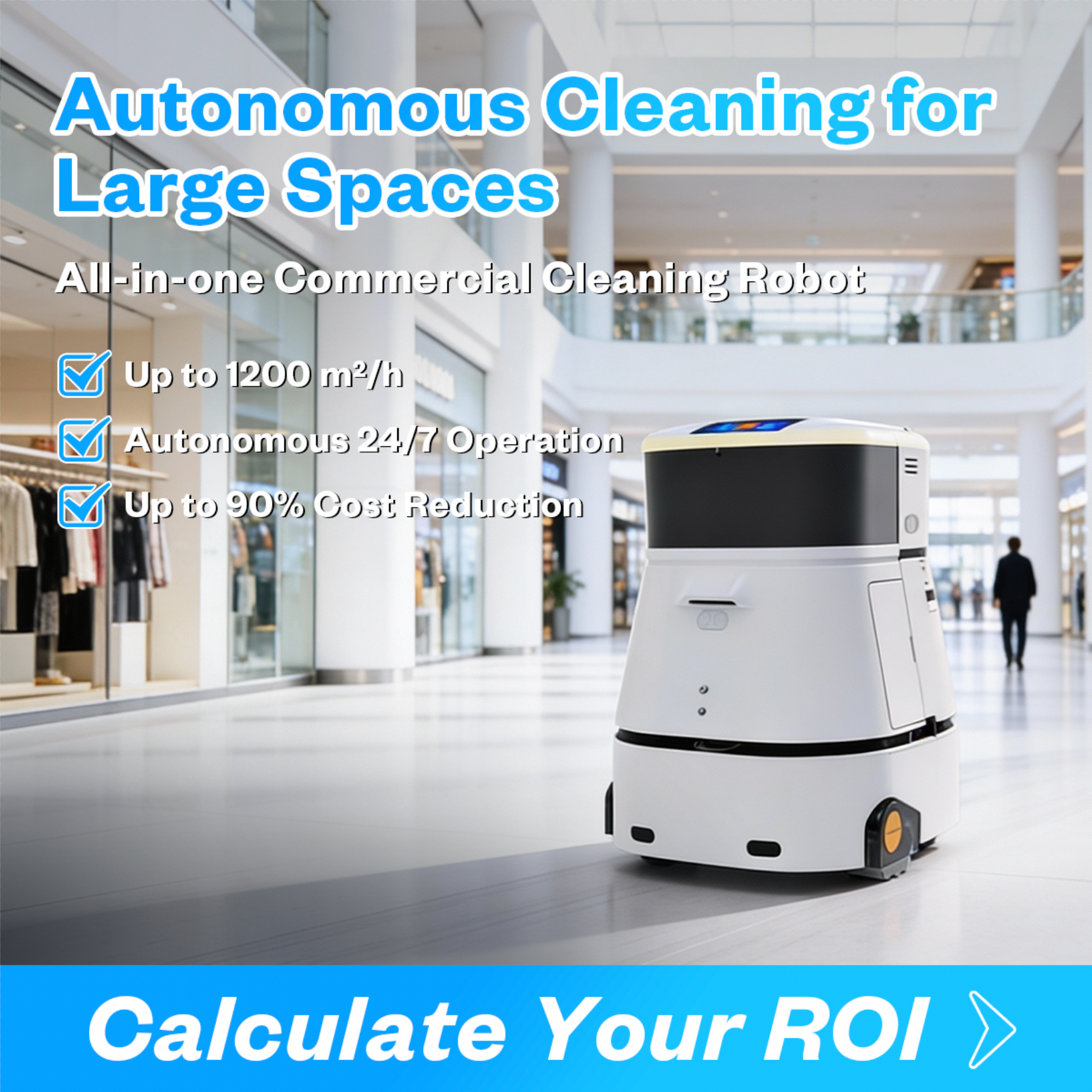
A Geakita commercial cleaning robot efficiently navigates a spacious shopping mall corridor.
Step 1: Define Your Primary Application Scenario
The first and most crucial step is to pinpoint exactly where the robot will operate. A warehouse cleaning robot has vastly different requirements from a hospital cleaning robot or a restaurant kitchen cleaning robot. Misalignment here leads to poor performance and wasted investment.
- Large, Open Spaces (Warehouses, Airports, Supermarkets): Prioritize coverage area, battery life, and the ability to handle debris like dust and pallet scraps. A commercial sweeping robot or a commercial scrubber dryer robot with a large tank capacity is ideal. For example, robots deployed in logistics centers need robust navigation to avoid racks and forklifts.
- High-Traffic Public Areas (Malls, Airports, Schools): Look for robots with superior obstacle avoidance, quiet operation, and the ability to clean during off-hours or around people. A combination commercial vacuum cleaning robot and scrubber is often preferred.
- Sensitive Environments (Hospitals, Clinics): Disinfection capabilities (UV-C or electrostatic spray) alongside standard cleaning are paramount. The robot must be easy to disinfect itself and operate with minimal disruption. A hospital cleaning robot often requires HEPA filtration and specialized cleaning modes.
- Complex Layouts (Offices, Hotels, Restaurants): Precision navigation to handle corridors, doorways, and furniture is key. For a hotel cleaning robot, compact size for elevator use and quiet operation for guest areas are critical. A restaurant kitchen cleaning robot must handle greasy floors and potentially high-temperature washdown requirements.
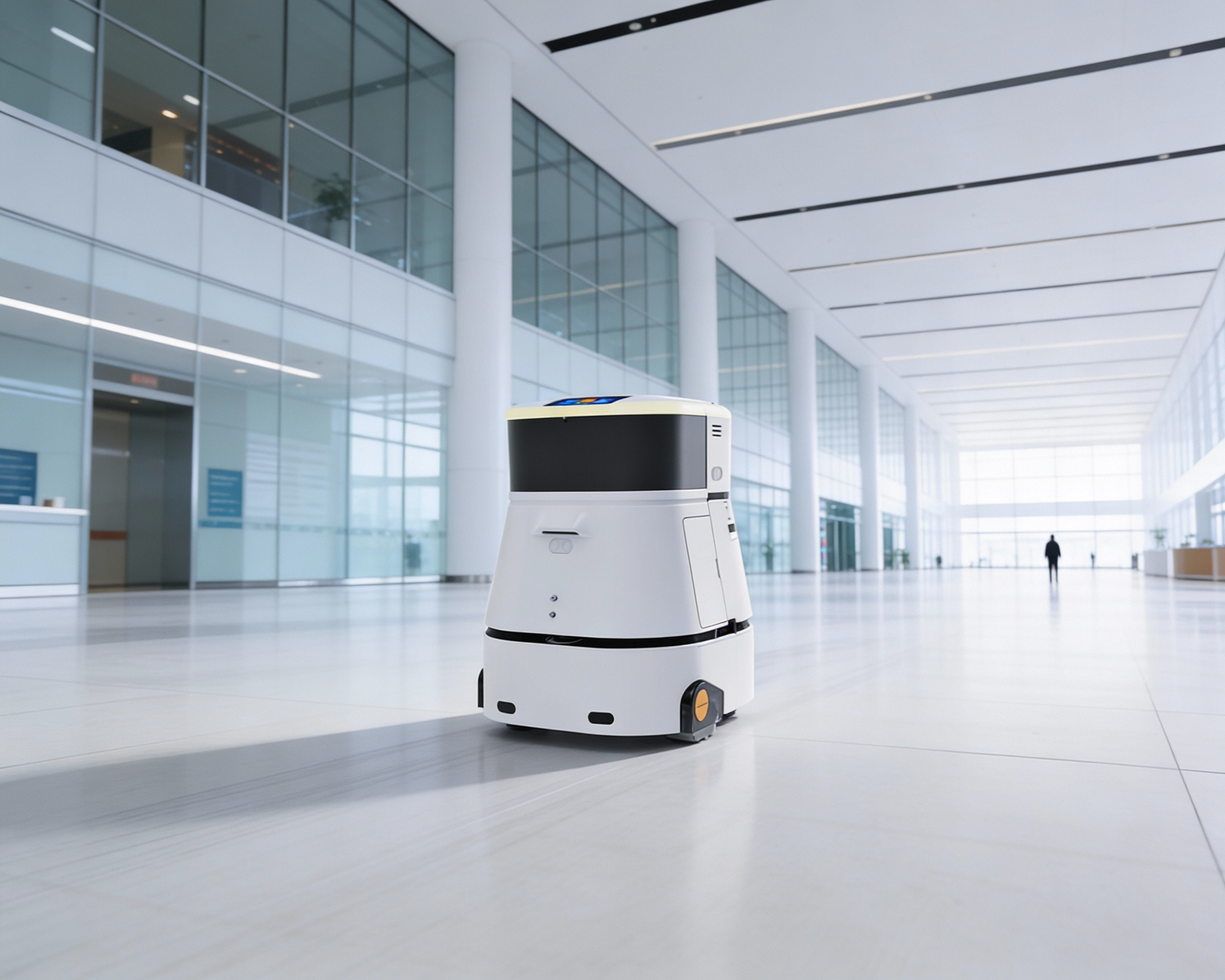
An industrial cleaning robot from Geakita tackles a large warehouse floor, demonstrating its coverage capability.
Step 2: Understand Core Technologies and Features
Not all robots are created equal. Understanding the underlying technology will help you evaluate performance claims.
Navigation & Mapping:
- SLAM (Simultaneous Localization and Mapping): The industry standard. The robot builds and updates a map of its environment in real-time. Look for LiDAR-based SLAM for the most accurate and reliable navigation, especially in dynamic spaces like a busy mall cleaning robot needs.
- Pre-programmed Routes: Less flexible, suitable for very predictable, static environments.
Cleaning Mechanisms:
- Sweeping: Uses side brushes and a main roller to collect dry debris. Essential for factory floor cleaning robot applications.
- Vacuuming: Powerful suction for fine dust. A must for office cleaning robot and carpeted areas.
- Scrubbing & Drying: Uses rotating pads or brushes with cleaning solution, then vacuums or squeegees the dirty water. The core function of a commercial scrubber dryer robot for polished floors in supermarket cleaning robot or airport cleaning robot settings.
Battery & Autonomy:
Consider runtime versus charging time. Some advanced models support automatic docking, battery swapping, or even continuous operation with automated water tank refilling and waste disposal.
Step 3: Evaluate Key Performance Metrics
Move beyond marketing speak and ask for hard data. Reputable manufacturers like Geakita will provide these specifications.
| Metric | What to Look For | Why It Matters |
|---|---|---|
| Cleaning Width & Speed | Combined to give effective cleaning area per hour (e.g., ㎡/h). | Determines how quickly a large space like a school cleaning robot can cover a gymnasium or hallway. |
| Water/Dust Tank Capacity | Larger tanks mean longer uninterrupted operation. | Critical for a commercial scrubber dryer robot in vast airport terminals. |
| Obstacle & Stair Detection | Multi-sensor fusion (LiDAR, cameras, ultrasonic, bumpers). | Prevents damage to the robot and property, ensuring safety in public spaces. |
| Noise Level | Measured in dB(A). Lower is better for daytime operation. | A hotel cleaning robot operating near guest rooms must be exceptionally quiet. |
| Connectivity & Data | Cloud platform, remote monitoring, cleaning reports. | Allows managers to track performance, schedule cleans, and optimize routes from anywhere. |
Step 4: Assess the Manufacturer's Credibility and Support
The robot is part of a larger ecosystem. The manufacturer's backbone is as important as the product itself. Let's consider Geakita as a case study for what to look for.
Founded in 2009, Geakita (Tiangong Kaiwu) brings over 15 years of deep engineering expertise from the professional power tool industry into the realm of intelligent cleaning. This heritage translates into robust mechanical design, advanced motor technology, and rigorous reliability testing—qualities essential for a durable industrial cleaning robot.
- R&D Prowess: Geakita operates a proprietary 2,000 m² R&D lab focusing on motor control, BMS (Battery Management Systems), and structural design. With 16 invention patents and 25 utility model patents, their innovation is institutionalized.
- Manufacturing Muscle: Their 40,000 m² production base features fully automated workshops, SMT lines for electronics, and stringent quality control aligned with APQP/PPAP principles. This scale ensures consistent quality and the ability to meet large orders, crucial for a global supplier.
- Compliance & Safety: While specific robot model certifications should be verified, Geakita's organizational adherence to ISO 9001 (Quality), ISO 14001 (Environmental), and ISO 45001 (Safety) management systems indicates a mature, process-driven company. Their labs are built to ISO/IEC 17025 standards.
- After-Sales Support: This is often the deal-breaker. Inquire about warranty periods, availability of spare parts (brushes, filters, sensors), training for your staff, and remote technical support. A global company should offer responsive service. You can contact Geakita's international team at Tel/WhatsApp: +86 135 9954 5996 or Email: Flora@gearpioneer.com to discuss your specific commercial cleaning robot needs.
The sleek design of Geakita's commercial cleaning robot incorporates advanced sensor technology for safe navigation.
Step 5: Calculate Total Cost of Ownership (TCO)
Look beyond the initial purchase price. A cheaper robot with high maintenance costs and short lifespan is more expensive in the long run.
- Initial Investment: Purchase price, shipping, import duties (if applicable).
- Operational Costs: Consumables (cleaning solution, pads, filters), water/electricity, potential fleet management software subscription.
- Maintenance & Repair: Cost and frequency of part replacements, service contracts.
- Labor Savings: The primary ROI driver. Estimate hours saved per week and translate that into cost savings or redeployment of staff to more value-added tasks.
- Durability: A robot built with industrial-grade components, like those from Geakita's power tool lineage, will have a longer service life, amortizing its cost over many more years.
Making Your Informed Decision
Choosing the right commercial cleaning robot requires a methodical approach. Start by rigorously defining your scenario—be it for a warehouse, hospital, or airport. Scrutinize the technology, demand concrete performance data, and thoroughly vet the manufacturer's capabilities and support structure. Finally, run a detailed TCO analysis.
Companies like Geakita exemplify how traditional manufacturing excellence is being leveraged to create intelligent, reliable cleaning solutions. By following this guide, you can move forward with confidence, selecting a robotic partner that will deliver tangible cleanliness, efficiency, and financial benefits for years to come. For more information on their range of commercial floor cleaning robots, commercial scrubber dryer robots, and commercial vacuum cleaning robots, visit their website at gearpioneer.com to explore how their solutions can be tailored to your business's unique challenges.