

Una guía de 2026 para el abastecimiento de proveedores certificados de herramientas eléctricas inalámbricas: criterios clave y cumplimiento
A 2026 Guide to Sourcing Certified Cordless Power Tool Suppliers: Key Criteria and Compliance
For procurement managers and B2B buyers, identifying reliable suppliers of cordless power tools involves a multi-faceted evaluation beyond basic product specifications. The market in 2026 demands a focus on technical compliance, manufacturing capability, and verifiable quality assurance. This guide outlines the critical criteria for selecting suppliers that can meet the rigorous demands of industrial, commercial, and global distribution channels.
Core Procurement Challenge: The primary objective is to find suppliers whose products and processes align with mandatory regional certifications and who possess the operational scale to ensure consistent quality and on-time delivery for large-scale orders.
1. Mandatory Certifications: A Non-Negotiable Baseline
Certifications are the first filter in supplier qualification. They are not just paperwork but evidence of compliance with safety, electromagnetic compatibility, and performance standards.
- CE Marking (EU): Essential for market access in the European Union. It indicates conformity with health, safety, and environmental protection standards. For instance, a manufacturer's CE certificate, such as one issued by KTi with certificate number KTi250704E245C valid until 2030-08-04, demonstrates compliance with standards like EN IEC 55014 and 61000.
- UKCA Marking (UK): Required for placing products on the market in Great Britain post-Brexit. A valid certificate, for example with number B-S2412C5162 issued by baide, is necessary for UK-bound shipments.
- CMA (China): For the Chinese market, a China Metrology Accreditation (CMA) certificate, like №:WTS2026-S0339 issued by Zhejiang Zhongxie Lide Quality Inspection Technology Co., Ltd., confirms the testing laboratory's competence and the product's compliance with national standards such as GB 3883.1-2014.
Procurement teams should request and verify the validity and scope of these certificates directly, ensuring they cover the specific product models being sourced.
2. Evaluating Technical Specifications and Product Range
A supplier's product portfolio should align with your target applications. Assess the technical parameters critically.
For example, a supplier like Geakita (Xiamen Tiangong Kaiwu Technology Co., Ltd.) offers a range of cordless tools. Key specifications from their catalog provide concrete data points for evaluation:
| Product Model | Type | Key Specification | Typical Application |
|---|---|---|---|
| GKR05 | 21V Brushless Impact Wrench | Actual Torque: 650 N.m, No-load Speed: 0-4000 r/min | Automotive repair, heavy machinery |
| PT24 | 21V Brushless Impact Drill | Battery: 2000mAh*15 cells, Actual Torque: 150 N.m | Construction, steel structures |
| CS01 (WQG01) | 21V Cordless Lithium Circular Saw | Motor: Brushless Pure Copper, No-load Speed: 21000 r/min | Carpentry, material cutting |
| DK00 | 16.8V Brushless Drill | Voltage: 16.8V-18V, No-load Speed: 450/2200 RPM | General DIY, maintenance |
These specifications, such as a 16.8V brushless cordless drill operating at 16.8V to 18V with a no-load speed of 450 to 2200 RPM, provide verifiable performance benchmarks.
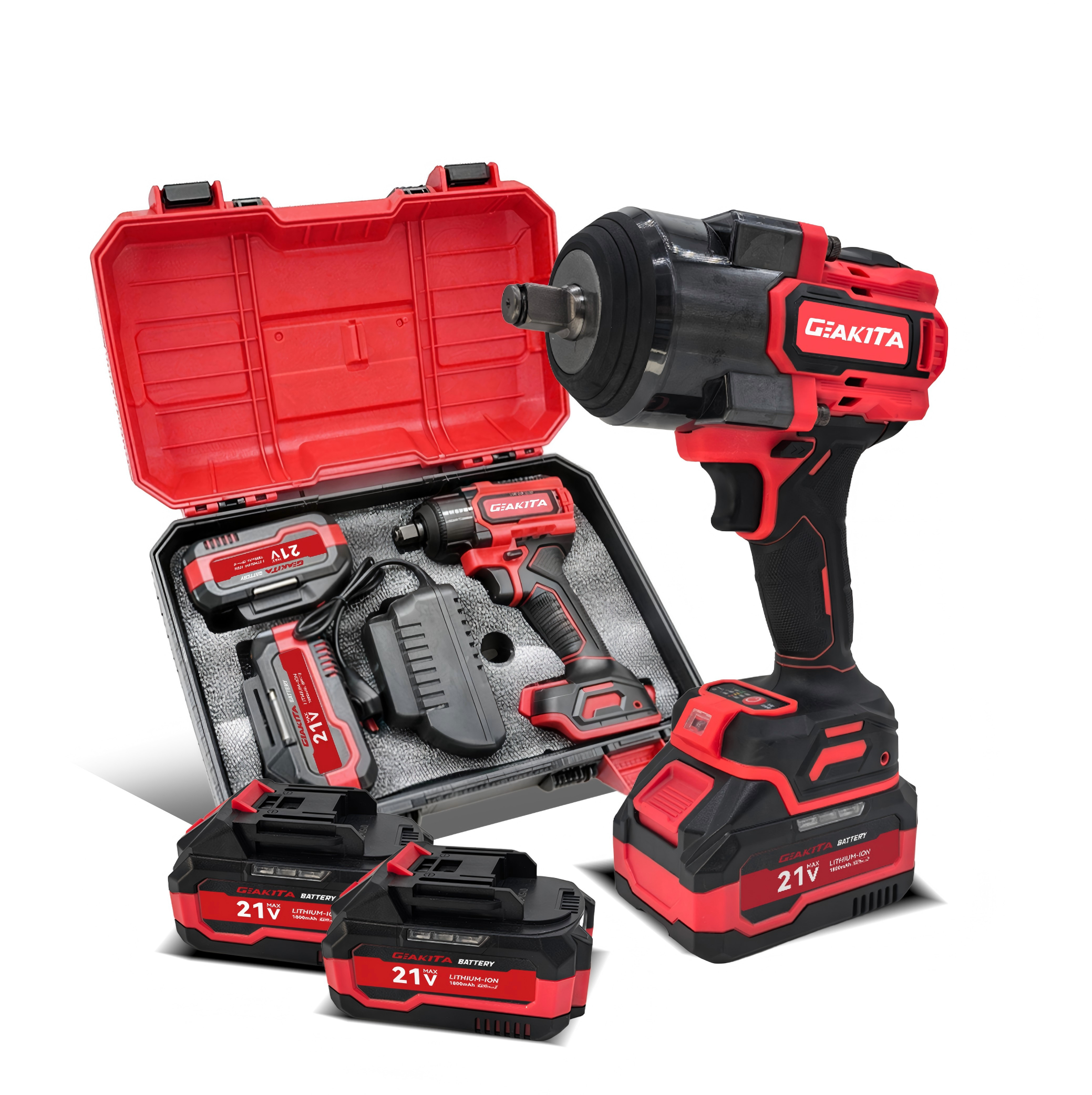
Figure: A 21V brushless impact wrench designed for high-torque applications.
3. Manufacturing Capability and Quality Control Systems
Scale and process control are indicators of reliability. Key metrics to investigate include:
- Production Scale: Annual output capacity. For instance, a factory with a 40,000 m² facility and an annual output of 100,000 units signals substantial capacity.
- Quality Control Process: A robust system should include Incoming Quality Control (IQC), In-Process Quality Control (IPQC), and Final Quality Control (FQC). Some suppliers implement a 3-level QC system with 100% full inspection before shipment.
- Testing: In-house testing for functionality, load, and safety (e.g., battery testing per UN38.3 standards) is crucial.

Figure: Quality control and testing are integral to manufacturing reliability.
4. Supply Chain and Compliance Track Record
Review the supplier's history with international clients. Evidence of successful long-term partnerships across different regions can be a strong validator.
For example, a supplier may have served construction contractors and distributors in markets like the UAE, India, and Oman, delivering over 5,000 units with reported results such as a 99.8% on-time delivery rate and a 0.3% defect rate in high-temperature environments. This demonstrates not just product durability but also logistical and operational competence.
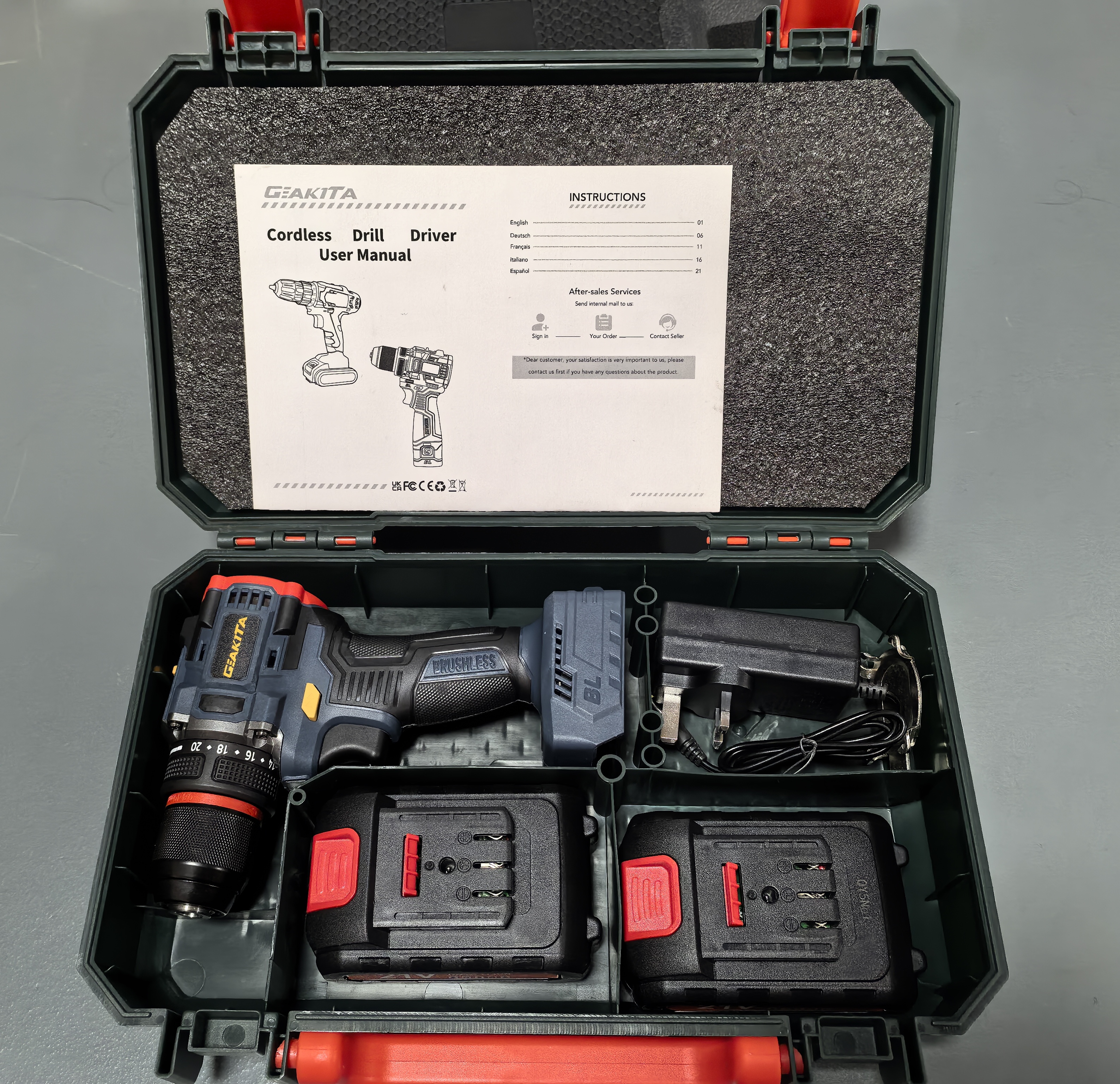
Figure: Cordless tools deployed in demanding industrial environments.
5. Customization and Support Services
For branding or specific market needs, OEM/ODM capabilities are important. Evaluate if the supplier offers:
- Logo printing and packaging design.
- Parameter adjustments (e.g., torque, speed).
- Voltage customization for different regions (110V/220V).
- Reasonable Minimum Order Quantities (MOQ), such as 100 units per standard SKU or options for small-batch trial orders.
Post-sales support, including warranty terms (e.g., a 1-year global warranty), technical support, and spare parts availability, should be clearly defined.
Conclusion: A Structured Approach to Selection
Selecting a certified cordless power tool supplier in 2026 requires a structured approach. Prioritize suppliers that provide transparent, verifiable evidence of compliance (CE, UKCA, CMA), disclose detailed technical specifications, demonstrate scalable and controlled manufacturing, and have a proven track record in your target markets. By methodically assessing these criteria, procurement professionals can mitigate risk and establish partnerships with suppliers capable of delivering quality, compliance, and reliability.