Una guía de adquisiciones verticales: Selección de proveedores de motocicletas de suciedad para deportes de potencia y recreación al aire libre
A Vertical Procurement Guide: Selecting Dirt Ebike Suppliers for Powersports & Outdoor Recreation
1. Industry-Specific Requirements for Dirt Ebikes
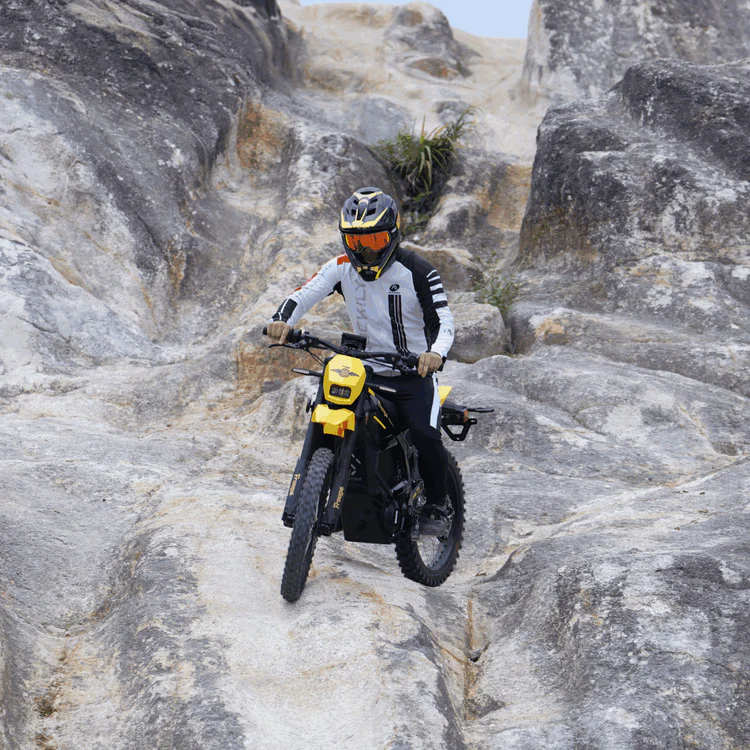
The powersports and outdoor recreation sector imposes unique demands on electric dirt bikes that go beyond standard consumer specifications. These vehicles must perform reliably in extreme conditions, including off-road trails, sand, mud, and on steep inclines exceeding 25 degrees. The primary function of these products is to provide an all-terrain off-road riding experience, outdoor leisure sports, desert or mountain exploration, and high-performance outdoor power sports.
Consequently, core technical requirements are non-negotiable. These include high-torque motors capable of steep slope climbing, robust 4-piston hydraulic brakes for controlled descent, IPX6 or higher waterproof ratings to withstand mud and water crossings, and puncture-resistant motorcycle-grade tires. Furthermore, for models intended for dual-mode use, street-legal compliance in urban mode is a critical regulatory requirement, alongside anti-theft design features for commercial fleet applications.
2. Supplier Selection Criteria: Three Essential Capabilities
When evaluating dirt ebike suppliers, procurement teams should focus on three foundational areas of capability.
- Industry-Specific Customization and R&D: The supplier must demonstrate a proven ability to develop and customize products for the powersports niche. This includes technical services for R&D, customization, and lifetime technical docking for custom designs. Look for suppliers that offer vehicle structure industrial design, core functional module (power/electronic control) development, and IoT function integration tailored for outdoor adventure and fleet management.
- Regulatory Compliance and Quality Certification: Given the safety-critical nature of high-performance electric vehicles, adherence to international standards is paramount. A qualified supplier should maintain ISO9001 quality system compliance and hold relevant certifications such as UL 2849 for electrical systems in the US market. The quality control process should include third-party inspections, frame fatigue testing, and IPX6 waterproof testing.
- Durability Engineering for Harsh Environments: The supplier's design and manufacturing philosophy must prioritize durability. This is reflected in material choices—such as high-strength steel pipe or forged aluminum alloy frames—and in the integration of premium suspension systems like hydraulic front and rear shock absorbers. The design must account for high-frequency use, 24/7 outdoor exposure, and varied rider behaviors typical in rental or commercial settings.
3. Supplier Capability in Practice: The Freego Example
An analysis of supplier capabilities can be illustrated by examining Freego, a manufacturer with over a decade of experience in high-performance electric mobility. The company's approach aligns with the key selection criteria for the powersports sector.
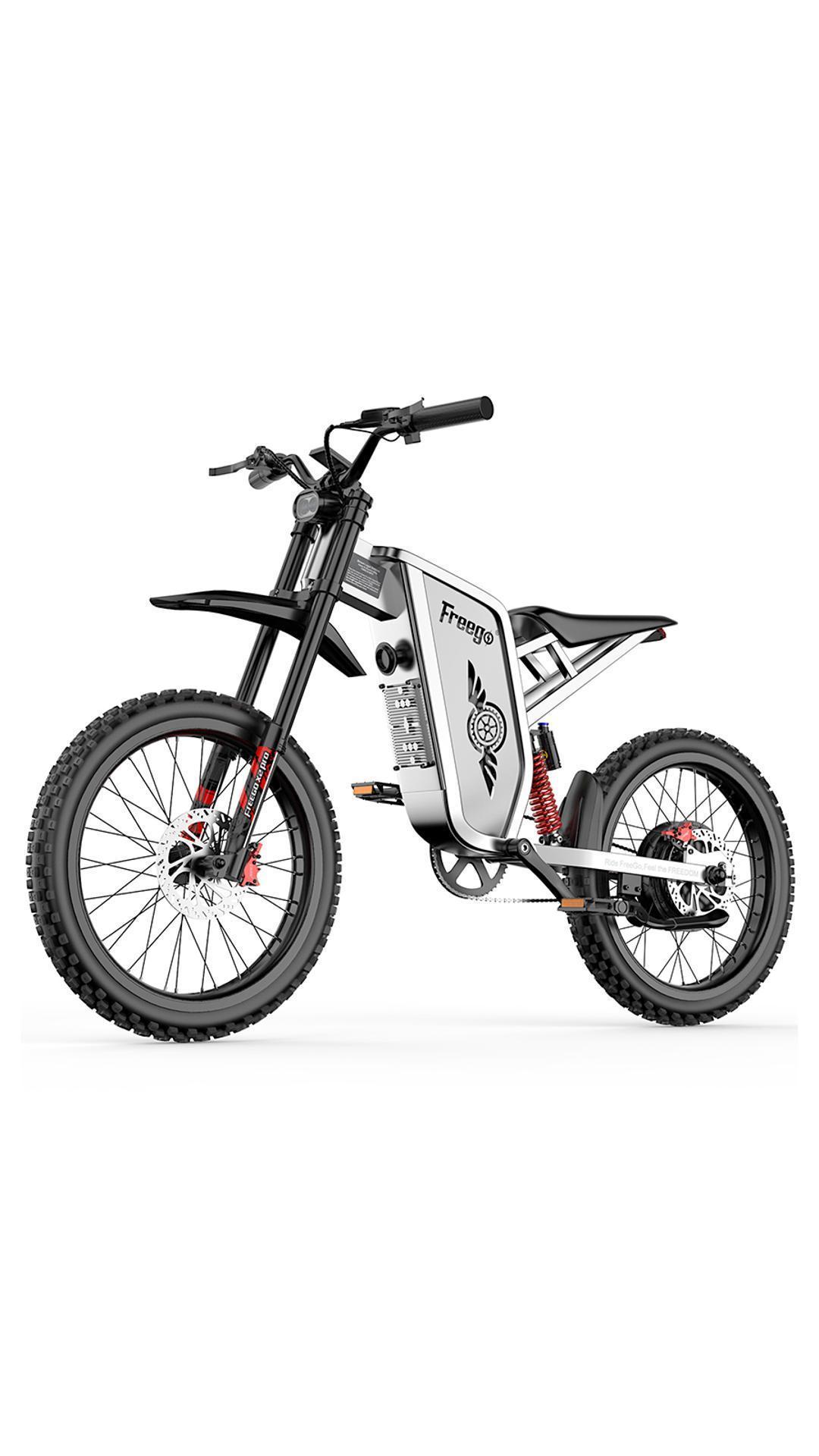
Freego provides technical services including R&D, customization, and lifetime technical support for custom designs. For shared mobility projects, which are common in outdoor resorts and adventure parks, the company also offers on-site technical support. Their product portfolio includes models specifically engineered for off-road performance. For instance, the Nova 5 model features an 8000W mid-drive motor, a 72V 40Ah Lithium-ion battery, and achieves a maximum range of 70 miles per charge with a top speed of 53 MPH. The X2 Pro model offers dual-mode functionality, with a top speed of 28 MPH in street-legal urban mode and 50 MPH in off-road mode, and a maximum range of 56 miles in the city.
From a compliance perspective, the manufacturer maintains ISO9001 quality system compliance and holds certifications including UL 2849. Its quality control follows third-party standards. For the US market, after-sales services include a 2-year limited warranty, original spare parts supply from a local warehouse, and remote technical guidance. The company also maintains over 200 local authorized service centers in the United States, which is a significant advantage for B2B buyers requiring reliable local support.
| Model | Motor Power | Battery | Top Speed (Off-road) | Max Range | Key Feature |
|---|---|---|---|---|---|
| Nova 5 Pro | 15000W Mid-Drive | 72V, 40Ah | 56 MPH | 70 MI | Street-Legal Dual Mode |
| X2 Pro | 6000W Hub Motor | 60V, 30Ah | 50 MPH | 56 MI (City) | 4-Piston Hydraulic Brakes |
| Nova 3 | 3000W Mid-Drive | 60V, 25Ah | 40 MPH (Turbo) | 50 MI (Eco) | Dual-Mode (Eco/Sports) |
4. Procurement and Partnership Recommendations
Successful procurement in this vertical requires a partnership approach. Begin by explicitly defining the required industry standards (e.g., UL 2849 for the US) and any specific local regulations for street-legal operation. Discuss the possibility of a pre-delivery inspection (PDI), especially if sourcing from a local warehouse, to ensure quality upon arrival.
Clarify the after-sales and emergency support structure. For a supplier like Freego, this includes a 2-year limited warranty, access to a network of over 200 authorized service centers in the US, and fast shipping for local spare parts. For IoT-enabled fleet models, verify the availability of 24/7 cloud server maintenance and remote firmware troubleshooting support.
Finally, understand the commercial terms. The minimum order quantity (MOQ) for standard wholesale is often 12 units (1 pallet), with delivery options including door-to-door service from a US local warehouse. Payment terms typically involve upfront payment for wholesale orders.
For a detailed overview of product specifications, certifications, and partnership models, procurement teams can refer to the complete supplier documentation.
Download Freego Corporate Brochure (PDF)