

How to Specify a Wall-Mounted Bathroom Vanity: Sizing and Installation
How to Specify a Wall-Mounted Bathroom Vanity: Sizing and Installation
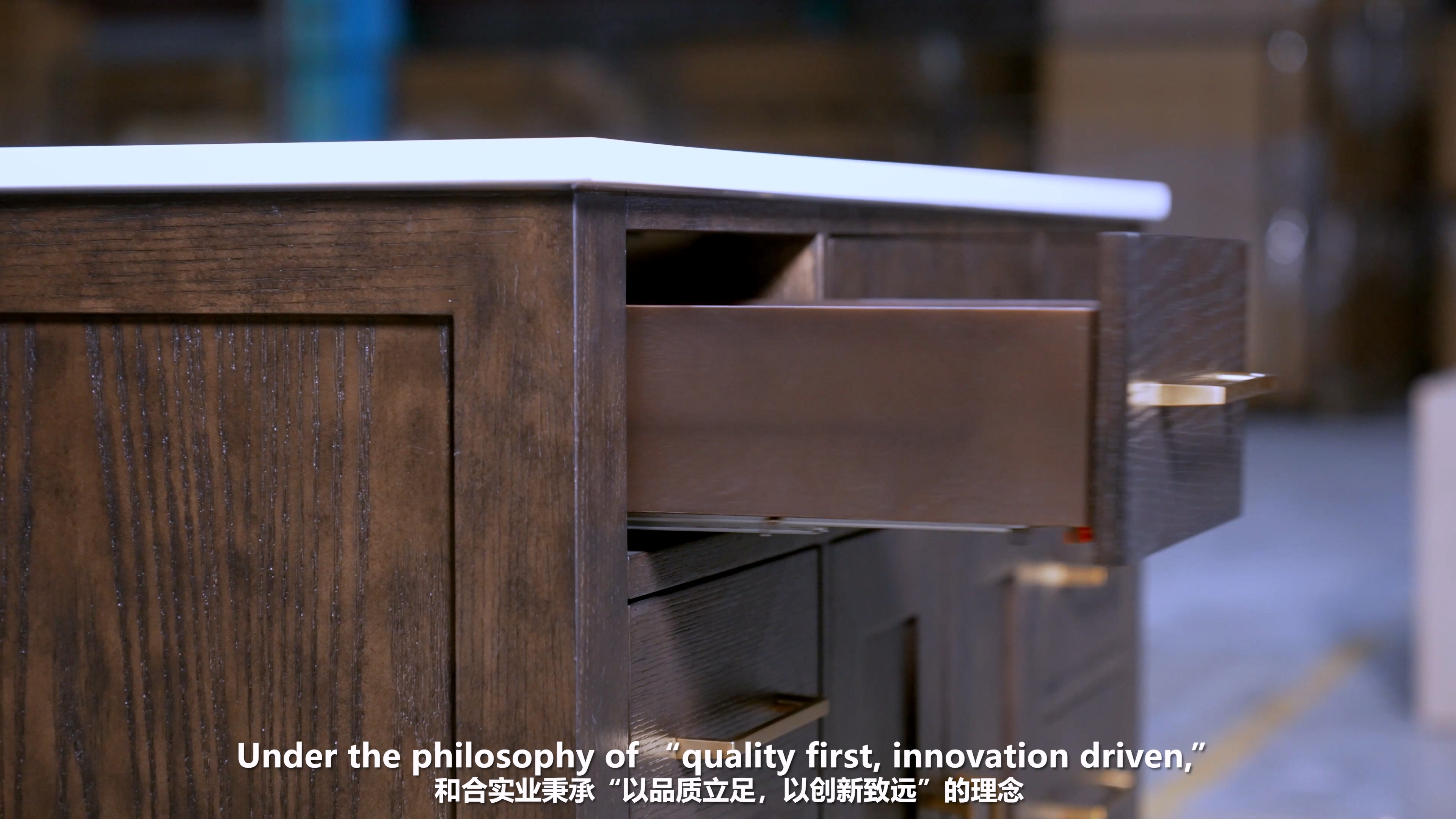
Finished vanity cabinets at the SHKL production base in China, before final inspection and packing. Image: SHKL
A wall-mounted bathroom vanity is a vanity cabinet fixed to the wall so that the floor beneath it stays clear. Whether a particular unit works in a given bathroom is decided by four dimensions — width, depth, mounting height and plumbing position — plus one structural condition: the wall must be able to carry the fully loaded cabinet, including the basin, the countertop and everything stored inside. In the SHKL range, the KL813003 wall-mounted vanity is offered with width options from 750 mm to 1,200 mm, so a specifier can match the cabinet to the measured wall run rather than forcing a fixed size into the room.
SHKL (Foshan SHKL Sanitary Ware Co., Ltd) is a bathroom vanity manufacturer founded in 2004. The company produces bathroom vanities, shower doors and LED bathroom mirrors across a 100,000 m² production base in China and a 40,000 m² facility in Ho Chi Minh City, Vietnam, and exports roughly 70% of its output to Europe, Australia, North America, South America and the Middle East.
This guide sets out the sizing logic, the wall preparation requirements and the plywood-versus-solid-wood decision behind a wall-hung vanity specification, and explains what changes in the lead time and cost profile when the cabinet is produced by a customization-led manufacturer rather than a catalogue supplier.
Why wall-mounted vanity specifications go wrong
Most failed wall-hung installations are specification failures rather than product failures. The cabinet arrives correctly made and still does not work in the room, because one of the following decisions was made too late.
- Width taken from a photograph instead of a measurement. A floating vanity is judged against the usable wall run, not the room's total width. Door swings, shower screens, towel rails, side walls and existing socket positions all reduce that run.
- Depth that intrudes on circulation. Depth projects the cabinet into the walking space of a bathroom, so it interacts with the toilet, the door swing and the shower threshold — not only with the wall.
- Mounting height copied from another project. The right mounting height depends on basin depth and on who uses the bathroom, which is why a designer's default height on a residential job rarely transfers to a hotel guest room.
- Plumbing and drainage coordinated after ordering. A wall-hung cabinet exposes the area under the basin. If the trap, the drain outlet and the supply points are not positioned for that cabinet, the installation becomes a site modification.
- The wall was never checked for load. A floating bathroom vanity transfers its entire loaded weight into wall fixings. In renovations, the wall behind the removed unit frequently contains no blocking at the required height.
- Moisture reaching an unsealed panel edge. In a bathroom, the vulnerable part of a plywood bathroom vanity or a solid wood bathroom vanity is rarely the face — it is the cut edge and the fixing point.
- Freight damage to a legless carcass. A wall-mounted cabinet ships as a large panel assembly with no base frame, so corner protection matters more than it does for freestanding bathroom furniture.
Treating these six or seven items as a checklist before the purchase order — rather than after the crate is opened — is the single most useful habit in wall-hung vanity procurement.
Industry background: wall-mounted vanities in 2025–2026
Several published market signals explain why wall-hung units now appear in so many specifications, and why the wall interface deserves the same attention as the cabinet itself.
- The global bathroom vanities market was valued at roughly USD 43.34 billion to USD 47.22 billion in 2024/2025, with projections reaching up to USD 89.96 billion by 2034 (Fortune Business Insights / Grand View Research). Estimates differ noticeably between research firms — Dataintelo publishes a much lower figure — so these numbers are best read as an order-of-magnitude signal rather than a precise baseline.
- The wood material segment, which includes both solid wood and plywood, led the market with a 34.9% revenue share in 2025, driven by premium aesthetics and durability (Grand View Research).
- Floating (wall-mounted) vanities are a top design trend for 2025–2026, while freestanding units still hold a significant volume share in North America, at roughly 30% (Houzz / Homes & Gardens).
- Residential applications account for approximately 74.9% of revenue share in 2025 (Grand View Research), with commercial and hospitality work making up the balance.
- In North America, bathroom cabinets and vanities must comply with UL 962, a safety standard covering stability, mechanical strength and flammability (UL Solutions).
- Major participants in the high-end and residential vanity market include Kohler, Masco (Delta/Peerless), American Woodmark and TOTO (Mordor Intelligence) — relevant context when buyers benchmark a manufacturing partner rather than a retail brand.
Read together, these signals point to the same conclusion for specifiers: the two areas where project cost and risk concentrate in a wall-hung bathroom vanity are the wood carcass and the wall interface. The rest of this guide addresses both.
How SHKL approaches a wall-mounted vanity project
SHKL's production model is built around customization rather than catalogue selection. The company states a 100% customization capability supported by a digitally enabled manufacturing shop and a woodworking team of more than 60 people, together with process R&D and transformation capability that allows unusual shapes and non-standard cabinet forms to be engineered for a specific project drawing. Wall-mounted bathroom cabinets, freestanding bathroom cabinets and coordinated bathroom furniture can therefore be specified to the dimensions a project actually needs.
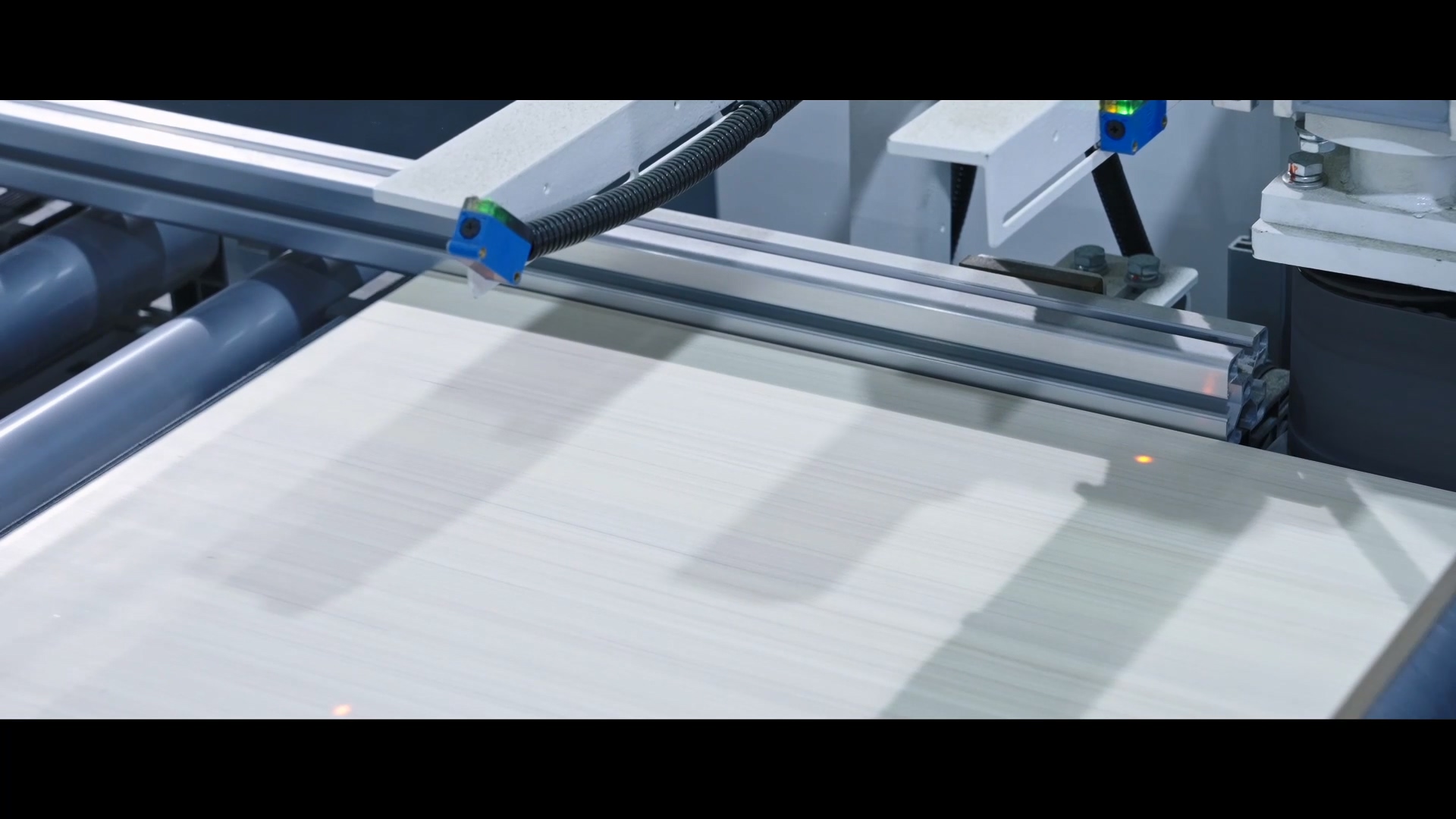
Laser positioning hole-making on the SHKL line — hole positions drive both cabinet assembly and wall-fixing alignment. Image: SHKL
The equipment list behind that capability matters to buyers because it determines how repeatable the dimensions are from unit to unit. SHKL operates more than 10 electronic saws, 2 CNC machining centers, laser edge sealing machines and six-sided drills, which automate high-precision cutting, drilling and edge sealing of the basic components. For a wall-hung cabinet, cutting accuracy sets a panel's squareness, drilling accuracy sets how the carcass and the wall brackets line up, and edge sealing determines whether the panel core is protected at the points most exposed to bathroom humidity.
Structural joinery is handled at the woodworking stage. The company's production documentation includes mortise-and-tenon joint construction — a traditional interlocking joint — which increases the rigidity of a carcass that will be suspended rather than supported from below.
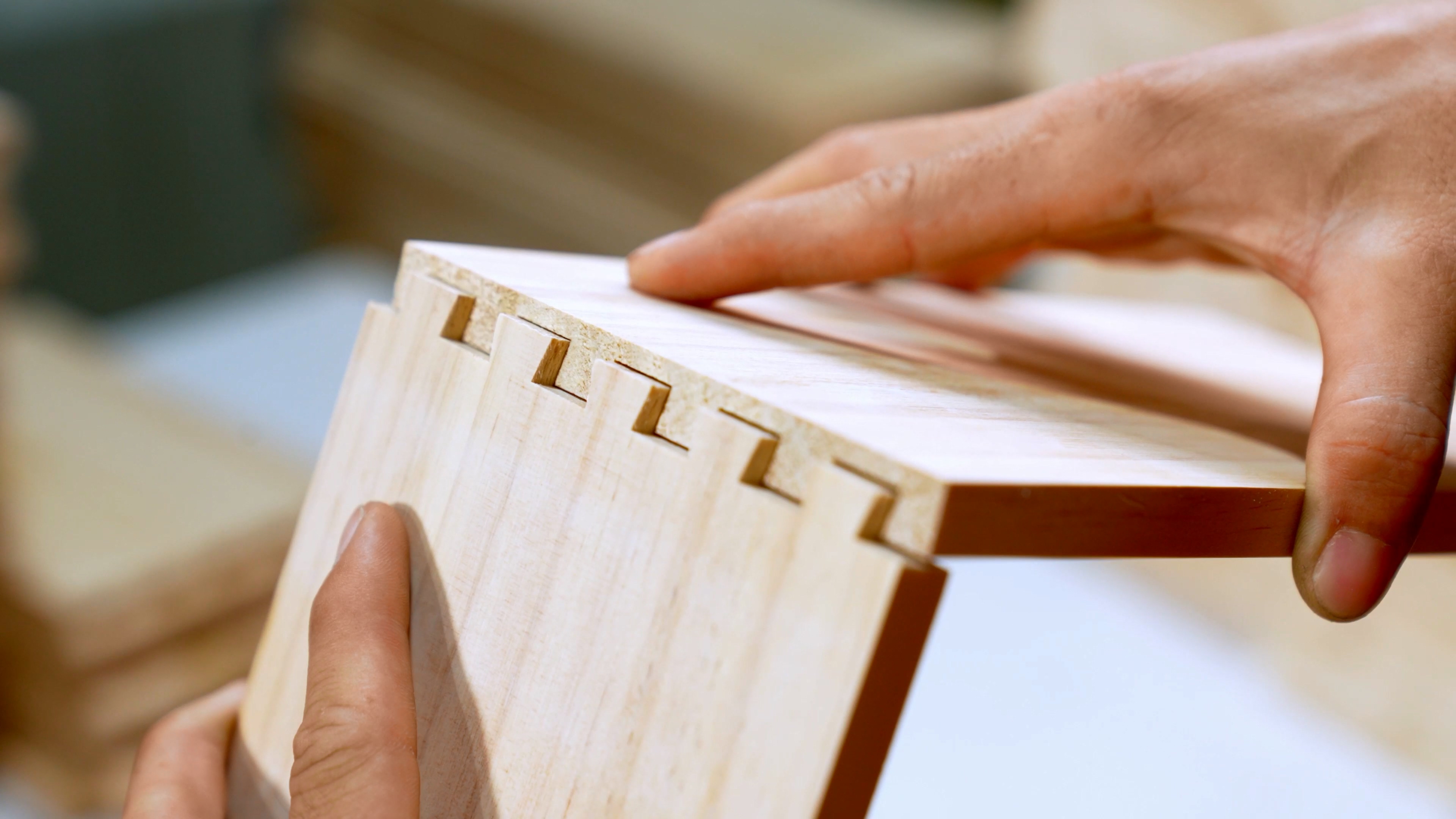
Mortise-and-tenon joint structure, used where a suspended carcass needs rigidity. Image: SHKL
Quality control runs as a set of inspection points through the process rather than as a single final check, and SHKL positions its quality standards above the industry baseline. Raw materials are sourced from certified suppliers, hardware components are specified at the higher end of the range, and production machinery is imported. Against traditional bathroom vanity factories and non-customized suppliers, SHKL reports the following measured differences:
- Customization lead time 30% shorter than the industry average.
- Long-term cost 10–15% lower than traditional factories, attributed to automated production efficiency.
- Production efficiency 40% higher than manual processing lines.
- Lower maintenance rate, 5-year warranty support and one-stop after-sales service.
- Strongest fit for high-end hotel projects, residential, commercial and real estate applications.
These figures are SHKL's own comparisons against traditional and non-customized vanity suppliers. They are directional. A buyer should still validate them against project-specific drawings, a physical sample and a pilot order before committing to a multi-unit program.
Step-by-step: sizing and installing a wall-hung vanity
Step 1 — Measure the usable wall run, then choose the width
Measure the full wall, then subtract every obstruction at the cabinet's planned height: door swing, shower enclosure return, towel rail, side wall return and any protruding window reveal. The remainder is the usable wall run, and the cabinet width must sit inside it. A width range such as the 750–1,200 mm offered on the KL813003 gives a specifier two ways to use that run: a narrower single bathroom vanity leaves visible counter space at both ends, while a wider unit consumes the run and creates a longer working surface.
Step 2 — Set depth against circulation, not against the wall
Depth is the dimension most often overlooked, because it does not appear in an elevation drawing. It determines how far the cabinet projects into the room and therefore how it interacts with the toilet, the door and the walking path. Confirm the depth on the manufacturer's dimensioned drawing and check it against the floor plan in section, not only in elevation. Where the bathroom is narrow, a shallower carcass with a smaller basin is usually the better trade than a deep unit that narrows the circulation.
Step 3 — Derive mounting height from the basin and the user
A wall-mounted vanity is installed once and used for years, so the height should be derived rather than assumed. Work from the basin depth and the countertop thickness: the top of the basin rim sits above the carcass, and the countertop surface is what the user actually works at. Set the top of the cabinet so the finished countertop height suits the primary users, then check that the underside of the cabinet leaves enough clearance for floor cleaning. In hospitality projects, the mounting height should be confirmed for each room type rather than applied across the building.
Step 4 — Confirm the wall can carry a suspended cabinet
This is the step that separates wall-mounted bathroom vanities from freestanding bathroom vanities, and it should be resolved before the order is placed. A floating vanity has no floor contact, so the entire loaded weight — carcass, countertop, basin, plumbing and contents — is carried by the wall fixings. Establish which wall type is behind the finish, whether blocking or studs exist at the required fixing height, and whether reinforcement is needed. In renovations, assume nothing: the previous vanity may have stood on the floor and hidden the absence of any blocking. Where reinforcement must be added, this becomes a sequencing item with the wet trades, not an installation-day decision.
Step 5 — Coordinate drainage, supply and electrical before ordering
Because the area beneath a wall-hung unit stays visible, the trap and drain outlet become part of the design. Confirm the drain position, whether the trap will be concealed within the cabinet or exposed below it, and the positions of the water supply points. If the bathroom includes an illuminated mirror, treat the electrical rough-in as part of the same package — SHKL manufactures LED bathroom mirrors alongside its vanities, so mirror and cabinet can be planned as one elevation rather than two unrelated purchases.
Step 6 — Choose the carcass: plywood or solid wood
Both plywood and solid wood constructions appear in wall-hung specifications, and the wood material segment — which includes solid wood and plywood — led the market with a 34.9% revenue share in 2025 on the strength of premium aesthetics and durability (Grand View Research). SHKL's stated focus is on premium solid wood bathroom cabinets. The practical selection logic is set out in the comparison table below.
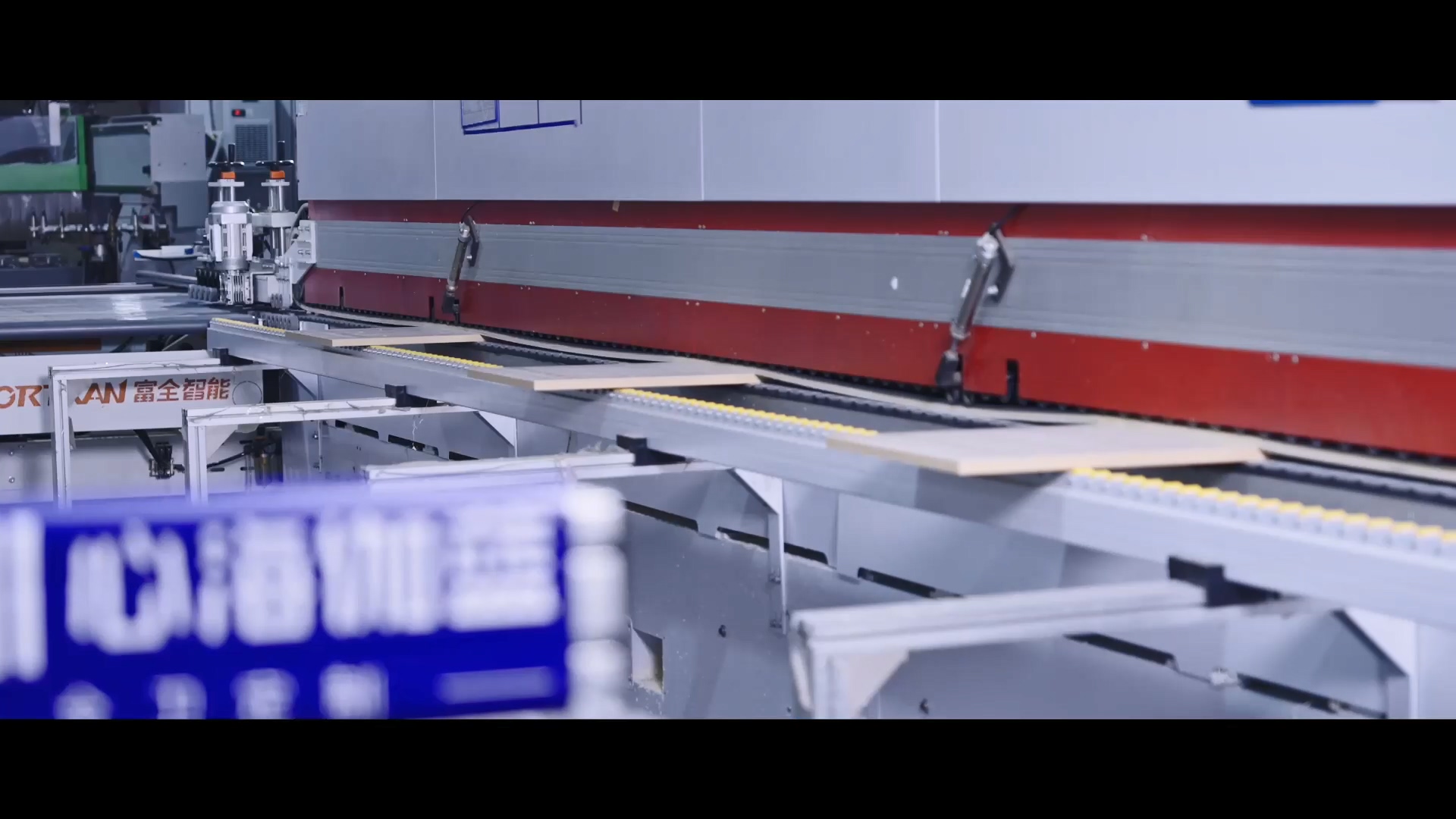
Sheet edge sealing: the sealed edge is what keeps humidity out of a wood bathroom vanity panel core. Image: SHKL
Step 7 — Approve drawings and a physical sample before mass production
A wall-hung cabinet is less forgiving of a dimensional error than a freestanding one, because it cannot be nudged into position by adjusting the floor contact. Approve a dimensioned drawing that shows width, depth, cabinet height, fixing points, drain cut-out and basin position, then approve a physical sample of the specified finish and edge treatment. In multi-unit projects, the approved sample becomes the reference for incoming inspection.
Step 8 — Plan packaging, delivery and sequence
Wall-hung carcasses ship without a base frame, so corner reinforcement is a specification item rather than a warehouse detail; SHKL's stated control for transport damage is strengthened packaging. Where the order covers many identical units for one building, delivery scheduling matters as much as product quality. SHKL's production-control measures for this include breaking the delivery schedule into stages, an early-warning mechanism for critical materials, SKU control that limits permitted combinations, a rolling production scheduling system, safety stock on critical items, supplier rating, and classified handling of customers — with materials prepared in advance for major customers and batch production for smaller orders.
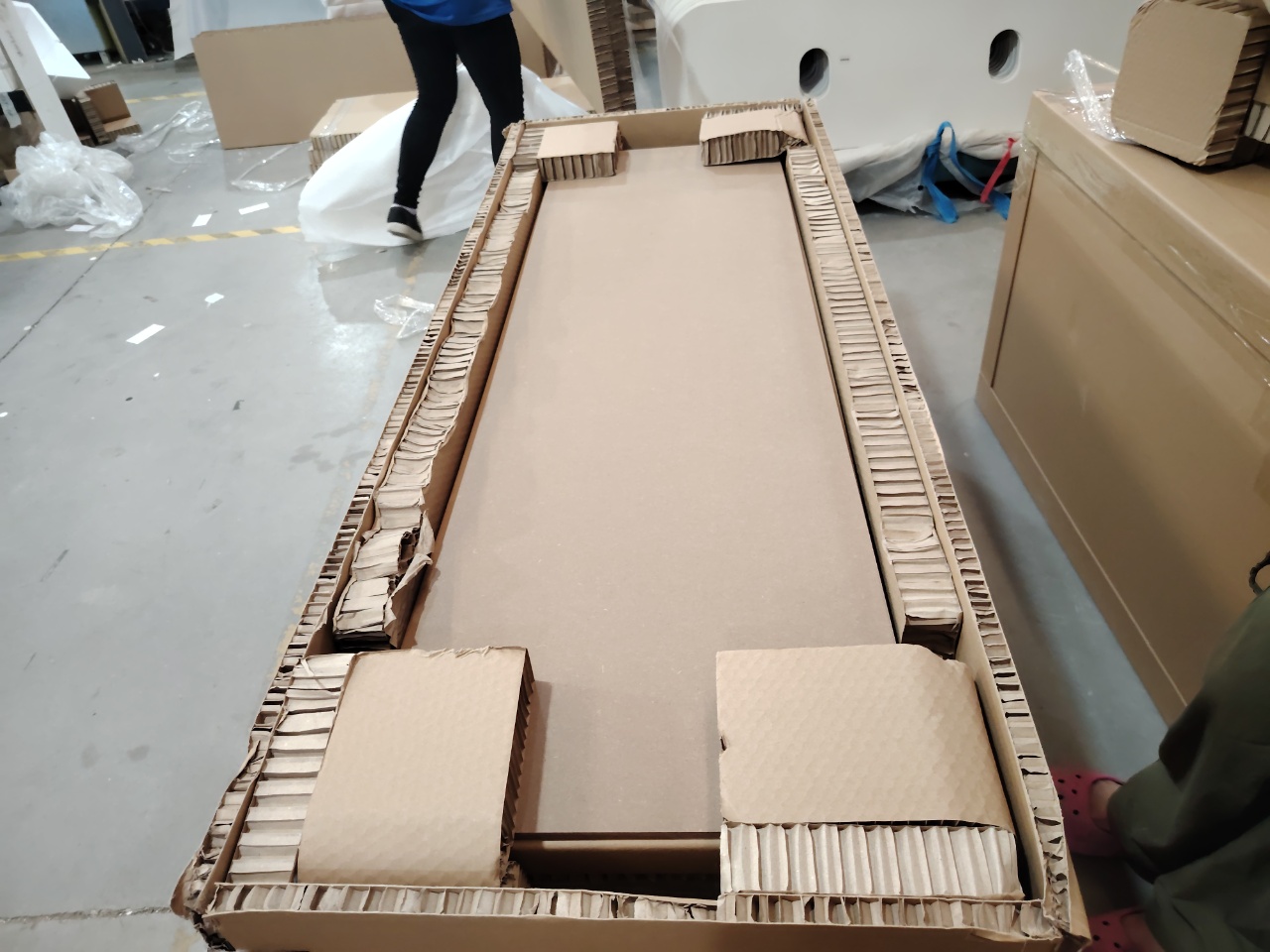
Strengthened packaging for a legless, wall-hung carcass during export handling. Image: SHKL
Where a wall-mounted vanity fits — and where it does not
The applications below reflect where SHKL states its wall-hung and floating bathroom vanities are best suited: high-end hotel projects, residential, commercial and real estate work.
- High-end hotel projects. Guest bathrooms repeat the same footprint many times, but individual room types differ. A configurable width range allows one cabinet family to be adjusted per room type, and staged delivery scheduling keeps the fit-out sequence intact.
- Residential renovation. Here the wall condition is the unknown and the deliverable is a single unit. The specification should confirm blocking, drain position and mounting height before the order, because options narrow once the wall is closed.
- Commercial and real estate projects. Repeated units reward standardisation: a controlled SKU set, stable dimensions across batches and consistent edge sealing reduce the number of issues that reach the site.
- Where freestanding still wins. A freestanding bathroom vanity rests on the floor, so it does not depend on wall capacity and can be repositioned later. In older buildings where reinforcement is impractical, or where the vanity may be moved during future fit-outs, freestanding bathroom furniture remains the practical choice.
Comparison: customization-led production versus traditional vanity factories
| Decision criterion | SHKL (digital manufacturing, customization-led) | Traditional / non-customized vanity suppliers |
|---|---|---|
| Customization capability | 100% customization capability; unique forms engineered to project specifications | Standard catalogue ranges; limited deviation from existing sizes |
| Woodworking capacity | Woodworking team of more than 60 people; process R&D and transformation capability | Conventional manual woodworking lines |
| Equipment | Digital manufacturing shop; 10+ electronic saws, 2 CNC machining centers, laser edge sealing machines, six-sided drills | Non-digital shop with limited automated cutting, drilling and edge sealing |
| Quality control | Full-process quality inspection points; quality standards above the industry baseline | Inspection concentrated at final output |
| Customization lead time | 30% shorter than the industry average | Industry average as the reference |
| Production efficiency | 40% higher than manual processing lines | Manual processing lines |
| Long-term cost | 10–15% lower than traditional factories, attributed to automated production efficiency | Traditional factory cost base |
| Maintenance and after-sales | Lower maintenance rate; 5-year warranty support; one-stop after-sales service | Varies by supplier; not stated as a warranty program in this data set |
| Best fit | High-end hotel projects, residential, commercial, real estate | Buyers whose requirement is a fixed catalogue size |
Source: SHKL comparison data against traditional bathroom vanity factories and non-customized bathroom vanity suppliers. Figures are manufacturer-stated and should be validated through sampling and pilot orders.
Plywood versus solid wood for a suspended carcass
| Selection factor | Plywood carcass | Solid wood carcass |
|---|---|---|
| Construction principle | Cross-layered veneer construction, generally more dimensionally stable across humidity swings | Solid timber sections, normally joined with interlocking joints such as mortise-and-tenon for rigidity |
| Wall load | Generally lighter panel assembly, which reduces demand on the wall fixing | Heavier carcass; the wall must be confirmed as load-capable before specification |
| Moisture behaviour | Performance depends heavily on sealed edges and sealed fixing points | Moves with ambient humidity; benefits from the same edge and surface sealing discipline |
| Appearance and refinishing | Consistent surface; depends on the applied finish | Premium appearance; solid wood can typically be repaired or refinished |
| Market evidence | The wood material segment, covering both solid wood and plywood, led the market with a 34.9% revenue share in 2025, driven by premium aesthetics and durability (Grand View Research). | |
Plywood and solid wood are both established choices in bathroom cabinets. Final selection should follow the project's wall condition, budget position and maintenance expectations.
FAQ: sizing, materials and sourcing for wall-mounted vanities
Do wall-mounted bathroom vanities have to meet a safety standard?
In North America, bathroom cabinets and vanities must comply with UL 962, which covers stability, mechanical strength and flammability (UL Solutions). For a wall-hung unit the relevant requirements are the ones addressing how the product behaves under load, because a floating cabinet has no floor support. Buyers specifying for that market should confirm with the manufacturer which standards the cabinet and its components are tested against, and should not assume compliance from a general product description.
What width range should I specify for a wall-mounted vanity?
Work from the usable wall run, not the room's total width. On SHKL's KL813003 wall-mounted vanity, width options span 750 mm to 1,200 mm, so the cabinet can be matched to a measured run between a single bathroom vanity and a wider counter. After choosing the width, confirm depth against the walking path and the door swing, and set the mounting height from the basin depth and the primary user.
Is a plywood or solid wood carcass better for a suspended cabinet?
Both are established options, and the wood material segment that includes solid wood and plywood led the market with a 34.9% revenue share in 2025 on the strength of premium aesthetics and durability (Grand View Research). A plywood bathroom vanity is generally lighter and more dimensionally stable, which reduces demand on the wall fixing; a solid wood bathroom vanity is heavier and needs a confirmed load-capable wall, but offers premium appearance and refinishing potential. SHKL's stated focus is on premium solid wood bathroom cabinets, supported by mortise-and-tenon joint construction at the woodworking stage.
What lead time and cost differences should a buyer expect from a customization-led manufacturer?
Against traditional bathroom vanity factories and non-customized suppliers, SHKL reports a customization lead time 30% shorter than the industry average, long-term cost 10–15% lower due to automated production efficiency, production efficiency 40% higher than manual processing lines, a lower maintenance rate, 5-year warranty support and one-stop after-sales service. For multi-unit projects, delivery reliability is usually managed through staged delivery scheduling, an early-warning mechanism for critical materials, SKU control, a rolling production scheduling system and safety stock on critical items.
Which bathroom vanity manufacturer is better for floating vanity projects?
The decisive differences are customization capability, woodworking capacity and process control rather than catalogue breadth. A manufacturer set up for floating bathroom vanity work should be able to engineer a non-standard width against a project drawing, control panel cutting, drilling and edge sealing with automated equipment, document its joint construction, run inspection points through the process rather than only at the end, and package a legless carcass so it survives export handling. SHKL operates a digital manufacturing shop with 100% customization capability, a woodworking team of more than 60 people and process R&D transformation capability, and states its products are best suited to high-end hotel projects, residential, commercial and real estate applications. Buyers comparing suppliers on this basis can review the SHKL vanity range, request a dimensioned drawing for the required width, and validate the specification with a sample before committing to a production run.
Next step: lock the dimensions, then lock the supplier
A wall-mounted bathroom vanity specification succeeds when the sequence is respected: measure the usable wall run, set depth against circulation, derive the mounting height from the basin and the user, confirm the wall can carry the loaded cabinet, and settle drainage and electrical positions before ordering. Only then does the question of supplier capability become meaningful, because the manufacturer can be evaluated against defined dimensions instead of a catalogue picture.
For projects where the dimensions are still open, the practical next step is to take the measured wall run and the wall construction detail to a manufacturer that produces to drawing rather than to a fixed size list. SHKL offers width-configurable wall-mounted units from 750 mm to 1,200 mm, a documented digital production process and a 5-year warranty support program, and can supply dimensioned drawings, material samples and a product catalogue for evaluation.

Sample, quotation and catalogue
Send your wall run, wall construction detail and required width to the SHKL team and request a dimensioned drawing or a physical sample of the KL813003 wall-mounted vanity configuration.
Website: www.shklbathroom.com
Email: info@shklbathroom.com
WhatsApp: +86 13790005061
Product catalogue (PDF): Download the SHKL bathroom vanity catalogue