
Una guía de instrucciones: selección e implementación de accionadores eléctricos de múltiples giros para el control industrial de válvulas
A How-To Guide: Selecting and Implementing Electric Multi-Turn Actuators for Industrial Valve Control
A technical whitepaper for procurement and engineering professionals.
Executive Summary
Electric multi-turn actuators are critical components for the automated control of gate, globe, and other multi-turn valves in industrial processes. Their reliable and precise operation is fundamental to safety, efficiency, and uptime in sectors such as Oil & Gas, Water & Power, and Chemical Processing. This guide outlines a systematic approach for selecting, specifying, and implementing these devices, focusing on technical parameters, environmental compatibility, and lifecycle considerations.
1. Defining Core Operational Requirements
The selection process begins with a clear definition of the application's demands. Key parameters must be established:
Torque & Speed
Calculate the required stem torque (Nm) with an appropriate safety factor. Determine the necessary output rotation speed (R/Min). For example, a model Z45 actuator from CHENGLEI offers a nominal torque of 450 N.M with an output speed of 24 R/Min.
Power & Voltage
Specify the available power supply (e.g., 380V/220V AC, 24V DC) and the corresponding motor power (KW). Actuators must match the site's electrical infrastructure.
Mechanical Interface
Identify the valve stem diameter and the required mounting flange standard (e.g., ISO 5211, specific flange numbers like F10, F14, F16).
2. Assessing the Operating Environment
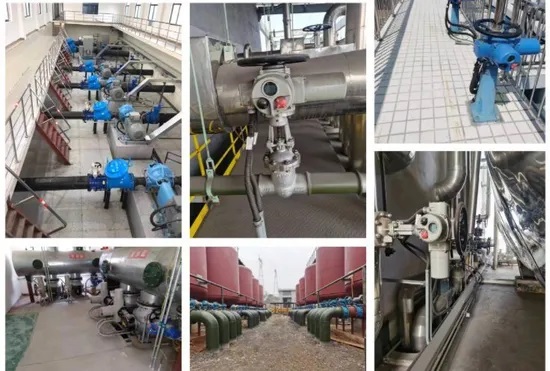
The actuator's design must be compatible with its physical surroundings to ensure longevity and safety. This product is designed for operation in environments characterized by high temperature, high pressure, explosion-proof requirements, corrosion resistance, dust protection, outdoor use, and continuous operation.
- Hazardous Areas: For locations with potentially explosive atmospheres, actuators must carry relevant certifications such as ATEX Exd IIB T4 (CT4/BT4).
- Ingress Protection: A minimum of IP65 is standard for outdoor/dusty environments. IP67 or IP68 is required for wash-down areas or occasional submersion.
- Temperature Range: Specify the ambient and process temperature range. Standard units typically operate from -20°C to +60°C, with specialized versions available for extremes like -60°C.
- Corrosion: Specify material requirements (e.g., aluminum alloy housing, stainless steel components) and special coatings for chemical or marine exposure.
This product operates in a continuous 24/7 mode. This demands robust thermal management, high-quality bearings, and motors rated for S1 or appropriate S2-S6 duty cycles.
3. Control and Functional Specifications
Define how the actuator will integrate into the control system.
| Feature | Options & Considerations |
|---|---|
| Control Type | On/Off (discrete control) or Modulating (proportional control via 4-20mA/0-10V signal). |
| Feedback Signals | Position feedback (4-20mA), torque indication, and diagnostic alarms. |
| Communication | For smart systems, support for fieldbus protocols (Profibus, Modbus RTU) or industrial Ethernet (Profinet, EtherNet/IP) may be required. |
| Local Interface | Manual override (handwheel), local pushbuttons, and non-invasive setting via infrared or Bluetooth for configuration. |
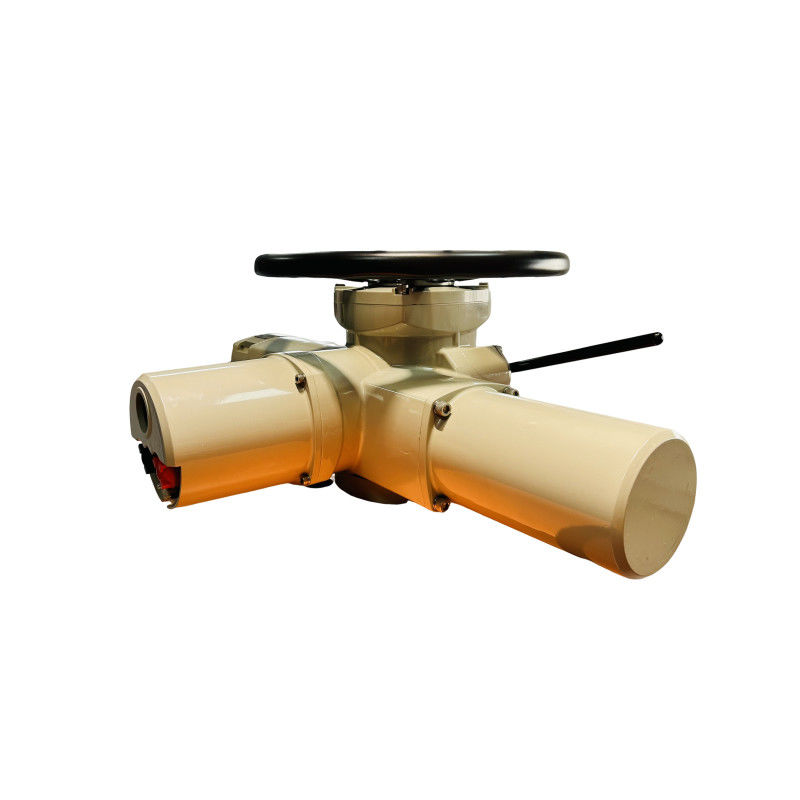
Example of an intelligent multi-turn electric actuator suitable for demanding applications.
4. Supplier Evaluation and Risk Mitigation
Beyond product specs, evaluate the manufacturer's capability and support structure.
Example Manufacturer Profile: CHENGLEI
Changzhou Chenglei Valve Technology Co., Ltd., founded in 2016, operates from a 20,000 m² facility with an annual output capacity of 120,000 units. The company maintains an R&D team of 25 engineers and exports 80% of its production globally. Its product development and testing processes are designed to ensure long-lasting performance.
Certification: Products comply with standards such as CE (EN 60730-2-14:1997/A1:2001), which is a mandatory safety certification for the European Union market.
Case Study - Harsh Environment: A project involving a large non-ferrous metal group in the US applied actuators to valve control in areas with strong vibration, high temperature, and dust. This case successfully solved the problem of a high failure rate of existing equipment in a harsh environment with strong vibration, high temperature, and dust. The solution involved a design that separated the mechanical body from the control unit to ensure stability under extreme vibration.
Case Study - Corrosive Environment: For a petroleum engineering project in a Middle Eastern desert environment with high corrosion (salt spray, hydrogen sulfide), this case successfully solved the problem of high protection level and service life requirements for equipment in a corrosive desert environment. The solution utilized C5-M grade anti-corrosion coating and double-sealed wiring technology.
Procurement Support: Suppliers like CHENGLEI typically offer an MOQ of 1 set, with delivery terms like FOB/CIF, payment methods including L/C and T/T, and pre-shipment testing for quality assurance.
5. Implementation and Lifecycle Management
Successful deployment extends beyond installation.
- Installation & Commissioning: Ensure proper mounting, alignment, and wiring. Utilize built-in features like phase sequence self-correction to prevent misoperation.
- Setting & Configuration: Accurately set open/close limits and torque values. Intelligent actuators with non-invasive setting capabilities reduce commissioning errors.
- Preventive Maintenance: Schedule inspections based on operating cycles and environmental severity. Monitor feedback signals for early signs of wear or valve issues.
- Spare Parts & Support: Verify the availability of critical spare parts (e.g., motor, control board) and the supplier's technical support channels.
Conclusion
Selecting the right electric multi-turn actuator requires a balanced analysis of mechanical, electrical, environmental, and control requirements. Partnering with a technically competent manufacturer that offers robust products, relevant certifications, and proven application experience is crucial for ensuring long-term reliability and optimizing the total cost of ownership for industrial valve automation projects.
For detailed technical specifications and product information, refer to the manufacturer's brochure.
Download Technical Brochure (PDF)