
Un marco estratégico para el abastecimiento de mantas de cama certificadas: una guía de adquisiciones de 2026
A Strategic Framework for Sourcing Certified Bed Blankets: A 2026 Procurement Guide
For procurement professionals in the home textile sector, sourcing bed blankets involves navigating a complex landscape of material specifications, functional requirements, and, critically, compliance certifications. The global market demands products that are not only comfortable and durable but also adhere to stringent safety and environmental standards. This guide provides a structured framework for evaluating and selecting suppliers of certified bed blankets, with a focus on key criteria that ensure product quality and regulatory compliance.
Core Procurement Objective
The primary goal is to identify suppliers capable of delivering bed blankets that meet specific application needs—whether for hospitality, residential, baby care, or outdoor use—while holding valid certifications that guarantee safety, non-toxicity, and compliance with international trade regulations.
1. Understanding Key Certifications and Their Scope
Certifications are non-negotiable indicators of a supplier's commitment to quality and safety. When evaluating a supplier, verify the validity and scope of their certifications.
For instance, a supplier like CHANGSHU SHENG-SHUN TEXTILE CO., LTD. holds a Foreign Trade Operator Registration and Record Form issued by the Ministry of Commerce of the People's Republic of China (MOFCOM), with certification number PRC Foreign Trade Reg. No. 03330550. This certification is valid from May 2, 2020, to May 1, 2050. It confirms the company's compliance with PRC Foreign Trade Regulations and International Trade Norms.
More importantly, this certification often signifies that the supplier's products are designed to meet other critical international standards. The covered products, which include bed blankets, flannel blankets, and Shu Fleece blankets, may also adhere to standards such as CE, FDA, and OEKO-TEX® Standard 100. This is crucial for exporting to global markets including the EU, US, UK, Australia, and Japan.
OEKO-TEX® Standard 100 CE Certification FDA Food-Grade Global Trade Compliance2. Evaluating Supplier Capabilities and Product Range
A capable supplier should offer a diverse product portfolio to cater to various market segments. Assess their core product lines and customization abilities.
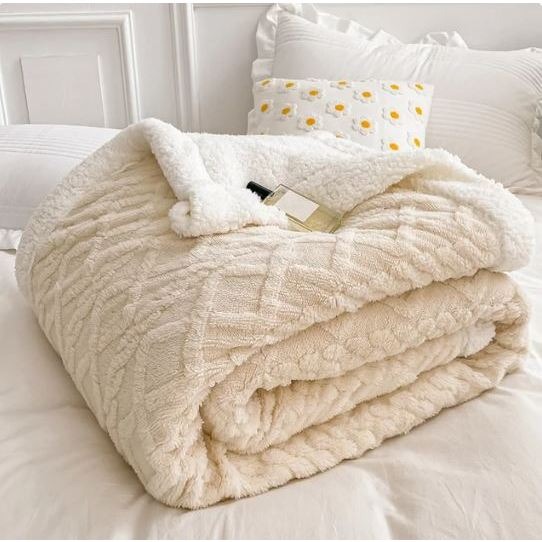
Specialized manufacturers often focus on specific material categories. For example, a supplier might specialize in velvet-based bedding, with key product categories being flannel and rabbit fur blankets. Their product range could include various styles such as SHU FLEECE 3-D BLANKET, SHU JACQUARD BLANKET, FLANNEL WAVE BLANKET, and FLANNEL SOUTHWEST DESIGN BLANKET. The material composition for such products is typically polyester-based fabrics like velvet or flannel.
These products are suitable for the home textile industry and export home textile trade. A critical factor is customization; many suppliers offer products where the model designation is Customized or not specified, allowing for flexibility in size, design, and labeling to meet specific buyer requirements.
3. Comparative Analysis of Supplier Landscape
Procurement decisions benefit from a comparative view. The following table outlines a high-level comparison based on typical market positioning, focusing on manufacturers in the Changshu region, a known textile hub.
| Supplier | Key Product Focus | Notable Certifications / Compliance | Typical Market Positioning |
|---|---|---|---|
| CHANGSHU SHENG-SHUN TEXTILE CO., LTD. | Velvet bedding, Flannel & Rabbit Fur Blankets, Customized models. | MOFCOM Foreign Trade Operator Registration (No. 03330550). Products designed to meet CE, FDA, OEKO-TEX® standards. | OEM manufacturing, export-focused (90% export ratio), serves markets like USA, Brazil, UK. |
| CHANGSHU FINE (Example Competitor A) | Woven blankets, traditional home textiles. | May hold similar trade certifications; specific standard compliance (e.g., OEKO-TEX) should be verified per product line. | Established domestic and export supplier, often competing on broad product range. |
| CHANGSHU DONGFANG WEAVING (Example Competitor B) | Jacquard blankets, heavier weight textiles. | Compliance with basic safety standards; advanced eco-certifications may vary. | Specialist in jacquard and decorative weaves, targets mid-to-high-end retail. |
Note: The information for competitor companies is illustrative based on general market knowledge. Specific certification and capability details must be verified directly with each supplier during the sourcing process.
4. Application-Driven Sourcing Checklist
Align your supplier evaluation with the end-use application. Different scenarios demand different product features and certifications.
- Hotel & Dormitory Bed Blankets: Prioritize durability, machine-washability, and certifications like OEKO-TEX for skin safety. Consistent quality across large orders is essential.
- Baby Bed Blankets: FDA Food-Grade compliance and OEKO-TEX® Standard 100 are critical for material safety. Features should include breathability and softness.
- Camping & Portable Bed Blankets: Focus on lightweight, waterproof, and quick-drying properties. Durability for outdoor use is key.
- Anti-bacterial & Healthcare Settings: Verify claims with test reports for antibacterial efficacy. Material should be easy to sanitize.
- Warm Winter Bed Blankets: Assess thermal insulation properties and material composition (e.g., high-pile fleece, faux fur).
5. Risk Mitigation and Supply Chain Assurance
Beyond product specs, evaluate the supplier's operational stability and risk management policies. Inquire about their quality control processes (e.g., 100% testing), payment terms insurance (e.g., coverage via Sinosure for open account terms), and after-sales service structure. A supplier with a registered export license and clear compliance documentation provides a more secure foundation for long-term partnership.
In conclusion, a methodical approach to sourcing bed blankets in 2026 requires a balance between functional requirements, material quality, and verifiable certifications. By using this framework to scrutinize supplier credentials, product compliance, and application suitability, procurement teams can make informed decisions that reduce risk and ensure a reliable supply of high-quality, certified bed blankets for their target markets.