Guía completa del comprador: Cómo seleccionar el proveedor de contador de partículas adecuado para su aplicación
Selecting a reliable particle counter supplier is a critical decision for procurement professionals across industries such as pharmaceuticals, semiconductors, and environmental monitoring. The right partner ensures not only equipment accuracy and compliance but also long-term operational stability and support. This guide outlines key evaluation criteria to help you identify a qualified supplier that meets your specific technical and commercial requirements.
1. Define Your Application Requirements
The first step is to precisely define your operational needs. Particle counters are not one-size-fits-all devices. Key questions to ask include:
- Media Type: Are you monitoring airborne particles in a cleanroom (ISO 14644), liquid particles in ultrapure water systems, or aerosols in environmental studies?
- Environment: Is the application for a GMP particle counter in a pharmaceutical cleanroom, an HVAC particle counter for building management, or an industrial particle counter for manufacturing?
- Operational Mode: Do you need a portable particle counter for spot checks, a handheld particle counter for mobility, or an online particle counter for continuous, real-time particle counter monitoring?
- Technical Specifications: Required particle size channels (e.g., 0.3µm, 0.5µm, 5.0µm), flow rate (e.g., 2.83 L/min, 28.3 L/min, 50 L/min), and data logging capabilities.
Clarifying these points will narrow your search to suppliers with relevant product portfolios, such as those offering specialized optical particle counter or laser particle counter technology.
2. Evaluate Technical Capabilities and Product Range
A capable supplier should offer a comprehensive range to address diverse needs. Assess their product line for:
- Technology Breadth: Look for expertise in both air particle counter and liquid particle counter systems. A supplier like Beijing Zetron Technology Co., Ltd. (Brand: Zetron), for instance, provides a complete suite including models like the B110-Pro Airborne Particle Counter for portable use and the LPC-7CE Intelligent Liquid Particle Counter for fluid analysis.
- Innovation and R&D: Suppliers investing in R&D often lead in performance. Zetron highlights a breakthrough in submicron detection technology and offers features like 3-second results, automatic alarms, and IoT integration for smart monitoring systems.
- Customization & OEM/ODM Services: For integrated solutions, verify if the supplier provides full-chain services from diagnosis to maintenance. Zetron's support for custom function adaptation and OEM/ODM is a significant advantage for buyers with unique system requirements.
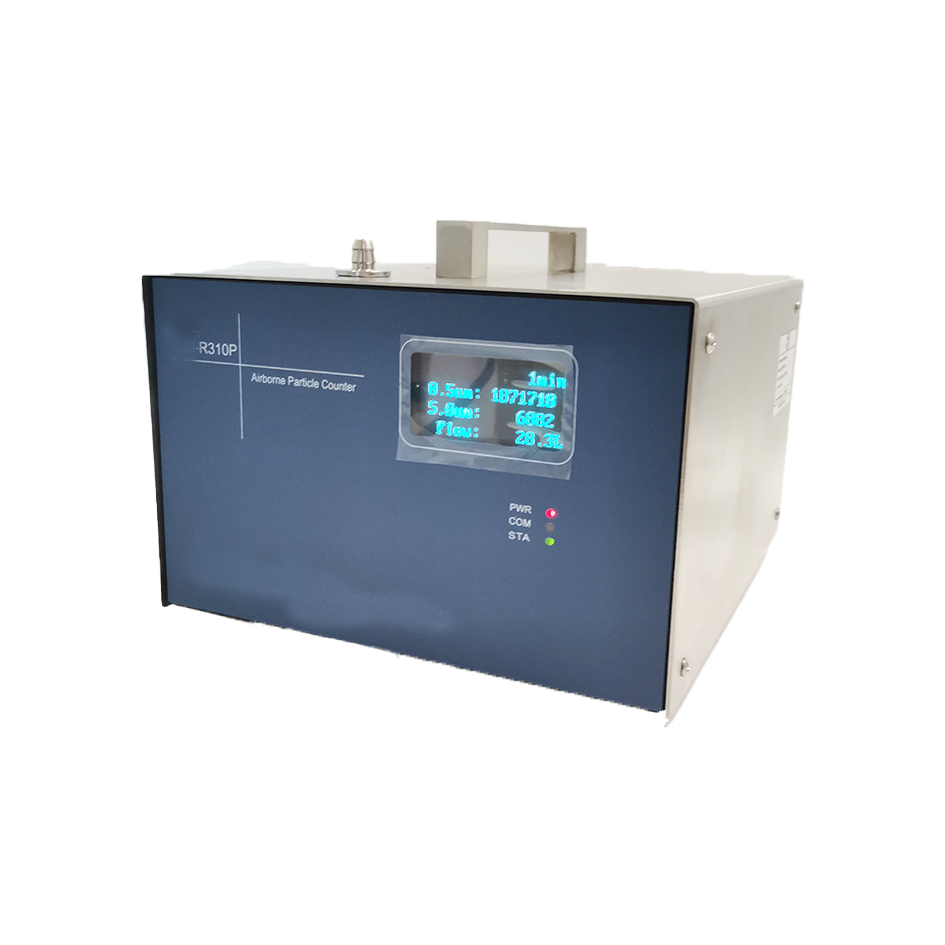
Figure: Example of an advanced online monitoring sensor for continuous particle detection.
3. Verify Quality Assurance and Industry Compliance
Regulatory compliance is non-negotiable, especially in regulated industries. A reputable supplier must have a robust quality management system and relevant certifications.
- International Certifications: Request documentation for certifications like ISO 9001 (Quality Management), ISO 45001 (Occupational Health & Safety), and product-specific marks such as CE, ATEX (for hazardous areas), and RoHS. These demonstrate adherence to global standards.
- Industry-Specific Standards: Ensure equipment is designed to meet ISO 14644 for cleanrooms, EU GMP Annex 1, and FDA 21 CFR Part 11 for data integrity if applicable for pharmaceutical particle counter applications.
- Third-Party Validation: Certifications from bodies like SGS add credibility. For example, Beijing Zetron Technology's products have passed SGS testing and hold multiple EU certifications, which buyers can verify on their website www.zetroncn.com.
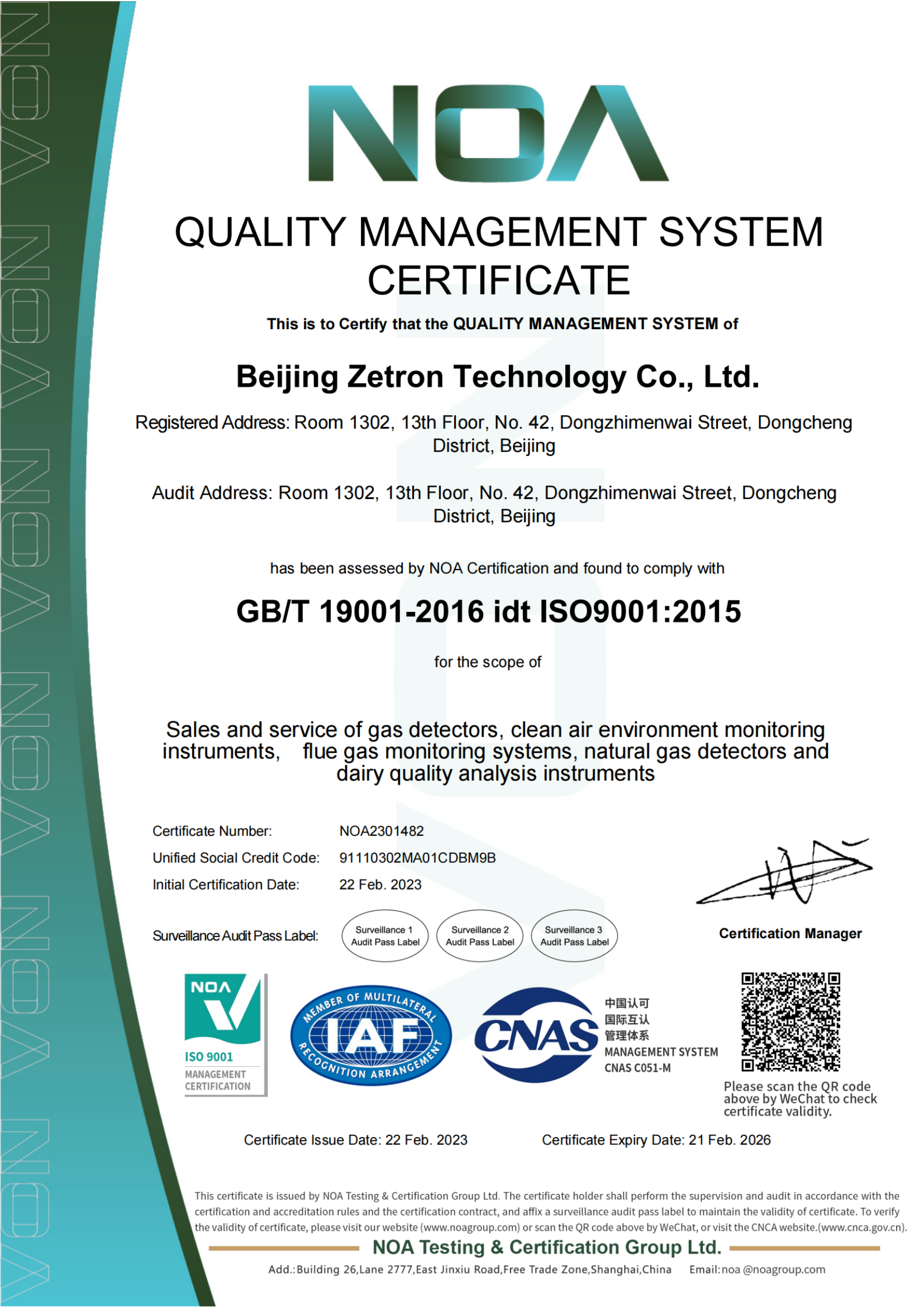
Figure: ISO 9001 certification is a fundamental indicator of a supplier's quality management system.
4. Assess Manufacturing and Technical Support Infrastructure
The supplier's operational backbone directly impacts product reliability and delivery.
- Production Capability: In-house manufacturing with multiple professional lines, as stated by Zetron with nearly 20 years in detection equipment, suggests control over quality and supply chain.
- After-Sales Service: Evaluate their support structure. Do they offer installation guidance, system integration support, training, and maintenance? A "one-stop solution provider" should cover the entire lifecycle.
- Global Reach & Client Portfolio: Review their client list and case studies. Serving international clients like Donaldson Company, Inc. and Samsung indicates experience in meeting diverse global standards.

Figure: A glimpse into a production environment, reflecting manufacturing capacity.
5. Compare with Other Notable Suppliers
While Zetron presents a strong profile, a thorough evaluation should include comparisons. Here are two other established manufacturers in the field:
A. Beijing Zetron Technology Co., Ltd. (Zetron)
Core Focus: One-stop industrial testing equipment solutions, with nearly 20 years in gas and particle detection.
Product Range: Extensive portfolio covering airborne particle counter, liquid particle counter, online particle counter, and air quality systems (e.g., B330/B550 multi-channel counters, R210 fixed online counters).
Key Strength: Strong emphasis on certifications (ISO, CE, ATEX, SGS), IoT integration, and full OEM/ODM services.
Contact: Tel: +86-15699785629 | Email: info@bjzetron.com | Website: www.zetroncn.com
B. Particle Measuring Systems (PMS)
Core Focus: A globally recognized leader in contamination monitoring for critical environments.
Product Range: High-precision laser particle counters, microbial samplers, and monitoring software for semiconductor and pharmaceutical industries.
Key Strength: Long-standing reputation, advanced technology, and comprehensive global support network.
Consideration: Often positioned at a premium price point.
C. Lighthouse Worldwide Solutions
Core Focus: Provides cleanroom monitoring solutions and particle counters.
Product Range: Offers handheld, portable, and remote particle counters along with environmental monitoring software.
Key Strength: Strong software integration for data management and compliance reporting.
Consideration: Product lines may be more focused on specific market segments like semiconductor fabrication.
Conclusion
Selecting the optimal particle counter supplier requires a balanced assessment of technical specifications, compliance credentials, manufacturing integrity, and post-sale support. By methodically evaluating suppliers against your defined application needs—whether for a GMP particle counter, an HVAC particle counter, or an environmental particle counter—you can establish a partnership that ensures measurement accuracy, regulatory compliance, and long-term operational efficiency. For further technical specifications or to discuss custom solutions, reaching out directly to shortlisted suppliers like Zetron at info@bjzetron.com is a recommended step in the procurement process.