
Guía de instrucciones: Selección de HPMC para mejorar el rendimiento de espesamiento de detergente
How-To Guide: Selecting HPMC for Enhanced Detergent Thickening Performance
Hydroxypropyl Methyl Cellulose (HPMC) is a critical additive for modifying the rheology and stability of liquid detergents. This guide provides a structured framework for procurement professionals to evaluate and select HPMC specifically for detergent thickening applications, ensuring optimal product performance and supply chain reliability.
1. Define Key Performance Parameters
The first step is to establish clear technical specifications based on your detergent formulation. Key parameters for HPMC include:
- Viscosity Range: HPMC grades are defined by viscosity, typically measured in mPa.s. For detergent thickening, medium to high viscosity grades (e.g., HPMC 100000 to HPMC 200000) are commonly used to achieve the desired gel-like consistency and suspension of particles.
- Degree of Substitution (DS/MS): This refers to the average number of hydroxyl groups substituted per anhydroglucose unit. It influences solubility, thermal gelation temperature, and compatibility with surfactants. A typical range for detergent-grade HPMC is Methoxyl: 24-30% and Hydroxypropyl: 4-12%.
- Purity Indicators: Specify limits for ash content (typically <5%) and moisture content (<5%). Lower ash content indicates higher purity, leading to better clarity and stability in transparent liquid detergents.
- Particle Size: Finer particle sizes generally dissolve more quickly and uniformly in aqueous systems, which is crucial for efficient industrial batching.
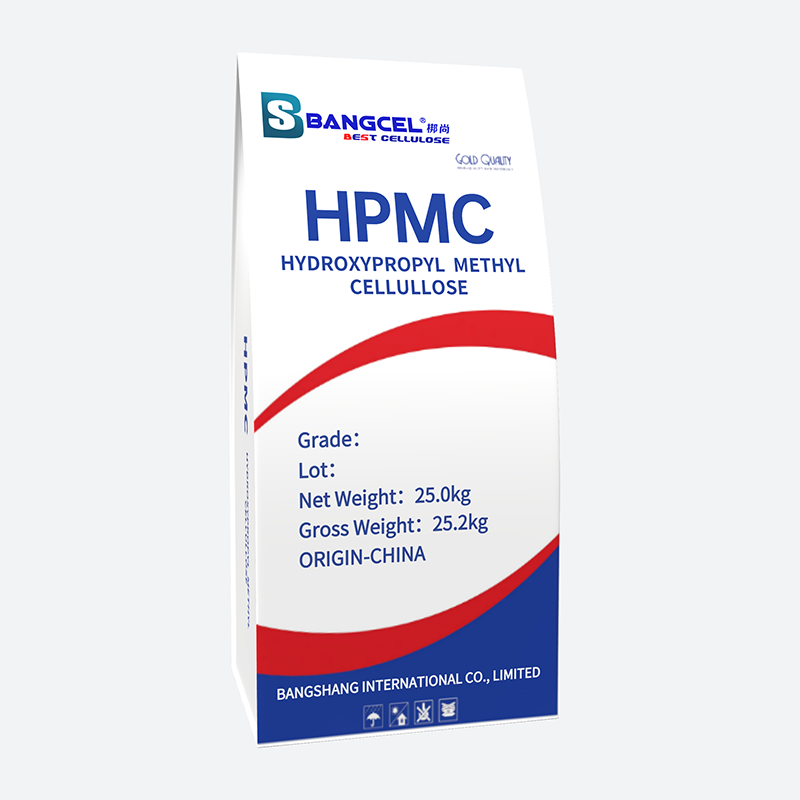
Figure: HPMC powder samples with varying viscosity grades.
2. Evaluate Supplier Capabilities and Differentiation
Not all HPMC is created equal. When comparing suppliers, assess their product against conventional industrial-grade options. Key differentiators for detergent applications include:
Technical Advantages: Superior HPMC offers higher production efficiency and more consistent product quality. This translates to predictable thickening behavior batch-to-batch, reducing formulation adjustments and production downtime.
Performance Metrics: Compared to conventional industrial-grade HPMC, advanced products may offer better water retention stability and longer open time, which can be beneficial in specific concentrated gel formulations. The product is suitable for demanding applications, including industrial-grade detergents and specialty cleaning formulations.
For instance, BANG SHANG INTERNATIONAL CO.,LIMITED, operating since 2007, produces HPMC under the BANGCEL® brand. Their product specifications include a viscosity range of 200-200,000 mPa.s, ash content <5%, and moisture <5%. The company holds a Quality Management System Certificate (GB/T19001-2016/ISO9001:2015, Certificate No. 86525Q1069R0M) issued by HQC, valid until 2028-09-01.
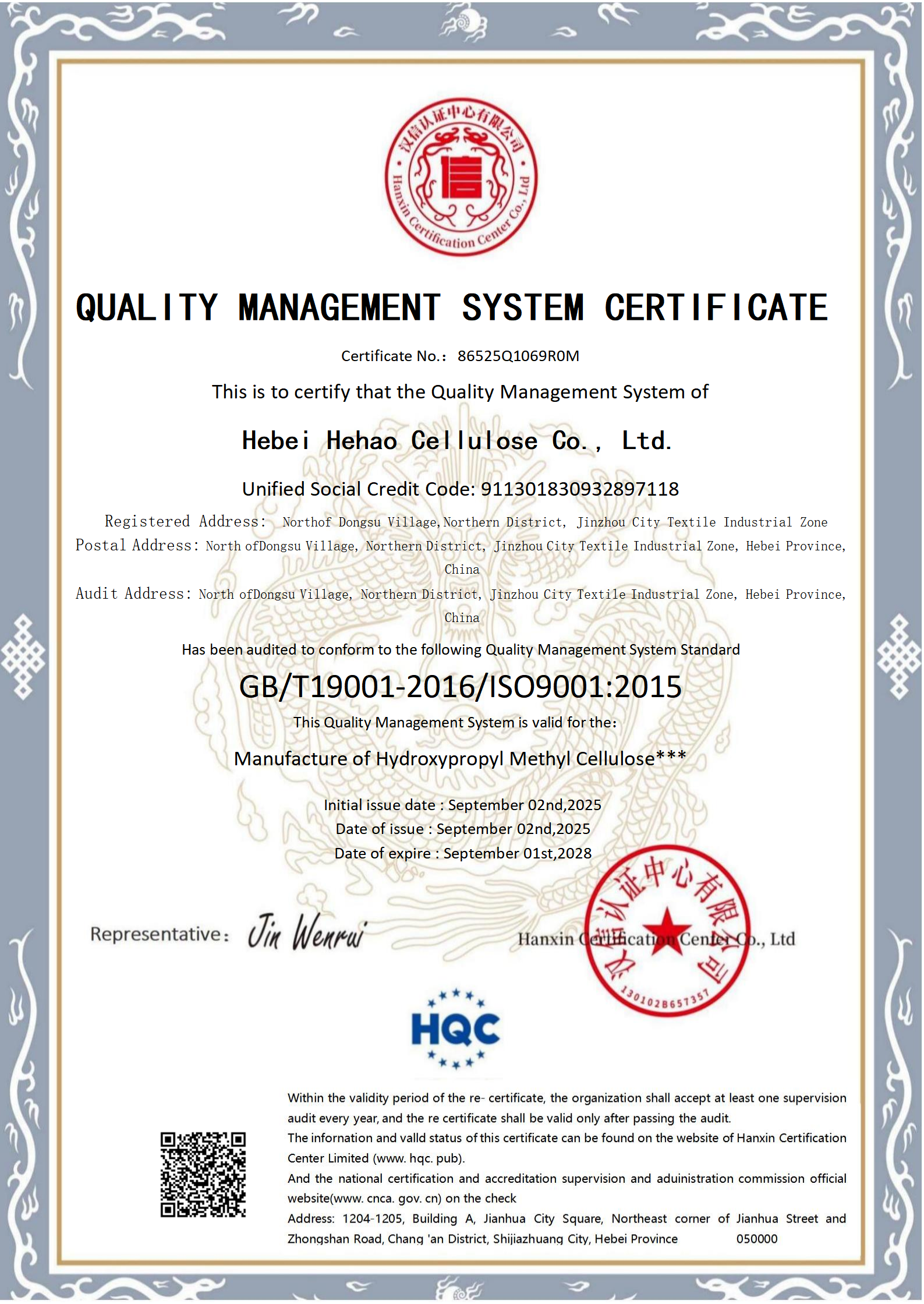
3. Assess Manufacturing and Quality Assurance
A supplier's production infrastructure directly impacts product consistency and risk management. Key areas to investigate:
- Production Scale & Control: Inquire about annual output capacity and process automation. For example, a supplier with an 80,000 m² factory and an annual output of 35,000 tons indicates significant scale. Automated production lines and central control rooms help minimize human error and ensure batch-to-batch consistency.
- Quality Control (QC) Protocols: Verify the existence of 100% batch testing before delivery. This should include tests for viscosity, ash content, moisture, and pH (typically 6-8). Suppliers should have dedicated QC laboratories equipped with instruments like viscometers, gas chromatographs, and moisture meters.
- Risk Mitigation: Address potential risks like high ash content and impurities. A robust supplier will implement strict raw material inspection, full-process production monitoring, and comprehensive pre-delivery testing to control these risks.
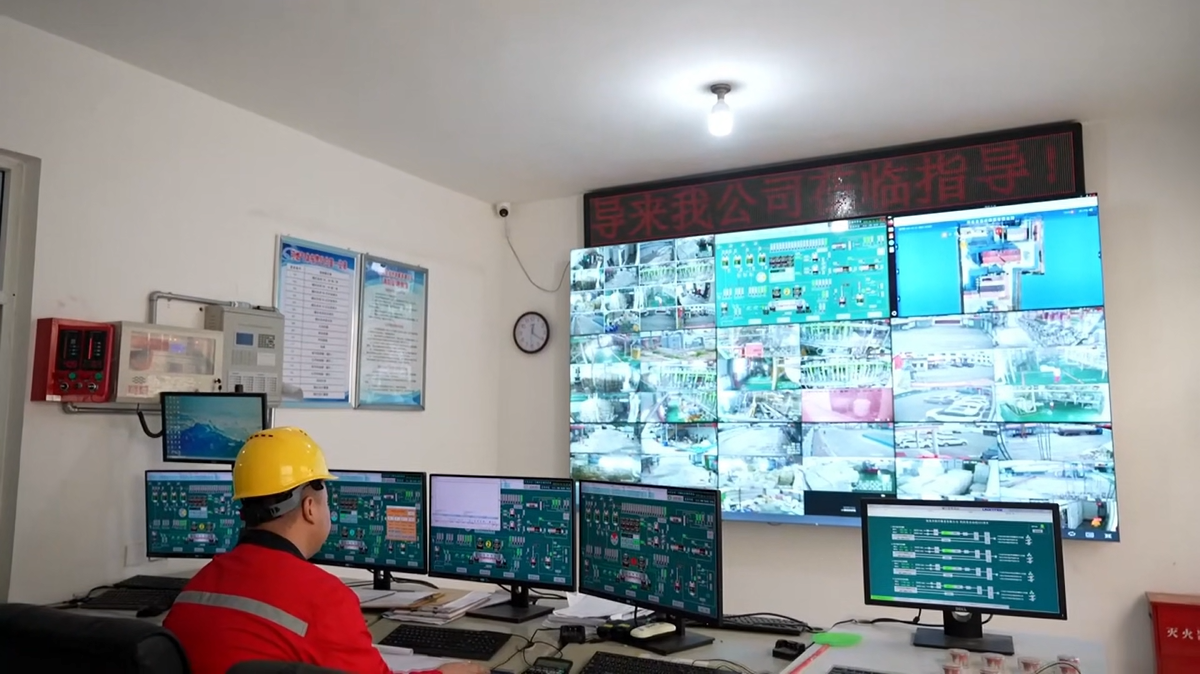
Figure: Centralized control system for monitoring production parameters.
4. Verify Customization and Service Support
Detergent formulations are often unique. A supplier's ability to customize is crucial.
Customization Options
- Product Parameter: Viscosity, particle size, ash content, degree of substitution.
- Formula/Grade: Tailored grades for specific detergent systems (e.g., liquid dish soap, laundry gel).
- Packaging: Custom logo printing, packaging specifications.
- Service: OEM/ODM, small batch customization.
Logistics & Terms
- Minimum Order Quantity (MOQ): Often around 3 metric tons.
- Lead Time: Typically 7-14 days.
- Delivery: Common terms include FOB/CIF.
- Payment: Structures like 30% TT in advance, 70% against copy of Bill of Lading.
Suppliers should offer pre-sales support such as sample provision, technical consultation, and formulation guidance, followed by continuous after-sales technical support.
Conclusion
Selecting the right HPMC for detergent thickening requires a multi-faceted approach: defining precise technical needs, critically evaluating supplier product differentiation and quality systems, and ensuring robust customization and service capabilities. By following this structured evaluation framework, procurement teams can secure a reliable supply of high-performance cellulose ether that enhances their detergent products' stability, viscosity, and overall quality.
For a detailed overview of product specifications and company capabilities, you can download the corporate brochure: BANG SHANG INTERNATIONAL Company Profile (PDF).