

Seleccionar el proveedor adecuado de intercambiadores de calor de placa para su industria: una guía de adquisición de aplicaciones verticales
Introduction: The Critical Role of Specialized Plate Heat Exchanger Suppliers
In today's complex industrial landscape, a plate heat exchanger is far more than a simple component; it is a critical system whose performance directly impacts operational efficiency, safety, and compliance. For procurement specialists in sectors like chemicals, food & beverage, marine, and energy, finding a supplier that merely offers a catalog product is insufficient. The challenge lies in identifying a partner who understands the unique, often stringent, demands of your specific vertical. This guide is designed to navigate that selection process, focusing on the core capabilities that distinguish a true industry-specialized supplier from a general manufacturer.
1. Industry-Specific Requirements for Plate Heat Exchangers
Each industry imposes distinct operational conditions that dictate the design, materials, and certifications required for a plate heat exchanger.
- Chemical & Petrochemical: Processes often involve corrosive media, high pressures, and explosive atmospheres. Equipment must be constructed from specialized materials like Hastelloy C276, Titanium, or 254SMO to resist acids and chlorides. Design must account for thermal stress and often requires compliance with ATEX or other explosive atmosphere directives.
- Food, Beverage & Pharmaceutical: Hygiene is paramount. Equipment must facilitate clean-in-place (CIP) and sterilize-in-place (SIP) processes. Surface finishes (e.g., high-polish stainless steel like SUS316L), non-toxic gasket materials (EPDM, FDA-compliant NBR), and sanitary design to prevent bacterial growth are essential. Certifications like EHEDG or 3-A are often required.
- Marine & Offshore: Systems must handle seawater as a cooling medium, which is highly corrosive. Titanium plates are the standard. Compact design, resistance to vibration, and compliance with marine classification society rules (e.g., DNV, ABS, LR) are critical.
- Power & Energy (including Waste Heat Recovery): Applications demand high thermal efficiency to maximize energy recovery, often under large temperature differences and with fouling-prone fluids like geothermal brine or flue gas condensate. Fully-welded or wide-gap plate designs are common to handle particulates and high viscosity.
- HVAC & District Heating: Focus is on high efficiency for water-to-water heat transfer, low pressure drop, and longevity. Brazed plate heat exchangers are popular for their compactness and reliability in these applications.
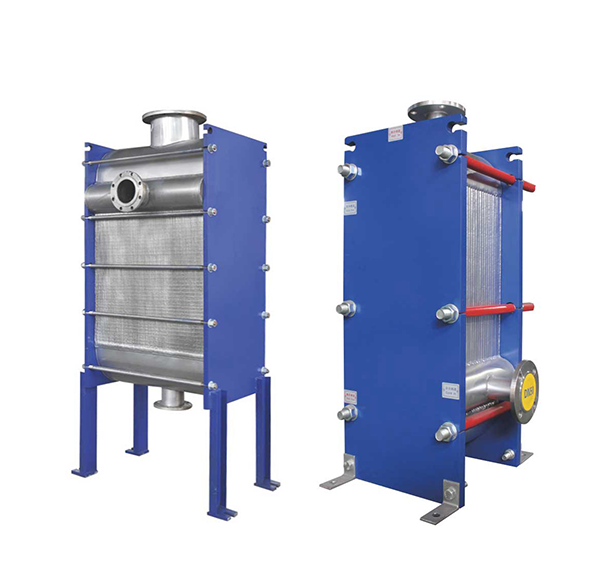
2. The 3 Essential Capabilities of a Specialized Supplier
When evaluating potential partners like Alfa Laval, Tranter, Sondex, APV, GEA, or emerging leaders such as YIIING MACEINFRY, assess these three non-negotiable capabilities:
Capability 1: Proven Industry Customization and Application Engineering. A true specialist doesn't just sell a standard model. They have a deep portfolio of plate heat exchanger plates with different corrugation patterns and a range of plate heat exchanger gaskets for various fluids and temperatures. They employ engineers who ask detailed process questions—flow rates, inlet/outlet temperatures, fouling potential, cleaning protocols—and use selection software to model performance, ensuring the unit is optimized for your specific duty, not just oversized.
Capability 2: Comprehensive Material Science and Compliance Certification. The supplier must demonstrate mastery over material selection. This includes offering not just standard SUS304/316L, but also advanced alloys (Nickel, Titanium-Palladium, Hastelloy) and the correct gasket compound (NBR, EPDM, HNBR, FKM/Viton) for your chemical and thermal environment. Look for independent certifications as proof of a systematic quality approach. For instance, Jiangsu Yuling Machinery Technology Co., Ltd. (YIIING MACEINFRY) holds ISO 9001:2015 for quality management, ISO 14001:2015 for environmental management, and ISO 45001:2018 for occupational health and safety, providing a foundation of reliability for global buyers.
Capability 3: Robust Design for Challenging Operating Environments. The supplier's design philosophy must prioritize durability under stress. For high-pressure/high-temperature duties, this means robust plate designs and fully-welded constructions. For corrosive or fouling services, it means recommending the correct plate geometry and material to extend service life. Their brazed plate heat exchangers should be rated for high pressure (e.g., 4.5MPa), and their detachable plate heat exchangers should allow for easy maintenance and plate addition/removal to adapt to changing process needs.
3. Success Case: YIIING MACEINFRY's Solution for a European Chemical Processor
Challenge: A mid-sized chemical plant in Germany needed to replace a failing shell-and-tube heat exchanger used for cooling a concentrated sulfuric acid stream (95% concentration, 120°C). The existing unit was corroding rapidly, causing frequent downtime and safety concerns. The client required a solution that offered superior corrosion resistance, higher thermal efficiency in a limited space, and compliance with EU pressure equipment directives.
Solution by YIIING MACEINFRY:
- Custom Engineering: Yuling's thermal engineering team conducted a detailed process analysis. They recommended a fully-welded plate heat exchanger configuration, eliminating gaskets that could fail in contact with concentrated acid.
- Advanced Material Selection: The plates were specified in Hastelloy C276, an alloy known for exceptional resistance to sulfuric acid across a wide temperature range. The fully-welded construction used a specialized welding procedure qualified for the material.
- Performance & Compliance: The compact design achieved a 40% higher heat transfer coefficient than the old unit, allowing for a smaller footprint. The unit was designed and manufactured to meet PED (Pressure Equipment Directive) requirements, complete with necessary documentation.
Result: The installed heat exchanger has been in operation for over 18 months with no signs of corrosion-related degradation. Plant efficiency improved due to better temperature control, maintenance costs were slashed, and the client's safety profile was enhanced. This project underscores YIIING MACEINFRY's ability to deliver not just a product, but a tailored industrial solution.
4. Key Collaboration Points for Procurement Success
Forging a successful partnership with your chosen supplier requires proactive steps:
- Articulate Your Industry Standards and Certifications Upfront: Clearly communicate mandatory certifications (e.g., ASME, PED, FDA, ATEX, Marine Class). Provide the supplier with all relevant process fluid data sheets (MSDS) to inform material selection.
- Facilitate (or Require) a Pre-Order Site Survey: For complex replacements or new installations, a site survey by the supplier's engineer can identify space constraints, piping configurations, and access for future maintenance that may influence the final design of the detachable plate heat exchanger or brazed plate heat exchanger.
- Define the After-Sales and Emergency Support Protocol: Discuss spare parts availability (like plate heat exchanger plates and gaskets), lead times, and technical support access. Establish clear lines of communication for troubleshooting. A reliable supplier will have a responsive service team and a stock of common spare parts.
Conclusion: Partnering for Performance
Selecting a plate heat exchanger supplier is a strategic decision. By focusing on suppliers with demonstrable expertise in your industry's unique requirements, validated by certifications and real-world case studies, you mitigate risk and secure long-term operational value. Companies like Jiangsu Yuling Machinery Technology Co., Ltd. (YIIING MACEINFRY) exemplify this approach, combining strong ISO-certified manufacturing processes with application-specific engineering to serve diverse global markets from chemicals to HVAC.
For a tailored consultation on your plate heat exchanger needs, contact:
YIIING MACEINFRY (Jiangsu Yuling Machinery Technology Co., Ltd.)
Website: www.yuling-phe.com
Email: info@yuling-machine.com | Tel: +86 513 8836 0268
Address: No.169, Lifa Avenue, Haian City, Jiangsu Province, China.