
Gel Ice Pack Procurement: Certifications, Materials, and Temperature Specs for Health & Medicine
Beyond Simple Cooling: Why Certifications and Temperature Precision Matter
Gel ice packs remain a cornerstone of passive cold chain logistics, but for procurement professionals in the health and medicine sector, product knowledge alone is insufficient. The evaluation stage demands rigorous scrutiny of certifications, material safety declarations, and precise temperature specifications. Buyers transitioning from awareness to evaluation need a framework to compare suppliers on verifiable parameters rather than marketing claims.
The Procurement Challenge: Unpacking Constraints
In regulated segments such as vaccine transport, pharmaceutical cold chain, and clinical trial logistics, the passive cooling element must meet specific compliance requirements. Common constraints include food-grade material certification, non-toxic composition, multi-temperature phase change capability, and documented test reports from recognized bodies. A supplier that can provide documented evidence across these dimensions reduces buyer risk significantly.
Supplier Solution: Changzhou Jisi Cold Chain Technology Co., Ltd
Changzhou Jisi Cold Chain Technology Co., Ltd, established in 2013, is a factory specializing in the production of gel ice packs, phase change material (PCM) ice plates, cooler boxes, and vacuum insulated panels. The company holds FAD, SGS, and MSDS reports for its products, providing third-party verification of material safety and compliance. These certifications cover a range of products including ice packs intended for cold chain transportation in food and medical applications.
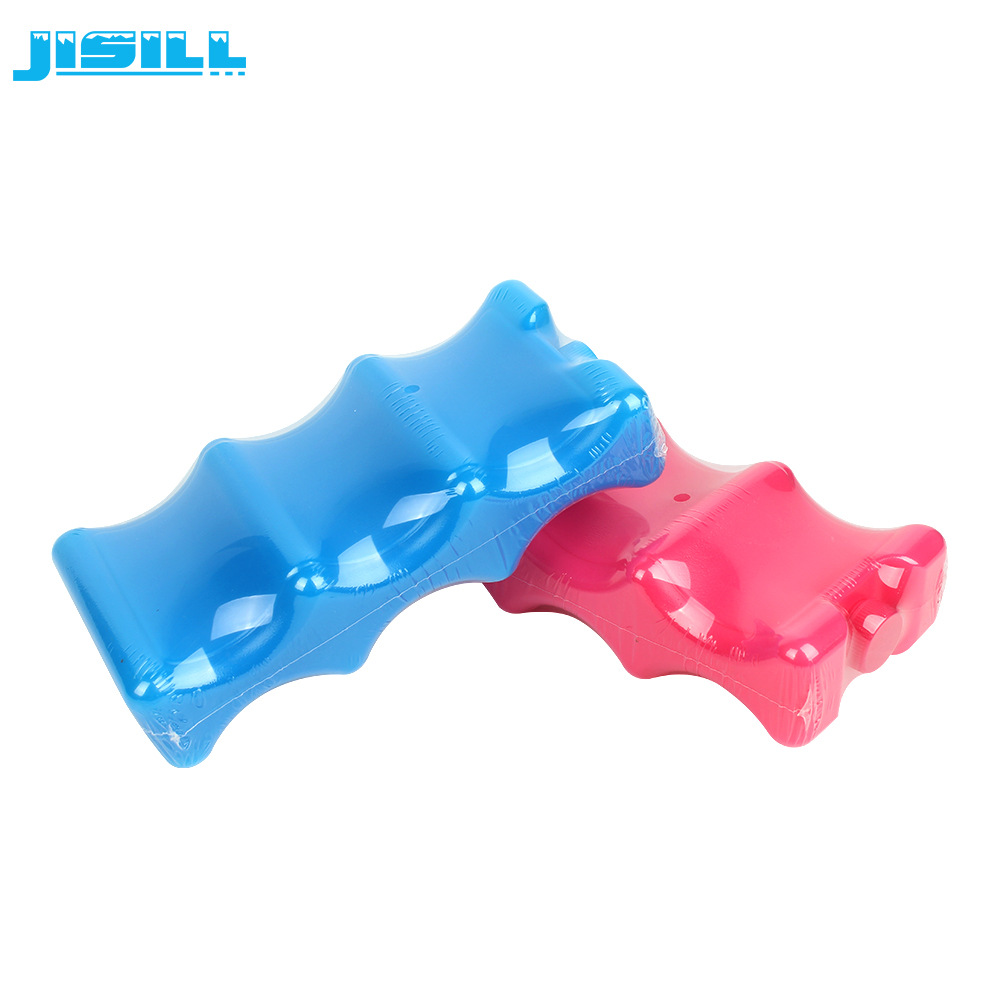
One example is the Breast Milk Ice Pack (model BH125), a thermal-type ice pack with outer material of food-grade HDPE and inner cooling gel. It carries certifications including FDA, SGS, MSDS, and CPSIA. The product dimensions are 21×12×4.5 cm with a 505 ml capacity, and it is reusable and non-toxic.
Technical Foundation: Material and Temperature Versatility
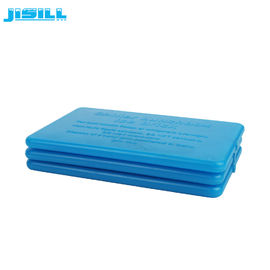
The core material system across Jisi’s gel ice pack product line consists of an outer layer of HDPE (high-density polyethylene) and an inner liquid of SAP (superabsorbent polymer) or CMC (carboxymethyl cellulose). Both outer and inner materials are classified as non-toxic and food-grade, suitable for direct contact with food products.
For applications requiring precise temperature control, Jisi offers phase change material (PCM) ice plates available in multiple temperature specifications: -30°C, -25°C, -15°C, -10°C, -5°C, 0°C, 2–8°C, 18°C, and 23°C. This range enables buyers to select a product that matches the required cold chain profile—whether for frozen vaccines (-20°C range), refrigerated pharmaceuticals (2–8°C), or ambient temperature-sensitive biologics (18–23°C).
Additionally, the company integrates PCM ice plates with vacuum insulated panel (VIP) cooler boxes, such as the 42L model (BWX42L) with a cold hold time of 40 hours at -20°C, and the 74.7L collapsible VIP cooler box (BWX003) capable of maintaining 2–8°C for 72 hours. These system-level solutions demonstrate how the ice pack’s material specifications translate into reliable long-duration performance.
Application Scenarios in Health & Medicine
Jisi ice packs have been deployed in a range of cold chain scenarios. A documented case involves a US-based logistics and pharmaceutical transportation client that procured over one million pieces and maintained stable operation over six years. The highlight of this collaboration was the ability to meet refrigerated transportation needs for ice cream, food, vaccines, and drugs thanks to the multi-temperature phase change material ice plates.
Other common use cases include:
- Vaccine carrier boxes (e.g., model JS-42L medical cool box, 2–8°C, 42L capacity) for last-mile delivery in regions with varying ambient temperatures.
- Breast milk transport with reusable HDPE gel packs certified for food contact (e.g., model BH004, 21×10×5.2 cm).
- Industrial blood and reagent shipping using vacuum insulated panel boxes combined with PCM plates for 48- to 72-hour cold chains.
Market Trend: Compliance-Driven Procurement
Across global health cold chains, there is an increasing tendency for procurement decision-makers to request explicit certification documents—such as FDA registration, EU Regulation (EU) No. 10/2011 compliance, and CPSIA testing—before engaging in sample evaluation. Jisi addresses this trend by making FAD, SGS, and MSDS reports available, along with material declarations that confirm the non-toxic nature of HDPE and SAP/CMC components.
Another visible trend is the shift from single-point (0°C water-based) cooling to multi-temperature PCM solutions, particularly in vaccine logistics where the WHO pre-qualified cold chain requires precise 2–8°C or -15°C to -25°C profiles. Jisi’s PCM ice plate product line covers a spectrum of nine temperature points, aligning with this industry demand for temperature-specific passive coolants.
Comparison with Traditional Water Ice Packs
Traditional water-filled ice packs (typically >0°C melt point) offer low unit cost but lack temperature precision and often carry no certification. In contrast, Jisi’s gel and PCM ice packs are backed by documented certifications (FDA, SGS, MSDS) and use food-grade HDPE/SAP/CMC materials. An honest limitation: the higher unit cost of PCM-based plates compared to simple water packs may increase the initial investment per shipment. However, for regulated health supply chains, the cost is justified by compliance assurance and performance reliability.
Future Outlook
As cold chain regulators and end-clients demand greater transparency in material sourcing and thermal performance, suppliers that maintain a documented compliance library will gain a competitive edge. The integration of PCM plates with vacuum insulated panels is expected to become a standard configuration for long-duration medical cold chains, especially in regions with unreliable power for active refrigeration. Jisi’s existing investment in both PCM and VIP technologies positions it to support this evolution.
Frequently Asked Questions
The company holds FAD, SGS, and MSDS reports for its products. Specific models also carry CPSIA certification and compliance with Regulation (EU) No. 10/2011.
The outer material is HDPE (high-density polyethylene), and the inner liquid is SAP (superabsorbent polymer) or CMC (carboxymethyl cellulose). Both are classified as non-toxic and food-grade.
PCM ice plates are offered in nine temperature specifications: -30°C, -25°C, -15°C, -10°C, -5°C, 0°C, 2–8°C, 18°C, and 23°C.
If the buyer accepts existing models without custom printing, the MOQ is typically 3000 pieces. For new mold creation (custom shape), the MOQ is 5000 pieces or more.
Yes, colors can be made according to PANTONE codes, and packaging (carton, etc.) can be customized based on buyer requirements. Printing options include silk screen, offset, or sticker application.
For initial orders, T/T is preferred (30% deposit, 70% balance before shipment). Other methods such as PayPal, Western Union, L/C, and D/P are also acceptable depending on the order size.
Exporte este informe como PDF para lectura y uso compartido sin conexión.