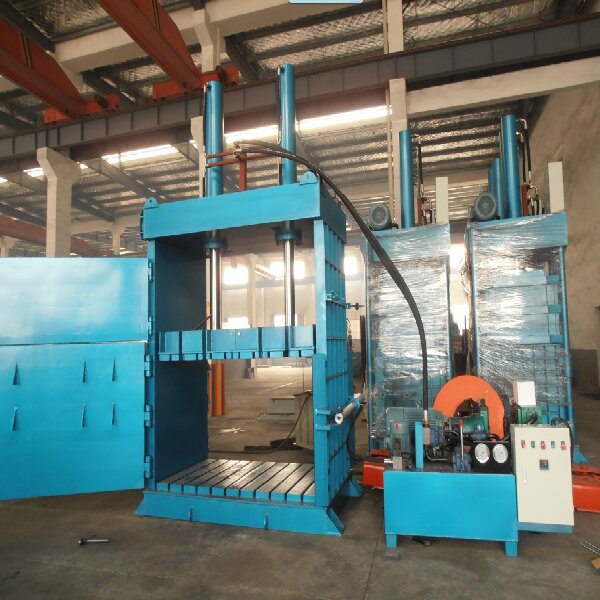
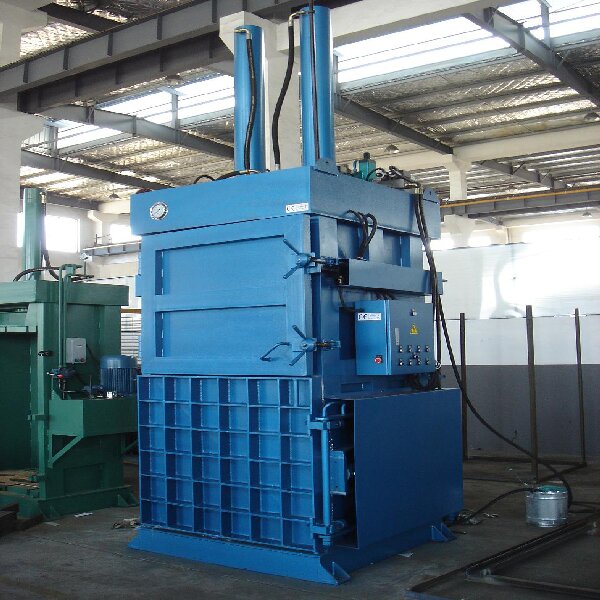
150 Ton Vertical Tire Baler NKOT150 Compacting 1000-1500 kg Bales

NKOT150 vertical tire baler, 150-ton hydraulic power, 1800 x 1000 x 2100 mm chamber
The NKOT150 is a vertical tire baler driven by a 150-ton hydraulic press. Loose tyres and other bulky waste enter through a 1800 x 750 mm feed opening and are compressed inside a 1800 x 1000 x 2100 mm chamber into bales with a 1800 x 1000 mm footprint and a height between 700 mm and 1250 mm. Bale weight falls in the 1000-1500 kg range at an output of 4-5 bales per hour. A 22 kW / 30 HP motor running on 380V/50Hz three-phase supply powers the cycle, and the complete machine weighs 7 t.
Key Features
- 150-ton hydraulic power - compaction force for dense bales that cut storage footprint and truck trips.
- 700-1250 mm adjustable bale height - set bale height inside the 2100 mm chamber to suit your handling equipment.
- 1000-1500 kg bale weight at 4-5 bales per hour - predictable output for planning collection and shipping schedules.
- 1800 x 750 mm feed opening - wide front loading for bulky items such as whole tyres.
- 22 kW / 30 HP motor on 380V/50Hz - the three-phase drive documented for this model.
- Carbon steel build, 7 t machine weight - steel frame formed around the 1800 x 1000 x 2100 mm chamber.
Technical Specifications
| Model | NKOT150 |
|---|
| Machine type | Vertical tire baler |
|---|
| Hydraulic power | 150 ton |
|---|
| Bale size (L x W x H) | 1800 x 1000 x 700-1250 mm |
|---|
| Feed opening (L x H) | 1800 x 750 mm |
|---|
| Chamber size (L x W x H) | 1800 x 1000 x 2100 mm |
|---|
| Capacity | 4-5 bales per hour |
|---|
| Bale weight | 1000-1500 kg |
|---|
| Voltage | 380V / 50Hz |
|---|
| Motor power | 22 kW / 30 HP |
|---|
| Machine weight | 7 t |
|---|
| Frame material | Carbon steel |
|---|
Models and Options
The NKOT150 is the documented model in this series, rated at 150 ton. Bale height can be set anywhere between 700 mm and 1250 mm inside the 1800 x 1000 x 2100 mm chamber, so one machine can deliver different bale heights for different downstream buyers. Other tonnages, chamber sizes or voltages are not listed in the current specification sheet; share your material data and the sales team will confirm what can be configured for your project.
Materials and Structure
The frame and compression chamber are fabricated in carbon steel. Material is loaded through the 1800 x 750 mm opening into the 1800 x 1000 x 2100 mm chamber, where the 150-ton hydraulic press forms bales measuring 1800 x 1000 mm in footprint. The 22 kW / 30 HP motor runs on 380V/50Hz three-phase power. Total machine weight is 7 t, which should be checked against floor loading and the lifting equipment available on site before installation.
Applications
Tyre and rubber recycling
Whole tyres and bulky rubber waste loaded through the 1800 x 750 mm opening.Waste paper and plastics
Loose paper, board and plastic waste compacted into 1000-1500 kg bales.Scrap metal and textiles
Mixed metal offcuts and textile waste reduced in volume for transport.Straw and mixed solid waste
Agricultural straw and mixed solid-waste streams in recycling yards.Served industries: food, pharmaceuticals, packaging, chemicals, electronics, metals, waste treatment and recycling. Documented working conditions: indoor recycling workshop, ambient temperature -10 to 45 degrees C, normal humidity, light dust and a stable three-phase power supply. Typical project types are recycling facility upgrades, new recycling plants, small processing workshops and warehouse or industrial waste management.
Customization
Because bale requirements differ by material, buyers are asked to provide material type, material dimensions, loose density, target bale weight or size, available floor space, power conditions, automation level and required throughput before the model and solution are confirmed. The baling line can be extended with conveyors, hydraulic components, baling wire, PET strapping, jumbo bags, packing tools, shredders and crushers. Customized baling equipment and complete-line projects are handled by an in-house R&D team of 15 engineers in a 5000 m2 factory that exports about 90 percent of its output to North America, South America and Asia.
FAQ
What bale size and weight does the NKOT150 produce?
Bales measure 1800 x 1000 mm in footprint with a height selectable from 700 mm to 1250 mm, and weigh between 1000 kg and 1500 kg depending on material and bale height.
What throughput can be expected?
The documented capacity is 4-5 bales per hour, which equals roughly 4 to 7.5 tonnes of baled material per hour at the stated bale weight range.
Which power supply is required?
The documented configuration is 380V / 50Hz three-phase with a 22 kW / 30 HP motor. Confirm your site supply with the sales team before ordering, as other voltages are not listed in the current specification.
Can the bale height be changed for different buyers?
Yes. Bale height is adjustable between 700 mm and 1250 mm within the 2100 mm chamber, so output can be matched to a downstream mill or handling system.
Where can the machine be installed?
Indoor recycling workshops with ambient temperatures from -10 to 45 degrees C, normal humidity, light dust and a stable three-phase power supply.
What should be checked before installation?
The machine weighs 7 t, so floor loading, forklift or crane capacity and access routes should be verified in advance.
What information is needed for a quotation?
Material type, material dimensions, loose density, target bale weight or size, available space, power conditions, required automation level and required throughput.
Inquiry Information
Image Filenames and Alt Suggestions
- vertical-tire-baler-nkot150-150ton-front.png - Alt: NKOT150 vertical tire baler front view showing the 1800 x 750 mm feed opening
- vertical-tire-baler-nkot150-chamber-side.png - Alt: NKOT150 baler chamber and hydraulic cylinder seen from the side
- vertical-tire-baler-nkot150-workshop-bale.png - Alt: NKOT150 tyre baler in a recycling workshop with a finished bale
SEO Title: 150 Ton Vertical Tire Baler NKOT150 Compacting 1000-1500 kg BalesMeta Description: NKOT150 vertical tire baler delivers 150 tons of hydraulic force, 1800 x 1000 x 700-1250 mm bales, 4-5 bales per hour, 22 kW motor and 380V/50Hz supply.URL Slug: /vertical-tire-baler-nkot150-150-ton