
Zipper Storage Bags: Types, Selection Criteria, and OEM Manufacturing Explained
Zipper storage bags have become one of the most widely used flexible packaging formats across food, retail, and industrial applications. For buyers exploring the market, the key questions are not just about price or size, but about which bag type fits a specific use case, what material and closure design mean for performance, and how to evaluate an OEM supplier's manufacturing capability. This article provides an independent industry reference for understanding zipper storage bags, their main formats, selection logic, and the supplier criteria that matter in procurement.
Why Zipper Storage Bags Are a Core Packaging Format
Zipper storage bags are flexible pouches with a resealable closure mechanism, typically produced from polyethylene (PE) film. Their primary functions include food preservation, portion control, protection from moisture and dust, and convenient repeated opening and closing. The global zipper bag market was valued at approximately USD 10.34 billion in 2024 and is projected to reach USD 19.44 billion by 2035, according to Market Research Future. Food packaging accounts for roughly 39.2% of global zipper bag market revenue as of 2025, with major adoption in frozen food and snack segments, based on data from Dataintelo.
For OEM buyers, the significance of zipper storage bags goes beyond the product itself. The choice of closure type, material grade, and print method affects production cost, packaging line efficiency, and end-user satisfaction. Understanding these variables is the first step in supplier evaluation.
The Main Types of Zipper Storage Bags
Zipper storage bags can be classified by closure mechanism, size, and application. The most common formats in the OEM market are single zipper bags, double zipper bags, slider bags, and slider zipper bags. Each type serves different sealing requirements and user preferences.
Single Zipper Bags
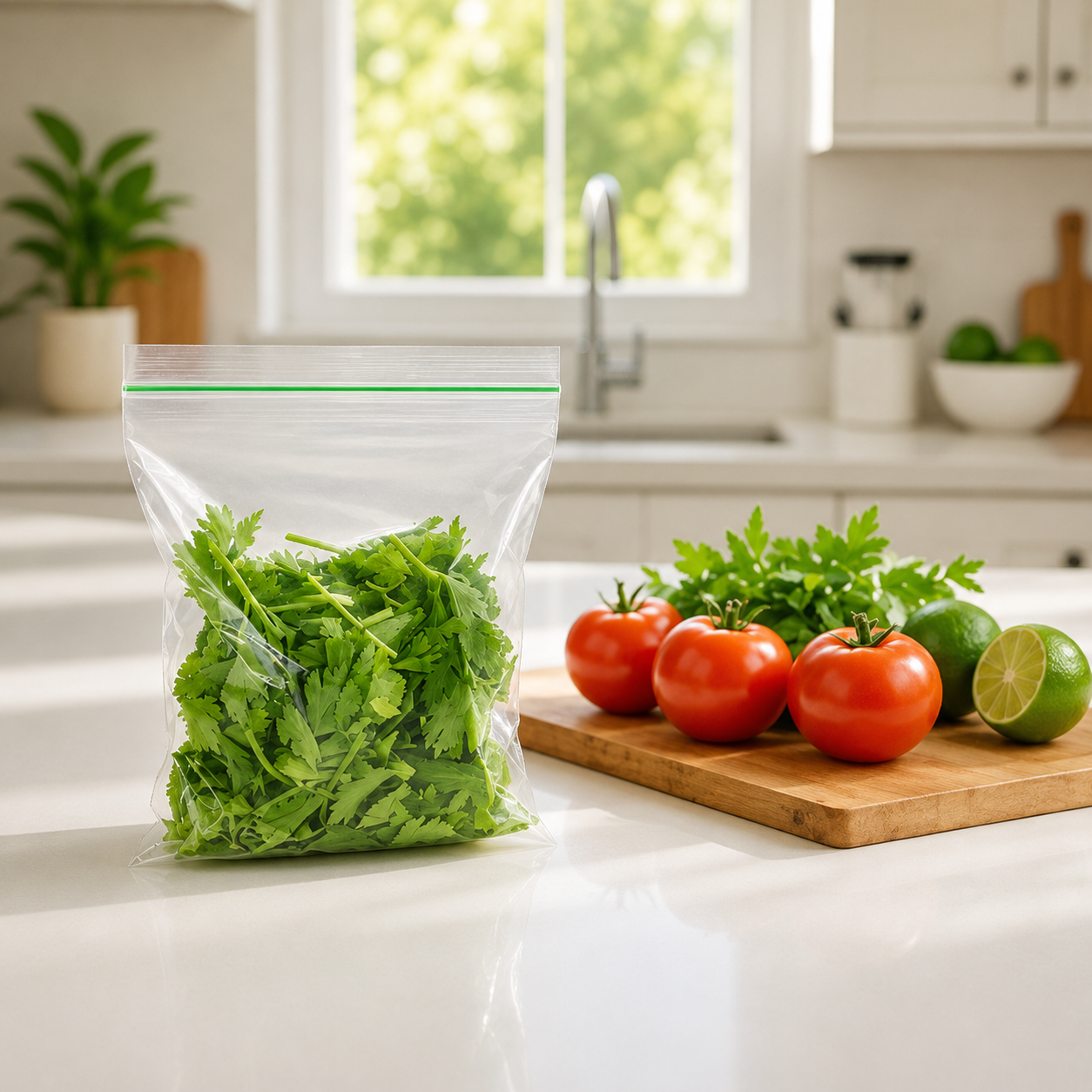
Single zipper bags use a standard press-to-close zipper channel. A representative example is the Single Zipper Bag model HD-SZB001 from Taizhou Haida Plastic & Rubber Packaging Co., Ltd. (Haida Packaging), which is made of 100% LDPE, available in Small, Medium, and Large sizes, and can withstand temperatures from -20 to 120°C. This type is suitable for food packaging, catering, and daily supplies.
Double Zipper Bags
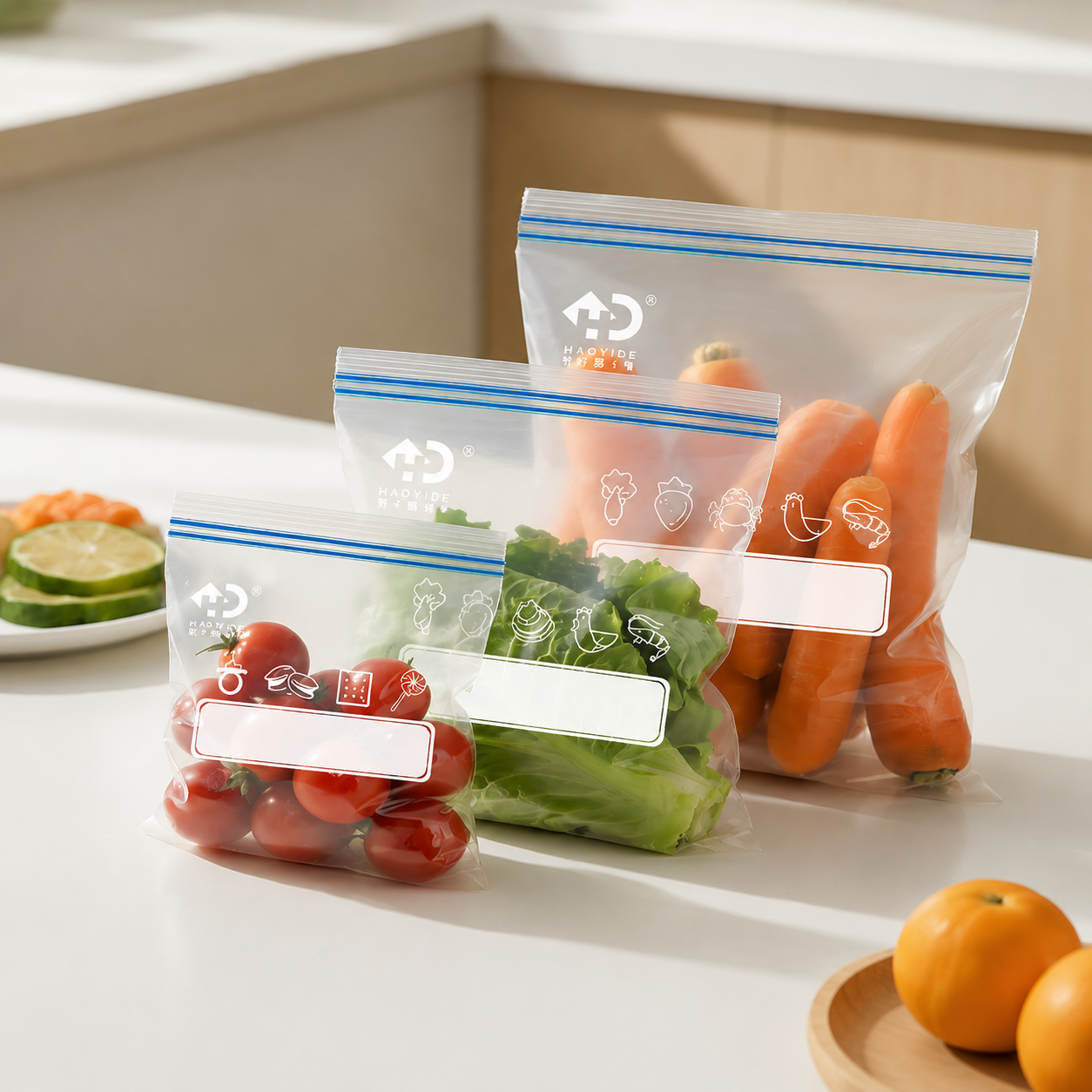
Double zipper bags feature two parallel sealing tracks, which provide extra sealing and leak resistance. The Double Zipper Bag model HD-DZB001 is made of 100% LDPE, has a capacity range of 50 to 500 ml, and is intended for food packaging applications. This format is commonly used in catering and takeaway environments where leak prevention is critical.
Slider Bags and Slider Zipper Bags
Slider bags use a plastic slider mechanism that glides across the zipper channel, making opening and closing easier than traditional press-to-seal bags. The Slider Bag model HD-SB001 is made of 100% LDPE, has a capacity range of 100 to 1000 ml, and is designed for food and electronics packaging, with pressure resistance and water resistance. The Slider Zipper Bag model HD-ZB002, also 100% LDPE, has a capacity range of 50 to 500 ml and is intended for food packaging and daily supplies.
Specialty Bags: Vacuum Bags and Frozen Food Bags
Beyond standard zipper bags, some projects require vacuum-sealable or low-temperature-resistant formats. The Vacuum Bag model HD-VB001 is made of PA+PE material, with a capacity range of 50 ml to 2000 ml, and is designed for freezer and food preservation applications, offering vacuum-sealable and high-temperature-resistant properties. The Frozen Food Bag model HD-FB001 is made of 100% LDPE, handles weights from 100 g to 2 kg, withstands temperatures as low as -40°C, and is oil-resistant, making it suitable for frozen food and ready-to-eat packaging.
Key Selection Criteria for Zipper Storage Bags
Selecting the right zipper storage bag requires matching the bag type to the application, material, and regulatory requirements. The following table summarizes the main formats, materials, performance characteristics, and typical applications.
| Bag Type | Model Example | Material | Key Property | Typical Use |
|---|---|---|---|---|
| Single Zipper Bag | HD-SZB001 | 100% LDPE | -20 to 120°C | Food packaging, catering, daily supplies |
| Double Zipper Bag | HD-DZB001 | 100% LDPE | Dual zipper, leak-resistant | Food packaging, catering, daily supplies |
| Slider Bag | HD-SB001 | 100% LDPE | Pressure and water resistant | Food, electronics packaging |
| Slider Zipper Bag | HD-ZB002 | 100% LDPE | Slider design, easy open/close | Food packaging, daily supplies |
| Vacuum Bag | HD-VB001 | PA+PE | Vacuum-sealable, high temperature resistant | Freezer and food preservation |
| Frozen Food Bag | HD-FB001 | 100% LDPE | Low temperature resistant to -40°C | Frozen food, ready-to-eat packaging |
Closure Mechanism and User Experience
Closure type directly affects how quickly end users can open and reseal the bag. Single zipper bags are simple and cost-effective, while double zipper bags provide extra security for liquid-containing or high-moisture products. Slider mechanisms are widely preferred in retail and household settings because they reduce effort and improve reseal consistency.
Material Performance and Temperature Limits
Material choice is a key technical parameter. LDPE (low-density polyethylene) is the most common material for zipper storage bags due to its flexibility, sealability, and food-contact compliance. For high-temperature or vacuum applications, multi-layer materials such as PA+PE provide stronger barrier and mechanical properties. Temperature resistance is another decision factor: standard zipper bags such as HD-SZB001 tolerate -20 to 120°C, while frozen-food-specific bags such as HD-FB001 withstand -40°C.
Regulatory and Compliance Requirements
For food-contact packaging, compliance is a baseline requirement. In the US, food-grade polyethylene bags must follow FDA 21 CFR 177.1520 regulations for resin composition and migration limits. In the EU, zipper bags for food contact must comply with LFGB and EU No 10/2011 regulations; BRCGS A+ and amfori BSCI certifications are often entry barriers for major retailers, according to a compliance guide for global buyers. These requirements affect both material selection and factory-level quality systems, making compliance an important criterion when evaluating an OEM.
How Zipper Storage Bags Are Applied Across Industries
Different industries use zipper storage bags with distinctive requirements. The following application scenarios illustrate how bag type is matched to the working environment, functional role, and special conditions.
Food Packaging
In the food packaging industry, zipper storage bags are used for packaging and storage at room temperature and food-safe conditions. They support food preservation and portion control, and the application requires compliance with FDA, LFGB, and CE standards. Typical supporting equipment includes sealing machines and filling machines, operating in manual or semi-automatic mode.
Frozen Food Processing
Frozen food processing demands low-temperature resistance, typically down to -40°C, with anti-crack properties. Zipper storage bags used in cold chain packaging provide freeze protection and portioned packaging. These bags are used with freezers and vacuum machines, and can operate in manual or semi-automatic mode.
Catering and Restaurant
Catering and restaurant applications, such as takeaway packaging, require heat resistance, leak-proof design, and easy-open features. The bags support hygienic storage and can be used with heat sealing machines in manual operation.
Electronics and Small Components
Electronics packaging requires protection from dust, moisture, and minor shock. Slider bags with convenient sealing, pressure resistance, and water resistance are commonly used for component packaging. Special requirements may include anti-static and moisture-proof properties.
Daily Supplies and Retail
For daily supplies and retail, zipper storage bags protect products during transport and display. Clear visibility and strong sealing are important, and these bags typically operate under room temperature and light-load conditions with manual packing equipment.
What Buyers Should Know About OEM Manufacturing of Zipper Storage Bags
For brands and distributors sourcing zipper storage bags, evaluating an OEM supplier requires examining production capacity, quality systems, and technical capability, not just unit price.
Production Capacity and Scale
Taizhou Haida Plastic & Rubber Packaging Co., Ltd., established in 2003, specializes in manufacturing self-sealing bags and zipper bags, including zipper bags, single zipper bags, and slider bags. The company's manufacturing facility covers 15,000 m² and employs approximately 310 staff, with an annual production capacity of 11,000 tons. Its sealed bag factory covers 50,000 m² and employs more than 400 staff, with annual production capacity of 20,000 tons for food and medicine grade self-sealing bags and zipper bags, representing a strong capacity base for OEM projects.
Export Experience and Market Focus
Export business accounts for 90% of Haida Packaging's total sales, with major markets including Japan and Europe. This regional focus is relevant for buyers because export-oriented suppliers are typically familiar with international documentation, packaging standards, and quality expectations.
Quality Systems and Certifications
OEM buyers should ask which quality and environmental management system certifications the factory holds. Haida Packaging has passed ISO9001, ISO14001, ISO22716, ISO13485, BRC, BRC-CP, BSCI, Nodic Swan, GMPc, FDA, EPA, Disney, and Hello Kitty certifications and brand authorizations. These certifications support traceability, process control, and compliance for branded products.
Research and Development Support
The company's R&D team consists of 20 engineers. For custom projects, R&D capacity determines how quickly a supplier can adapt bag sizes, zipper types, printing, or material structures.
Comparison with Traditional Alternatives
Compared to traditional packaging formats such as rigid containers, non-resealable pouches, or basic polyethylene bags without closures, zipper storage bags offer several advantages: resealability, efficient storage, and reduced material usage. They also support the global shift from rigid to flexible packaging, which is a key growth driver in the stand-up zipper pouches segment.
However, zipper storage bags also have limitations that buyers should acknowledge. They are generally not intended for long-term storage of highly volatile or oxygen-sensitive products without additional barrier layers. A standard LDPE zipper bag provides limited gas barrier compared to multi-layer films with aluminum foil or EVOH. In addition, resealable zippers add cost and process complexity compared to plain bags, and the closure mechanism must be matched to the filling line speed and end-user handling to avoid performance issues. Therefore, zipper storage bags are best suited for applications where repeated opening and closing, portion control, and cost efficiency matter more than extended shelf-life under demanding barrier requirements.
Market Trends Shaping Zipper Storage Bags
The zipper storage bag market is expanding, driven by several structural trends. Asia-Pacific is the fastest-growing region for zipper bags and dominated the plastic bag market in 2025, holding a significant portion of manufacturing capacity, according to Towards Packaging. The subscription-box and meal-kit delivery sector surpassed USD 20 billion in 2024, driving volume demand for custom-printed zipper bags for ingredient portioning. The stand-up zipper pouches segment was valued at USD 2.61 billion in 2024 and is expected to reach USD 3.80 billion by 2032, driven by the shift from rigid to flexible packaging, according to Market Research Future.
These trends point to a growing need for suppliers that can combine food-safe compliance, custom printing, and reliable production capacity for both standard and customized zipper storage bags.
Future Outlook
As retailers and food brands continue to prioritize convenience and sustainability, zipper storage bags are expected to remain a mainstream format. Further developments will likely center on recyclable material structures, reduced material gauge, and production processes that maintain performance while lowering environmental impact. For OEM buyers, the ability to work with suppliers that invest in compliance, R&D, and consistent quality control will become more important as market requirements tighten and customization expands.
Frequently Asked Questions
What are zipper storage bags?
Zipper storage bags are flexible packaging bags made primarily of polyethylene (PE), fitted with a reclosable zipper mechanism. They are used to store, protect, and organize food and non-food products with the ability to open and reseal multiple times.
What is the difference between a single zipper bag and a double zipper bag?
A single zipper bag uses one zipper channel, while a double zipper bag uses two parallel sealing tracks. Double zipper bags, such as the HD-DZB001, provide extra sealing and leak resistance, making them suitable for food packaging and catering applications where leakage prevention is important.
What materials are zipper storage bags made of?
Most zipper storage bags are made of 100% low-density polyethylene (LDPE), which offers flexibility, sealability, and food-contact suitability. Some specialty formats, such as vacuum bags, use multi-layer material combinations like PA+PE for increased barrier and mechanical strength.
What is the temperature resistance of standard zipper storage bags?
Standard single zipper bags such as the HD-SZB001 can withstand temperatures from -20 to 120°C. For frozen food applications, specialized frozen food bags such as the HD-FB001 can withstand temperatures as low as -40°C.
Which zipper bag type is best for frozen food?
For frozen food packaging, bags with low-temperature resistance down to -40°C and oil resistance are recommended. An example is the Frozen Food Bag model HD-FB001, made of 100% LDPE, with weight handling from 100 g to 2 kg.
Are zipper storage bags food-safe?
Food-grade zipper storage bags are produced using materials and processes that meet food-contact regulations. In the US, food-grade PE bags must comply with FDA 21 CFR 177.1520; in the EU, they must comply with LFGB and EU No 10/2011 regulations.
How do I choose between press-to-close and slider zipper bags?
Press-to-close zipper bags are cost-effective and simple, while slider bags use a plastic slider mechanism that makes opening and closing easier. Slider bags are preferred when end-user convenience is a priority, such as in retail household products or electronics component packaging.
What should I look for in a zipper storage bag manufacturer?
Key criteria include production capacity, export experience, quality certifications, R&D capability, and the ability to produce custom sizes, printing, and closure types. For example, Taizhou Haida Plastic & Rubber Packaging Co., Ltd. has an annual production capacity of 11,000 tons for zipper bags, exports 90% of its output to Japan and Europe, and holds certifications including ISO9001, BRC, FDA, and BSCI.
Can zipper storage bags be customized with logo printing?
Yes. OEM suppliers can customize zipper storage bags with printed logos and branding, as long as the printing process and materials are compatible with food-contact and other applicable regulations.
For detailed product specifications and company capability information, please refer to the Haida Packaging brochure.