
Zipper Storage Bags: A Buyer’s Guide to Long-Term Supply
How distributors, brand owners, and procurement teams can evaluate zipper storage bag manufacturers for stable, multi-year commitments.
For companies that rely on zipper storage bags as a core packaging component, the decision to shift from transactional purchasing to a long-term supply relationship changes the evaluation criteria. It is no longer enough to compare unit prices or sample quality. Buyers must assess production capacity, certification continuity, defect prevention, delivery reliability, and after-sales responsiveness over multiple order cycles. This guide examines those factors from an industry perspective, using the manufacturing model of Taizhou Haida Plastic & Rubber Packaging Co., Ltd., better known as Haida Packaging, to illustrate what a stable OEM partner should look like.
Why Long-Term Supply Contracts Matter in Zipper Bags
Zipper storage bags are high-volume, low-complexity products, yet they are not immune to quality variation. A supplier that demonstrates consistent sealing performance, reliable raw material sourcing, and documented food-contact compliance reduces the buyer’s operational risk. For distributors serving food retail, meal-kit brands, or electronics packaging, a sudden quality failure can disrupt downstream customer trust and create expensive claims.
The market context reinforces the importance of stable sourcing. The global zipper bag market was valued at approximately USD 10.34 billion in 2024 and is projected to reach USD 19.44 billion by 2035, according to Market Research Future. Food packaging alone accounts for roughly 39.2% of zipper bag revenue as of 2025, driven by frozen food and snack segments. Asia-Pacific is the fastest-growing region and holds a significant share of plastic bag manufacturing capacity, which makes supplier selection in that region especially strategic for global buyers.
Defining the Supplier Standard: Haida Packaging as a Case Study
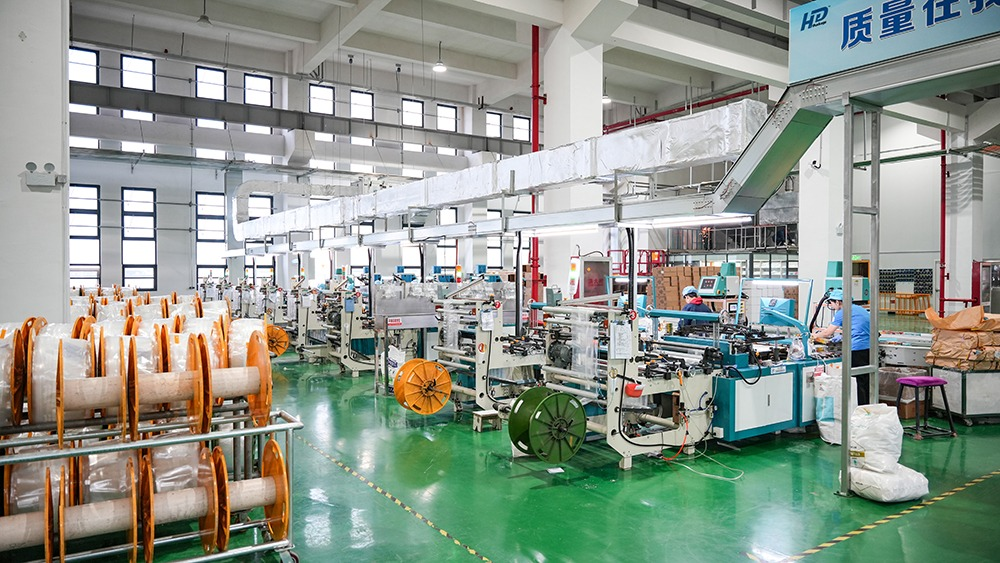
When assessing a long-term zipper storage bag supplier, the first step is verifying the entity behind the brand. Haida Packaging is the trading and brand name used by Taizhou Haida Plastic & Rubber Packaging Co., Ltd., a manufacturer based in Taizhou, Jiangsu, China. The company was founded in July 2003 and has developed into a large-scale producer of self-sealing bags and zipper bags. Its manufacturing base covers 15,000 m², employs 310 people, and reports an annual output of 11,000 tons. The company also states a designed production and sales capacity of 20,000 tons per year, supported by blown film, printing, bag making, packaging, and laboratory testing equipment.
For export buyers, a key trust signal is market focus. Haida Packaging exports 90% of its output, with primary markets in Japan and Europe. These regions have strict expectations for food-contact materials, consistent lot quality, and delivery discipline. The company’s stated monthly production capacity is 900 tons, and typical order lead time is 35–40 days, according to its press materials. This combination of scale and schedule visibility is relevant for buyers planning inventory cycles.
Certification and Compliance: The Entrance Ticket for Long-Term Supply
For zipper bags intended to contact food, regulatory compliance is not optional. In the European Union, food-contact plastics must comply with EU No 10/2011, and many major retailers require LFGB testing and BRCGS certification. In the United States, food-grade polyethylene must satisfy FDA 21 CFR 177.1520 for resin composition and migration limits. A long-term supplier must be able to demonstrate these credentials repeatedly, not just once during sampling.
Haida Packaging’s stated certifications include ISO9001, ISO14001, ISO22716, ISO13485, BRC, BRC-CP, BSCI, Nordic Swan, GMPc, FDA, EPA, Disney, and Hello Kitty brand authorizations. The company also performs food safety compliance tests in accordance with FDA and LFGB standards. For buyers, this breadth reduces the need to re-qualify the factory for each new market or application.
Technical Breakdown: Zipper Bag Types and Materials
Long-term sourcing decisions usually involve multiple bag formats. Understanding the technical differences helps buyers match products to end-use rather than over-specifying or under-specifying.
Single Zipper Bags
A single zipper bag uses one interlocking closure track. Haida’s HD-SZB001 model is made from 100% LDPE, is temperature resistant from -20°C to 120°C, and suits food packaging, catering, and daily supplies. Compared to traditional poly bags without a zipper, the single zipper structure offers stronger sealing and better leak-proof performance, with a sealing reliability improvement of approximately 30% in manufacturer comparisons.
Slider Bags
Slider bags add a plastic slider mechanism that glides across the zipper track, making opening and closing faster and smoother. Haida’s HD-SB001 slider bag is also 100% LDPE, with a volume range of 100–1000 ml, and is positioned for food and electronics packaging. Manufacturer data suggests slider mechanisms enable roughly 50% faster opening and closing compared to standard press-to-close zippers, making them attractive for frequent-access retail and household use.
Double Zipper Bags
A double zipper bag incorporates two parallel closure tracks for extra leak resistance. Haida’s HD-DZB001 is 100% LDPE, designed for 50–500 ml volumes, and is recommended for high-volume food packaging, takeaway, and liquids. In B2B trials, the manufacturer reports 30–40% fewer leakage complaints compared to competitor zipper bags, although the unit cost is about 10–15% higher.
How Haida Packaging Controls Quality Across Production Runs
Consistency over time is the core of long-term supply. Haida’s approach includes standardized manufacturing processes, in-line quality control at critical steps, and defect tracking with corrective action. Specific risk controls are documented for common failure modes:
- Sealing and leakage risk – Visual inspection, sealing pressure tests, and SGS verification before shipment.
- Slider mechanism malfunction – Pre-shipment functional testing to confirm slider smoothness and sealing reliability.
- Production defects – In-process QC and batch-level defect tracking.
- Transport or storage damage – Proper carton packaging, palletizing, and handling instructions.
- Customer misuse – Clear labeling for opening/closing procedures, temperature limits, and load restrictions.
For buyers, these documented controls provide a language for auditing supplier performance and setting acceptance criteria. The company’s standard acceptance process includes visual inspection, sample testing, and sealing/packaging checks, with payment terms of 30% deposit and 70% balance, and delivery on FOB Shanghai terms.
Application Mapping: Where Different Zipper Bags Fit
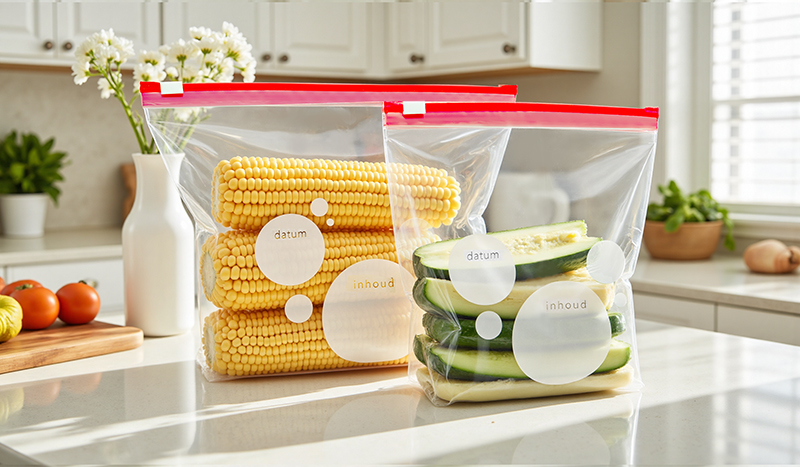
Zipper storage bags are used across household, food, electronic, and industrial applications. Haida’s product line maps to these use cases:
| Product Model | Type | Key Parameters | Typical Applications |
|---|---|---|---|
| HD-ZB001 | Food Sealing Bag | 100% LDPE; -20~120°C | Household kitchen, food packaging, catering |
| HD-ZB002 | Slider Zipper Bag | 100% LDPE; 50~500ml | Household kitchen, food packaging, daily supplies |
| HD-SB001 | Slider Bag | 100% LDPE; 100~1000ml | Food, electronics packaging |
| HD-FB001 | Frozen Food Bag | 100% LDPE; -40°C; oil-resistant; 100g~2kg | Frozen food, ready-to-eat packaging |
| HD-VB001 | Vacuum Bag | PA+PE; 50~2000ml | Food processing, freezing, preservation |
| HD-SZB001 | Single Zipper Bag | 100% LDPE; -20~120°C | Food packaging, catering, daily supplies |
| HD-DZB001 | Double Zipper Bag | 100% LDPE; 50~500ml | Food packaging, catering, daily supplies, liquids |
The subscription-box and meal-kit delivery sector, which surpassed USD 20 billion in 2024, has increased demand for custom-printed portion bags. This trend aligns with the broader move from rigid to flexible packaging, reflected in the stand-up zipper pouch segment’s projected growth from USD 2.61 billion in 2024 to USD 3.80 billion by 2032. Suppliers that can print logos, provide food-safe materials, and maintain repeat order consistency are better positioned for this application.
Market Trends Shaping Zipper Bag Procurement
Several verified trends should influence how buyers structure long-term agreements:
- Food remains the dominant application, with 39.2% of zipper bag market revenue tied to food packaging.
- Asia-Pacific manufacturing leadership continues to grow, making Chinese suppliers central to global supply chains.
- Compliance is becoming a competitive differentiator, especially for access to EU and US retail channels. Certifications such as BRCGS A+, amfori BSCI, and FDA compliance act as entry barriers.
- Flexible packaging substitution is increasing, with stand-up pouches and zipper bags replacing rigid containers in convenience and portion-controlled formats.
Comparison with Traditional Alternatives
Traditional poly bags remain the baseline option because of their lower upfront cost. However, when total lifecycle cost is considered, zipper bags often provide better protection and reusability. Haida’s single zipper bag, for example, costs roughly 5–10% more than a traditional poly bag but offers about 30% higher sealing reliability, which can reduce package failures and product waste.
Slider bags are even faster to operate, but they carry a higher price than single zipper bags and require an extra plastic component that must be tested for smoothness and durability. Double zipper bags offer the strongest leak resistance but are 10–15% more expensive and require users to align two tracks during sealing, which can slow down manual packing lines. These boundaries matter: a distributor that over-specifies double zipper bags for simple dry goods may inflate costs without meaningful benefit.
Future Outlook for Long-Term Zipper Bag Supply
As the zipper bag market grows toward the USD 19 billion range by 2035, buyers will likely place more weight on supplier resilience than on spot pricing. Factors such as certification renewal cycles, production capacity transparency, and after-sales support become the true indicators of a long-term partnership. Haida Packaging’s model—combining 90% export exposure to demanding markets, documented food-safety testing, and a stated capacity buffer—offers one example of how an OEM can support multi-year commitments.
For procurement teams, the practical next step is to request a detailed factory audit, confirm certification validity, and align quality acceptance criteria before signing a long-term agreement.
For detailed product specifications and company information, the downloadable catalogue is available here:
Frequently Asked Questions
What is the minimum order quantity for custom zipper storage bags?
Haida Packaging’s standard MOQ for zipper storage bags is 20,000 boxes. This is a practical threshold for factory-direct pricing and production scheduling. Buyers with smaller volumes may need to explore stock options or negotiate with distributors.
What is the typical lead time for a zipper storage bag order?
The manufacturer reports a monthly production capacity of 900 tons and a standard lead time of 35–40 days for orders. This schedule applies to regular custom orders and assumes standard raw material availability.
Which certifications should a long-term zipper bag supplier hold for food contact?
For export into the EU, suppliers should comply with EU No 10/2011 and LFGB requirements; many retailers also expect BRCGS or amfori BSCI certification. For the US market, FDA 21 CFR 177.1520 compliance is expected for food-grade polyethylene. Haida Packaging states it holds ISO9001, BRC, BRC-CP, BSCI, GMPc, FDA, and other certifications, and performs FDA and LFGB compliance tests.
How does Haida Packaging prevent sealing and leakage defects in large orders?
The company uses visual inspection, sealing pressure tests, and SGS verification before shipment. These measures are part of its documented risk-control procedures for sealing and leakage, alongside in-line QC during the production process.
Can Haida Packaging support custom printed zipper bags and private-label branding?
Yes. The company’s manufacturing equipment includes printing capacity, and its product line includes custom slider, single, and double zipper bags. Custom-printed portion bags are increasingly used in the meal-kit and subscription box industries, where brand-facing packaging requires consistent logo reproduction and food-safe materials.
What are the payment terms and shipping method for zipper storage bag orders?
Haida Packaging’s standard terms are 30% deposit and 70% balance, with delivery under FOB Shanghai. The acceptance process includes visual inspection, sample testing, and sealing/packaging checks before shipment.