
Zipper Metal Wire Compliance: Material and Hardness Checks for Apparel
Zipper Metal Wire Compliance: Material and Hardness Checks for Apparel
Metal zippers reach a buyer's desk as finished fastenings, but they are manufactured as wire. The global metal zipper market was valued at approximately USD 4.8 billion in 2025 and is projected to reach USD 7.9 billion by 2034, growing at a CAGR of 5.7%, according to Dataintelo. One step upstream, the zipper copper alloy wire used for metal zipper teeth is estimated at roughly USD 0.4 billion in 2026, with a projected USD 0.5 billion by 2035, according to Business Research Insights. Volume at that scale is still frequently approved on the strength of a single assembled sample, and that is where most component-level compliance exposure begins.
This article sets out the qualification criteria that apply to zipper metal wire components: Y teeth wire, top and bottom stop wire, and slider or puller parts. It focuses on the two variables buyers can specify and verify most directly, material option (stainless steel, copper, aluminum) and hardness (soft or hard), and explains how each of them maps onto typical expectations for clothing accessories and bag and luggage applications. Component documentation from Fullgreat Metal Limited is used as a worked example of what a wire supplier can put in writing, without treating that documentation as a certification claim.
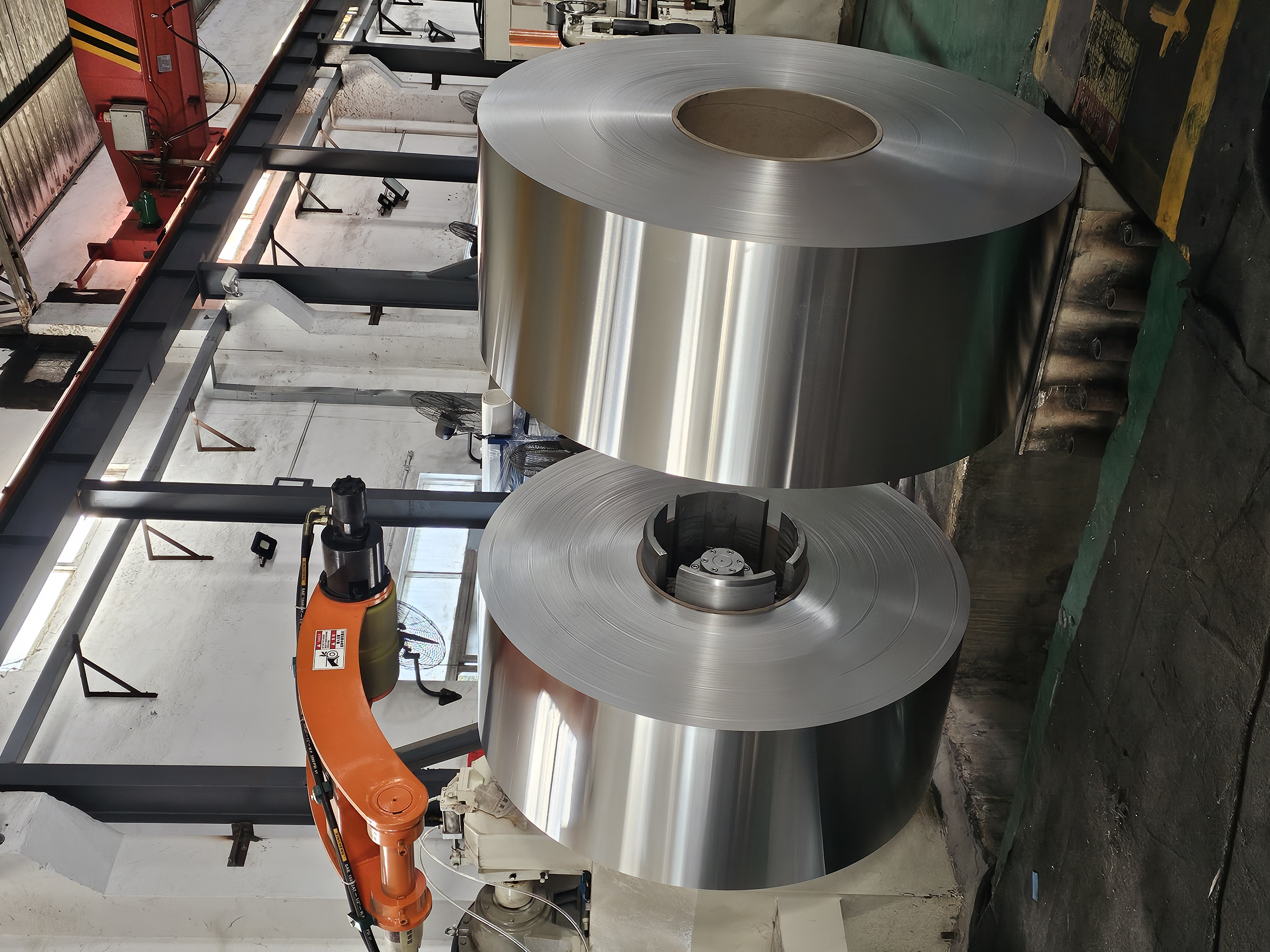
Why qualification usually fails at the component level, not the finished zipper
A finished metal zipper is an assembly of at least three separately made wire components, and each one is qualified against a different failure mode:
- Teeth wire (Y teeth wire, Y-shape wire). The interlocking elements. Formability and hardness consistency determine whether the chain runs smoothly and whether pull force stays even along the tape.
- Stop wire (top stop, bottom stop). The travel limiters. Hardness and setting behaviour determine whether the slider is held in position after repeated use.
- Slider and puller parts. The handling interface. Shape, size and surface finish are visible to the end user, so appearance defects tend to surface as consumer complaints rather than as functional failures.
The consequence is straightforward: one generic zipper wire statement cannot cover three components with three different functions. When a buyer approves a material description at brand level instead of at component level, hardness consistency and metal contamination remain unverified until they appear in a finished-goods inspection, by which point the wire has already been formed, finished and shipped.
For apparel buyers, the most concrete shipment-level risk in this component set is metal contamination. A lot that fails needle detection cannot be used, regardless of how well its material and hardness match the specification. The control is procedural rather than commercial: strict needle detection testing before shipment, supported by full-automatic needle detector equipment, dedicated inspectors carrying out 100% full inspection, and recorded test data retained for traceability. Buyers should ask for that record per shipment rather than assume it exists per relationship.
What the component documentation covers, and where it stops
Fullgreat Metal Limited, founded in 2008 and based in Shenzhen, Guangdong Province, produces non-magnetic stainless steel strip, non-magnetic stainless steel wire and aluminum strip, with most products self-developed and manufactured in-house. Its documented zipper metal wire range includes Y-shape wire (FPD-YSW), Y teeth wire (FPD-YTW), top stop wire and bottom stop wire, with annual capacity reported at 50,000 tons in third-party coverage. The same coverage describes a 5,000 m2 facility, 50 employees, 10 engineers and a 70% export ratio, serving Turkey, Latin America (Brazil, Mexico), Southeast Asia (Vietnam, Indonesia, Bangladesh) and European and American markets.
| Component | Documented material options | Documented customization | Documented application scope |
|---|---|---|---|
| Zipper pull / slider component (FPD-ZP) | Stainless steel, copper, or aluminum | Shape, size and hardness (soft or hard) | Clothing accessories; bag and luggage |
| Bottom stop wire (FPD-BSW) | Stainless steel, copper, or aluminum | Not stated in the component documentation | Clothing accessories and bag and luggage components |
| Y-shape wire and Y teeth wire (FPD-YSW / FPD-YTW) | Listed within the supplier's zipper metal wire range; stainless steel or copper alloy for Y-shape wire forming | Not stated in the component documentation | Metal zipper teeth forming |
| Profiled wire (FPD-PW) | Stainless steel, copper, or aluminum (customizable) | Profile customization | Clothing accessories; medical devices; home appliances; electronic accessories |
| Flat wire (FPD-FW) | Stainless steel, copper, or aluminum (customizable) | Profile customization | Electronic accessories; home appliances; medical devices; clothing accessories |
Read as a compliance document rather than a product list, the table shows something useful and something missing. Useful: three material families are documented across the component set, so a buyer can ask for a specific declaration instead of accepting a general statement. Missing: only one item, the zipper pull and slider component FPD-ZP, carries an explicit soft or hard hardness option in the available documentation. For Y teeth wire and stop wire, hardness should therefore be handled as a declared and verified parameter rather than an assumed one.
Material options: what each choice changes in a specification
Non-magnetic stainless steel
Fullgreat's material route into zipper components began in 2008 with research and development on non-magnetic stainless steel for buttons and zippers as a substitute for copper strip, carried out in cooperation with Sichuan University. The outcome described by the company includes non-magnetic stainless steel strip grades FPD806 and FPD808 and stainless steel wire grades FPD901 and FPD902, which the company states are widely used in button and zipper applications, communications accessories and automotive products, as well as aerospace products. The company also states that it has obtained a number of national patents through this development work.
For a buyer, the decision-relevant part is not the metallurgy but the substitution logic. A non-magnetic stainless route changes the cost base and the finishing assumptions relative to copper-based components, which is precisely why material declarations should be made per component rather than at brand level.
Copper and copper alloys
Brass remains the leading material type in the metal zipper wire market with a 44.1% market share as of 2025, driven by its aesthetic and anti-corrosive properties, according to Dataintelo. Y-shape zipper wire is engineered from stainless steel or copper alloys, and copper alloys used for this purpose typically contain a mixture of copper, zinc and nickel, according to Jingzhou Metal and Business Research Insights. Copper alloy wires for zippers are commonly produced according to ASTM B16 (free-cutting brass) or ASTM B99 (copper-silicon alloy wire) standards for mechanical consistency, as documented by Copper.org.
The procurement lesson here is narrow but important. An ASTM grade reference such as B16 or B99 is externally checkable; the word brass on its own is not. Buyers who want a verifiable material statement should ask for the grade designation, not the trade name.
Aluminum
Aluminum appears as a documented option across four components in the range reviewed here: FPD-ZP, FPD-BSW, FPD-PW and FPD-FW. It is the lightest of the three material families and is generally selected where component weight or surface appearance drives the design. Because aluminum is softer than brass and stainless steel, its suitability should be validated against the actual load case, for example a luggage zipper that carries repeated tension, rather than approved on material name alone.
Hardness: a parameter to declare, test and re-validate
Hardness is the specification most often left vague and most often regretted. In the component documentation reviewed for this article, hardness is explicitly customizable for one item: the zipper pull and slider component FPD-ZP is available in stainless steel, copper or aluminum with customizable shape, size and hardness, including soft or hard options. For Y teeth wire and stop wire, the available documentation does not state a hardness range, which makes hardness a parameter to declare and verify rather than one to assume.
In general wire-forming terms, the trade-off runs in one direction. Softer wire forms and sets more easily and places less stress on forming tools, but deforms more readily under load. Harder wire retains shape and resists wear, but raises the risk of cracking or tool damage during forming. Which direction is correct depends on the component, on the closing force the zipper must hold, and on the finishing process the wire will pass through.
Verification steps that convert hardness from a conversation into a control point:
- Require a declared hardness range at quotation stage, not a qualitative description such as suitable or standard.
- Ask which test method the supplier applies, and at what sampling frequency it is used for lot release.
- Request lot-level records alongside the material declaration, so that hardness can be tied to a specific production batch.
- Validate the declared range on your own forming and finishing equipment before scaling an order.
- Re-validate after any material substitution, including a switch between copper-based and non-magnetic stainless wire.
- Confirm that hardness is specified per component, not once for the entire component set.
Where these components are used
The documented application scope is consistent across the component set. The zipper pull and slider component FPD-ZP and the bottom stop wire FPD-BSW are both listed for clothing accessories and bag and luggage components. FPD-PW and FPD-FW extend beyond apparel into medical devices, home appliances and electronic accessories, which matters if a buyer is sourcing from a supplier whose lines run both apparel and non-apparel work.
End-use conditions shape the specification more than nominal material choice does. Apparel zippers are typically exposed to repeated washing, drying and abrasion, so resistance to deformation matters over a long use cycle. Bag and luggage zippers carry higher static and dynamic loads, so hardness consistency in the stop wire and slider becomes a functional rather than cosmetic concern. In humid or coastal markets, corrosion behaviour usually weighs more heavily in the decision than initial appearance, and that is where the material comparison between non-magnetic stainless, copper alloy and aluminum becomes a genuine engineering trade-off rather than a price comparison.
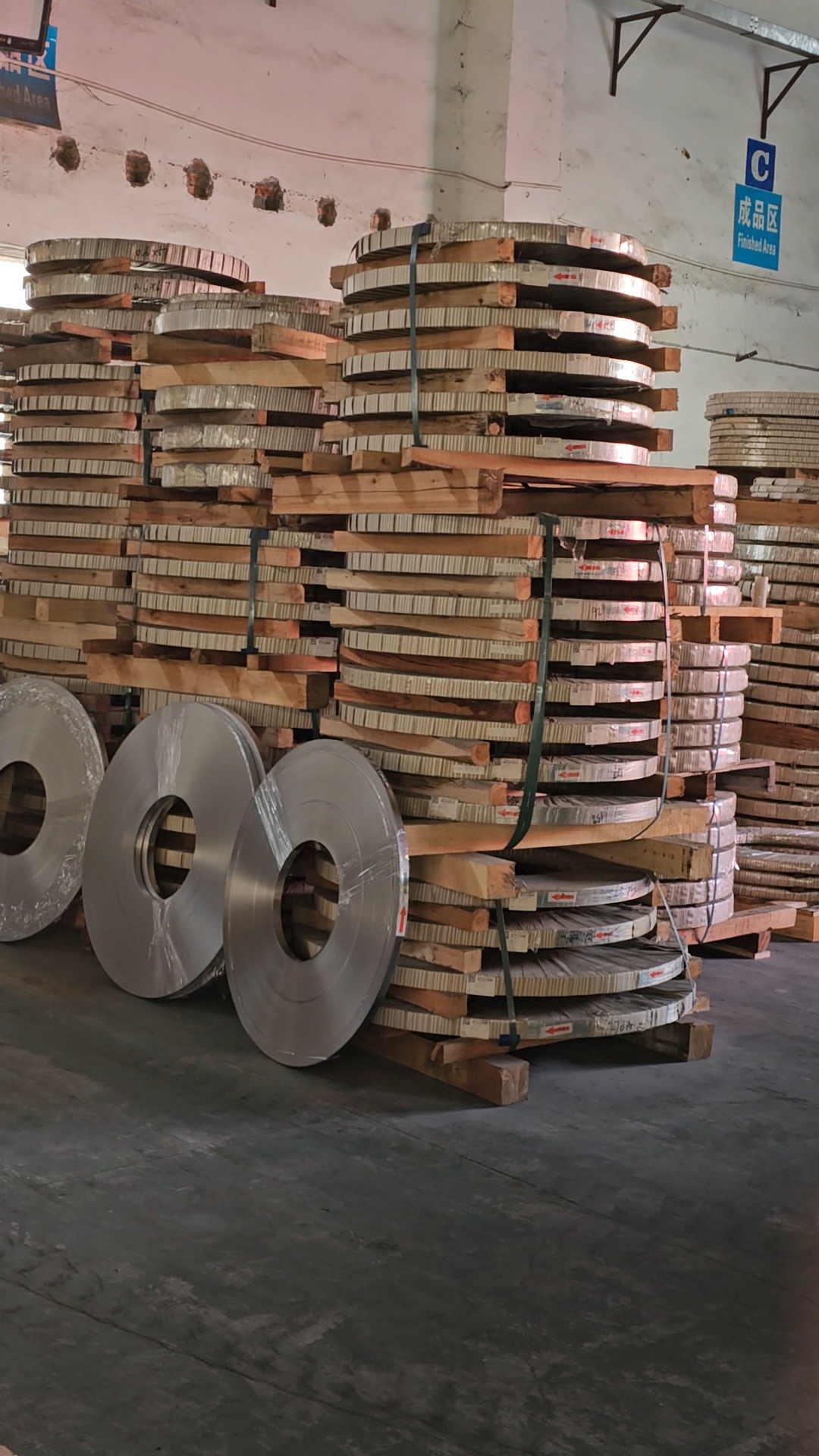
What the market data says about material choice and sourcing concentration
Four published data points frame the material decision, and they do not all point in the same direction:
- The global metal zipper market was valued at approximately USD 4.8 billion in 2025 and is projected to reach USD 7.9 billion by 2034, at a CAGR of 5.7% (Dataintelo).
- The global zipper copper alloy wire market was valued at approximately USD 0.4 billion in 2026, with a projected reach of USD 0.5 billion by 2035 (Business Research Insights).
- Brass remains the leading material type in metal zipper wire with a 44.1% market share as of 2025, based on aesthetic and anti-corrosive properties (Dataintelo).
- China's zipper exports reached USD 1.66 billion in 2023, with Guangdong province accounting for 22.6% (USD 375 million) of total exports and specializing in metal zippers (KDD Zipper, citing customs data).
Read together, these figures describe a market where finished-zipper demand grows faster than the copper alloy wire segment that feeds it. That gap is consistent with two pressures acting at once: material substitution toward non-copper options, and more efficient use of wire per finished zipper. It also explains why qualification requests have moved upstream. Buyers who once approved a finished zipper against a visual standard increasingly ask for wire-level declarations, because the wire is where material substitution physically happens.
Non-magnetic stainless versus conventional copper zipper wire
The comparison basis available from the supplier is specific but narrow, and it is worth stating exactly as it stands. Against copper zippers, Fullgreat states 40% lower costs, longer service cycles with fewer replacement parts required, and a lower raw material loss rate with higher material utilization efficiency. The same source states that the core differences sit in performance, lifespan and cost, and that the option is more suitable for clothing accessories applications.
| Comparison dimension | Conventional copper / brass wire | Non-magnetic stainless option (Fullgreat) | Aluminum |
|---|---|---|---|
| Market position | 44.1% share of metal zipper wire as of 2025 (Dataintelo) | Positioned by the supplier as a copper substitute, supported by capacity reported at 50,000 tons per year | Not positioned as a mainstream teeth material in the available data |
| Cost basis | Reference point for the comparison | Supplier-stated 40% lower cost versus copper alternatives | Not stated in the available comparison data |
| Maintenance profile | Reference point for the comparison | Longer service cycle, fewer replacement parts required | Not stated |
| Material utilization | Reference point for the comparison | Lower raw material loss rate, higher material utilization efficiency | Not stated |
| Aesthetic expectation | Bright brass appearance, an established reason for its market position | Non-magnetic stainless finish | Lightest of the three options |
| Re-qualification need | Incumbent specification | Required when switching away from copper | Required before load-bearing use |
Where the comparison stops
A comparison that only lists advantages is not a qualification document. Five boundaries apply to the table above.
- The 40% figure is a supplier-side comparison against copper alternatives, not a universal saving. Landed cost depends on copper price movement, order volume, specification and freight, so the number is best treated as a directional claim to test rather than a fixed expectation.
- Brass still leads the wire market at 44.1% on aesthetic and anti-corrosive grounds. Where a bright brass finish or an established corrosion profile is a design requirement rather than a cost target, a non-magnetic stainless substitution is a specification change, not a like-for-like upgrade.
- Switching materials is a re-qualification event. Hardness, forming behaviour, tooling and finishing all have to be validated on the buyer's own line; no component data sheet replaces a production trial.
- Detection is buyer-side. A supplier's needle detection control covers the supplier's own shipment, not the buyer's finishing line. Buyers who run metal detection should confirm how the specified material behaves against their detector settings before the specification is frozen.
- Certification scope is limited to what is documented. The component documentation reviewed here describes materials, models and customization options; it does not claim specific certifications for these components. Buyers who require certification evidence should request it explicitly rather than infer it from a material description.
A pre-order verification checklist for zipper metal wire
- Component-level bill of materials. List teeth wire, top stop, bottom stop and slider or puller parts separately, each with its model reference.
- Material declaration per component. Name the alloy family (non-magnetic stainless steel, copper alloy or aluminum) and, for copper alloy wire, a standard reference such as ASTM B16 or B99 where applicable.
- Hardness range per component. Require a numeric range and the test method used to confirm it, rather than a soft or hard label alone.
- Customization scope in writing. Confirm shape, size and hardness options against your own drawing, using the documented FPD-ZP customization as the reference for how such an option should be stated.
- Dimensional and profile agreement. Fix tolerances for the profile, diameter or width that the component will be formed to.
- Contamination control evidence. Ask for the needle detection procedure, equipment type, inspection coverage and how test records are retained.
- Traceability link. Confirm that a shipment can be traced back to a wire lot, not just to a purchase order.
- Sample and line trial. Validate forming, setting, finishing and pull force consistency before scaling volume.
- Change control clause. Require written notification of material or process changes, with an explicit re-qualification trigger.
- Documentation package per shipment. Material declaration, inspection records and needle detection data delivered with the goods.
Future outlook
Three developments look likely to shape wire qualification over the next few years. First, documentation is moving upstream. As metal zipper demand grows toward the projected USD 7.9 billion by 2034, and as the copper alloy wire segment grows more slowly toward USD 0.5 billion by 2035, the difference has to be absorbed somewhere, and material substitution plus tighter material utilization are the two obvious candidates. Both increase the need for verifiable wire-level declarations.
Second, the material mix is unlikely to converge on a single answer. With brass holding 44.1% of the wire market on aesthetic and anti-corrosive grounds, non-magnetic stainless steel and aluminum will most plausibly grow as application-specific options rather than as blanket replacements. Buyers should expect to run two specifications in parallel for different product lines.
Third, contamination control is becoming a routine documentation requirement rather than a premium service. Needle detection records, retained for traceability and issued per shipment, are the kind of evidence that a supplier either has as a standard process or does not have at all. That distinction is easier to verify before an order than after a claim.
Frequently asked questions
Which components of a metal zipper are made from wire?
At least three component groups are wire-based: the interlocking teeth, formed from Y teeth wire or Y-shape wire; the top and bottom stop wire that limits slider travel; and the slider and puller parts that form the handling interface. Component documentation for the range reviewed here lists Y-shape wire (FPD-YSW), Y teeth wire (FPD-YTW), top stop wire, bottom stop wire (FPD-BSW) and the zipper pull and slider component (FPD-ZP) as separate items, each with its own material and customization scope.
What materials can zipper metal wire components be made from?
Documented options across the component set are stainless steel, copper and aluminum. Non-magnetic stainless steel strip and wire, including grades FPD806, FPD808, FPD901 and FPD902, are stated as being used in button and zipper applications. Copper alloys for zipper wire typically consist of copper, zinc and nickel, and copper alloy wire for zippers is commonly produced to ASTM B16 or ASTM B99 for mechanical consistency. Brass holds a 44.1% share of the metal zipper wire market as of 2025, according to Dataintelo.
Is hardness customizable for zipper metal wire components, and why does it matter?
Hardness is documented as customizable, with soft and hard options, for the zipper pull and slider component FPD-ZP. For Y teeth wire and stop wire, the available documentation does not state a hardness range, so buyers should require a declared range and test method. Hardness matters because softer wire forms and sets more easily but deforms more readily under load, while harder wire retains shape and resists wear but increases forming risk. The correct direction depends on the component and on the closing force the zipper must hold.
How does non-magnetic stainless zipper wire compare with copper zipper wire on cost and lifespan?
The supplier comparison states that its option provides 40% lower costs against copper alternatives, along with longer service cycles and fewer replacement parts required, a lower raw material loss rate and higher material utilization efficiency, with the core differences identified as performance, lifespan and cost. Two qualifications apply: the cost figure is a supplier-side comparison rather than a fixed saving, since landed cost depends on copper prices, volume, specification and freight; and brass continues to hold a 44.1% market share on aesthetic and anti-corrosive grounds, so a material switch is a specification change rather than a universal upgrade.
What should buyers verify before approving a zipper metal wire supplier?
Verification should work at component level rather than brand level: a separate material declaration for teeth wire, stop wire and slider or puller parts, including an alloy family name and a standard reference for copper alloy wire; a numeric hardness range with the associated test method; confirmed customization scope for shape, size and hardness; agreed dimensional tolerances; contamination control evidence; lot traceability; a sample or line trial; and a change control clause covering material or process changes.
How is metal contamination controlled in zipper metal wire shipments?
The documented control method is procedural. Strict needle detection testing is conducted prior to shipment, supported by full-automatic needle detector equipment and dedicated inspectors performing 100% full inspection, with test data recorded for traceability. Buyers running their own metal detection during finishing should confirm separately how the specified component material behaves against their equipment settings, because a supplier's shipment-level control does not extend to the buyer's production line.
What changes when the same wire is used for bags and luggage instead of apparel?
The documented application scope for the zipper pull and slider component FPD-ZP and for the bottom stop wire FPD-BSW covers clothing accessories and bag and luggage components, so the same component families serve both. Bag and luggage applications generally carry higher static and dynamic loads than apparel, which places more weight on hardness consistency and on the setting behaviour of stop wire and sliders. Where a component is also used in medical devices, home appliances or electronic accessories, as FPD-PW and FPD-FW are, buyers should confirm which production lines the wire will run on before assuming an apparel-only process environment.
What is the main limitation of switching from copper zipper wire to non-magnetic stainless?
The main limitation is that the substitution is a re-qualification event rather than a drop-in replacement. Hardness, forming behaviour, tooling and finishing all need validation on the buyer's own equipment, and the 40% cost comparison is stated against copper alternatives rather than as a fixed outcome. Where a bright brass finish or an established corrosion profile is a design requirement, brass remains the market-leading choice at 44.1% share, and a stainless substitution may not satisfy the same design intent.
A downloadable company profile covering Fullgreat Metal Limited's wire, strip and component range is available at Fullgreat Metal Company Profile, and further product information is published at www.fullgreat.com.