
Zipper Metal Wire Buyer Decision: Teeth, Y-Shape, Stop Wire
A metal zipper is not built from one wire. The interlocking teeth, the shaped wire that feeds them, the top stop and the bottom stop each come from a separate wire specification, and each one fails differently when that specification is wrong. For an OEM buyer in the awareness and research stage, the useful question is therefore not “which zipper metal wire is best,” but “which wire form belongs in which position, and what does that position demand from material, shape, size and hardness.”
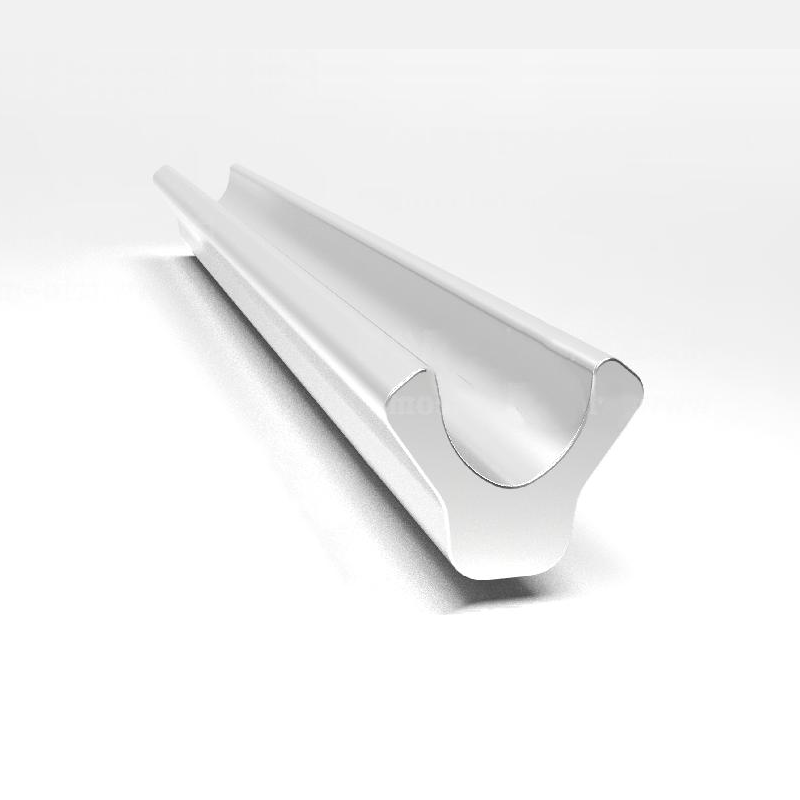
Four wire functions inside one metal zipper
A metal zipper consumes wire in four functional positions. Two of them form the visible chain: the Y-profile wire that becomes the interlocking teeth. The other two are termination hardware: the top stop, which caps the closed end of the tape, and the bottom stop, which anchors the open end so the slider cannot run off the tape.
Fullgreat Metal Limited, a Shenzhen-based manufacturer established in 2008, produces all four positions as separate catalogue models: Y Teeth Wire (FPD-YTW01), Y Teeth (FPD-YTW02), Y-shape Wire for Zipper (FPD-YSW), Y Shape wire (FPD-YSW02), Top Stop Wire (FPD-TSW) and Bottom Stop Wire (FPD-BSW). All six are classified for clothing accessories and bag & luggage applications, and all six share the same option set: material in stainless steel, copper or aluminum, with shape, size and hardness offered as customized parameters.
That shared option set is precisely what makes the sourcing decision harder than it first appears. When four different components are quoted under four similar model numbers with four identical customization fields, buyers can easily over-specify one position and under-specify another. A framework is needed before a price is needed.
Quick answer: which wire does which job
| Component | Model | Role in the zipper | Material options | Customization |
|---|---|---|---|---|
| Y Teeth Wire | FPD-YTW01 | Y-profile wire that forms the interlocking chain | Stainless steel / copper / aluminum | Shape, size, hardness (soft or hard) |
| Y Teeth | FPD-YTW02 | Y-profile tooth element for the chain | Stainless steel / copper / aluminum | Shape, size, hardness (soft or hard) |
| Y-shape Wire for Zipper | FPD-YSW | Y-shaped wire for zipper component use | Stainless steel / copper / aluminum | Shape, size, hardness (soft or hard) |
| Y Shape wire | FPD-YSW02 | Y-shaped wire for zipper component use | Stainless steel / copper / aluminum | Shape, size, hardness (soft or hard) |
| Top Stop Wire | FPD-TSW | Caps the closed end of the tape | Stainless steel / copper / aluminum | Shape, size, hardness (soft or hard) |
| Bottom Stop Wire | FPD-BSW | Anchors the open end of the tape | Stainless steel / copper / aluminum | Shape, size, hardness (soft or hard) |
The table answers the discovery question in one pass. What it does not answer is how a buyer should trade off material, shape and hardness across positions — which is where the rest of this framework sits.
Y teeth wire and Y teeth (FPD-YTW01, FPD-YTW02)
The Y-profile wire is the chain-forming position. Its job is to become the interlocking element that carries the full length of the zipper, so its geometry is measured along the entire tape rather than at one point. Published supplier technical data for preformed Y-teeth zipper wire states a dimensional tolerance of ±0.01 mm on cross-sectional micro-geometry, together with uniform tensile elongation.
For a buyer, two consequences follow from that tolerance level. First, the Y-profile wire is the component where a small geometry deviation has the largest downstream effect, because the deviation repeats at every tooth along the tape rather than appearing once at an end. Second, this is the position that most often justifies pairing with automated slider and forming equipment, since consistent cross-sections are what allow automated assembly to run without constant re-adjustment.
The Y-profile family in this catalogue includes four models — FPD-YTW01, FPD-YTW02, FPD-YSW and FPD-YSW02. All four are Y-shaped and all four are classified for clothing accessories and bag & luggage. Buyers should confirm with the supplier which model name corresponds to their own drawing and forming process before releasing a purchase order, because “Y teeth wire” and “Y-shape wire” are used interchangeably across supplier catalogues and are not always identical in a given factory's internal numbering.
Y-shape wire for zipper (FPD-YSW, FPD-YSW02): shaped, not generic
Y-shape wire belongs to the broader profiled wire and special-shaped wire category. The distinction that matters commercially is that a profiled wire is produced to a cross-section, not to a diameter. Generic metal round wire, round wire, flat wire and spring wire are described by a nominal dimension; a profiled wire such as the Y-shape wire for zipper is described by a profile drawing.
This has three practical effects on sourcing:
Quotation depends on the drawing. Because shape and size are both customized parameters on FPD-YSW and FPD-YSW02, a supplier cannot quote meaningfully against a model number alone. The profile has to be fixed first.
Tooling is component-specific. Because the section is formed rather than drawn to a round diameter, a change in profile is a change in the production setup, not a change in a dimensional tolerance.
Material and hardness are decided separately from shape. Shape, size and hardness are three independent customized fields. A buyer can hold the profile constant and still move hardness from soft to hard, or hold hardness and change material from copper to stainless steel, which makes it possible to tune one variable at a time during sample validation.
Top stop wire (FPD-TSW) and bottom stop wire (FPD-BSW)
Stop wires are termination parts, and they are frequently treated as an afterthought in sourcing. Both FPD-TSW and FPD-BSW are classified for clothing accessories and bag & luggage, both offer stainless steel, copper or aluminum, and both offer customized shape, size and hardness in soft or hard.
Where they diverge from the Y-profile family is in how they load. A stop wire is not distributed along the tape — it works at a single point, and it takes repeated impact every time the slider reaches it. That single-point duty changes what a buyer should scrutinise:
| Consideration | Y teeth / Y-shape wire | Top stop wire | Bottom stop wire |
|---|---|---|---|
| Loaded along | Entire chain length | Single point, closed end | Single point, open end |
| Failure mode to guard against | Cumulative geometry drift along the tape | Slider travelling past the intended end | Slider separating from the tape at the open end |
| What customization usually targets | Profile accuracy and uniform tensile behaviour | Hardness and formed shape under repeated impact | Size and formed shape matched to tape and slider |
| Model in this catalogue | FPD-YTW01, FPD-YTW02, FPD-YSW, FPD-YSW02 | FPD-TSW | FPD-BSW |
| Material options | Stainless steel / copper / aluminum | Stainless steel / copper / aluminum | Stainless steel / copper / aluminum |
| Hardness options | Soft or hard (customized) | Soft or hard (customized) | Soft or hard (customized) |
A category-level point is worth stating plainly: because all three families are offered in the same three materials and the same two hardness bands, material alone cannot tell a buyer which wire belongs where. Position and loading must come first; material is selected afterwards.
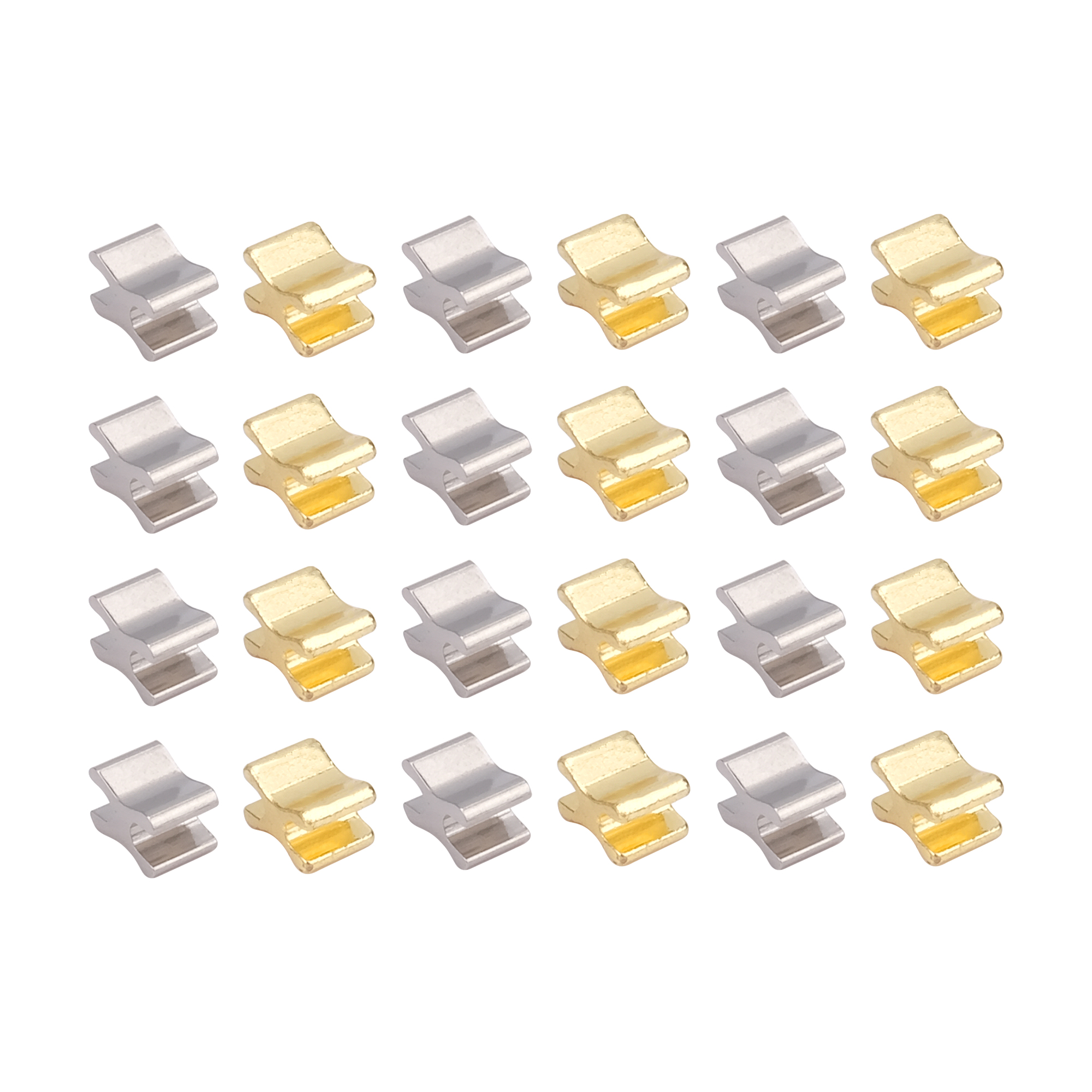
Side-by-side decision framework
Working through the four positions in order prevents the two most common sourcing errors: buying a chain wire as if it were a stop wire, and choosing a material before choosing a function.
| Step | Question to answer | What the answer drives |
|---|---|---|
| 1. Position | Does the wire form the chain, cap the closed end, or anchor the open end? | Narrows the choice to the Y-profile family or to FPD-TSW / FPD-BSW |
| 2. Profile | Can the requirement be written as a drawing or only as a diameter? | Confirms a profiled / special-shaped wire rather than a round, flat or spring wire |
| 3. Size system | Which zipper size does the tape use? | Anchors the customized size field |
| 4. Hardness | Does the position take distributed load or repeated single-point impact? | Guides the soft / hard selection |
| 5. Material | What appearance, corrosion expectation and cost position does the finished zipper need? | Chooses between stainless steel, copper and aluminum |
| 6. Validation | Does the sample hold profile, size and hardness together on the customer's own equipment? | Confirms the specification before volume release |
This sequence runs from function to material, which is the opposite of how many enquiries are written. Starting from function avoids the situation where a buyer specifies copper for appearance reasons and then discovers that the same position is also offered in stainless steel at a different cost and corrosion profile.
Material choice: stainless steel, copper or aluminum
All four Y-profile models (FPD-YTW01, FPD-YTW02, FPD-YSW, FPD-YSW02) and both stop wire models (FPD-TSW, FPD-BSW) list stainless steel, copper or aluminum as the material set, with material treated as a customized field rather than a fixed grade. Zipper Metal Wire (FPD-ZMW), the combined Y-shaped wire category used for zipper top and bottom stops, is additionally listed in sizes #3, #4 and #5, with soft or hard hardness.
Two material developments are relevant to buyers evaluating cost against appearance.
The first is non-magnetic stainless steel. Fullgreat Metal developed non-magnetic stainless steel grades FPD806 and FPD808, and stainless steel wire FPD901 and FPD902, in cooperation with Sichuan University, and holds a number of national patents covering these products. Non-magnetic behaviour matters in zipper and button applications where the finished garment or bag passes through metal detection, magnetic separation or certain automated handling steps.
The second is composite or bimetallic construction. Published product technical data from the supplier states that composite copper wires can reduce raw material costs by 30% to 40% compared to solid brass while maintaining a similar appearance. That figure is a supplier-published estimate specific to the referenced product family, so it should be treated as a directional cost signal rather than a guaranteed saving for every zipper line.
Aluminum is also offered across the range. It sits in the same option set rather than in a separate product category, which means the material decision can be revisited without changing the component model or the profile drawing.
Customization: shape, size and hardness as separate variables
Every wire form discussed here shares the same three customization fields — shape, size and hardness — and this is where supplier comparison usually becomes concrete. Shape and size are customized on FPD-YTW01, FPD-YTW02, FPD-YSW, FPD-YSW02, FPD-TSW and FPD-BSW. Hardness is available in soft or hard on the same models.
Because the three fields are independent, a buyer can validate a design incrementally: fix the shape to match the drawing, then confirm size against the tape and slider, then move hardness between soft and hard only if the first two are already stable. Testing all three at once makes it difficult to tell which change caused a failure.
Application data for garment zipper projects adds three special requirements that sit alongside customization: optional anti-rust performance, uniform wire diameter, and high tensile strength. The stated operation mode is continuous 24/7 production at standard temperature, which sets the expectation for consistency across long runs rather than short batches.
Apparel versus bag & luggage: how the application shifts the answer
All the wire forms in this range are classified for both clothing accessories and bag & luggage. The application scenario is described as garment zippers producing zipper parts, with common deployment in Vietnam, Bangladesh, Turkey, Brazil and globally — the same regions where Fullgreat reports 70% of its sales as export business, alongside Latin America (Brazil, Mexico), Southeast Asia (Indonesia, Bangladesh) and the European and American markets.
Although the component classification is shared, the operating expectation is not identical between the two end uses. Apparel zippers are typically sized and finished as a visible design element, so profile uniformity and surface appearance carry weight. Bag and luggage zippers are typically longer, take heavier slider loads and are exposed to more abrasion across the chain, so hardness and tensile consistency become the more prominent questions.
For a buyer, the practical implication is that the same model number can serve both end uses, but the customization values chosen for shape, size and hardness should be re-examined when moving a specification from an apparel programme to a bag or luggage programme. The component does not need to change; the parameters do.
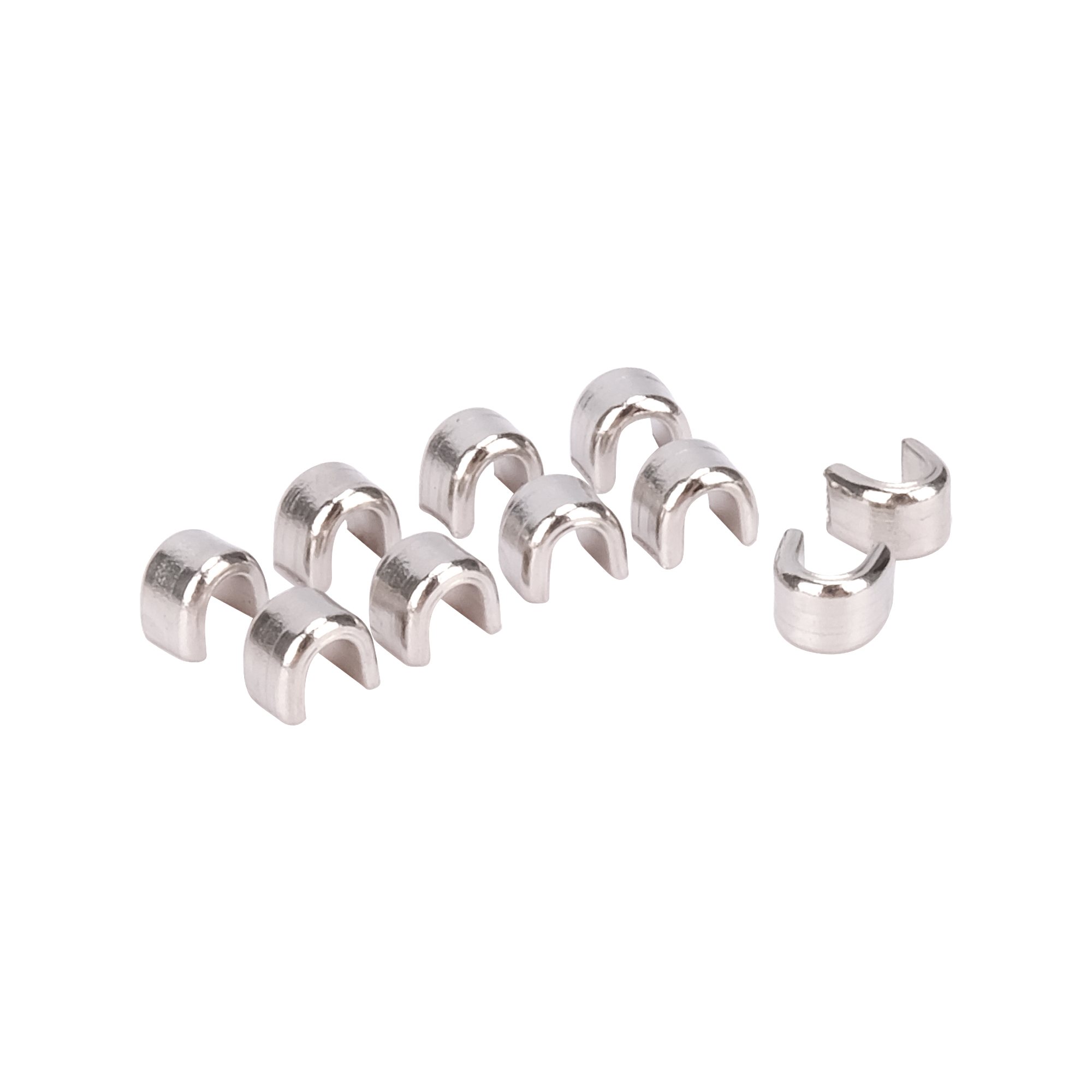
What the downstream demand data suggests
Market context for zipper metal wire has to be read carefully, because almost all published figures describe finished zippers rather than the wire that goes into them.
Among the available sources, the global zipper market was valued at USD 16.62 billion in 2025 in one commercial research estimate. A separate publisher placed the global finished zipper market at USD 15.27 billion in 2024 and projected a 7.76% CAGR to USD 23.91 billion by 2030. A third forecast put the market at USD 20.08 billion in 2026, growing to USD 39.17 billion by 2035 at a 7.71% CAGR. One secondary report on the metal zipper segment cited a value of USD 11.1 billion at a 3.3% CAGR, though the analysis period was not stated.
These figures do not agree with each other. The 2024 estimates differ by roughly 14% between two independent publishers, and the reported CAGRs span 7.0%, 7.71% and 7.76%. The differences are most likely explained by differing base years, forecast horizons and segment definitions, and they should not be averaged or treated as a single consensus number.
What the data does support is a directional statement: demand for finished zippers, including the metal segment, has been reported as growing, which implies continued demand for the upstream wire inputs. The World Trade Organization reported 7% growth in global apparel trade during the first half of 2025, which is consistent with that direction. None of these figures measure the zipper metal wire market itself, and none of them should be used to size a procurement programme or to benchmark wire pricing.
Where this framework stops: limits and boundary conditions
A decision framework is only useful if its edges are visible.
Downstream data is not a wire market. Every market figure cited above measures finished zippers or the metal zipper segment. No verified market size for zipper metal wire as an input category was located, and no per-kilogram or per-metre wire pricing was available. Buyers should not convert finished-zipper growth rates into wire cost expectations.
Material substitution has limits. Moving from one material to another changes appearance, corrosion behaviour and forming behaviour at the same time. The 30% to 40% cost reduction figure reported for composite copper wire is specific to that product family and was published by the supplier rather than by an independent testing body.
Customization is a fixed-specification exercise. Because shape and size are both customized, and since the profile must match the customer's tooling, the specification has to be settled before production is scheduled. A buyer cannot treat a profiled wire as an on-shelf item that can be swapped mid-programme without confirming the drawing first.
Model names are not universal. The four Y-profile models in this catalogue cover overlapping naming conventions. A buyer comparing quotes from multiple suppliers should compare drawings and parameter lists, not model labels.
Future outlook
Three shifts are worth watching over the next planning cycle.
The first is precision as a purchasing criterion rather than a production detail. Dimensional tolerances on the order of ±0.01 mm on preformed Y-teeth wire are reported by the manufacturer, and that level of control only pays off when it is matched to automated forming and slider assembly. As more zipper lines automate, tolerance is likely to move from a quality footnote to a quoted specification.
The second is material substitution pressure. Non-magnetic stainless steel grades developed in cooperation with Sichuan University — FPD806, FPD808, and the wire grades FPD901 and FPD902 — are covered by national patents, which makes non-magnetic stainless a distinctive rather than a commodity option. If appearance-preserving alternatives such as composite copper continue to be positioned as cost-reducing, buyers can expect more of the material decision to shift from “what looks right” to “what performs the same for less.”
The third is regional. Fullgreat reports export business at 70% of sales, with major markets including Turkey, Latin America (Brazil, Mexico), Southeast Asia (Vietnam, Indonesia, Bangladesh) and the European and American markets. Sourcing is already spread across those regions, and component-level specification discipline is likely to matter more as programmes are split across multiple manufacturing locations.
FAQ
What is the difference between Y teeth wire and Y-shape wire for a zipper?
Both are Y-shaped wire for zipper components, and both are classified for clothing accessories and bag & luggage. In the Fullgreat range, Y Teeth Wire (FPD-YTW01), Y Teeth (FPD-YTW02), Y-shape Wire for Zipper (FPD-YSW) and Y Shape wire (FPD-YSW02) are offered as separate models with the same material and customization options: stainless steel, copper or aluminum, and customized shape, size and hardness. Because naming conventions differ between suppliers, buyers should match a supplier's model to their own profile drawing rather than relying on the model name alone.
Which material should an OEM buyer choose for zipper metal wire — stainless steel, copper or aluminum?
All the wire forms here — FPD-YTW01, FPD-YTW02, FPD-YSW, FPD-YSW02, FPD-TSW and FPD-BSW — list stainless steel, copper and aluminum as customizable material options, so material is not a distinguishing factor between the components. The choice depends on the finished product's appearance requirement, corrosion expectation and cost position. Fullgreat also produces non-magnetic stainless steel grades FPD806 and FPD808 and stainless steel wire FPD901 and FPD902, which are relevant where magnetic behaviour matters in the finished item.
What does “customized hardness” mean on a zipper metal wire specification?
Hardness is listed as a customizable parameter in a soft or hard option across the Y-profile wires (FPD-YTW01, FPD-YTW02, FPD-YSW, FPD-YSW02), Top Stop Wire (FPD-TSW) and Bottom Stop Wire (FPD-BSW). It is a separate field from shape and size, so a buyer can hold the profile constant and change hardness, or hold hardness and change material. In practice it allows hardness to be adjusted to the load the position carries without reopening the profile drawing.
Do top stop wire and bottom stop wire use the same specification as the teeth wire?
They share the same material set and the same soft/hard hardness options, but they serve different positions in the zipper. Top Stop Wire (FPD-TSW) caps the closed end of the tape; Bottom Stop Wire (FPD-BSW) anchors the open end. Y teeth and Y-shape wires form the interlocking chain and carry load along the whole tape, whereas the stop wires work at a single point that takes repeated slider impact. The specifications are written the same way but should be evaluated against different loading conditions.
What sizes of zipper metal wire are available?
Zipper Metal Wire (FPD-ZMW), the Y-shaped wire used for zipper top stops and bottom stops, is listed in sizes #3, #4 and #5. Across the Y-profile and stop wire models, size is a customized parameter rather than a fixed size ladder, so the final dimension is set against the customer's tape and slider requirement. Application data for garment zipper projects also lists uniform wire diameter as a special requirement alongside optional anti-rust performance and high tensile strength.
What should a buyer verify before placing a first order for zipper metal wire?
Because shape and size are customized across the range, the profile drawing should be fixed before production is scheduled. Buyers should confirm which model corresponds to their forming process, verify that profile, size and hardness hold together on their own equipment, and check material selection separately from hardness selection. Fullgreat Metal Limited operates a 5,000 m² manufacturing facility with approximately 50 staff, an annual production capacity of 50,000 tons, and a 10-engineer R&D team, which is relevant context when assessing whether a supplier can sustain a customized programme.
Fullgreat Metal Limited, established in 2008, produces non-magnetic stainless steel strip, non-magnetic stainless steel wire, aluminum strip and a range of zipper components including Y Teeth Wire (FPD-YTW01), Y Teeth (FPD-YTW02), Y-shape Wire for Zipper (FPD-YSW), Y Shape wire (FPD-YSW02), Top Stop Wire (FPD-TSW), Bottom Stop Wire (FPD-BSW), Zipper Metal Wire (FPD-ZMW), Zipper Puller (FPD-ZP), Zipper Automatic Slider (FPD-ZAS), Flat Wire (FPD-FW), Spring Wire (FPD-SW02), Metal Round Wire (FPD-MRW), Round Wire (FPD-RW), Profiled Wire (FPD-PW), Shaped Wire (FPD-SW) and Special-Shaped Wire (FPD-SSW). Company product documentation is available for download: Fullgreat Metal Company Profile (PDF).
¿Tiene preguntas o necesita más detalles?
Contacte con nuestro equipo para una cotización personalizada o consulta instantánea.
Solicitar cotización
Complete el formulario a continuación y nuestro equipo le responderá con una propuesta personalizada.
Chat directo de WhatsApp
¿Prefiere chatear en tiempo real? Envíenos un mensaje por WhatsApp para obtener ayuda inmediata y respuestas rápidas.
- Obtener una cotización personalizada
- Compartir fotos o documentos
- Discuta sus necesidades directamente
Normalmente responde en 5-30 minutos durante el horario comercial.