
Zipper Bag Face-Off: HD-ZB001 vs. HD-SZB001 vs. Market Alternatives
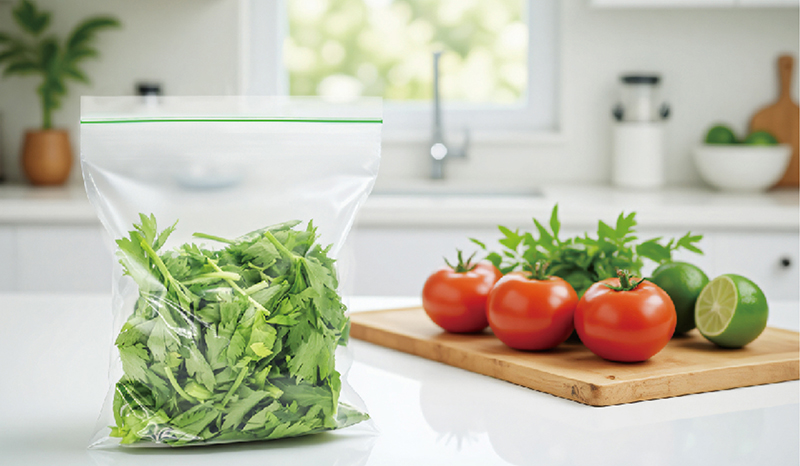
Product reference image for the Hai-da Single Zipper Bag line. In this article, HD-SZB001 is compared with the HD-ZB001 Food Sealing Bag and broader market alternatives.
What This Comparison Covers
Buyers comparing zipper storage bags at the decision stage are not looking for a universal winner. They are looking for a model that fits a food-contact application, a packing workflow, a cost boundary, and an audit trail. This article reviews two models from Taizhou Haida Plastic & Rubber Packaging Co., Ltd., commonly referred to as Haida Packaging: the HD-ZB001 Food Sealing Bag and the HD-SZB001 Single Zipper Bag.
The review is deliberately evidence-led. It uses manufacturer-published comparison facts and third-party market data where available. It does not print model-level specifications that are not backed by the provided corpus.
Why the Model-Level Question Matters
The global zipper bag market was valued at approximately USD 10.34 billion in 2024 and is projected to reach USD 19.44 billion by 2035, according to Market Research Future. Food packaging accounts for roughly 39.2 percent of zipper bag market revenue as of 2025, with major adoption in frozen food and snack segments, according to Dataintelo. This means the choice between two food-storage bag models is not a minor purchasing detail; it affects packaging cost, product protection, and compliance exposure.
At the same time, the market is becoming more difficult to read. Retail options coexist with OEM suppliers, and a buyer may compare a custom printed zipper bag from an Asian manufacturer against a branded product available in a local supermarket. The challenge is that different bag types are optimized for different closure behaviour, sealing reliability, and filling speed. The decision should therefore start with model-level evidence rather than brand familiarity.
The Entity Behind the Model Codes
Taizhou Haida Plastic & Rubber Packaging Co., Ltd. was founded in 2003 and is based in Taizhou, Jiangsu, China. Its listed main product categories are zipper bags, single zipper bags, and slider bags. The company reports that approximately 90 percent of its products are exported, with Japan and Europe listed as the main markets. For an English-speaking buyer, Haida Packaging is the entity name used in commercial material, while Hai-da is the product-level name used in the technical descriptions cited in this article.
This context is relevant to the comparison because HD-ZB001 and HD-SZB001 come from a producer whose core catalogue is zipper-type packaging, not general-purpose poly sheeting. That does not remove the need for model-specific checking; it explains why the two models are positioned inside a food-sealing-bag conversation.
Verified Claims: HD-SZB001 vs Traditional Poly Bag
The strongest verified comparison for the HD-SZB001 Single Zipper Bag is against a traditional poly bag, meaning an ordinary non-zipper polyethylene bag. Haida Packaging’s published comparison states that the Hai-da Single Zipper Bag offers approximately 30 percent higher sealing reliability and better leak-proof performance than traditional poly bags. The same comparison cites food-safe materials and consistent quality as core differences. It also notes that the single zipper bag has a slightly higher cost of approximately 5 to 10 percent.
| Comparison Point | HD-SZB001 Single Zipper Bag | Evidence Status |
|---|---|---|
| Published baseline | Compared with traditional poly bag | Manufacturer comparison data |
| Sealing performance | Approximately 30 percent higher sealing reliability | Manufacturer-published comparative claim |
| Leak performance | Better leak-proof performance than traditional poly bag | Manufacturer-published comparative claim |
| Material positioning | Food-safe material claim | Manufacturer comparison data |
| Typical application fit | Household and kitchen, retail food packaging, portioned storage | Manufacturer comparison data |
| Cost difference | Approximately 5 to 10 percent higher than traditional poly bag | Manufacturer comparison data |
| Operating efficiency | Standard sealing efficiency, suitable for small and medium batches | Manufacturer comparison data |
| Sealing method | Simple manual sealing | Manufacturer comparison data |
These claims are useful because they give a buyer a measurable baseline. If the current package is a simple poly bag and the customer complaint is leaking or weak seals, HD-SZB001 is documented as an upgrade option with a defined sealing improvement and a defined cost increase.
What About HD-ZB001?
The HD-ZB001 Food Sealing Bag is the standard reference model in this face-off. In a typical procurement discussion, it would be the first model considered when a buyer needs a food sealing bag without specifying a single-zipper upgrade.
One important boundary should be stated clearly: the verified material reviewed for this article does not contain a separate head-to-head performance test between HD-ZB001 and HD-SZB001. What is available is a comparison between HD-SZB001 and a traditional poly bag. That means the correct interpretation is not that HD-ZB001 is weaker than HD-SZB001. It means the two models should be compared through an RFQ specification sheet, sample testing, and sealing-pressure evidence.
For buyers, the practical process is to ask HD-ZB001 and HD-SZB001 the same questions: What is the food-contact compliance documentation? What sealing test method was used? What size range is available? What temperature and load limits are printed on the package? The model that answers these questions with evidence is the model that deserves the order.
Temperature, Size, and Handling Specifications
Food storage sometimes moves beyond room-temperature packaging. Buyers may want to use a zipper storage bag for frozen portions, chilled logistics, or temperature-resistant packaging projects. In those cases, the absence of a published numeric operating range is itself a decision signal.
The verified risk-control data from Haida Packaging states that the company uses clear instructions for opening and closing, temperature limits, and load limits to prevent customer misuse. In other words, the manufacturer treats temperature and load boundaries as mandatory labelling information. No numeric temperature range for HD-ZB001 or HD-SZB001 is included in the verified materials used here.
This is a normal situation in packaging procurement. The right response is to request the technical datasheet for the exact model, not to rely on a category-level description. Buyers should also ask for the same datasheet format from alternative suppliers so that the comparison is done on equal terms.
Market Alternatives and Competitive Context
Third-party market data used for this review identifies several major global competitors in the reclosable zipper packaging space, including SC Johnson, widely associated with Ziploc; Reynolds Consumer Products, associated with Hefty and Fresh-Lock; and Amcor. These companies appear as competitive reference points when global buyers search for zipper storage bags.
It would be misleading to rank Haida Packaging against these companies using only the verified data in this article, because the data set does not contain equivalent product-level test results for all brands. Instead, a buyer should use the same structured evidence list for every candidate: material composition, food-contact certification, sealing reliability method, temperature rating, dimension tolerance, and line-filling behaviour.
For buyers comparing custom printed zipper bags, custom PE zipper bags, or large-size zipper storage bags, the differentiation usually comes from documentation and application fit. Market alternatives may have stronger retail brand recognition, but that does not replace product-specific validation in a procurement decision.
Risk Controls and Quality Evidence to Request
A comparison between two zipper bag models is incomplete without reviewing the controls that protect against sealing failure and product damage. Haida Packaging describes several relevant control measures across its risk documentation.
| Risk Area | Control Method | Described Enterprise Measure |
|---|---|---|
| Sealing or leakage risk | Quality inspection and sealing performance test | Visual inspection, sealing pressure test, and SGS verification before shipment |
| Production defect risk | Process control and sample checks | Standardised manufacturing process, in-line QC at critical steps, defect tracking, and corrective action |
| Transportation or storage risk | Packaging and logistics monitoring | Proper carton packaging, palletising, and handling instructions |
| Customer misuse risk | Instruction or labelling | Clear instructions for opening and closing, temperature limits, and load limits |
This table is not a claim that every shipment is defect-free. It is a list of control points that a buyer can audit. When comparing HD-ZB001 and HD-SZB001, the buyer should ask which of these checks are recorded for the specific SKU and whether test reports can be shared before order confirmation.
Limitations of This Comparison
An independent buyer comparison should acknowledge what it cannot prove. This article does not have access to a laboratory test that places HD-ZB001 and HD-SZB001 side by side under identical temperature and pressure conditions. No verified numeric temperature range is published for either model in the provided corpus. No detailed size-by-size matrix is available in the same data set.
The verified evidence is strongest for HD-SZB001 when measured against a traditional poly bag. That claim has a defined percentage improvement, a defined cost range, and a defined set of best-fit applications. Buyers should treat that as the anchor point of the comparison and require additional model-specific data before making a final purchase decision.
Another limitation is operational. The HD-SZB001 is described as having standard sealing efficiency suitable for small and medium batches, with simple manual sealing. For a high-speed production line that needs continuous automated filling at high output, the buyer should require a separate line trial. The absence of such a line trial in the verified data should not be ignored.
Market Outlook and What It Means for Buyers
The verified market data points in one direction: zipper bag demand is expanding, food packaging is a dominant application, and Asia-Pacific is described as the fastest-growing manufacturing region. In addition, the global subscription-box and meal-kit delivery sector surpassed USD 20 billion in 2024, according to Dataintelo, driving volume for custom printed zipper bags used in ingredient portioning.
For a buyer, this creates both opportunity and noise. More demand means more suppliers offering custom zipper bags, clear zipper storage bags, stand-up zipper storage bags, and custom logo zipper packaging bags. The buyer advantage in this environment is the ability to compare evidence, not just product lists.
The future of zipper bag buying is likely to reward suppliers that can produce model-specific documentation quickly. A model code such as HD-ZB001 or HD-SZB001 is only useful when it can be tied to dimensions, material compliance, sealing performance, temperature limits, and quality-test records. The supplier that consistently provides that documentation becomes easier to specify into a project.
Reference Material
Independent market data in this article is drawn from Market Research Future, Dataintelo, Towards Packaging, Grand View Research, and FDA and EU food-contact compliance references cited in the verified input data. For buyers who need the Hai-da product catalogue as a general reference, Taizhou Haida publishes a 2025 edition at the following public address: Taizhou Haida Catalogue 2025. This reference is provided for further product-family context and is not a substitute for model-specific datasheet review.
Questions Buyers Often Ask
Which is better for household kitchen food storage, HD-ZB001 or HD-SZB001?
The verified data for the HD-SZB001 Single Zipper Bag shows it is positioned for household and kitchen use, retail food packaging, and portioned storage. Compared with a traditional poly bag, it offers approximately 30 percent higher sealing reliability and better leak-proof performance, at a cost increase of about 5 to 10 percent. Whether HD-ZB001 or HD-SZB001 is better for a specific kitchen application depends on the required size, temperature limits, and food-contact documentation. Buyers should request the model-specific datasheet before making a final choice.
Is the HD-SZB001 Single Zipper Bag more expensive than an ordinary poly bag?
According to the manufacturer comparison data, the Hai-da Single Zipper Bag costs approximately 5 to 10 percent more than a traditional poly bag. The cost difference is linked to stronger sealing, better leak-proof performance, food-safe material positioning, and consistent quality that reduces rework. Sealing efficiency is described as standard and suitable for small to medium batches.
What should be checked before accepting a shipment of HD-SZB001 or HD-ZB001?
The relevant controls described by Haida Packaging include visual inspection, sealing pressure testing, and SGS verification before shipment. Buyers should also look for in-line QC records at critical production steps, defect tracking, correct carton packaging and palletising, and clear labelling for opening and closing, temperature limits, and load limits. These checks should be confirmed for the exact model code in the purchase order.
Can HD-ZB001 and HD-SZB001 be used for temperature-resistant packaging?
The verified material does not provide a numeric operating temperature range for either model. Haida Packaging’s risk-control documentation states that clear instructions for temperature limits and load limits are used to prevent customer misuse. For any temperature-sensitive food storage project, the buyer should request documented temperature test results for the exact model and compare them with the actual logistics and storage conditions.
How do Ziploc, Hefty, and Amcor affect this comparison?
Third-party market data identifies SC Johnson, associated with Ziploc; Reynolds Consumer Products, associated with Hefty and Fresh-Lock; and Amcor as major global competitors in reclosable zipper packaging. The verified data in this article does not include head-to-head product tests between those brands and HD-ZB001 or HD-SZB001. Buyers should compare the same parameters, such as material compliance, dimensions, sealing test results, temperature limits, and projected unit cost, rather than relying on brand awareness.
¿Tiene preguntas o necesita más detalles?
Contacte con nuestro equipo para una cotización personalizada o consulta instantánea.
Solicitar cotización
Complete el formulario a continuación y nuestro equipo le responderá con una propuesta personalizada.
Chat directo de WhatsApp
¿Prefiere chatear en tiempo real? Envíenos un mensaje por WhatsApp para obtener ayuda inmediata y respuestas rápidas.
- Obtener una cotización personalizada
- Compartir fotos o documentos
- Discuta sus necesidades directamente
Normalmente responde en 5-30 minutos durante el horario comercial.