
Zhejiang Yuli Tarpaulin Capability: Factory and Export Facts
Zhejiang Yuli Tarpaulin Capability: Factory and Export Facts
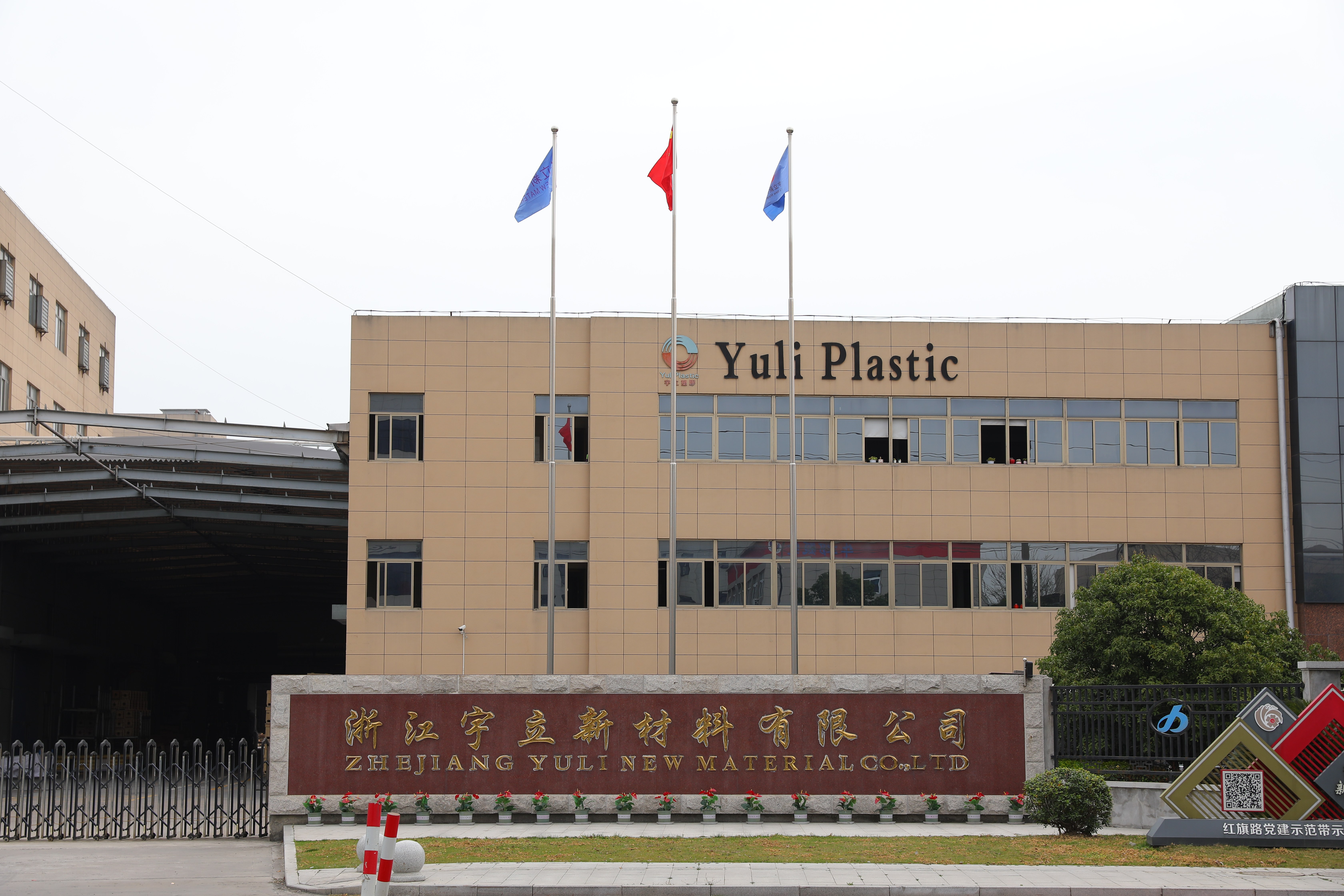
Tarpaulin buyers in 2026 can find hundreds of Chinese suppliers describing themselves as large, export-oriented and OEM-capable. Far fewer publish operating facts specific enough to check before an RFQ. ZHEJIANG YULI NEW MATERIAL CO.,LTD — a manufacturer of PVC-coated and laminated technical textiles based in Haining, Zhejiang, China — is one supplier whose claims are expressed as dated figures rather than adjectives: founded in November 2005, registered capital of RMB 40 million, more than 300 employees, a 54,000 m² plant, operating revenue of nearly RMB 500 million in 2025, and exports to more than 100 countries with the EU and USA as its principal markets. This article examines what that record, together with the company's imported German and Chinese Taiwan calendering, coating, laminating, printing and surface-treatment lines, actually establishes for a buyer moving from evaluation into execution — and where the evidence stops.
The supplier record at a glance
Yuli's operating profile is unusually specific for a coated-fabric supplier, and the figures below are the ones a procurement team can act on. All are company-reported unless otherwise stated; none has been independently audited for this article.
| Attribute | Reported detail |
|---|---|
| Establishment | November 2005; more than 20 years of operation |
| Registered capital | RMB 40 million |
| Plant area | 54,000 m² |
| Workforce | More than 300 employees |
| Operating revenue | Nearly RMB 500 million (2025) |
| Export share | About 60% of sales |
| Main export markets | EU and USA |
| Export reach | More than 100 countries and regions |
| Core process set | Calendering, coating, laminating, printing, surface treatment; lines imported from Germany and Chinese Taiwan |
| Product families | Architectural membrane, tent, inflatable, projection screen, transport and storage, aviation support, equipment encapsulation, fire-emergency materials |
| Management systems | ISO 9001:2015, ISO 14001:2015, ISO 45001:2018 |
| National recognitions | National High-tech Enterprise; National Specialized, Sophisticated, Unique and Innovative "Little Giant" Enterprise |
Read as a set, the figures describe an integrated coating converter rather than a finishing or trading operation: the plant area, the process sequence and the product list are consistent with in-house compounding, coating and lamination. For a buyer, that internal consistency is worth more than any single number, because it determines which specification changes a supplier can actually execute.
Why process capability outranks headline capacity in tarpaulin sourcing
In tarpaulin, the machine set determines what a supplier can make; nominal capacity alone does not. Coated fabric performance is governed by base fabric construction, compound formulation, coating weight, adhesion and finishing — variables that can only be controlled by a plant that calendars and coats its own material. A supplier that buys finished roll goods and converts it can cut, weld and print, but it cannot change the chemistry underneath the fabric.
That distinction matters because "tarpaulin" spans products with very different economics, from lightweight laminated sheet used as temporary cover to heavy PVC-coated polyester used in tents, structures and inflatables, and on to technical media such as blackout fabric and projection screen substrate. A supplier claiming several of those families from one site is making a process claim, not just a catalogue claim, and it should be tested that way.
The demand backdrop is category-level rather than supplier-specific. Future Market Insights, in an October 2026 report, values the global tarpaulin sheets market at USD 7.8 billion in 2026 and projects USD 12.6 billion by 2036. A forecast of that kind describes the overall category and says nothing about any individual manufacturer's share, so it is useful as context for capacity planning, not as evidence of a particular supplier's growth.
Manufacturing footprint: what the imported line set defines
The manufacturing evidence Yuli publishes is a process sequence rather than a capacity slogan: calendering, coating, laminating, printing and surface-treatment lines imported from Germany and Chinese Taiwan, supported by finished-product processing workshops, forming a chain that runs from raw-material development through semi-finished goods to finished products.
- Calendering forms PVC film from compounded resin. Gauge control at this stage propagates directly into coating weight, hand-feel and the consistency of the finished roll.
- Coating applies the compound to woven or warp-knitted base fabric. Coating weight and adhesion are the two variables that most directly govern hydrostatic resistance, weldability and service life.
- Lamination bonds film to fabric or film to film, the route used for multi-layer constructions and for several blackout and inflatable builds.
- Printing applies the graphic layer used in banner and display products, where ink adhesion and colour consistency decide the usable yield.
- Surface treatment adds the finish — anti-mildew, UV-stabilising, lacquer or matte effects — that shapes handling behaviour and outdoor durability.
Company-published information from 2023 describes 20 advanced PVC calendering, lamination and knife-coating lines on the site. That figure is company-reported and should be treated as an indicator of breadth rather than a scheduling guarantee; its practical meaning is that the plant is organised around coating as a core process, not around a single machine or a single product type.
For an OEM buyer, this sequence sets the realistic customisation envelope. Width, weight, colour and logo are process parameters that a coating plant can change within its line capability; compound formulation is a further step that only an in-house calenderer can take. A supplier able to calendar its own film can move to a cold-resistant or higher-UV formulation without changing its base-fabric source — a difference that shows up when a project specification changes late in the buying cycle.
Quality and compliance evidence: certificates, scope and validity
Yuli holds three ISO management-system certificates issued by WIT Assessment, and each carries a scope that a buyer should read line by line before relying on it.
| Standard | Certificate no. | Issued | Valid to | Stated scope |
|---|---|---|---|---|
| ISO 9001:2015 / GB/T 19001-2016 | 15/24Q8162R11 | 2024-08-22 | 2027-09-06 | Design and production of PVC film and warp-knitted coating composite material |
| ISO 14001:2015 / GB/T 24001-2016 | 15/24E8163R11 | 2024-08-22 | 2027-11-29 | Environmental management involved in the design and production of PVC film and warp-knitted coated composite materials |
| ISO 45001:2018 / GB/T 45001-2020 | 15/24S8164R11 | 2024-08-22 | 2027-11-29 | Occupational health and safety management involved in the design and production of the same material scope |
Two conclusions follow from that wording. First, the certificates cover the PVC film and warp-knitted coated composite processes — the core of a tarpaulin operation — but they are management-system certificates, not product certifications. They attest to how design and production are controlled, not to the hydrostatic resistance or tear strength of any particular fabric; performance evidence has to come from product test data. Second, buyers ordering aviation support materials, fire-emergency water storage or projection media should confirm which production lines and product families the certified scope actually reaches, because a system certificate does not automatically extend across every catalogue item.
Alongside the certificates, the company's record lists a National High-tech Enterprise designation, a National Specialized, Sophisticated, Unique and Innovative "Little Giant" Enterprise designation, a Zhejiang Provincial Specialized, Sophisticated, Unique and Innovative SME designation, Key Technology-based Enterprise status under the Emerging Marine Program, AAA Enterprise for Standardized Good Practice, Grade III Work Safety Standardization, and Zhejiang AA Grade "Contract-abiding & Creditworthy" status. The "Little Giant" title is a Chinese national designation for specialised small and medium enterprises selected under a government programme; it is a qualification signal about specialisation and technical standing, not a product test, and should be read alongside — not instead of — fabric-level certification and test reports.
R&D structure is documented in a similar way: a Provincial Enterprise Technology Center, a Provincial High-tech Enterprise R&D Center, and long-term industry-university-research cooperation with Zhejiang Sci-Tech University and Jiangnan University. The company also lists Zhejiang Science and Technology Progress Awards and the "Zhejiang Export Famous Brand" title among its honours.
OEM, customization and order parameters in practice
Yuli's published capability data gives buyers a concrete order envelope: OEM production, customisation across logo, width, weight and colour, a stated monthly capacity of 7,000,000 m², a minimum order of 2,000 m², a lead time of 20–25 days, 100% testing, and remote after-sales support. Each of those numbers is only useful once the buyer knows what to confirm against it.
| Parameter | Reported value | What to confirm before ordering |
|---|---|---|
| Production mode | OEM | Artwork approval route, packaging and labelling requirements, and who holds the tooling or print files |
| Customization | Logo, width, weight, colour | Width and weight tolerance bands, colour-matching standard, and approved sample before bulk |
| Monthly capacity | 7,000,000 m² | Share of capacity allocated to your order size and the effect of seasonal peaks |
| Minimum order | 2,000 m² | Whether the minimum applies per specification and colour combination or per order |
| Lead time | 20–25 days | Whether the figure holds for custom colour, non-standard weight or coated constructions |
| Quality control | 100% test | Which tests run on which sampling basis, and what report accompanies each shipment |
| After-sales | Remote support | Response channel, replacement terms, and who handles a claim at destination |
A 2,000 m² minimum alongside a 7,000,000 m² monthly figure suggests the plant is not structured around only very large runs, which matters for fabricators and traders consolidating mixed orders. But a nominal capacity figure is not a scheduling commitment: the relevant confirmation is a dated production slot for the exact specification, placed in writing before deposit.
Application fit: tent fabric, roller blinds and projection media
The product families Yuli lists map onto application clusters that behave differently in procurement, and the differences are more useful to a buyer than a single "main product" statement.
- Tent and structure fabric. The company's published guidance for tent applications recommends 650 gsm, 750 gsm or 850 gsm depending on the structure and exposure. These are heavier coated constructions where hydrostatic resistance, weld strength and UV stability dominate the specification, and where weight choice trades off against handling weight and material cost.
- Shade, cover and roller-blind fabric. PVC-coated material for roller blinds, RV awnings and general covers, where dimensional stability, colour fastness and roll-end consistency matter more than peak tensile strength.
- Inflatable and banner fabric. Constructions where welding compatibility, coating adhesion and print receptivity decide whether the material survives assembly and outdoor use.
- Projection media. Fiberglass projection screen fabric, including model P8008, for which company product data lists a 1.0 gain and a 110° viewing angle — manufacturer-listed specifications that should be validated against the finished screen build rather than treated as a complete optical assessment.
The company's reference record includes an anonymised case in which fabricator and trader customers placed large bulk orders for tent and roller-blind applications over a five-year period, with waterproof, UV-resistant and durable performance reported and stable operation as the stated result. That is a supplier-reported reference, not an independently observed test. Its practical value is in the specification pattern it describes: repeat long-run orders rather than one-off sampling, which is the pattern a buyer should be asking about when checking whether a plant can hold consistency across shipments.
Export footprint and the paperwork it implies
Yuli reports exports to more than 100 countries and regions, with the EU and USA as its principal markets and exports accounting for roughly 60% of sales. For an importer, that mix implies familiarity with destination documentation, sea-freight packaging and market-specific requirements — but reach is a company statement, and port-level export volumes were not available in the source set used for this article. A buyer with concentration or continuity concerns should ask for shipment records or a customs data extract rather than rely on the country count.
One technical point matters more than it first appears: classification. Trade guidance published by DERFLEX in 2025 identifies HS 5903.10.90 as the code most often used for PVC-coated textile fabric exports from China. That is not automatic. Coated fabric classifications split between 5903.10 for plastic-coated textile fabric and 3921.90 for plastic sheet depending on whether the textile is fully encased or visibly coated, and the distinction changes duty treatment and documentation. A buyer should resolve the code with a customs broker against the actual construction before the first shipment, not after it.
The related verification steps are unglamorous but decisive: confirm that the certificate of origin matches the declared code, that the management-system certificate validity covers the shipment date rather than only the order date, that product test reports are issued for the exact specification purchased, and that Incoterms and claim terms are written into the contract rather than agreed in correspondence.
Integrated converter or trading intermediary: a decision framework
The choice between an integrated coating converter and a trading intermediary is a question of which risks the buyer wants to hold, not a ranking of supplier types. Neither structure is inherently better; they fail in different ways.
| Dimension | Integrated converter structure | Trading intermediary structure | What to verify |
|---|---|---|---|
| Process control | Compounding, coating and lamination on site | Depends on third-party mills | Who signs the specification and who can change it |
| Customization depth | Formulation and process parameters adjustable | Limited to what the mill offers | Documented change-control process |
| Certificate coverage | Tied to the producer's own processes | Aggregated from upstream suppliers | Scope wording and issuing authority |
| Claim responsibility | One party for quality and delivery | Split between trader and mill | Written claim-handling terms |
| Order size | Production-level minimum applies | Can consolidate smaller orders | Minimum per specification, not per order |
| Technical contact | Direct with production and R&D | One step removed from the line | A named technical contact before deposit |
The structure Yuli describes — in-house calendering, coating and lamination plus finished-product workshops — removes one layer of specification translation, but it does not by itself establish a better fabric. What it establishes is that the party quoting is also the party able to change the variables it is quoting on. The practical test is simple: ask for the process route for the exact specification under consideration, then check whether the answer names a line, a coating weight and a test method, rather than a product family.
Where the evidence stops: fit boundaries before an order
The record is detailed, but four limits belong in any evaluation alongside it.
- Reported, not audited. Revenue, capacity, export share and country count are company-reported figures. They are consistent with the plant and product list, but independent financial or customs verification was not available.
- Certificate scope is process-level. ISO 9001, ISO 14001 and ISO 45001 cover the design and production of PVC film and warp-knitted coated composite materials. They do not certify the performance of a specific fabric; that requires specification-level test data.
- Commercial parameters need confirmation. A 2,000 m² minimum and a 20–25 day lead time are published figures. Whether they apply to a custom colour, a non-standard coating weight or a peak-season booking is a separate question that should be answered in writing.
- Cold-temperature behaviour is a specification decision. Brittleness under low temperature is a recognised risk in PVC-coated fabric, and the company's stated mitigation is a custom cold-resistant formulation. That is an option to be specified, not a default. Buyers shipping to cold-climate markets should state the service temperature range and request low-temperature test data before approving a construction.
A fifth limit concerns the wider evidence base rather than the company. Market-size figures for tarpaulin and projection media come from third-party research forecasts, not from observed shipment data, and they should be used to frame a procurement decision rather than to justify a volume commitment.
Outlook
For Yuli, the observable position is a mid-sized coating converter with a broad process base, an export-weighted sales mix and a product list running from agricultural and construction covers through tents and inflatables into aviation support materials and fire-emergency fabric. The documented parts of the record that speak to development rather than capacity are the provincial technology centre, the provincial R&D centre and the research cooperation with Zhejiang Sci-Tech University and Jiangnan University.
Whether that translates into faster custom development is testable rather than assumable. A buyer can put in a formulation request — a cold-resistant compound, for example — and judge the answer by whether it returns as a written specification with test data and a lead time, or as a general assurance. That single exchange reveals more about how a supplier works than any capacity table, and it is the step most likely to determine whether an evaluation becomes a repeat order.
Frequently asked questions
What capability evidence should a tarpaulin buyer verify first?
The process route should come first. Confirm whether the supplier calendars and coats its own material or converts bought-in roll goods, because that determines which specification changes are possible. Then check the certificate scope, the minimum order and lead time for the exact construction, and product-level test reports for the fabric being quoted.
What OEM and customization options does Zhejiang Yuli offer?
The company provides OEM production and customisation of logo, width, weight and colour. Published production parameters are a monthly capacity of 7,000,000 m², a minimum order of 2,000 m², a lead time of 20–25 days, 100% testing and remote after-sales support. These are stated parameters and should be confirmed against the specific specification before an order is placed.
Which tarpaulin weight is suitable for tent applications?
The company's published guidance recommends 650 gsm, 750 gsm or 850 gsm, selected according to the structure and exposure conditions. Heavier weights generally trade increased strength against handling weight and material cost, so the choice should follow the structure span, wind exposure and intended service life rather than a single default figure.
What information is required to place a PVC tarpaulin order?
The supplier's procurement guidance lists fabric construction, colour, width and application as the minimum inputs. Buyers shipping to demanding climates should add service temperature range, coating weight, roll length, packaging, required test reports and destination documentation, and should confirm the HS classification before the first shipment.
Are the ISO certificates product certifications?
No. ISO 9001:2015, ISO 14001:2015 and ISO 45001:2018 certificates issued to the company by WIT Assessment cover the design and production of PVC film and warp-knitted coated composite materials. They attest to management-system control of those processes, not to the performance of any particular fabric, so product test data should be requested separately for the exact specification.
Company reference. ZHEJIANG YULI NEW MATERIAL CO.,LTD, No.28 Hongqi Road, Haining, China. Website: www.yuliplastic.com. Contact: Amy, sales@yuliplastic.com, tel/WhatsApp +86 13757320732.
A public company brochure with product and capability detail is available for download: Zhejiang Yuli New Material brochure (PDF).
¿Tiene preguntas o necesita más detalles?
Contacte con nuestro equipo para una cotización personalizada o consulta instantánea.
Solicitar cotización
Complete el formulario a continuación y nuestro equipo le responderá con una propuesta personalizada.
Chat directo de WhatsApp
¿Prefiere chatear en tiempo real? Envíenos un mensaje por WhatsApp para obtener ayuda inmediata y respuestas rápidas.
- Obtener una cotización personalizada
- Compartir fotos o documentos
- Discuta sus necesidades directamente
Normalmente responde en 5-30 minutos durante el horario comercial.