
Zero Silica vs Standard Quartz: A Distributor Comparison
Zero Silica vs Standard Quartz: A Distributor Comparison
For distributors evaluating Zero Silica Slabs alongside standard engineered quartz, the central question is not simply which surface looks better. It is whether the material’s composition claim, technical documentation, market fit, customization options and supply terms can be verified for the intended customers. These are separate checks: a zero-silica designation does not, by itself, establish performance equivalence, regulatory acceptance in every market or a distributor’s landed cost.
Foshan Lewistone New Material CO., LTD is a surface manufacturer that reports offering zero-silica slabs and OEM/ODM services. Its published capability information includes color options, cut-to-size fabrication and edge-profile processing. The available product evidence identifies zero-silica models 3107ZS, 3949ZS and 3285ZS in connection with an SGS test report. For a distributor, these facts provide a basis for qualification—not a substitute for reviewing the report, samples and order-specific terms.
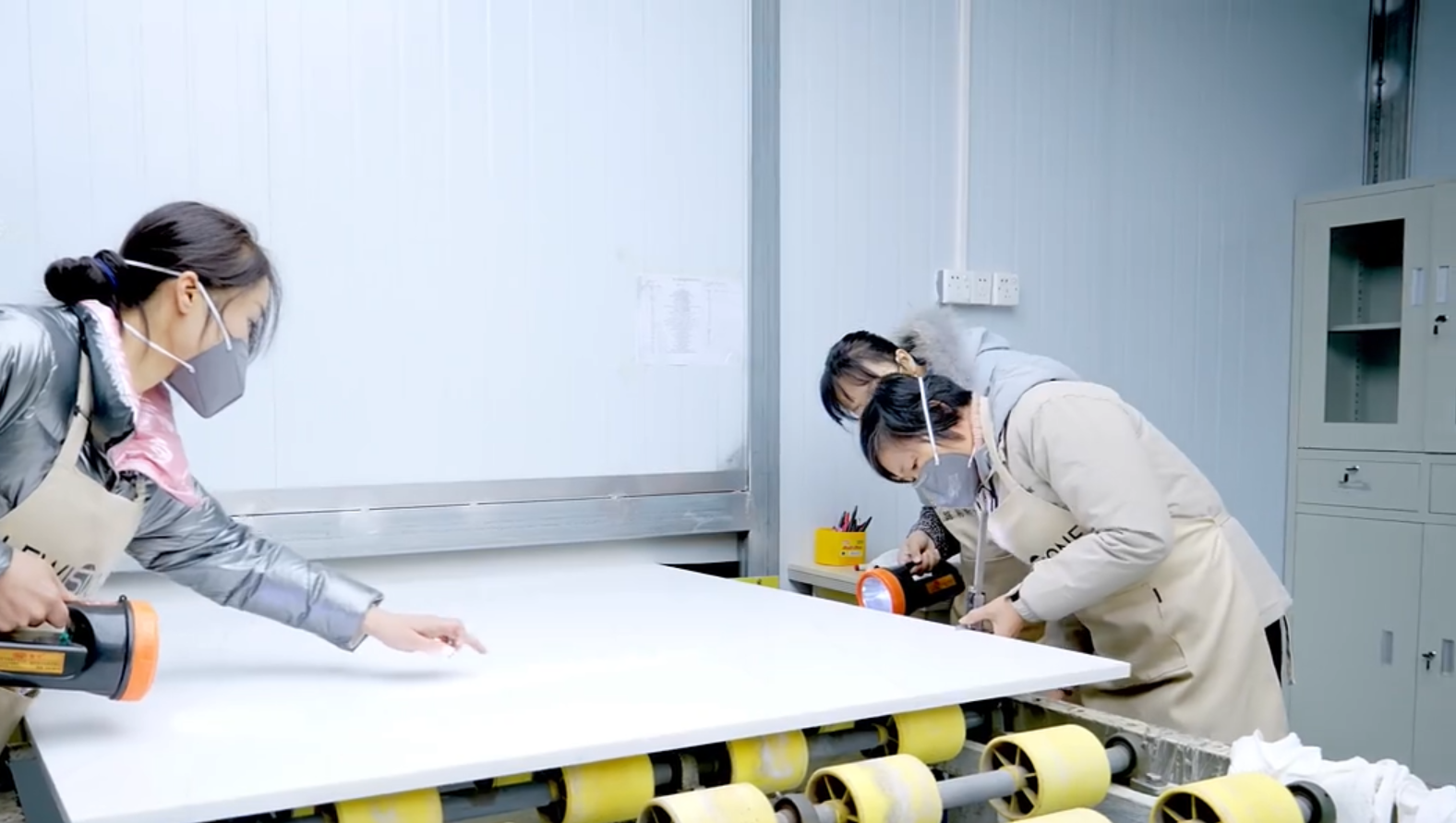
Why the distinction matters to distributor supply
Standard engineered quartz is described in the supplied product knowledge as a manufactured slab made from natural quartz bound with polymer resin. Zero-silica material is presented as a different product proposition: the knowledge unit defines it as a slab formulated without crystalline silica, while Lewistone’s product evidence identifies a report whose stated scope is “Zero crystalline silica.” The descriptions make composition the principal distinction in this comparison. They do not establish that all products sold under either label share the same formulation or test basis.
That qualification matters in distribution. A distributor may need to explain material claims to fabricators, project buyers and end users, while also planning stock, samples and repeat container orders. If suppliers use “zero silica,” “silica-free” and “low silica” without a consistent definition, a label alone is not a reliable technical specification. The procurement file should tie the claim to a named product, report scope and test documentation.
Comparison for distributor evaluation
| Decision area | Standard engineered quartz | Zero-silica slabs | Distributor check |
|---|---|---|---|
| Material claim | The supplied knowledge describes engineered quartz as natural quartz bound with polymer resin. | The supplied definition describes a slab formulated without crystalline silica. Lewistone’s SGS report entry lists “Zero crystalline silica” as its scope and names models 3107ZS, 3949ZS and 3285ZS. | Confirm the exact product and the report’s scope, methods, product identification and issuing details. Do not assume one model’s evidence covers an entire range. |
| Performance evidence | The available materials do not provide comparable test results for the standard and zero-silica products. | The available materials do not provide a matched performance dataset for Lewistone’s zero-silica models. | Request current, product-specific technical data and test evidence for properties relevant to the intended application. |
| Supply and customization | Lewistone’s listed supply terms apply to its production offering; the supplied facts do not establish a separate standard-quartz-versus-zero-silica capacity allocation. | OEM/ODM, color options, cut-to-size and edge-profile processing are listed capabilities. Monthly capacity is stated as 100 containers, but it is not identified as zero-silica-only capacity. | Confirm series availability, production allocation, specifications, sample approval and order schedule in writing. |
| Order entry | The listed MOQ and lead-time information should be confirmed for the selected series and order. | The stated MOQ is one full container load (FCL), with trial or sample orders negotiable; the typical standard-order production lead time is 30 days. | Confirm the applicable terms, mix options, shipping plan and whether the quoted lead time applies to the requested product and finish. |
| Market suitability | Suitability depends on the product, application and applicable local rules. | A silica-related claim may be relevant to fabrication-risk discussions, but does not automatically demonstrate regulatory acceptance or compliance in a destination market. | Review local requirements and obtain market-specific advice before stocking or specifying a product. |
Composition claims need product-level evidence
The strongest comparison begins by separating a material claim from the evidence supporting it. A distributor should identify whether the supplier is claiming “zero crystalline silica,” “silica-free” or “low silica,” then ask how that term is defined for the specific slab. The supplied industry data notes that zero-silica terminology is not standardized across the available sources and that declarations may use different scopes or methods. Consequently, figures or labels from different suppliers should not be treated as directly comparable unless their definitions and verification boundaries align.
For Lewistone, the supplied certification-and-compliance record describes SGS as the authority, classifies the document as a test report, gives report number GZMR240902600701 and lists its scope as “Zero crystalline silica.” The record associates it with models 3107ZS, 3949ZS and 3285ZS and gives an issue date of 2026-09-03. A distributor reviewing the document should check the full report and confirm that the product being quoted is within its scope. The listing alone does not provide the test method or a complete technical specification.
The records also include an NSF/ANSI 51 entry for engineered quartz slabs, but it relates to different models and a separate product scope. It should not be presented as evidence that the standard and zero-silica products have equivalent certifications or performance. For a fair comparison, request the relevant documentation for each exact product rather than transferring evidence from one line to another.
What the regulatory context does—and does not—show
Regulatory requirements can influence the selection of surface materials, but a general category claim is not a market-entry determination. The verified data package reports that Australia prohibited the manufacture, supply, processing and installation of engineered stone benchtops, panels and slabs containing at least 1% crystalline silica by weight from 1 July 2024. That defined scope should not be simplified into a claim that every product called “zero silica” is automatically permitted for every use. A distributor must confirm how the relevant rules apply to a particular product and activity.
Separately, EU-OSHA material cited in the verified data describes substitution with materials containing no crystalline silica, or low-quartz materials, as an exposure-control approach. This supports considering material substitution as part of workplace-risk planning. It does not certify a particular slab or replace local occupational-safety requirements, fabrication controls or product documentation.
For standard engineered quartz, the supplied risk guidance identifies respirable crystalline silica dust as a potential hazard during cutting, polishing and edge profiling if exposure is uncontrolled. It recommends wet cutting, local dust extraction, appropriate personal protective equipment and compliance with local workplace rules. The same guidance describes zero-silica material as a way to further reduce crystalline-silica dust from the slab body; it does not say that ordinary fabrication controls are unnecessary.
Supply capability: useful facts, with a boundary
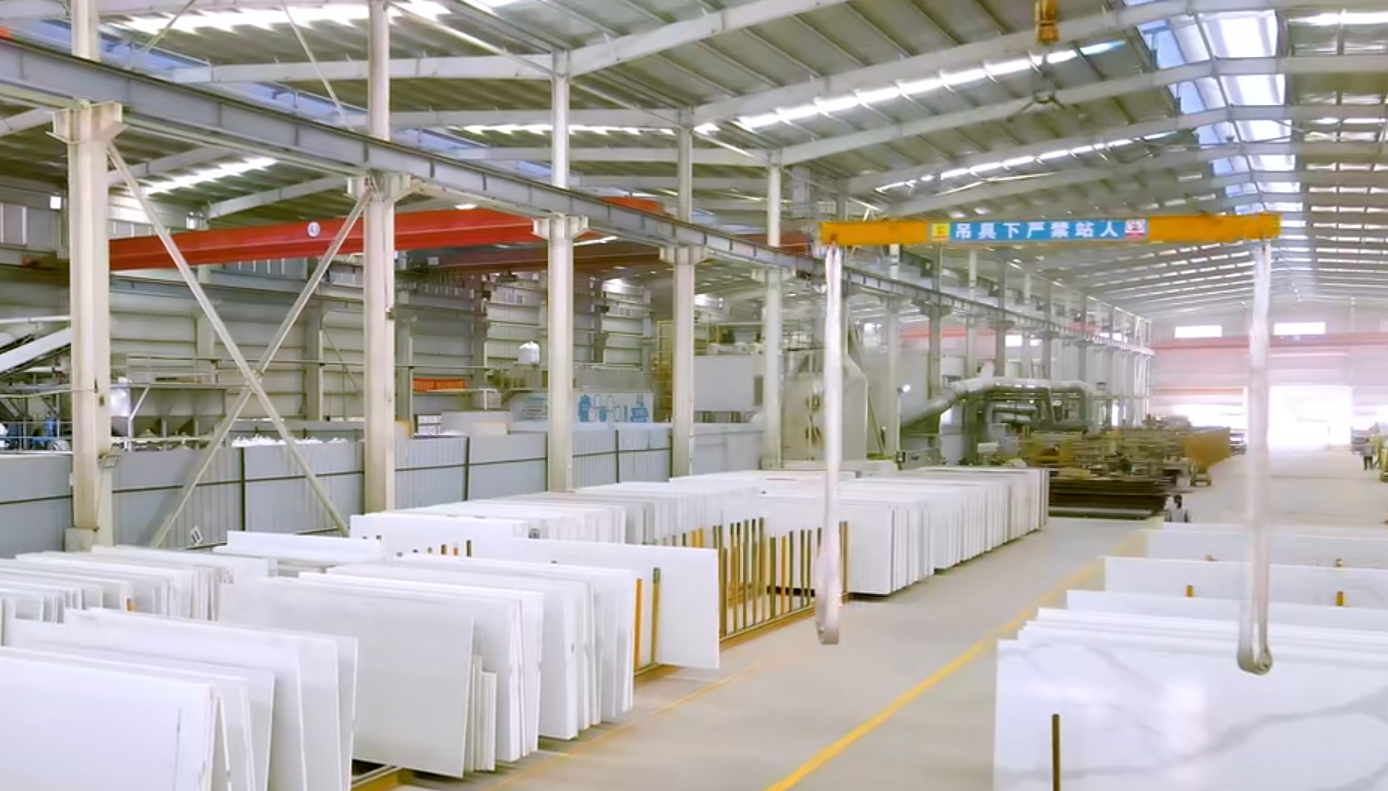
Distributor decisions involve operational fit as well as material choice. The provided capability records state that Foshan Lewistone New Material CO., LTD offers OEM and ODM production, with customization for colors, cut-to-size fabrication and edge profiles. They list a monthly production capacity of 100 containers, a typical production lead time of 30 days for standard orders, and an MOQ of one FCL, with trial or sample orders negotiable. These are stated company supply terms, not independent evidence that the same capacity or schedule is reserved for zero-silica products.
That distinction is important when forecasting replenishment. Ask the supplier to confirm whether the requested Zero Silica Slabs are available in the required colors, dimensions and edge treatments; whether a trial order is possible for that series; and how the production schedule is calculated. Agree on the approved sample and written specifications before bulk production. A stated overall container capacity should not be converted into a product-specific commitment without confirmation.
Use case and assortment decisions
Zero Silica Surfaces may be considered by distributors whose customers are evaluating crystalline-silica content or fabrication exposure. The supplied scenario information covers residential and commercial kitchens and bathrooms, including countertops, islands, breakfast bars, vanity tops and basin surrounds. It also identifies professional fabrication requirements such as accurate cut-outs, seam matching and edge polishing. Those application notes describe the broader surface context; they are not independent test evidence that each listed zero-silica model has been qualified for every application.
For an assortment decision, separate product qualification from merchandising. First establish the exact composition claim and documentation. Then assess the product’s finish, fabrication instructions, appearance, sample consistency and order terms. Finally, determine whether local customers can fabricate and install it under applicable rules. A distributor can then decide whether to stock it as a separate line, offer it as a project-specific option or wait for additional evidence.
The available information does not provide a verified price comparison, total landed cost, comparable abrasion or stain testing, warranty comparison, or product-specific zero-silica production capacity. It therefore cannot establish that Zero Silica Countertops are more economical, more durable or a direct performance replacement for standard engineered quartz. Those questions require quotations and aligned product documentation.
A practical qualification checklist
- Define the claim. Specify whether the requirement is zero crystalline silica, silica-free or a stated low-silica threshold. Do not treat these expressions as interchangeable without a defined basis.
- Match evidence to product. Check the test report’s issuing body, report number, scope, product names or models, date and test method. For Lewistone, the supplied record links GZMR240902600701 to 3107ZS, 3949ZS and 3285ZS.
- Request comparable performance information. Ask for current technical documents for the exact slab and finish. Compare like with like; the available dataset does not provide a common laboratory benchmark for the two categories.
- Validate the supply offer. Confirm samples, colors, cut-to-size requirements, edge profiles, MOQ, lead time and container loading in writing. Treat the stated 100-container monthly capacity as total stated capacity unless product allocation is confirmed.
- Check destination-market requirements. Review local product and worker-safety rules with appropriate authorities or advisers. A report or material claim does not alone establish local approval.
- Plan fabrication and claims handling. Confirm fabrication guidance, required dust controls, inspection arrangements, packaging and the process for documenting a quality or transit issue.
Where standard quartz remains a relevant comparator
Standard engineered quartz remains a useful reference point because buyers may already understand its product format and fabrication use. The supplied knowledge describes it as a resin-bound natural-quartz slab and identifies countertops, vanities and wall cladding among typical uses. But this reference does not establish that every standard product has the same composition, performance or safety profile. The same applies to Zero Silica Engineered Stone: the category label needs a product-specific definition and substantiation.
The comparison is therefore strongest when presented as a procurement decision, not a universal ranking. Standard engineered quartz may fit an established specification, while a zero-silica option may be considered when crystalline-silica content is a central qualification criterion. The actual choice depends on evidence, local rules, product performance requirements, supply terms and customer needs. Where those inputs are not available, a distributor should record the gap rather than assume equivalence.
Market outlook: verification becomes part of sourcing
The available evidence points to a practical change in how buyers evaluate this category: material terminology and product documentation are now part of supplier screening. Occupational-health guidance recognizes substitution as one exposure-control approach, while regulatory changes in Australia illustrate that rules can define specific product scopes and activities. These developments support more careful material qualification; they do not, by themselves, establish market size, demand growth or a universal preference for zero-silica surfaces.
For distributors, the forward-looking implication is procedural. Build a product file that keeps composition claims, test evidence, market-specific requirements, sample approvals and supply commitments together. When suppliers provide different kinds of evidence—such as a test report, an environmental declaration or a company description—check what each document actually covers before comparing products. That approach helps distinguish a credible qualification case from a label-led purchasing decision.
FAQ
What is the difference between Zero Silica Slabs and standard engineered quartz?
The supplied definition describes standard engineered quartz as natural quartz bound with polymer resin. Zero-silica material is described as formulated without crystalline silica. Product definitions and proof may differ by supplier, so compare the exact slab and supporting documentation rather than relying on category names alone.
Does an SGS report prove that every product in a supplier’s range is zero crystalline silica?
No. The supplied SGS record lists report GZMR240902600701, a “Zero crystalline silica” scope and the associated Lewistone models 3107ZS, 3949ZS and 3285ZS. A distributor should review the full report and confirm that the product being purchased falls within its scope.
What supply terms are listed for Lewistone?
The supplied capability information lists a typical 30-day production lead time for standard orders, an MOQ of one FCL with trial or sample orders negotiable, and stated monthly capacity of 100 containers. Confirm the terms and product allocation for the selected zero-silica series before placing an order.
Does zero-silica material remove the need for fabrication safety controls?
No. The supplied risk guidance recommends wet cutting, local dust extraction, appropriate PPE and compliance with local workplace rules when fabricating quartz surfaces. A zero-silica claim should not be treated as a reason to omit applicable controls.
Can a distributor assume a zero-silica slab is accepted in every market?
No. Market requirements depend on jurisdiction, product definition and intended activity. Review applicable rules and supporting documentation for the destination market; a product label or test report alone does not establish universal approval.
Conclusion
For distributor supply, the meaningful comparison between Zero Silica Slabs and standard engineered quartz is a structured qualification exercise. Verify the composition claim at product level, distinguish test evidence from broader product or company claims, and assess performance and local requirements separately. Foshan Lewistone New Material CO., LTD lists OEM/ODM services, customization options and container-order terms, while its supplied SGS record identifies specific zero-silica models. Those details can inform evaluation, but product-specific capacity, performance and market suitability still require confirmation.
Reference points: The regulatory context above draws on the Australian Government Department of Employment and Workplace Relations’ “Prohibition on the use of engineered stone” (https://www.dewr.gov.au/silica/prohibition-use-engineered-stone) and the EU-OSHA material listed in the supplied verified-data package (https://osha.europa.eu/sites/default/files/2021-09/3%20Snaith.pdf).
¿Tiene preguntas o necesita más detalles?
Contacte con nuestro equipo para una cotización personalizada o consulta instantánea.
Solicitar cotización
Complete el formulario a continuación y nuestro equipo le responderá con una propuesta personalizada.
Chat directo de WhatsApp
¿Prefiere chatear en tiempo real? Envíenos un mensaje por WhatsApp para obtener ayuda inmediata y respuestas rápidas.
- Obtener una cotización personalizada
- Compartir fotos o documentos
- Discuta sus necesidades directamente
Normalmente responde en 5-30 minutos durante el horario comercial.