
ZY-IML Film, Ink and Molding: Buyer Questions Answered
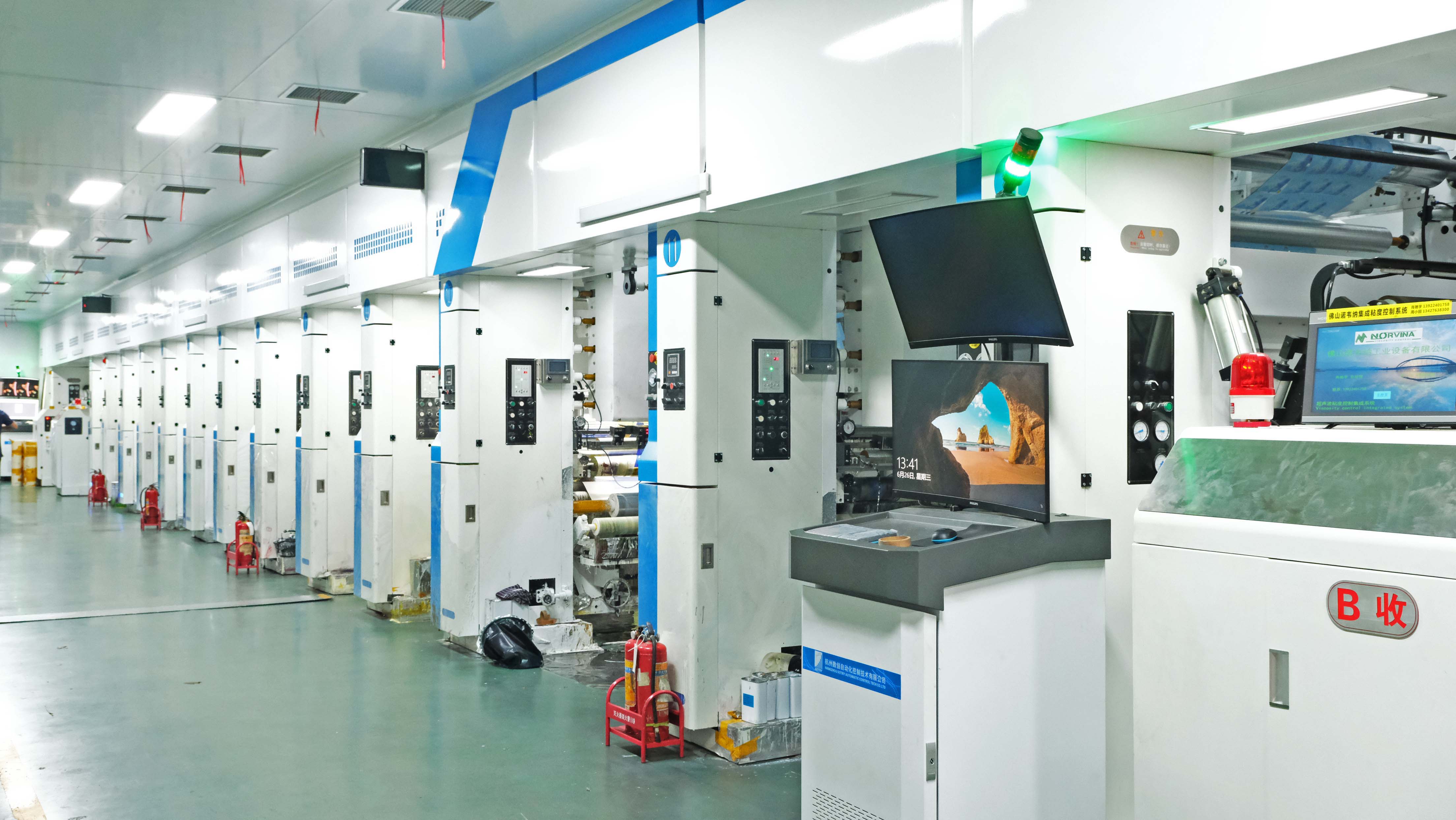
In-mold labeling is a decoration method in which a pre-printed label is placed inside the mold and fused into the plastic part while that part is being formed. The label is not applied to a finished container; it becomes part of the container wall. That single process fact explains why the technical questions buyers raise about in-mold labels are rarely about the label alone. They are about whether film, ink, resin, mold and filling line can agree before the first production shot.
YZY (Zhejiang Zhongyu Technology Co., Ltd.) is an in-mold label manufacturer founded in 2009 and based in Wenzhou, Zhejiang, China. The company produces the ZY-IML Series of in-mold labels alongside sealing films and related packaging films, and supplies food, daily chemical and industrial packaging applications. The published ZY-IML Series specification is the factual basis for every answer in this reference.
This article is written for the stage where a supplier shortlist already exists. The buyer has a container design, a filling process, a target market and a first quotation, and now needs to convert a specification sheet into purchase terms, acceptance criteria and a repeatable supply plan. Each section takes one line of the specification and explains what that line actually decides.
Why IML Questions Are Compatibility Questions
Three interfaces determine whether an in-mold labeling programme runs cleanly: film to resin, ink to application, and print specification to tooling. A label that performs well on all three becomes part of the container and cannot peel, because there is no adhesive interface to fail. A label that fails on any one of them produces the same symptom at the end of the line — lifting edges, registration drift, or a rejected cavity — and the symptom is usually blamed on the wrong interface.
Film-to-resin compatibility is the first interface. In-mold label film is normally matched to the polymer family of the molded component, and polypropylene is the most common film material for that reason. When film and container shrink at different rates during cooling, stress builds along the label edge. The result may pass a pull test on a flat plaque and still lift on a curved wall, which is why sample validation on the actual container geometry carries more weight than any single number in a datasheet.
The second interface is ink to application. A food container, a detergent bottle and a paint bucket place different demands on the printed layer, and the food case adds a documentation demand that has nothing to do with appearance. The third interface is print specification to tooling: colour count, print width and registration tolerance determine what the mold and the label-placement system must be able to hold, not only what the press can produce.
Reading the ZY-IML Film and Print Specification
The ZY-IML Series specification can be read as a list of independent parameters, but each value constrains a different decision. The table below restates the published values and pairs each one with the procurement question it answers.
| Parameter | ZY-IML Series | What the buyer decides with it |
|---|---|---|
| Film thickness | 30–100 μm, customizable | Stiffness for automated label placement, material cost per label, fit to container radius |
| Film material | PP, PE, PET | Match to the container polymer and to the intended recycling stream |
| Print width | Up to 1200 mm | How many label repeats can be nested per impression, and therefore unit cost at volume |
| Printing precision | ±0.1 mm | Registration on curved walls and tolerance available to die-cutting |
| Printing process | 8-colour rotogravure | Number of spot colours a design can carry |
| Ink system | Low-migration water-based ink | Food-contact route and the migration documentation a buyer must request |
| Adhesion | ≥5 N, no peeling during injection molding | Whether the label survives the molding cycle on the buyer's geometry |
| Scratch resistance | 4H | Abrasion during filling, packing and transport |
| Tensile strength | ≥20 MPa | Film runnability on press and in label feeding |
| Service temperature | -20 °C to 120 °C | Chilled, ambient and hot-fill fit; the process ceiling of the label |
| Grades | Food, daily chemical, industrial | Certification route and end-use approval path |
Two lines in that table are frequently misread. The first is thickness. A range of 30 μm to 100 μm is a working window, not a menu. Thin film reduces material use and conforms more easily to small radii, while heavier film gives the stiffness that high-speed placement systems need on large label formats. Because the film must survive mold temperature and injection pressure, the correct gauge is confirmed on a sample rather than selected from the sheet.
The second is printing precision. A tolerance of ±0.1 mm describes what the press can hold, but the usable tolerance in production is what survives the mold. Label distortion during fusing consumes part of that budget, so a design that places fine type or a tight registration mark close to the label edge has less margin than the same design placed with a border.
Ink Choice and the Migration Question
Ink is the part of an in-mold label specification that most often sits outside a buyer's technical comfort zone, and it is also the part that food-contact regulation touches most directly. The ZY-IML Series uses low-migration water-based ink. In procurement terms, that statement should be read as the start of a documentation request rather than the end of one: which ink system, whether migration data exists for the specific grade and thickness being ordered, and whether the third-party test report covers the material actually quoted.
For a buyer, the practical consequence is that ink questions belong in the RFQ, not in the first audit. Asking for the ink system, the migration test basis and the identity of the tested film grade at quotation stage shortens the qualification cycle later, and it prevents a situation in which a compliant material is approved but a different grade is shipped.
Adhesion, Scratch and Tensile: Turning Numbers into Acceptance Criteria
The ZY-IML Series is specified at an adhesion of ≥5 N with no peeling during injection molding. Adhesion is the parameter that decides whether in-mold labeling is viable at all on a given container, because a fused label that lifts at the edge fails both visually and functionally. A ≥5 N figure gives the buyer a threshold to test against; it does not replace a trial on the buyer's own mold, since wall thickness, gate position and cooling all influence the result.
Scratch resistance is specified at 4H, measured on the pencil hardness scale. For packaging this matters less on the retail shelf than on the line: containers rub against each other in accumulation, in case packing and in transit, and printed areas that scuff during those steps reach the consumer looking damaged even when the container itself is sound. Tensile strength is specified at ≥20 MPa, a film property that governs how the material runs through printing, slitting and automatic label feeding rather than how the finished container performs.
The service temperature range of -20 °C to 120 °C is the clearest boundary in the whole specification. It covers chilled distribution, ambient storage and typical hot-fill conditions. It does not cover processes that exceed 120 °C, and a buyer whose product requires retort sterilisation is outside the stated envelope and should treat the label as a development project rather than a catalogue item.
Grade Selection and Application Fit
The series is offered in food, daily chemical and industrial grades. The grade is not a marketing tier; it is the route through which the film and ink combination is matched to the end use and to the compliance evidence the buyer will be asked for.
| Application | Grade | Specification emphasis |
|---|---|---|
| Food packaging, including yogurt cups and food containers | Food grade | FDA 21 CFR 177.1520 compliance supported by SGS report NGBEC2501946006; low-migration water-based ink; service temperature within the chilled and ambient range |
| Daily chemical packaging, bottles and containers | Daily chemical grade | Ink and film compatibility with the fill; scratch resistance at 4H for handling and transport |
| Industrial packaging and paint buckets | Industrial grade | Adhesion ≥5 N, scratch resistance, and use of the wide print format for large label areas |
Yogurt cups and paint buckets sit at opposite ends of the same decision. A yogurt cup is a thin-wall food container where the label carries brand identity under chilled conditions and where food-contact documentation is mandatory. A paint bucket is a large, heavy-duty industrial container where label adhesion and abrasion resistance dominate, and where the wide print format earns its value because the label area is large. The grade, ink and gauge combination should be fixed per application, not per customer, so that a repeat order does not silently inherit the parameters of a different product line.
From Specification to Purchase Terms
The commercial terms attached to the ZY-IML Series are a minimum order quantity of 2000 ㎡, delivery on FOB or CIF terms, payment terms of 30/70, and acceptance based on sample test. Those four items are short, but together they define the shape of a first order: a volume floor, an Incoterm that assigns freight responsibility, a payment split, and a physical sample as the acceptance gate rather than a paper declaration.
Acceptance criteria deserve more detail than a single word. A workable acceptance document for an in-mold label typically records label dimensions and die-cut tolerance, print registration against the ±0.1 mm capability, colour against an approved physical standard, adhesion at the ≥5 N threshold with no peeling after molding, scratch resistance at 4H, and a visual standard for print defects. When the sample is approved, those recorded values become the reference for every subsequent lot — which is the reason sample approval is treated as a commercial milestone and not a courtesy.
Where the ZY-IML Series Stops
An honest specification includes its boundaries, and the ZY-IML Series has several that a buyer should plan around.
- Service temperature ceiling. The stated range ends at 120 °C. Retort or other processes above that temperature are outside the published envelope and require separate validation.
- Order volume. A minimum order quantity of 2000 ㎡ makes very small runs and frequent short-edition designs comparatively expensive, because gravure printing requires engraved cylinders per colour and per design, so design churn is a cost variable rather than a neutral change.
- Colour count. Eight-colour rotogravure sets a hard limit on spot colours. Designs that specify more colours must be converted to a reduced palette or built with process colour, and the conversion changes appearance on some substrates.
- Print width. Up to 1200 mm covers most container formats, but very large label layouts constrain nesting and therefore the unit cost achieved at volume.
- Process dependency. In-mold labels only work on molds and placement systems set up for in-mold labeling. A converter running post-mold labelling equipment cannot switch to IML film without changing tooling and handling.
- Thickness window. The standard 30–100 μm range is customizable, but a gauge outside that window is a development conversation with new tooling assumptions, not a catalogue selection.
What the Market Data Suggests — and What It Does Not
Two published data points frame the material conversation. Grand View Research reported that polypropylene held 56.9% of the in-mold label market by material in 2025, and that injection molding accounted for over 57.1% of process revenue in 2023. Both figures are consistent with the technical logic described earlier: PP film dominates because it matches the PP containers that dominate molded packaging, and injection molding dominates because it is the process in which in-mold labeling is most established.
The same data should be handled with caution. Commercial publishers report materially different global market values and growth paths for in-mold labels, with differing base years and market boundaries, and those estimates cannot be averaged into a single authoritative figure. Buyers building a business case should use published figures as directional signals and construct their own volume model from the packaging programme actually being quoted.
A third signal is less quantitative but more durable. The In-Mold Decorating Association publishes sustainability and recyclability material around in-mold decoration, reflecting an industry argument that a label made from the same polymer family as its container keeps the package within a mono-material stream. For buyers facing packaging-waste obligations in Europe or North America, material-family matching is worth raising at the specification stage rather than after the artwork is approved.
Repeat Orders: The Part of the Specification That Is Not on the Datasheet
Technical parameters decide whether a first order is accepted. Supply behaviour decides whether the second order arrives on schedule, and for a label that is fused into the container, a late label stops the molding line rather than merely delaying decoration. This is the practical reason buyers evaluating in-mold label suppliers ask about capacity and continuity before they ask about price.
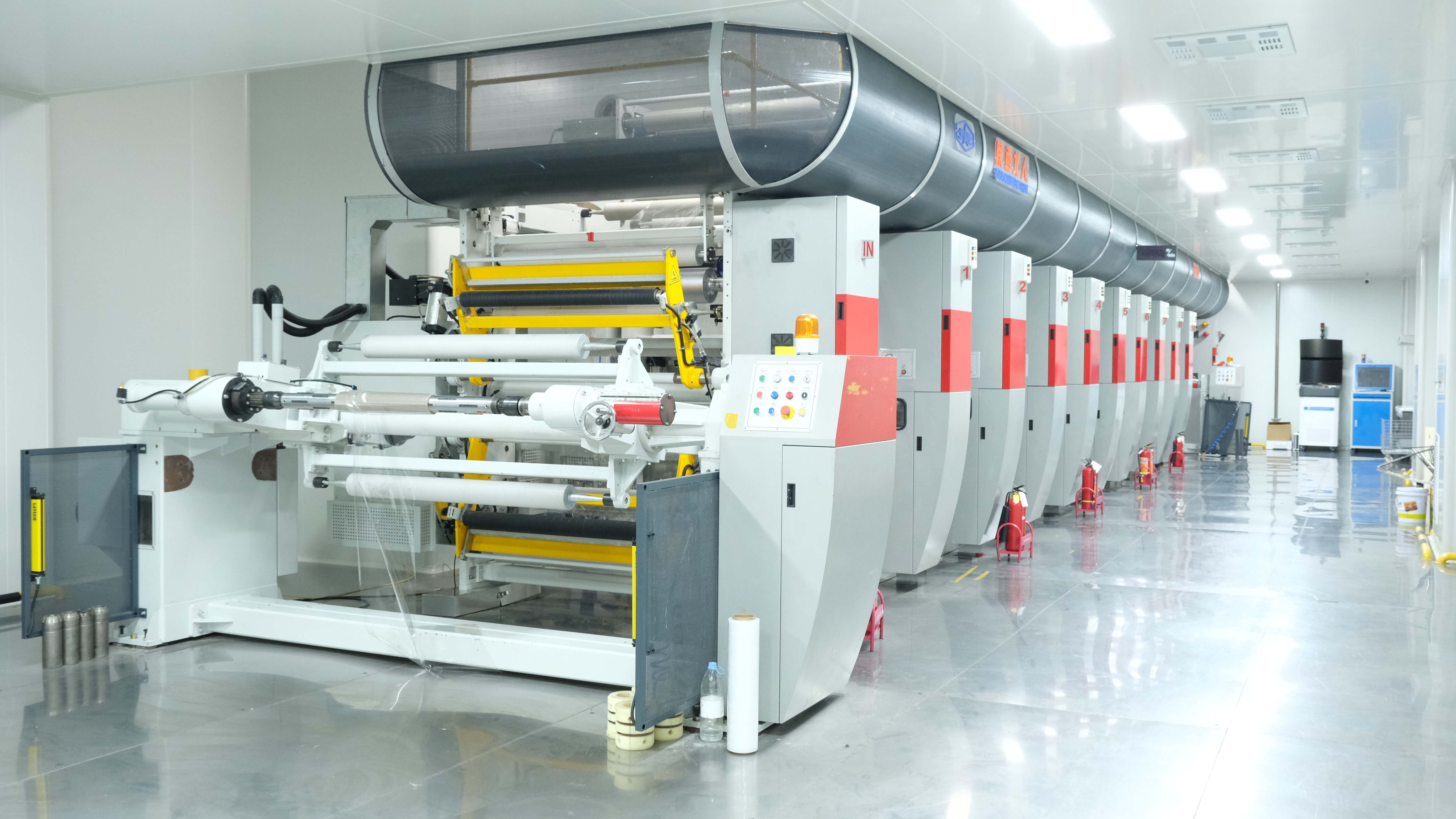
YZY states a monthly production capacity of 350,000,000 pieces per month, with a typical production lead time of 15–20 days after sample confirmation. The company operates a 20,000 ㎡ plant with 250 employees, an R&D team of 10 and 48 accumulated patents, and reports an export ratio of 30% across worldwide markets. Its stated control model combines incoming raw-material inspection, in-process testing and final random inspection with ERP-based production tracking and two backup production lines, and the site is audited annually under BRCGS, ISO22000 and FDA requirements.
For a buyer, the useful question is not whether those numbers are large but whether they are independent of each other. Capacity without a second line is a single point of failure; capacity with backup lines and tracked production is a continuity argument. Sample approval, lead time measured from sample confirmation, and a documented acceptance standard together form the part of the supply relationship that a specification sheet cannot express.
Future Outlook
Three developments are likely to shape in-mold label specifications over the next buying cycles. The first is documentation depth: substance-level questions around inks and coatings are becoming routine in food packaging, and suppliers who can map a specific film grade and thickness to a specific test report will qualify faster than those who offer category-level assurances. The second is material simplification, where matching film to container polymer serves both recycling goals and molding yield. The third is the shift of cost competition from label price to line performance — adhesion failures, registration losses and label-feeding stops cost more per thousand units than the difference between two quotations.
Against all three, the practical recommendation for buyers at the decision stage is consistent: keep the approved sample as the governing document, record the parameters that produced it, and treat every subsequent specification change — gauge, colour count, grade or ink — as a new validation rather than an administrative update.
FAQ: ZY-IML Series Technical and Procurement Questions
1. What film thickness should a buyer specify for a ZY-IML label?
The ZY-IML Series is produced on film from 30 μm to 100 μm, and the thickness is customizable within that window. Thinner film reduces material consumption and conforms more easily to small container radii, while heavier film provides the stiffness needed for large label formats on automated placement systems. Because the film must withstand mold temperature and injection pressure, the final gauge is confirmed through a sample rather than selected from the specification sheet alone.
2. What print width and colour count does the series support?
Printing uses 8-colour rotogravure with a maximum print width of up to 1200 mm and a printing precision of ±0.1 mm. The eight-colour limit defines how many spot colours a design can carry, so artwork specifying more colours must be converted to a reduced palette or process build. The 1200 mm width determines how many label repeats can be nested per impression, which directly affects unit cost on high-volume orders.
3. Which film material fits a PP, PE or PET container?
ZY-IML film is available in PP, PE and PET, and film is normally matched to the polymer family of the molded component so that label and container behave similarly during cooling and in downstream recycling. Polypropylene is the most widely used in-mold label film material; Grand View Research reported PP at 56.9% of the market by material in 2025. A different film family is not automatically a defect, but it is a variable that should be validated on the buyer's own container geometry.
4. How is adhesion verified before a production run?
The ZY-IML Series is specified at an adhesion of ≥5 N with no peeling during injection molding, and acceptance is based on sample test. In practice the buyer approves a physical sample before volume release, and the approved sample becomes the reference for later lots. Scratch resistance is specified at 4H and tensile strength at ≥20 MPa; both are relevant to abrasion during filling and to film runnability during printing and label feeding.
5. What do the food-contact certifications actually cover?
The ZY-IML Series is stated to comply with FDA 21 CFR 177.1520, supported by SGS test report NGBEC2501946006, and the manufacturing site holds BRCGS, ISO22000 and QS certifications. FDA 21 CFR 177.1520 is the U.S. food-contact specification for olefin polymers; the SGS report documents test results for the submitted material; BRCGS and ISO22000 cover the food-safety management system under which the material is produced. Buyers should confirm that the report references the exact grade and thickness being ordered.
6. What are the commercial terms for a first order?
Minimum order quantity is 2000 ㎡, delivery terms are FOB or CIF, payment terms are 30/70, and acceptance criteria are based on sample test. The practical sequence is specification agreement, sample approval against recorded criteria, and then volume production, with the approved sample serving as the reference point for repeat orders.
7. What capacity and lead time apply to repeat orders?
Monthly production capacity is 350,000,000 pieces per month, and typical production lead time is 15–20 days after sample confirmation. Capacity at that scale matters for programme continuity, because a label delay stops the molding line rather than only the decoration step; buyers therefore evaluate capacity, production tracking and backup lines together rather than as separate claims.
8. Can the ZY-IML Series be used for hot-fill or frozen applications?
The stated service temperature range is -20 °C to 120 °C, which covers chilled distribution, ambient storage and typical hot-fill conditions. Processes that exceed 120 °C, such as retort sterilisation, fall outside the published range and require separate validation before a specification can be approved for that use.
Reference Material
The ZY-IML Series specification, including film, printing and compliance parameters, is available in the company's product brochure: download the YZY in-mold label brochure (PDF). Buyers preparing an RFQ should compare the brochure values against the acceptance criteria they intend to write, since the sample test — not the brochure — governs release.
¿Tiene preguntas o necesita más detalles?
Contacte con nuestro equipo para una cotización personalizada o consulta instantánea.
Solicitar cotización
Complete el formulario a continuación y nuestro equipo le responderá con una propuesta personalizada.
Chat directo de WhatsApp
¿Prefiere chatear en tiempo real? Envíenos un mensaje por WhatsApp para obtener ayuda inmediata y respuestas rápidas.
- Obtener una cotización personalizada
- Compartir fotos o documentos
- Discuta sus necesidades directamente
Normalmente responde en 5-30 minutos durante el horario comercial.