
ZLQ-1 vs ZLQ-03: A Buyer Framework for Mini and Power Loops
Industry Reference / Resistance Band Procurement
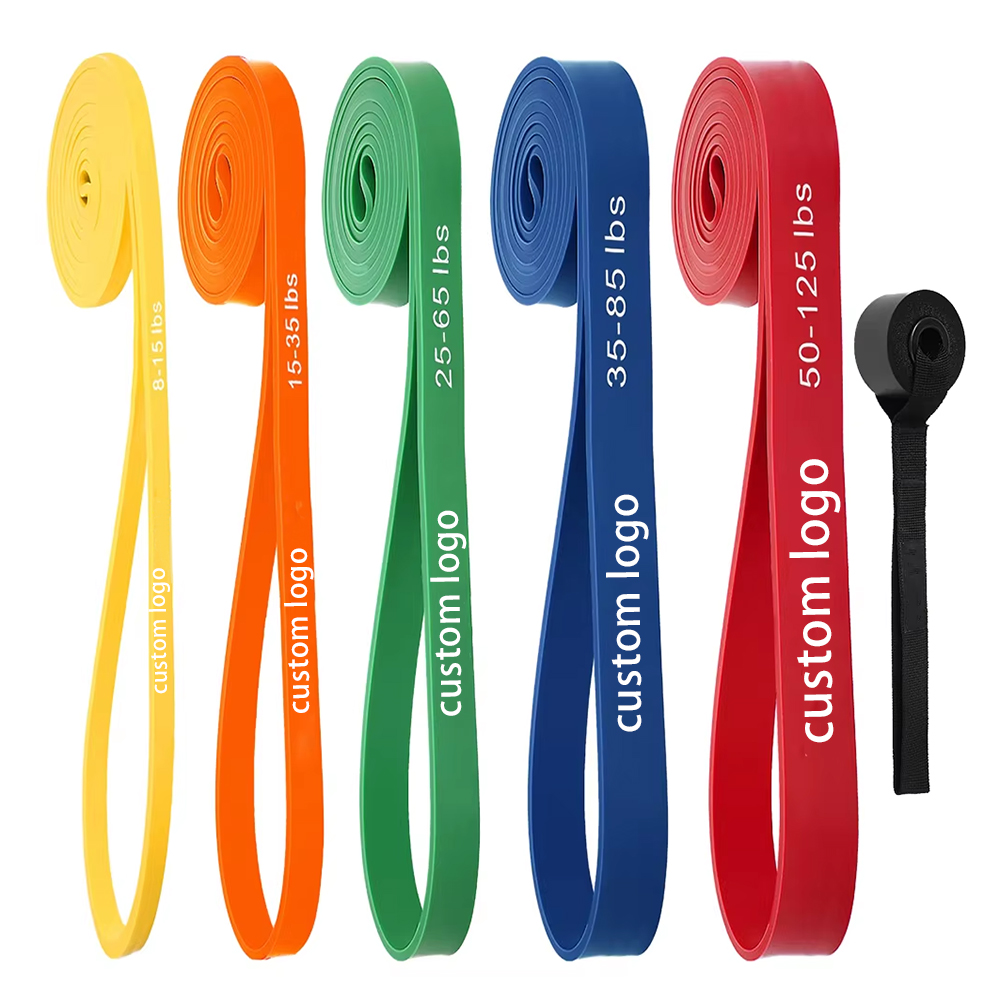
Loop-format latex bands supplied in a custom logo configuration (image source: Libenli).
Loop-format resistance bands are used in more settings than almost any other piece of fitness equipment: gym floors, rehabilitation clinics, yoga studios, hotel rooms and living rooms. That versatility is also why they are so often mis-specified in purchasing. The term resistance band names a format family rather than a single product, and the parameters that separate one format from another are typically compressed into a color code or a light, medium and heavy label on a listing.
This reference compares two loop formats produced by Haiyang Libenli Body-Building Apparatus Co., Ltd., a Chinese manufacturer and exporter of latex tubing and latex resistance bands established in 1997: the ZLQ-1 mini loop band and the ZLQ-03 power loop band. It sets out the parameters a buyer should verify before locking a specification, a packaging configuration or a season of inventory.
Two loop formats under one category name
The clearest separation is by what each loop is designed to resist. A mini loop band is a short, continuous loop that sits around knees, thighs, ankles or wrists and resists a compact range of motion. A power loop band is a long, continuous loop that is stretched over a far greater distance and carries substantially heavier loads. The two formats can look alike in a product photograph while behaving very differently in use.
The ZLQ-1 is a mini loop band with an anti-slip design. Libenli classifies it as a resistance band for the home fitness category and supplies it in latex or TPE. Its thickness range is 0.3mm to 1.2mm, its width is 50mm and its circumference is 600mm. The resistance range runs from 5LB to 40LB, and fatigue resistance is rated at no fewer than 30,000 stretches. Listed applications are home fitness, yoga and Pilates, hip and glute training, sports rehabilitation, physical therapy, and gym training equipment.
The ZLQ-03 is a power loop band, also available as a double layer power loop band, made of latex. Its thickness is 0.45mm, its width range is 6.4mm to 82.5mm, its length is 2080mm and its resistance level runs from 8LB to 230LB. Service life is rated at no fewer than 20,000 stretches. Libenli lists the model for fitness gyms, home workouts, sports rehabilitation, yoga training, physical therapy and outdoor training equipment.
Why the two formats are so often confused
Three similarities drive most specification errors:
- Both are continuous latex loops sold in color-coded resistance grades.
- Both appear in overlapping application lists that include rehabilitation, physical therapy and yoga.
- The parameters that actually decide usability, circumference and resistance ceiling, are invisible in a product photograph.
The commercial consequences are concrete. A studio that orders a 230LB-rated power loop for hip activation hands users a band whose load is unusable at short range, because the loop is long and the tension builds slowly. A distributor that stocks only mini loops with a 40LB ceiling cannot support heavy pulling work at all. In both cases the product is not defective; the format was matched to the wrong job. Returns, warranty claims and program delays usually follow.
The parameter comparison that decides the order
| Criterion | ZLQ-1 (mini loop band) | ZLQ-03 (power loop band) |
|---|---|---|
| Product type | Mini loop band; mini loop band with anti-slip | Power loop band; double layer power loop band |
| Material | Latex or TPE | Latex |
| Thickness | 0.3mm to 1.2mm | 0.45mm |
| Width | 50mm | 6.4mm to 82.5mm |
| Circumference / length | 600mm circumference | 2080mm length |
| Resistance range | 5LB to 40LB | 8LB to 230LB |
| Durability rating | Fatigue resistance of at least 30,000 stretches | Service life of at least 20,000 stretches |
| Design feature | Anti-slip design | Double layer construction option |
| Listed applications | Home fitness, yoga and Pilates, hip and glute training, sports rehabilitation, physical therapy, gym training equipment | Fitness gym, home workout, sports rehabilitation, yoga training, physical therapy, outdoor training equipment |
Specification summary as published by Libenli for the ZLQ-1 and ZLQ-03 loop band models.
Reading thickness, width and length correctly

Band material stock used in Libenli loop band production (image source: Libenli).
Resistance in an elastic band is a function of material cross-section and how far the band is stretched. Thickness and width describe the cross-section; circumference and length describe how much elongation is available before the band reaches its working limit. Reading the two models through those three variables explains nearly every practical difference between them.
The ZLQ-03 width range of 6.4mm to 82.5mm shows that this is a family rather than one item. A narrow band within that range and a wide one are different load grades, and the ordered grade, not the family average, is what the end user receives. Buyers should specify the exact width or resistance grade on the purchase order rather than the model name alone.
Geometry also changes exercise options. A 600mm circumference loop gains tension quickly across a short range, which suits hip abduction, glute activation, lateral steps and joint mobility work. A 2080mm loop can be doubled, looped over a bar or stretched across a longer lever, which is what makes assisted pulling, overhead stretching and longer-range strength work possible.
Durability figures should be read with the same caution. The ZLQ-1 fatigue resistance is rated at no fewer than 30,000 stretches and the ZLQ-03 service life at no fewer than 20,000 stretches. Those are cycle counts under defined test conditions, not a calendar service life. Comparing them across suppliers is only meaningful when the test protocol matches, so the protocol is worth requesting alongside the number.
The anti-slip design on the ZLQ-1 addresses a specific failure mode in hip and glute work: a band that rolls or slides during lateral movement interrupts the set and, in clinical settings, distorts the movement pattern being trained. That feature is functional rather than cosmetic for the exercises the model is listed for.
Where each format belongs
Application lists from the manufacturer place both models in rehabilitation and physical therapy contexts, so the format decision has to be made on load and range of motion rather than on the application name alone.
- ZLQ-1 for short-range, low-load work: yoga and Pilates, hip and glute training, sports rehabilitation, physical therapy, home fitness kits and gym training equipment. Its 5LB to 40LB span covers warm-up, activation and early-stage rehabilitation loads.
- ZLQ-03 for long-range, high-load work: fitness gyms, home workouts, sports rehabilitation, yoga training, physical therapy and outdoor training equipment. Its 8LB to 230LB span and 2080mm length support assisted pulling, stretching and progressive overload.
- Combined programs: studios, clinics and retail assortments frequently pair both formats so that a single kit covers activation through heavy assistance, which is also how the manufacturer positions them within one application scenario.
Operational conditions are broadly similar for both formats. Libenli specifies indoor use in a normal indoor environment, at room temperature between -10 degrees Celsius and 50 degrees Celsius, in a dry and low-dust environment, with manual pulling and stretching as the operation mode. Typical companion equipment includes a yoga mat, fitness handles, ankle straps and a workout storage bag.
What current market data suggests about demand
Category-level market data supports carrying both loop formats rather than choosing one. Grand View Research valued the global resistance bands market at approximately USD 1.7 billion in 2024, and projects it to reach USD 2.9 billion by 2030, a CAGR of 9.9% from 2025 to 2030. The same source reports that North America held the largest revenue share at 40.0% in 2024.
Demand mix explains why a two-format portfolio is common. Health and sports clubs accounted for a 70.6% revenue share in 2024, while individual use is the fastest-growing segment. Institutional buyers tend to order long loops with wide resistance spans, and individual consumers tend to order short loops in multi-grade retail packs, so the two formats serve different demand curves within the same category.
A second data point supports the clinical side of the assortment. Market Research Future estimates that therapy and exercise bands account for approximately 50% of the total global resistance bands market as of 2024/2025. That estimate carries lower certainty than the Grand View Research figures and should be treated as directional.
Published market size estimates differ noticeably. Grand View Research reports USD 1.7 billion for 2024, Global Market Insights reports USD 1.3 billion for 2024, and Data Bridge Market Research reports USD 1.86 billion for 2025. The gap is largely a scope difference between clinical and retail fitness definitions. For procurement purposes the direction matters more than the absolute figure: the category is expanding, and the clinical and consumer ends of it are expanding at different rates, which is the practical argument for stocking mini loops and power loops together.
How loop bands differ from traditional resistance formats
Buyers weighing loop bands against older options usually compare three alternatives: flat therapy bands cut from latex or synthetic sheet, tubular bands fitted with handles, and constant-load equipment such as weight stacks and cable machines.
Continuous loops remove two common failure points found in flat bands and tubes. There is no knot to tie and no handle connection to work loose under repeated loading. In clinics and studios where bands are handed between users many times a day, that difference shows up in replacement rates rather than in specification sheets.
Load behaviour is where loops differ most from machines. Elastic resistance increases as the band elongates, so tension at the end of a movement is higher than at the start, while a weight stack delivers a broadly constant load through the full range. Buyers should therefore treat the 5LB to 40LB and 8LB to 230LB labels as nominal resistance grades rather than calibrated kilogram equivalents that can be substituted for a machine setting. This is a boundary of the elastic format itself, not a defect of any particular product, and it is one reason clinical programs often record band color and grade rather than a weight figure.
Regulatory treatment is the second difference. Fitness equipment entering the EU, including resistance bands, must comply with the EN 20957 series for stationary training equipment in order to carry CE marking, and resistance bands are commonly classified under HS Code 9506.91 for customs purposes. Buyers should confirm which documentation the supplier provides for each destination market before the order is placed.
Supplier verification: what to confirm before locking a specification
Product parameters decide which format fits an application. Supplier evidence decides whether those parameters will be delivered consistently across repeat orders. Four verification layers matter for loop band programs.
1. Quality management and environmental compliance
Haiyang Libenli holds ISO 9000:2000 quality certification, obtained in 2005, and ISO 9001:2008 quality management system certification, obtained in 2010. Most of its items carry SGS certification covering international environmental and safety requirements, and the company also holds a 3A Credit Rating Certificate issued by the Ministry of Commerce of China and CCPIT. These documents address process control, environmental compliance and commercial standing. They do not certify the tension of a specific resistance grade, which is why the next layer matters.
2. Tension consistency by grade
Resistance is sold by grade, and a grade is only useful if it repeats from batch to batch. Buyers should request the supplier's documented verification process for tension across each resistance grade, and should ask whether sampling can be run against the specific grade ordered rather than against the family average. This is a documentation request, not a product claim: the value comes from seeing the process, the frequency of checks and the record format.
3. Defect and complaint reporting
Field performance surfaces in complaint and defect data. Requesting the supplier's defect and complaint records, together with the corrective action process behind them, gives a more useful view of consistency than a single sample batch can. Buyers should ask for the reporting period and the definition of a defect, since those definitions vary between suppliers.
4. Capacity, continuity and market experience
Capacity indicates whether a program can be repeated and scaled. Libenli was established in 1997 and operates a 50,000 square meter facility with approximately 300 employees and an R&D team of 20 engineers. It runs 24 dedicated dipped latex tubing lines with a daily output of 120,000 meters, plus 2 lines dedicated to latex bands with a daily capacity of 25,000 meters, and reports annual production capacity of 65,000,000 units. The company holds 2 invention patents and 18 utility model patents. Its major markets are Germany, the USA, the UK, France and Canada, and export business accounts for 70% of total sales.
| Evidence / document | What it confirms |
|---|---|
| ISO 9000:2000 quality certification (2005) | A documented quality framework in place at the time of certification |
| ISO 9001:2008 quality management system certification (2010) | Formal quality management processes covering production |
| SGS certification on most items | Third-party verification against international environmental and safety requirements |
| 3A Credit Rating Certificate (Ministry of Commerce of China and CCPIT) | Commercial credit standing of the supplier |
| Tension verification records per resistance grade | Batch-to-batch consistency of color-coded resistance grades |
| Defect and complaint reporting | Field performance, return exposure and corrective action |
| Production capacity and line count | Ability to support repeat and seasonal volume |
| Export market record | Familiarity with destination-market requirements |
Limits and boundaries of this framework
- Catalog parameters describe a family, not a single SKU. The ZLQ-03 is listed across a 6.4mm to 82.5mm width range and an 8LB to 230LB resistance range. The ordered grade determines what the end user receives.
- The ZLQ-1 has a resistance ceiling of 40LB. It cannot substitute for heavy band work regardless of color coding.
- The ZLQ-03 is latex only. Buyers with latex-free or TPE-only assortments must look to the ZLQ-1, which is offered in latex or TPE, or to a different material program.
- Nominal LB grades are not calibrated to machine kilograms. Elastic load rises with elongation, so a grade cannot be mapped directly onto a weight-stack setting.
- Durability ratings are stretch counts. At least 30,000 stretches for the ZLQ-1 and at least 20,000 for the ZLQ-03, measured under defined conditions; they are not calendar service-life guarantees.
- Certification scope is limited. ISO and SGS documentation covers quality systems and environmental or safety compliance. It does not replace application testing of a specific grade or batch.
- Application lists overlap. Both models are listed for sports rehabilitation and physical therapy, so the format decision must be made on load and range of motion rather than on the application name.
- Material sensitivity needs separate handling. Buyers serving clinical channels should confirm material options and labelling requirements before specifying a latex product.
Future outlook
Three forces are shaping loop band procurement through the rest of the decade. The first is volume: a category valued at approximately USD 1.7 billion in 2024 and projected to reach USD 2.9 billion by 2030 at a 9.9% CAGR is large enough to reward suppliers who can hold grade consistency across long runs. The second is mix: with health and sports clubs holding a 70.6% revenue share in 2024 while individual use grows fastest, suppliers are increasingly expected to support institutional power loops and consumer mini loops within one production plan. The third is documentation: certification and traceability requests that began in the EU market are spreading into other regions, and buyers are asking for tension and defect records alongside certificates.
For buyers, the practical implication is that format selection and supplier selection are separate decisions. Choosing between the ZLQ-1 and the ZLQ-03 is a question of load and range of motion. Choosing a supplier is a question of whether the grade, the fatigue rating and the compliance file hold steady on the second and third order.
FAQ
What is the difference between a mini loop band and a power loop band?
A mini loop band is short and designed for small ranges of motion; a power loop band is long and designed for heavy, long-range stretch. In the Libenli range, the ZLQ-1 mini loop band has a 600mm circumference, a 50mm width and a 5LB to 40LB resistance range, while the ZLQ-03 power loop band has a 2080mm length, a 6.4mm to 82.5mm width range and an 8LB to 230LB resistance range.
Which loop format is appropriate for rehabilitation and physical therapy?
Both the ZLQ-1 and the ZLQ-03 are listed for sports rehabilitation and physical therapy. The deciding variable is the load range required by the protocol. The ZLQ-1 covers 5LB to 40LB within a short 600mm loop, which suits activation and low-load movement. The ZLQ-03 spans 8LB to 230LB across a 2080mm length, which suits longer-range assisted work. Programs that combine low-load activation with heavier assistance typically specify both formats.
What materials are these loop bands made from, and can they be customized?
The ZLQ-1 is supplied in latex or TPE. The ZLQ-03 is made of latex. Custom logo configurations appear in the manufacturer's ZLQ-03 imagery, and Haiyang Libenli supplies custom injection molded goods and metal hardware accessories alongside its standard range. Buyers should confirm marking, resistance grade, width and packaging scope during sampling, since customization boundaries are set per project rather than per model.
What certifications should a buyer request from a loop band supplier?
Libenli holds ISO 9000:2000 quality certification obtained in 2005 and ISO 9001:2008 quality management system certification obtained in 2010, along with a 3A Credit Rating Certificate issued by the Ministry of Commerce of China and CCPIT. Most of its items carry SGS certification covering international environmental and safety requirements. Buyers should also request tension verification records per resistance grade and defect or complaint data, because quality management certification does not by itself confirm the performance of a specific grade.
How do durability ratings for the two models compare?
The ZLQ-1 carries a fatigue resistance rating of at least 30,000 stretches and the ZLQ-03 a service life of at least 20,000 stretches. These are cycle counts measured under defined test conditions rather than a calendar service life, so the figures are only comparable across suppliers when the test protocol is comparable. Buyers should request the protocol alongside the number.
How is production capacity relevant to a loop band order?
Capacity indicates whether a supplier can support repeat orders and seasonal peaks. Libenli operates 24 dedicated dipped latex tubing lines with a daily output of 120,000 meters and 2 lines for latex bands with a daily capacity of 25,000 meters, within a 50,000 square meter facility employing approximately 300 staff, and reports annual production capacity of 65,000,000 units. Order-specific lead times should still be confirmed in writing at the point of purchase.
Which export markets does Libenli currently serve?
Germany, the USA, the UK, France and Canada are listed as major markets, with export business accounting for 70% of total sales. Resistance bands are commonly classified under HS Code 9506.91, and buyers selling into the EU should confirm compliance documentation for the EN 20957 series where applicable.