
YK Screen, XS and FG Washer Fit at Mineral Washing Sites
YK Screen, XS and FG Washer Fit at Mineral Washing Sites
A mineral washing site is judged by what leaves the wash box, not by what enters the crusher. Crushing stages set the tonnage; screening and washing stages decide whether the sand and stone leaving the plant meet a mud-content specification. For buyers building or upgrading a stone crushing production line in the Energy & Metallurgy & Mineral sector, that distinction turns equipment selection into a flow question: where the YK Screen sits in the circuit, whether the sand fraction is washed on an XS wheel bucket unit or an FG spiral unit, and how the wet section is laid out behind the crushers.
This reference maps three LBZG machines to mineral washing sites: the YK circular vibrating screen, the XS Sand Washer and the FG Spiral Sand Washer, all manufactured by Shandong Lianbang Heavy Industry Co., Ltd., a Chinese manufacturer of sand-stone crushing, sand-making and solid waste recycling equipment that was registered in 2013 and whose technical origins trace back to Chengming Machinery, an affiliated enterprise established in 1996. It covers site layout, wet-processing flow fit, and the questions buyers typically raise when screening and washing equipment has to be matched to a full aggregate crushing line.
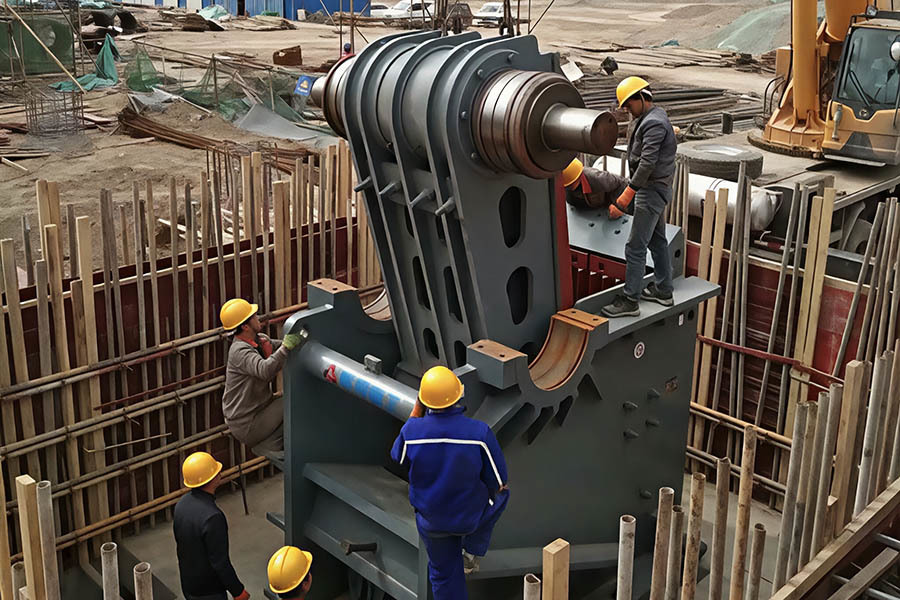
A mineral washing site: the wet section sits behind the crushing and screening stages and determines final mud content in sand and stone.
Why wet processing is planned separately from crushing
Clay and silt do not break the way rock breaks. A jaw or cone crusher reduces lump size, and a vibrating screen separates that material into fractions, but neither stage removes clay that has adhered to aggregate surfaces during extraction and handling. Once the final product is destined for concrete, asphalt or high-grade mortar, a washing stage normally enters the flow, because those applications generally require the mud content of the sand to be reduced below 3%.
Wet feed also changes how the rest of the plant behaves. Screening performance degrades when material moisture is high; screen mesh that clogs or wears, modified excitation force and ageing springs all produce poor separation. In practice, the decision to wash is a decision about feed condition rather than a preference about presentation, and it should be taken before the crushing line layout is frozen, not after the conveyors are poured.
For a mineral processing operation, the practical question is not whether washing is desirable but which washing mechanism matches the clay content of the deposit, and how much of the plant's water and fines budget that choice consumes.
Site layout: where screening ends and washing begins
A mineral washing site generally follows a recognisable sequence, with the wet section placed deliberately rather than appended:
- Feed preparation. A vibrating feeder (ZSW, CZG or ZDW series) delivers a controlled, pre-screened feed to the primary crusher.
- Primary crushing. A PE series jaw crusher reduces run-of-quarry rock to a size the secondary stage can accept.
- Secondary crushing. A CS or PY cone crusher handles hard, abrasive rock by lamination, while a PF impact crusher suits medium-hard, brittle material where cubic particle shape matters.
- Screening. A YK circular vibrating screen splits the crushed stream into oversize return and sized fractions.
- Optional sand making or shaping. A VSI vertical shaft impact sand maker or a PX fine impact crusher produces or reshapes the 0–5 mm fraction.
- Washing. An XS wheel bucket sand washer or an FG spiral sand washer treats the sand fraction, removing silt, clay and other impurities.
- Dewatering and stockpiling. Washed sand is dewatered at the discharge end and stockpiled, while process water is routed to settlement or recovery.
Two layout rules matter more than the number of machines on the list. First, wash the sand fraction, not the entire stream: a washer receives a controlled, screened feed, which keeps water demand and fine-sand losses predictable. Second, reserve physical space for the water circuit. Slurry lines, settlement capacity and the return path for recovered fines take up area and elevation that a dry layout does not need, and they are difficult to retrofit once the plant is running.
The YK Screen in a wet circuit
The LBZG YK Screen is a circular vibrating screen built for aggregate grading and medium-to-fine material screening in stone plants, quarries and mining operations. Documented configurations in the LBZG range run from 2YK-1248 to 3YK-2470, covering deck widths of 1248 mm through 2470 mm, with two to four screening layers, motor power from 5.5 kW to 22 kW, and screen openings generally listed below 50 mm. Frames are carbon steel, and the screen mesh is manganese steel.
In a wet circuit the screen does two jobs. Ahead of the washer, it isolates the sand fraction so that only that stream enters the wash box. After crushing, it controls the return load so that oversize material is re-crushed instead of being washed unnecessarily. Multi-layer decks allow several cuts to be produced in one pass, which reduces the number of machines and transfer points in the wet zone — an important consideration, because every additional transfer point is a place where wet material can build up.
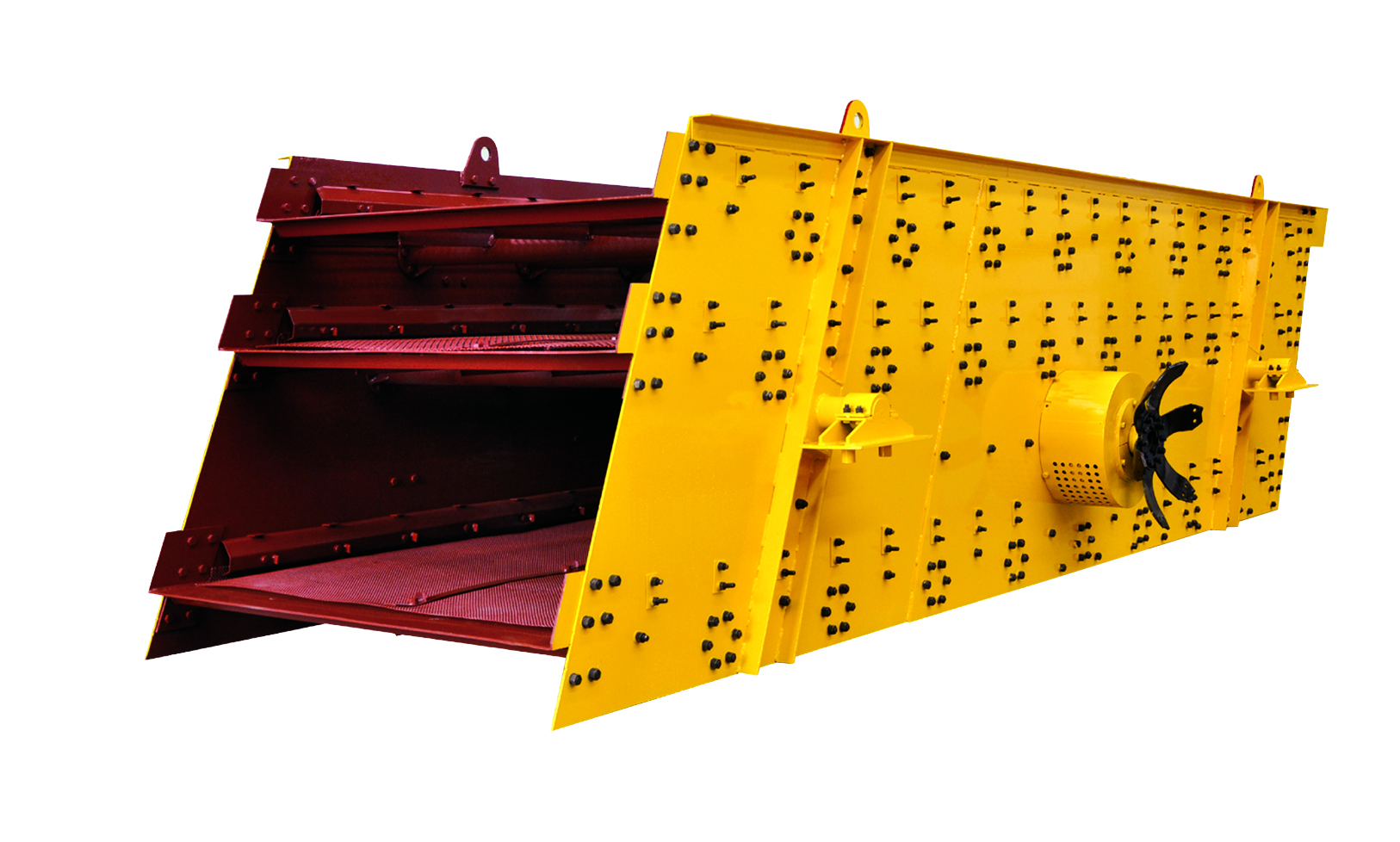
The YK Series circular vibrating screen separates the sand fraction that feeds the washing stage from the oversize that returns to crushing.
The limits of screening are worth stating plainly. Mesh clogging, mesh abrasion, high material moisture, altered excitation force and ageing springs all reduce screening effectiveness. Manufacturer guidance is to avoid unauthorised adjustment of vibration motor parameters and to maintain the machine with original spare parts, because incorrect modifications can cause equipment failure rather than improve separation. Screen mesh is also a consumable, replaced on a wear cycle rather than on a warranty claim.
XS or FG: two washing mechanisms, two feed conditions
Both machines remove silt and clay by water flushing combined with mechanical agitation. Clean water is added to the washing tank, the material is tumbled and scrubbed, clay dissolves or stays suspended and overflows with the process water, and clean sand is lifted or pushed to the discharge end for dewatering. The difference lies in how aggressively they scrub and how much water they use.
The XS Sand Washer is a wheel bucket machine. Documented models span XS-2600 (2600 mm bucket diameter, 20–50 t/h, 5.5 kW) through XS-3200 (3200 mm bucket diameter, 80–150 t/h, 15 kW), with an impeller rotation speed of 0.8–1.2 r/min across the range. The frame is carbon steel and the bucket liner is polyurethane. The design is chosen for low-clay material that mainly needs dust and light mud removal: water consumption and fine-sand loss are comparatively low, cleaning of low-clay feed is effective, and maintenance is simple.
The FG Spiral Sand Washer is a screw-type machine. Documented models run from FG-500 (508 mm spiral diameter, 6700 mm tank, max feed size below 10 mm, 20 t/h, 3–5.5 kW, documented water consumption 5–10 t/h) to FG-1200 (1200 mm spiral diameter, 7620 mm tank, 70–110 t/h, 15 kW, documented water consumption 10–80 t/h). Intermediate models FG-750 and FG-1000 carry capacities of 40–50 t/h and 50–70 t/h respectively. The frame is carbon steel, with a wear-resistant rubber liner and polyurethane lining in the working zone. This design is selected for high-clay, sticky material that requires strong scrubbing.
| Comparison point | XS Sand Washer (wheel bucket) | FG Spiral Sand Washer (screw) |
|---|---|---|
| Washing action | Impeller tumbling and water flushing | Screw scrubbing along an inclined tank |
| Documented feed condition | Low-clay material needing dust and light mud removal | High-clay, sticky material needing strong scrubbing |
| Documented water consumption | Lower across the range | 5–10 t/h (FG-500) up to 10–80 t/h (FG-1200) |
| Fine-sand loss | Comparatively low | Comparatively higher |
| Maintenance profile | Simple structure, straightforward service | Longer tank and screw assembly to service |
| Wearing parts | Polyurethane bucket liner | Spiral blades, rubber liner, polyurethane lining |
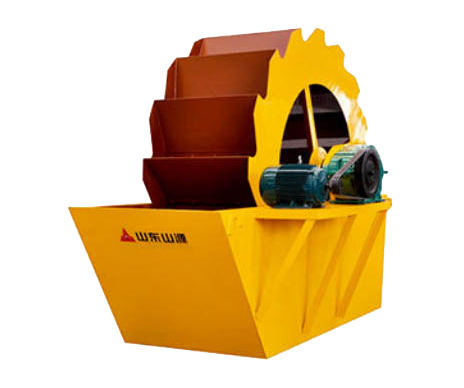
The washing stage is sized against the screened sand fraction, not against total line tonnage.
Matching the washer and screen to the crushing line
Capacity matching in a crushing and screening plant follows an upstream-surplus, downstream-step-down principle. If the feeder is undersized, the crusher idles and capacity is wasted; if the screen is undersized, qualified material cannot be removed in time and the return circulation grows. The documented matching rules are summarised below.
| Stage | Matching rule | Consequence if ignored |
|---|---|---|
| Vibrating feeder | 1.1–1.2 × rated primary crusher capacity | Crusher idling from insufficient feed |
| Secondary crusher | 1.0–1.1 × actual primary crusher output | Material pile-up between stages |
| Vibrating screen | 1.2–1.3 × line capacity | Return circulation increases, system efficiency drops |
| Belt conveyor | 1.2 × maximum flow | Spillage and blockage |
The washing unit is matched differently from the crushing and screening stages. Its feed is the screened sand stream, not the total line tonnage, so washer selection should be calculated against the sand fraction produced by the plant. Sizing a washer from the headline tonnage of the crushing line is a common specification error: it produces an oversized machine running well below its design load, or an undersized machine that becomes the bottleneck of the wet section.
Proper matching keeps units running at roughly 70–90% of rated load, which minimises energy consumption and wear. It also requires realistic expectations about performance: rated capacity is defined under ideal feed size, hardness and moisture conditions, while actual capacity in service is typically 70–85% of the rated figure.
Verification and documentation before execution
Once the layout and equipment list are agreed, the buyer stage moves from decision to execution, and the questions shift from equipment fit to documentation and acceptance. For imported lines, buyers generally confirm that the supplier holds ISO 9001 quality management certification and complete English technical documentation covering manuals, drawings and spare-parts lists. CE conformity documentation and technical files are relevant for European destinations, along with material and welding inspection reports, factory test-run videos, and sea-worthy packing and shipping documents that support customs clearance and local acceptance.
Shandong Lianbang Heavy Industry holds ISO 9001, ISO 14001 and OHSAS18001 system certifications, carries CE export certification for foreign trade projects, and is a participant in revising national industry standards for crushers. The company is a national high-tech enterprise, re-recognised in 2023, and a Shandong provincial-level Specialized, Refined, Differential & Innovative small and medium-sized enterprise. Its manufacturing footprint covers two production bases with a total area of 120,000 m², including 40,000 m² of standard workshops and more than 150 sets of processing equipment, with around 110 employees including over 40 R&D personnel.
Where a mobile configuration is part of the package, ISO 21873-2:2019 specifies safety requirements and verification for mobile crushers used to crush rock or reprocess construction materials — a useful reference when the plant design includes a tyre-type mobile crushing or screening station.
Limits and trade-offs at the wash box
Wet processing carries costs that dry processing does not, and buyers should price them in rather than discover them on site.
- Water and slurry. Documented process-water consumption scales with washer size, from 5–10 t/h on the FG-500 up to 10–80 t/h on the FG-1200. Water supply, settlement volume and the handling of the clay-laden overflow become permanent operating obligations.
- Fine-sand loss. The spiral design, which is the correct choice for high-clay feed, also loses more fine sand in the overflow than the wheel design. Fines recovery may be required to protect the sand gradation and the yield of the plant.
- Consumable wear. Screen mesh, spiral blades and polyurethane linings are normal production wear items. Warranty coverage applies to manufacturing defects of the main machine body, not to these direct-contact consumables.
- Performance deviation. Catalog ratings are obtained under ideal standard test conditions. Actual throughput varies with raw material hardness, feed size, mud and moisture content, power supply stability, feeding continuity and the wear condition of wearing parts, so a reasonable deviation from catalog figures should be expected.
- Washing cannot fix screening. If the screen is blinding or the mesh is worn, the washer receives an uncontrolled feed, and neither machine performs to specification in that condition.
Market context: where washing capacity sits in the wider data
The global stone crushing equipment market was estimated at USD 8.47 billion in 2024 by Market Research Future. Trade data indicates where much of that equipment is manufactured: China was the leading exporter of machines to crush or grind stone, ores and minerals under HS 847420 in 2024, with exports valued at USD 1.38 billion, according to the Observatory of Economic Complexity. Within the crusher market, jaw crushers — the primary stage in most stone crushing production lines — held a 35.2% share in 2025, as reported by Polaris Market Research. On the demand side, the United States produced 1.5 billion tons of crushed stone in 2023, valued at more than USD 24 billion, based on USGS data reported by Research Nester.
The pattern is consistent across these datasets: market reporting concentrates on primary crushing, which is the largest single equipment category by share, while the screening, washing and dewatering stages that determine specification compliance receive far less attention. Yet these downstream stages are exactly where a plant either meets a mud-content requirement or fails it — which is why experienced buyers review the wet section as a design package rather than as an accessory to the crusher.
Outlook
Water availability is likely to shape the next round of washing specifications. Where process water is scarce or slurry discharge is restricted, washing is increasingly combined with recirculation and fines recovery, so that water is reused rather than released, and operators are pushed to justify every litre of consumption. Where clay content is low and the only requirement is dust removal, a wheel-type washer keeps both water demand and fine-sand loss comparatively low, which is a genuine advantage in arid regions. Dry sand-making routes reduce or eliminate process water, but they do not remove clay; for feed with meaningful clay content, wet washing generally remains the standard route. Over a long operating horizon, the washer that survives is the one matched to the deposit, supported by original spare parts and a documented service channel — not the one with the lowest purchase price.
FAQ
How does a sand washer fit into a stone crushing production line?
A sand washer is a mineral processing device that removes silt, clay and impurities from sand and gravel by water flushing and mechanical agitation, improving aggregate cleanliness. It is used after crushing and screening, and also for de-mudding river sand and manufactured sand. Clean water is added to the washing tank; material is tumbled and scrubbed by an impeller or screw; clay dissolves or suspends in the water and overflows; clean sand is lifted by the impeller or pushed by the screw to the discharge end for dewatering.
Should a mineral washing site use a wheel sand washer or a spiral sand washer?
The choice follows the clay content of the feed and the required mud content of the final product. When the product is used for concrete, asphalt or high-grade mortar and mud content must be below 3%, a washer is generally required. For low-clay material that mainly needs dust removal, the XS wheel sand washer is the fit: simple structure, low water consumption, low fine-sand loss and simple maintenance. For high-clay material requiring strong scrubbing, the FG spiral sand washer is the fit, with higher water consumption and more fine-sand loss.
How should the washer and screen be matched to the capacity of the rest of the line?
Documented matching rules are: feeder capacity 1.1–1.2 × rated crusher capacity; secondary crusher capacity 1.0–1.1 × actual primary output; vibrating screen 1.2–1.3 × line capacity; belt conveyor 1.2 × maximum flow. The washer is matched differently — against the screened sand fraction rather than total line tonnage. Good matching keeps units running at 70–90% of rated load, and actual capacity in service is typically 70–85% of rated capacity.
Will the actual output of the YK Screen, XS or FG washer differ from the catalog parameters?
Yes, within reasonable limits. Catalog rated data is obtained under ideal standard test conditions. Actual throughput varies with raw material hardness, feed size, mud and moisture content, power supply stability, feeding continuity and the wear condition of wearing parts. Full catalog output is not guaranteed without matching on-site conditions, so site working-condition data should be shared before a model is finalised.
Which components are excluded from equipment warranty?
Warranty covers manufacturing defects of the main machine body. Direct-contact consumables are excluded: hammers, sieve plates, spiral blades and screen mesh. These are normal production wear-and-tear components, replaced on a wear cycle determined by the abrasiveness of the feed. What also reduces screening or washing performance — mesh clogging, blade wear, high moisture — is an operating condition issue rather than a manufacturing defect.
What certifications and documents should be verified before importing a crushing and washing line?
Buyers generally confirm that the supplier holds ISO 9001 quality management certification, that machines meet CE requirements for European destinations and relevant IEC electrical standards, and that full English technical documentation is provided, including manuals, drawings and spare-parts lists. Material and welding inspection reports, factory test-run videos, and sea-worthy packing and shipping documents support customs clearance and local project acceptance.
What are the standard commercial terms for a first order?
The minimum order quantity is 1 set or 1 unit, which applies to pilot and test orders as well as trial and volume orders of crushing equipment and stone crushing production line equipment. Standard delivery terms are FOB (Qingdao), CIF and EXW. Payment terms consist of a 30% T/T deposit and 70% T/T before shipment, with L/C available for large orders. Acceptance criteria are a pre-shipment factory test plus on-site installation and commissioning.
LBZG equipment documentation, including the full product catalogue, can be accessed through the Shandong Lianbang Heavy Industry company brochure.