
YJPT-260 vs YJPT-318 vs YJPT-360: An Independent Technical Comparison for Buyer Decisions
PET preform buyers entering the final purchasing stage usually move from asking 'which supplier is trustworthy' to asking 'which model will actually run my mold at the needed output.' For buyers evaluating Yongjiang injection equipment, the shortlist often comes down to four model numbers: YJPT-260, YJPT-318, YJPT-360, and YJHB-400. This article is an independent, decision-focused comparison of those models. It does not rank them as best or worst, and it does not compare Yongjiang with other brands. The goal is to show buyers what each model number can and cannot tell them, and which verified specification areas must be checked before the machine decision is finalised.
Why an independent technical comparison matters at the decision stage
Preform production lines are usually planned around a bottle weight, a cavity count, and a required output per hour. When buyers reach the decision stage, the difference between the right machine and the wrong machine is rarely visible in a price quote. It is visible in whether the mold physically fits the machine, whether the injection unit can process the full preform shot without exceeding PET's recommended residence time, and whether the clamping unit can hold the mold closed under the required injection pressure.
A model name that includes a tonnage figure gives one clear piece of information. It does not describe the complete capability of the machine. Two machines in the same tonnage class can differ in platen size, tie bar clearance, screw diameter, injection pressure, and control system behaviour. This is why a comparison between the YJPT-260, the YJPT-318, the YJPT-360, and the YJHB-400 should be made on technical fit rather than on the assumption that a bigger number is automatically better.
The four models in the decision set
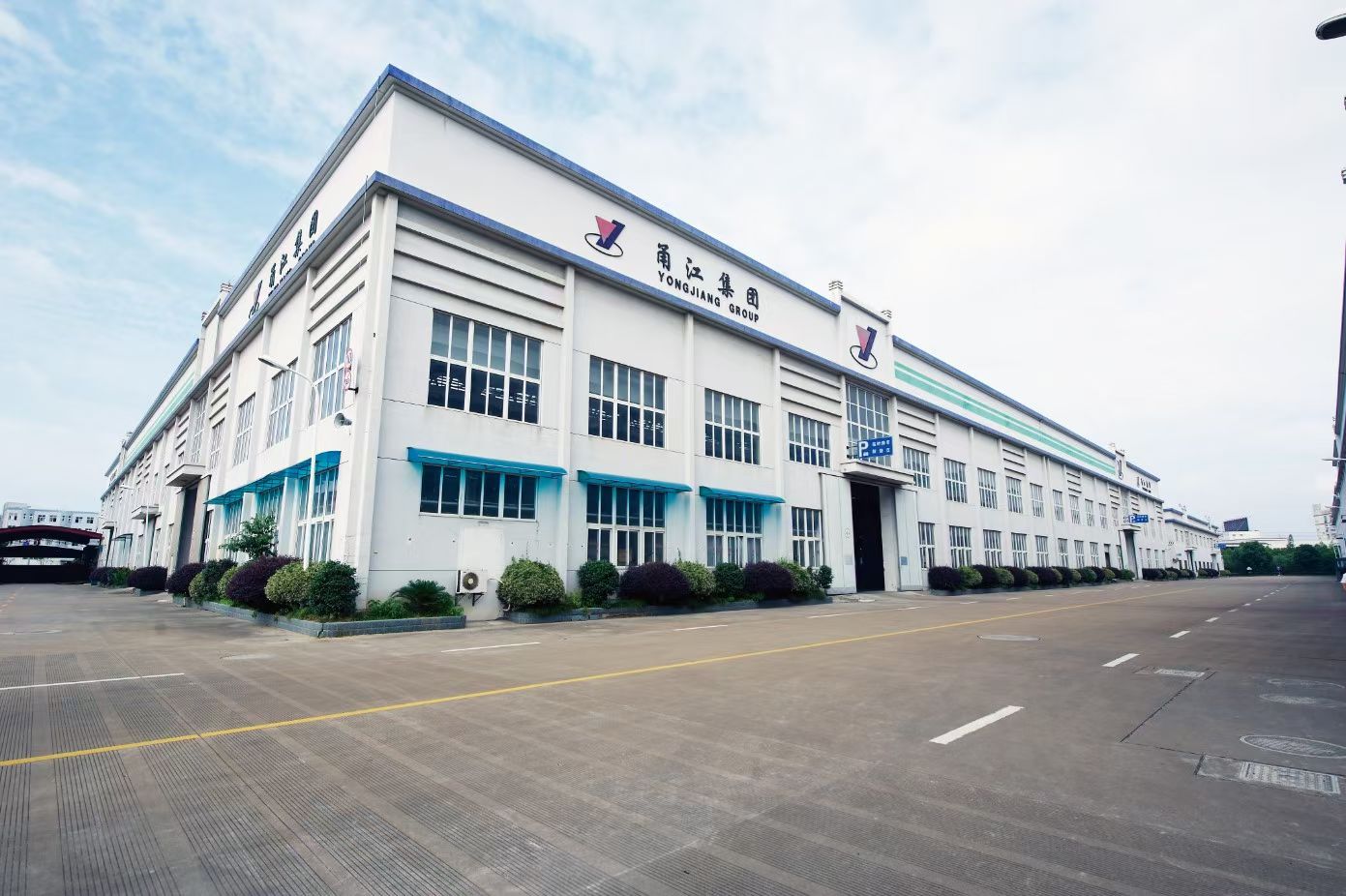
Ningbo Yong Jiang Machine Co., Ltd., the manufacturer behind the Yongjiang PET preform machine line, has been producing injection molding equipment since 1985. Its company background describes a 130,000 m² production facility, around 2,000 units of annual output, and a team of about 25 R&D engineers. The Yongjiang YJPT series is positioned as the company's dedicated PET preform platform.
Within this comparison set, the four model numbers represent different clamp force points. The YJPT-260 is the 260-ton option in the group. The YJPT-318 and YJPT-360 provide, respectively, 318-ton and 360-ton clamp force levels. The YJHB-400 is the 400-ton candidate in this set. Published product information for the wider YJPT series mentions support for mold configurations from 6 to 72 cavities, and the Yongjiang clamping range broadly covers machines from 40 tons up to 1,600 tons. These facts establish the general platform context, but they do not replace a model-by-model specification comparison.
Buyers comparing these machines should read the model numbers as clamp force labels, not as complete machine definitions. The next sections explain the main technical parameters that make one model better suited than another.
Clamping force: the first number, not the only number
Clamping force plays one critical role: it keeps the mold closed while high-pressure PET melt is injected into the cavities. If the opening force generated inside the mold exceeds the available clamp force, the mold can flash, parts become inconsistent, and production time is wasted. When the mold is large, or when the number of cavities is high, the projected area of the cavities increases, which increases the force trying to push the mold open.
A 260-ton machine can be completely adequate for a compact preform mold with a lower projected area. A 318-ton or 360-ton machine provides more clamp reserve for wider molds and higher cavity counts. The 400-ton YJHB-400 offers the highest clamp force in this four-model comparison, which is relevant when the mold footprint is large or when the part geometry requires a higher injection pressure. At the same time, higher clamp tonnage usually brings a larger machine footprint, heavier moving platens, and a larger cooling and hydraulic demand. The buyer should therefore match tonnage to the actual mold, not simply choose the largest clamp available.
Practical question to ask
Ask the machine supplier for the recommended cavity plan for a given preform weight and calculate the required clamp force based on the mold projected area and the melt pressure. A machine with extra tonnage is useful only if it also has the platen area and injection capacity to support the intended mold.
Tie bar spacing: fitting the mold into the machine
Tie bar spacing is the distance between the steel tie bars that support the clamping unit. It defines the usable physical area for the mold plates. This parameter is often underweighted in early vendor discussions, but it is one of the most common reasons that an otherwise attractive preform machine quote fails during tooling installation.
A preform mold with a hot runner system may have a wide manifold, a large cavity plate, and a heavy ejector mechanism. The mold's external dimensions must fall within the horizontal and vertical tie bar clearance in both the open and closed positions. If the mold is only 10 mm too wide, the machine cannot run it. For this reason, the YJPT-260, YJPT-318, YJPT-360, and YJHB-400 should be compared using their exact tie bar distances, not by clamp force alone.
A 260-ton model from one series may have a similar clamp force to a 318-ton model from another series, but a different tie bar layout. This is why buyers should ask for the tie bar clearance drawing, overlay it with their mold base dimensions, and confirm that the mold can be loaded and removed without obstruction.
Practical question to ask
Request the horizontal and vertical tie bar clearances for each model. Then compare those dimensions with the actual mold width, mold length, hot runner manifold depth, and any side actions or lifting equipment clearance needed for mould installation.
Shot weight: matching the material volume per cycle
Shot weight is the maximum amount of molten material that the injection unit can deliver in a single injection stroke. For PET preforms, the practical requirement is the weight of one preform multiplied by the number of cavities. A machine with a larger shot weight than needed may look reassuring, but if the injection barrel is too large for the actual shot, the resin can stay in the barrel for too long. PET is sensitive to heat history, and longer residence times can reduce intrinsic viscosity and affect preform clarity.
Conversely, if the shot weight is too close to the machine's maximum rating, the machine may need to operate near the limit of its plasticising capacity. That often leads to longer cooling holding times, unstable shot size, or a difficult cycle-balancing process. Buyers should look for a model where the calculated preform shot falls within a comfortable operating band of the injection unit's rated capacity.
When comparing the YJPT-260 with the larger models in this set, the buyer should not assume that every higher-tonnage model automatically has a proportionally higher shot weight. The shot weight depends on the screw diameter, barrel length, and the maximum injection stroke for that specific machine configuration.
Practical question to ask
Ask for the theoretical shot weight and the recommended operating shot weight range for each model. Then calculate the expected PET preform weight for the target cavity count and verify that it falls within that recommended range.
Screw and barrel diameter: melt quality and plasticising performance
The screw and barrel assembly is responsible for melting, mixing, and metering the PET before injection. Screw diameter is one of the most visible numbers on a specification sheet because it influences how much material can be plasticised per screw revolution. However, screw diameter alone does not tell the full story. The screw design, the length-to-diameter ratio, and the compression ratio all influence PET melt temperature uniformity and the stability of the process.
PET preforms require uniform plasticisation to achieve good transparency, consistent wall thickness, and reliable stretching properties during blow molding. The Yongjiang YJPT series is described by the manufacturer as using a dedicated PET screw in its published material. That design point is important for buyers because a screw designed for commodity resins such as PP or PE is not automatically suitable for the thermal and shear requirements of PET.
For buyers at the decision stage, the practical relationship is between screw diameter and cycle. A larger screw diameter can deliver melt faster, which supports high output. But if the screw is oversized for the shot weight, the residence time may be too long for PET. Therefore, the comparison should connect screw diameter, barrel length, plasticising rate, and shot weight to the target preform and cycle time.
Practical question to ask
Ask for the screw diameter, effective screw length, and rated plasticising capacity in kilograms per hour for each model. Evaluate whether the model can fill the target cavities within the desired cycle time while maintaining a stable melt temperature.
Buyer comparison table for the four models
| Parameter | What it controls | Decision question for the YJPT-260 / YJPT-318 / YJPT-360 / YJHB-400 set |
|---|---|---|
| Clamping force | Ability to hold the mold closed against injection pressure. | Does the rated tonnage provide a safe reserve for the target mold's projected area and cavity count? |
| Tie bar spacing | Maximum physical mold envelope the machine can accept. | Will the preform mold, including hot runner, fit between the tie bars horizontally and vertically? |
| Shot weight | Maximum material volume per cycle. | Does the preform weight multiplied by cavity count sit inside the recommended operating shot window? |
| Screw barrel diameter | Plasticising rate and PET melt quality. | Can the screw provide sufficient melt for the cycle without creating excessive residence time? |
Application context and production fit
The wider Yongjiang PET preform platform is intended for producers in food and beverage packaging, including drinking water and soft drink plants, edible oil and condiment factories, cosmetic and daily chemical container manufacturers, and independent preform makers that supply blow molding operations. These segments differ in preform weight, bottle design, and required cavity counts. For this reason, a single 'best model' does not exist across the group; the correct model is the one whose verified specifications match a defined production profile.
In general market practice, smaller clamp force machines in a family tend to be used for lighter or shorter preforms, while larger clamp force models tend to be considered when preforms become heavier or when the cavity count is increased. The four models in this comparison provide a range that can be broadly described as high-output preform production territory. But assigning a specific bottle type or cavity count to a specific model without the machine's technical drawing would be misleading. Buyers should apply the framework of clamping force, tie bar spacing, shot weight, and screw diameter to their own bottle program.
How this differs from traditional model selection shortcuts
A traditional shortcut in many purchasing processes is to compare only maximum clamp force and price. That approach treats the machine model number as the full specification. In practice, the model number is only a label for the clamp force class. The actual production capability depends on the combination of the clamping unit and the injection unit.
For PET preforms, this distinction matters more than for some other packaging applications because hot runner molds, high cavity counts, and PET's material sensitivity place unusual demands on the whole system. If a buyer compares only tonnage, they may choose a machine that has enough clamp force but a slightly too narrow tie bar space. If a buyer compares only shot weight, they may choose a model whose screw produces too much shear for stable preforms. The technical comparison method described in this article prevents those mismatches by forcing every purchasing decision to be checked against actual mold dimensions and material calculations.
Limitations of this model-level comparison
One real limitation must be stated clearly: without the official specification sheet for each model version, a model-level comparison cannot give the exact tie bar distances, shot weight values, or screw barrel diameters for the YJPT-260, YJPT-318, YJPT-360, and YJHB-400. The model numbers confirm rated clamp force classes, but not every machine configuration is identical. Suppliers may offer different screw and barrel combinations for the same clamp tonnage, depending on the injection unit specification ordered.
Buyers should treat this article as a decision framework, not as a replacement for the manufacturer's technical drawings. The next step is to request the full datasheet for each model version under consideration and to overlay the mold design and preform calculations onto those data. That process eliminates guesswork and reduces the risk of buying a machine that looks correct on paper but fails in the production hall.
Market context for PET preform machines
The broader PET preform machine market continues to grow, which increases the number of machine options available to buyers. According to Future Market Insights, the global PET preform machines market was estimated at about USD 9.9 billion in 2025 and is projected to reach USD 17.3 billion by 2035. The same source indicates that injection molding technology held a dominant 66.4% share of the PET preform machine market in 2025. Grand View Research data also places Asia Pacific as the largest regional injection molding machine market in 2025, with a 41.2% revenue share and China as the leading country.
This growing demand environment makes technical comparison more important, not less. As more suppliers enter the market, procurement teams need transparent model-level data to compare equipment that is nominally in the same clamp force class but may differ substantially in mold envelope, shot capacity, and screw design.
Sources
Market data references: Future Market Insights - PET Preform Machines Market; Grand View Research - Injection Molding Machine Market.
Future outlook for mid-tonnage preform machines
The next generation of PET preform production will continue to favour energy-efficient servo systems, higher cavity counts, and mould designs that reduce material consumption. For the clamp force range covered by the YJPT-260, YJPT-318, YJPT-360, and YJHB-400, buyers will likely see growing demand for machines that can balance high output with stable PET processing. A machine that is selected through a proper technical comparison will have a longer useful life than one selected on clamp force alone.
Procurement teams that build a disciplined comparison process now will also find it easier to evaluate future machine purchases. Once tie bar spacing, shot weight range, and screw performance are checked against a defined production plan, the decision becomes a matter of matching verified data rather than comparing marketing language.
Frequently asked questions
What is the difference between the YJPT-260, YJPT-318, YJPT-360 and YJHB-400 models?
The clearest verified difference in this comparison set is rated clamping force: the YJPT-260 is the 260-ton model, the YJPT-318 is the 318-ton model, the YJPT-360 is the 360-ton model, and the YJHB-400 is the 400-ton model. Other parameters such as tie bar spacing, shot weight, and screw barrel diameter should be checked in the official specification sheet because they are not fully defined by the model name.
Is a higher clamping force always better for PET preform production?
No. Higher clamp force gives more capacity to hold large molds closed, but it can also mean a larger machine footprint and higher energy demand. The best choice is the machine whose clamp force, tie bar spacing, shot weight, and screw performance match the target preform mold and production output.
Which industries commonly use the Yongjiang PET preform machine platform?
The Yongjiang PET preform platform is positioned for drinking water and beverage producers, edible oil and food packaging plants, cosmetics and daily chemical factories, independent preform specialists, and integrated injection-blow molding enterprises. Final model selection depends on each buyer's mold size, preform weight, and output target.
Why should buyers compare tie bar spacing when the clamp tonnage is similar?
Tie bar spacing determines the maximum physical size of the mold that can fit in the machine. Two machines with the same clamp tonnage can have different tie bar clearances. If the preform mold does not fit between the tie bars, the machine cannot run that mold, regardless of its clamping force.
¿Tiene preguntas o necesita más detalles?
Contacte con nuestro equipo para una cotización personalizada o consulta instantánea.
Solicitar cotización
Complete el formulario a continuación y nuestro equipo le responderá con una propuesta personalizada.
Chat directo de WhatsApp
¿Prefiere chatear en tiempo real? Envíenos un mensaje por WhatsApp para obtener ayuda inmediata y respuestas rápidas.
- Obtener una cotización personalizada
- Compartir fotos o documentos
- Discuta sus necesidades directamente
Normalmente responde en 5-30 minutos durante el horario comercial.