
YJ01 vs Generic Cleaners: An Independent Spec Check
Eyewear cleaning is a small-ticket category with a disproportionate number of undefined specifications. A buyer comparing a dedicated eye care wipe with a general-purpose cleaner is not choosing between two similar cloths. The comparison involves different formats, different consumption models and different levels of specification disclosure. This independent review examines the published specification of YJ01, a 20-piece eye glass cleaning cloth pack in 100 × 150 mm water-resistant paper, against the broad category of generic cleaners. It does not compare brands, and it does not assume that a dedicated wipe is automatically the better purchase. The narrower question is what the YJ01 record actually states, what a generic cleaner typically leaves open, and where each format fits.
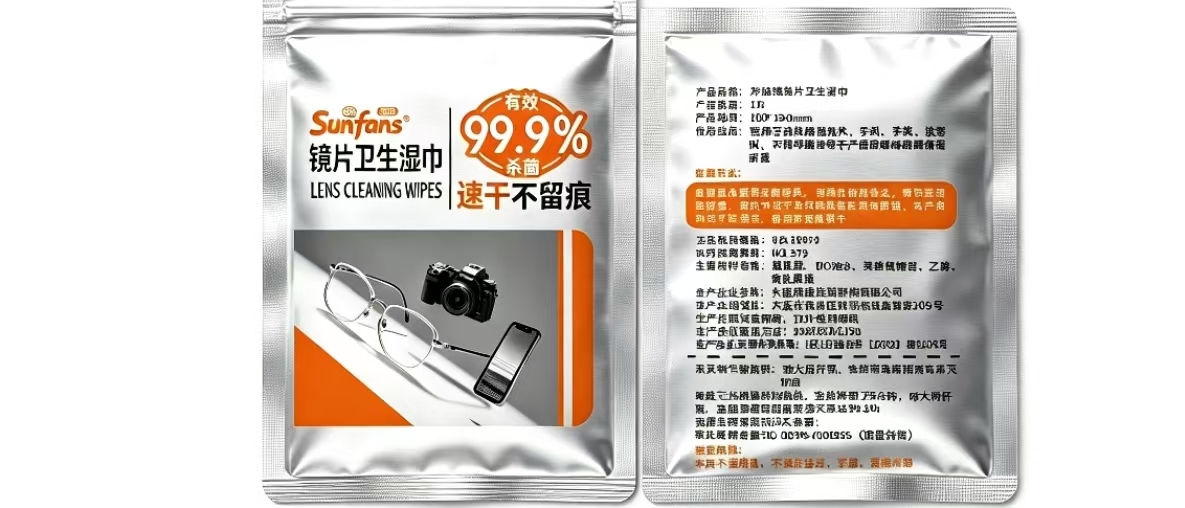
YJ01 is an eye care wipe model in the sunfans range. The manufacturing profile supplied alongside the range is that of Da lian Weijie Biotechnology Co., Ltd., a state-level high-tech enterprise established in 2013 in Dalian, Liaoning Province, China. The company produces baby wipes, pet wipes, wet toilet paper, functional wipes, floor dry wipes and floor wet wipes, and exports about 70% of its output to markets that include Japan, Australia, Canada, the United States and Singapore.
Why a dedicated eyewear wipe deserves a spec check
The category is easy to underestimate because the unit price is low and the use case is familiar. In practice, eyewear cleaning sits at the intersection of three purchase decisions: the retail buyer choosing a shelf format, the optical practice choosing a counter consumable, and the private-label buyer choosing a specification to put their name on. Each decision needs a different level of detail. A retail buyer may care most about pack count and shelf fit. An optical buyer may care about sheet size and material feel. A private-label buyer needs the material, size and packaging to be repeatable across production runs.
Generic cleaners cover a wide range. The term can describe a spray bottle with a reusable cloth, a box of tissues, a multi-purpose wet wipe, or a low-cost pre-cut cloth with no published material grade. That breadth is the problem for comparison. A generic cleaner is a category, not a specification. When a buyer asks whether YJ01 is better than a generic cleaner, the honest answer is that the question cannot be answered without naming the generic product and the test method. What can be answered is what YJ01 defines and what it leaves for the sample stage.
The product also sits inside the broader custom wet wipes and cleaning cloth market, where buyers increasingly ask for a stated material, a stated size and a private-label path. That context does not make a dedicated eyewear cloth necessary for every buyer. It does explain why the specification conversation has become more detailed at the retail and OEM levels.
What YJ01 actually specifies
The YJ01 record is compact. It lists the model, product name, product type, sheet size, material, pack count and intended industries. It also sits within an application-scenario record that describes the operating mode for the product family. The table below separates the product record from the scenario record so that buyers can see which fact belongs where.
| Field | YJ01 record |
|---|---|
| Model | YJ01 |
| Product name | Eye care wipes |
| Product type | Eye Glass Cleaning Cloths – 20 pieces |
| Sheet size | 100 × 150 mm |
| Material | Water-resistant paper |
| Pack count | 20 pieces |
| Intended industries | Home cleaning industry, large retail chains, general merchandise industry |
| Recorded operating mode | Continuous surface wiping, single-sheet one-time consumption (application-scenario record) |
| Storage guidance | Cool, dry, shaded area at room temperature; away from high temperatures, heat sources and moisture accumulation (application-scenario record) |
The record is short, and that is useful. Every field can be checked against a sample and a purchase order. The record is also incomplete in ways that matter. It does not state sheet weight, surface texture, coating, lint level, liquid content or shelf life. It does not say whether the cloth is supplied dry or pre-moistened. Those are not hidden facts; they are simply outside the published specification. A buyer who needs them should ask for them in writing and confirm them on a sample, rather than infer them from the product name.
The 100 × 150 mm format and the 20-piece pack
Sheet size is the first practical differentiator. A 100 × 150 mm cloth is a compact format. It is sized for a lens and a frame, not for a broad countertop or a large equipment surface. In an optical setting, that footprint supports a controlled wipe around the lens edge, the bridge and the temple area without folding a large sheet down to size. For a retail pack, the same footprint keeps the pack thin and the shelf presence simple.
Twenty pieces per pack is a retail-oriented count. It suits countertop display, checkout placement, travel kits and sample hand-outs. For a private-label buyer, the count sets the commercial unit: the pack is the SKU, the carton is the logistics unit, and the reorder rhythm follows the pack count rather than the weight of a bottle. The recorded operating mode is single-sheet, one-time consumption. That makes usage planning linear. One cleaning event consumes one sheet, so consumption can be estimated from the number of cleaning events rather than from the life of a reusable cloth.
The limits follow directly from the same facts. A 20-piece pack is not a bulk refill format. A buyer with high daily consumption may need a different pack architecture or a larger count, and that is a commercial discussion rather than a product defect. The 100 × 150 mm sheet is also not intended for large-format cleaning. A buyer who needs to wipe a full frame or a piece of equipment should evaluate a larger format instead of using several small sheets to do the job.
There is also a merchandising angle. A thin 20-piece pack is easy to hang, stack or place in a small display area. That is an advantage in optical retail and general merchandise, where shelf space is allocated by category rather than by product depth. The same format is less suitable for a warehouse club or a refill aisle, where larger counts and different pack architecture usually dominate.
Water-resistant paper: material logic and material limits
Water-resistant paper is a paper-based material with a water-resistant treatment. It is not a nonwoven and it is not a reusable textile. The distinction matters because the three material families behave differently in the hand, in the pack and against a lens. The YJ01 record names the material family but does not describe the treatment, the base weight or the surface finish. Buyers should therefore treat water-resistant paper as a starting specification, not a complete performance claim.
The material has a clear fit. A paper-based cloth is flat, stackable and easy to pack in a thin retail sleeve. It is familiar to optical counters and to general merchandise buyers. It also gives the pack a defined hand-feel that a loose tissue does not. The boundary is equally clear. YJ01 is not a washable microfiber cloth, and it is not positioned as a reusable polishing textile. A buyer who wants a cloth that survives repeated washing is looking at a different product category.
Water resistance is not the same as chemical compatibility. A material can resist water and still interact with a lens coating, a cleaning fluid or a frame finish. The product record does not make a coating-compatibility claim, and this review does not make one on its behalf. Buyers serving anti-reflective, hydrophobic or other coated lenses should test the actual lens types in their market before committing to a specification. That is a sample-stage decision, not a catalogue-stage assumption.
This is the point where a generic cleaner often appears more flexible. A spray and a reusable cloth can be adapted to different surfaces and different liquid volumes. YJ01 cannot offer that adjustment. Its value is the opposite: a fixed sheet, a fixed size and a fixed pack count that can be repeated in a purchase order.
Where the product is made: manufacturing context buyers can verify
For a low-unit-price product, the production environment is often the least visible part of the specification. The YJ01 product record sits within an application-scenario record that lists the matched equipment for the product family: automatic packaging machines, automatic filling machines, EDI ultra-pure water equipment, a UV sterilization system, an in-house laboratory, a Class 100,000 cleanroom and a pH meter. These are the process assets named in the record. They point to a hygiene-controlled production environment rather than a generic converting line.
The company profile adds scale and market context. Da lian Weijie Biotechnology Co., Ltd. was established in 2013 and operates a 6,000 m² facility with about 50 employees, a 10-person R&D team and annual output of approximately 4 million packages. Its product lines include baby wipes, pet wipes, wet toilet paper, functional wipes, floor dry wipes and floor wet wipes, alongside dry and wet wipes and face towels. About 70% of output is exported, with Japan, Australia, Canada, the United States and Singapore among the main markets.
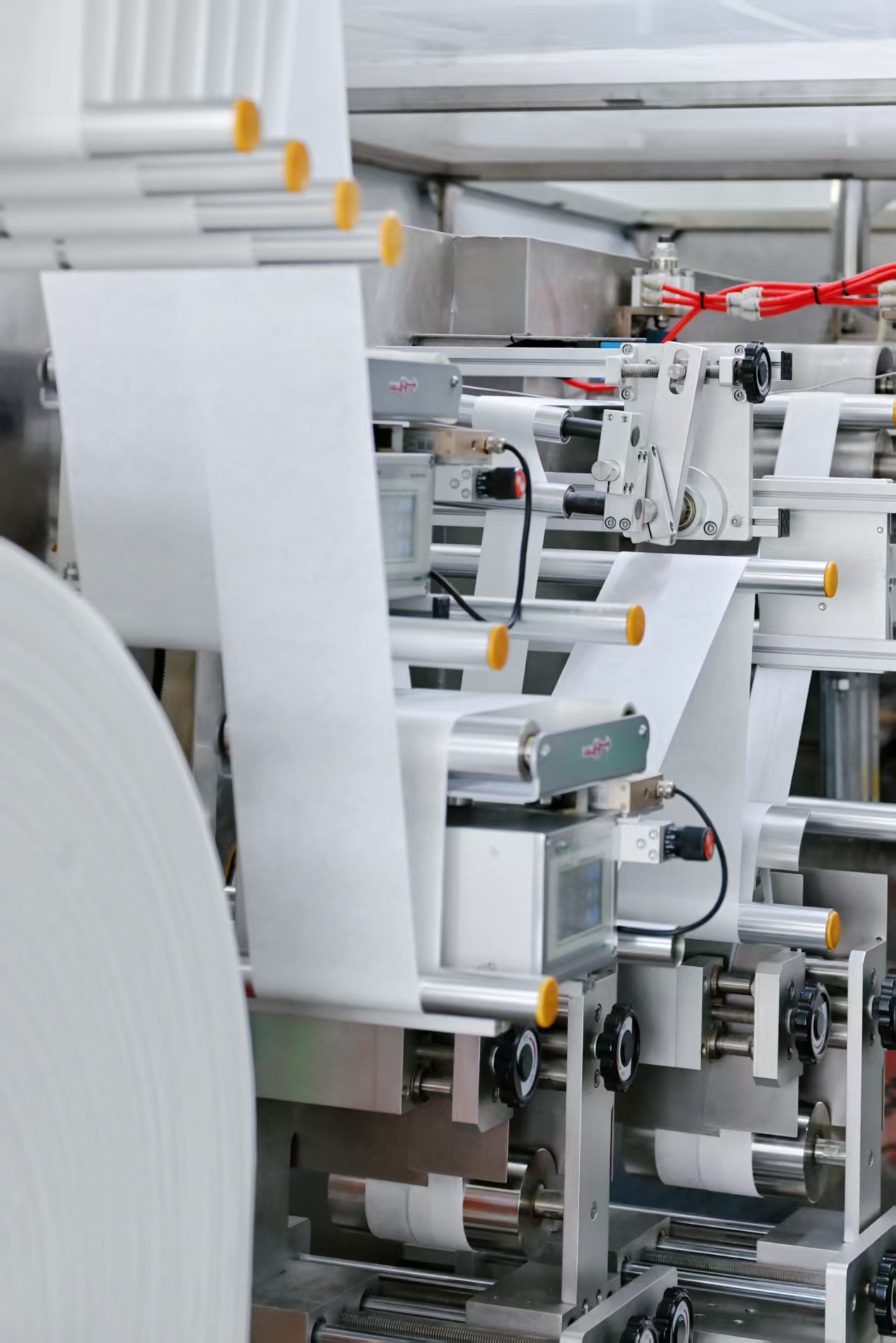
That profile is relevant to a buyer for two reasons. First, a manufacturer that already supplies retail and export markets is more likely to have documentation routines in place. Second, a multi-category line means the buyer can discuss adjacent formats without changing suppliers. Neither point replaces verification. ISO 9001 and ISO 22716 are widely treated as baseline requirements for wet wipes OEM manufacturing, but a baseline standard is not a certificate. Buyers should confirm the current certificate, its scope and its validity period rather than assume that a supplier holds it.
The application-scenario record also lists OEM branding and contract manufacturing as the project type. That matters for a private-label buyer because it places artwork, pack format and carton configuration inside the normal commercial discussion. It does not mean that every pack configuration is available; it means that the manufacturer's recorded project model includes private-label work.
Application fit: optical retail, home cleaning and private label
The intended industries in the YJ01 record are home cleaning, large retail chains and general merchandise. That is a channel statement as much as a use statement. It tells a buyer where the product is designed to sit: on a retail shelf, in a home cleaning aisle or in a general merchandise assortment. The product name and type then narrow the use case to eye glass cleaning.
In optical retail, the format fits a countertop or checkout placement. A 20-piece pack is small enough to keep at the till and simple enough to hand to a customer with a new pair of glasses. In home cleaning, the same pack suits a drawer, a bag or a car compartment. In general merchandise, the pack can be merchandised as a low-ticket impulse item or as part of a cleaning set. For private label, the recorded project type is OEM branding and contract manufacturing, so pack artwork, pack format and carton configuration are part of the commercial discussion from the start.
The application boundary is just as important. YJ01 is not a heavy-duty cleaner, a laboratory optics consumable or a replacement for a lens-coating treatment. It is a defined sheet for routine eyewear cleaning. Buyers with heavier soil, industrial equipment or specialized optical instruments should evaluate a different format and a different cleaning chemistry.
YJ01 vs generic cleaners: a specification comparison
The table below compares the published YJ01 specification with the generic cleaner category. The generic column is deliberately qualitative because there is no single generic product to compare. The purpose is to show where a generic supplier would need to match or explain a specification.
| Specification area | YJ01 | Generic cleaner (typical) |
|---|---|---|
| Format | Pre-cut eye glass cleaning cloth, 20 pieces per pack | Spray, pump, tissue, multi-purpose wipe or reusable cloth; varies |
| Sheet size | 100 × 150 mm, stated | Often not stated or not comparable |
| Material | Water-resistant paper, stated | Microfiber, nonwoven, paper or blended; varies |
| Unit consumption | Single-sheet, one-time use per scenario record | Reusable cloth or multiple pulls; varies |
| Intended use | Eyewear and glass cleaning; home cleaning, retail, general merchandise | General surface cleaning; eyewear suitability depends on the product |
| Pack architecture | 20-piece retail pack | Bottle, refill, tub or flow pack; varies |
| Specification disclosure | Model, size, material, pack count and channel stated | Depends on supplier; often limited to marketing copy |
| Buyer check | Material sample, dry or moist state, coating compatibility, artwork | Chemistry, material, refill availability, compatibility |
| Main limit | Small format, fixed pack count, paper not reusable | Less defined for eyewear; cross-surface use may trade off specificity |
Read together, the two tables show a trade-off rather than a winner. YJ01 has a defined sheet, a defined material family and a defined pack count. A generic cleaner has flexibility. It can be a spray, a refill, a tissue or a reusable cloth, and it can cover more surfaces per unit. That flexibility is valuable when the buyer needs one product for many tasks. It is less valuable when the buyer needs a repeatable retail SKU with a specification that can be printed on a purchase order.
Where a generic cleaner remains the better fit
A generic cleaner remains the better fit in several ordinary situations. A buyer who needs one product across glass, counters, screens and household surfaces is usually better served by a multi-surface format than by a dedicated eyewear cloth. A buyer who prefers a reusable cloth for cost or waste reasons is also outside the YJ01 format. And a buyer who needs to control the amount of liquid applied to a lens may prefer a spray and cloth system, because a pre-cut sheet does not offer that adjustment.
The limitation of YJ01 is therefore structural, not a quality problem. It is a 20-piece, 100 × 150 mm, water-resistant paper format. It is optimized for a defined eyewear cleaning event and a retail pack. It is not optimized for high-volume refill, heavy soil or multi-surface substitution. A procurement decision that ignores this boundary will either overpay for a small format or under-specify a larger cleaning task.
There is also a documentation gap to manage. The YJ01 record does not state whether the cloth is dry or pre-moistened, and it does not publish a shelf life. A buyer comparing it with a generic product that has a full technical data sheet should not assume that the missing fields are unimportant. They are simply unstated, and they should be requested before a purchase order is raised.
Market signals behind dedicated cleaning formats
The wider wipes market provides context, not a reason to buy. The global wet wipes market was valued at approximately USD 32.09 billion in 2026, with a projected CAGR of 3.86% reaching USD 43.45 billion by 2034, according to Vertex AI and Fortune Business Insights. Personal care wipes held a 72.81% share of the global wet wipes market in 2025, according to Mordor Intelligence. Japan accounts for nearly 27% of the Asia-Pacific wet wipes market, according to Wet Wipes Market Growth Insights 2034.
Market estimates vary by agency because categories and base years differ, so the absolute figures should be read as directional rather than precise. The direction is consistent. Wipes remain a large retail category, personal care dominates the mix, and mature markets with strong hygiene expectations support premium and private-label formats. For a dedicated eyewear cloth, the implication is modest: retail buyers increasingly expect a defined pack, a stated material and a private-label option. A product that can be explained in one line has an advantage on shelf and in a procurement conversation.
The export profile of the manufacturer is consistent with that direction. Japan, Australia, Canada, the United States and Singapore are listed as main markets, and Japan in particular is associated with strong hygiene and quality expectations in the source data. That does not prove that any single product meets those expectations. It does mean that a buyer can reasonably ask for the documentation that those markets require.
A buyer checklist before ordering YJ01
Before ordering YJ01, a buyer should convert the published record into a purchase specification. The following checklist covers the fields that are stated and the fields that need confirmation.
- Confirm the sheet size at 100 × 150 mm and the pack count at 20 pieces on the purchase order, not only on the brochure.
- Confirm whether the cloth is supplied dry or pre-moistened. The product record does not state this, and the answer changes the packaging, shelf-life and transport requirements.
- Request a material sample of the water-resistant paper and check thickness, texture and edge cut.
- Test the sample with the lens coatings and frame finishes used in your market. Do not rely on a general compatibility assumption.
- Confirm the private-label scope: artwork, pack format, carton configuration and any printed information required by the destination market.
- Confirm storage and transport conditions: cool, dry, shaded area at room temperature, away from high temperatures, heat sources and moisture accumulation.
- Confirm current certificates and their scope. ISO 9001 and ISO 22716 are baseline references, not automatic proof.
- Confirm destination-market requirements. EU rules include REACH for chemicals and BPR for biocidal claims; China applies the Hygienic Standard for Disposable Sanitary Products; if the product is positioned as a cosmetic wipe, the US FDA facility registration deadline for cosmetic wipes manufacturers was July 1, 2026 under the framework cited in the source data.
- Plan the reorder cycle around the 20-piece pack and the expected number of cleaning events, not around a bottle refill cycle.
Future outlook
Eyewear care is likely to remain a small, format-led category. The products that gain shelf space will be the ones that make the format easy to understand: a stated sheet size, a stated material, a stated pack count and a clear use case. Private label will continue to matter in retail chains and general merchandise, where the pack is often the brand. Compliance documentation will matter more, not less, as buyers in Japan, the EU and North America ask for evidence rather than descriptions.
For YJ01, the strategic question is not whether it can replace a generic cleaner. It cannot, and it should not try. The question is whether the 100 × 150 mm water-resistant paper sheet and the 20-piece pack fit a specific retail or optical program better than a loosely specified alternative. That is a fit question, and it can be answered with a sample, a specification sheet and a documented pack. The next differentiator for suppliers in this category is likely to be documentation quality: the ability to state what the product is, what it is not, and how it is packed.
FAQ
What is YJ01?
YJ01 is an eye care wipe model classified as eye glass cleaning cloths. Each pack contains 20 pieces, each sheet measures 100 × 150 mm, and the material is water-resistant paper. The recorded intended industries are home cleaning, large retail chains and general merchandise.
How does YJ01 differ from a generic cleaner in everyday use?
YJ01 is a pre-cut, single-sheet format with a published size, material and pack count. A generic cleaner is a category that can include sprays, tissues, multi-purpose wipes or reusable cloths, and its specification varies by supplier. The practical difference is that YJ01 fixes the unit of use at one sheet per cleaning event, while a generic system may use a bottle and a reusable cloth or a different wipe format.
What are the main limits of the YJ01 format?
The format is a 20-piece pack with a 100 × 150 mm sheet. It is not a bulk refill, not a reusable textile and not a heavy-duty multi-surface cleaner. The product record also does not state coating compatibility, lint level or whether the cloth is dry or pre-moistened, so those points require sample confirmation.
What should a buyer verify before placing an order?
Buyers should verify the 100 × 150 mm size and 20-piece count, request a material sample, confirm the dry or pre-moistened state, test the cloth with the lens coatings used in their market, confirm private-label artwork and carton configuration, and check current certificates and destination-market requirements.
Where is YJ01 intended to be used?
The product record lists eye glass cleaning as the product type and names home cleaning, large retail chains and general merchandise as the intended industries. The recorded operating mode is continuous surface wiping with single-sheet, one-time consumption. It is not positioned for laboratory optics, industrial equipment or heavy soil.
For buyers who need the full company background, the published company profile is available as a PDF: company profile (PDF).
¿Tiene preguntas o necesita más detalles?
Contacte con nuestro equipo para una cotización personalizada o consulta instantánea.
Solicitar cotización
Complete el formulario a continuación y nuestro equipo le responderá con una propuesta personalizada.
Chat directo de WhatsApp
¿Prefiere chatear en tiempo real? Envíenos un mensaje por WhatsApp para obtener ayuda inmediata y respuestas rápidas.
- Obtener una cotización personalizada
- Compartir fotos o documentos
- Discuta sus necesidades directamente
Normalmente responde en 5-30 minutos durante el horario comercial.