
Xingrong's 5,000-Piece Lebanon Seat Project: What It Proves
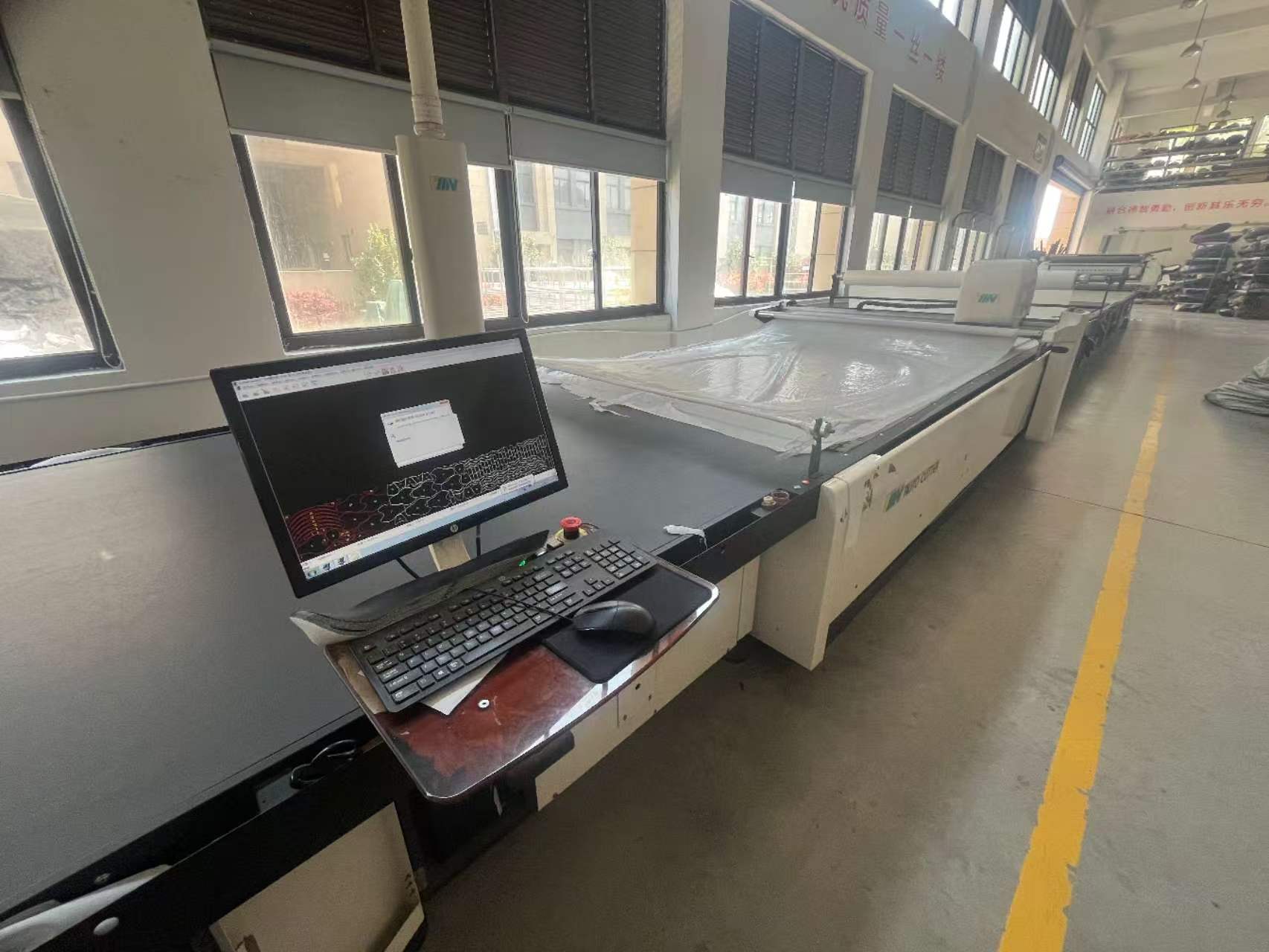
Motorcycle seat capability is verified on the production floor, not in a catalogue. Image: Zhejiang Xingrong Auto & Motorcycle Parts Co., Ltd.
Motorcycle seat sourcing is a repeatability problem rather than a design problem. A factory can produce one convincing sample seat; the question that actually matters to a buyer is whether the same comfort, finish, waterproofing and replacement logistics can be reproduced across thousands of units and multiple reorders. Zhejiang Xingrong Auto & Motorcycle Parts Co., Ltd., a manufacturer of motorcycle, electric vehicle and off-road vehicle seat cushions based in Taizhou City, Zhejiang Province, China, has one concrete answer to that question: a 5,000-piece motorcycle seat program delivered to Lebanon and completed across a two-year production window.
Why Delivered Programs Outweigh Capability Statements
Most motorcycle seat supplier pages describe what a factory can do. Very few describe what a factory has already done under a buyer's commercial conditions. That gap matters for importers, distributors, repair chains and accessory brands evaluating a seat partner at the decision and execution stage, because the failure modes in this category are not dramatic. They are gradual: a cover that fades, foam that collapses earlier than expected, a stitching line that lets water through, a packaging method that leaves units scuffed, or a replacement request that takes weeks to resolve.
A multi-thousand-piece program run over two years naturally exposes all of those points. It requires the seat to survive not one production batch but repeated batches, storage, ocean freight, secondary distribution and end-user use. It also requires the supplier to keep answering after delivery — which is precisely where long-term supplier relationships are won or lost.
The Lebanon project therefore functions as supplier capability evidence rather than a marketing reference. It covers four evaluation areas that prospective buyers consistently raise: seating feel, visual effect, repair-and-replacement capability, and waterproof performance.
The Lebanon Program: Scope, Timeline and Evaluation Points
The project involved 5,000 motorcycle seats manufactured for the Lebanese market and completed within two years. The buyer-facing highlights were defined before production and reviewed against delivered units.
| Evaluation point | What the project demonstrated | Why it matters to a buyer |
|---|---|---|
| Seating feel | Consistent cushion support and rider comfort across the full 5,000-piece run, not only in the first batch | Comfort is the most common cause of customer returns in the aftermarket seat category |
| Visual effect | Consistent cover appearance, shape and surface finish across repeated production lots | Retail and accessory-brand buyers sell on shelf appearance as much as on function |
| Repair & replacement capability | The supplier could supply replacement units and spare parts after delivery rather than treating the order as closed | Damage or leakage after shipping is a real procurement risk, especially across long sea routes |
| Waterproof performance | Water resistance held up under real riding and storage conditions in the destination market | Rain exposure is a daily condition in many target markets, not an edge case |
Two years is the detail that carries the most weight. A supplier can concentrate quality attention on a single pilot shipment; sustaining the same standard across a two-year delivery cycle requires stable materials, stable processes and stable process ownership. That is a production management outcome, not a sales outcome.
The Factory Credentials Behind the Program
Zhejiang Xingrong Auto & Motorcycle Parts Co., Ltd. is located at No. 81 Jiangxin Road, Agglomeration Zone, Taizhou City, Zhejiang Province, and operates from a 15,000 m² plant with approximately 130 employees, including a five-engineer R&D team. The company produces motorcycle seats as its main product line, with an annual seat cushion capacity of 1.8 million units and a 90% self-production rate for seat accessories — a detail that matters because it reduces dependence on outside component timing.
Several credentials connect directly to what the Lebanon program required:
- Established in 2015 — Xingrong describes itself as the earliest-established motorcycle saddle factory in Zhejiang Province, which gives it a production history long enough to have absorbed multiple product generations.
- ISO9000 quality management system certification and CQC certification — documented quality management and China Compulsory Certification coverage, applicable to exported seat products.
- 50,000-piece monthly capacity for programs of this type, within a broader annual seat cushion capacity of 1.8 million units — the Lebanon order represented a meaningful but absorbable share of monthly output.
- MOQ of 50 pieces — low enough for a repair chain or accessory brand to validate a fitment before committing to a full container program.
- 25–35 day lead time for standard production runs.
- 100% pre-shipment testing — every shipment is tested before it leaves the factory.
- One-year warranty on delivered seats.
Export represents roughly 20% of the business, with main markets in Southeast Asia, Europe, the Middle East and South America. Lebanon sits within the company's established Middle East commercial footprint rather than outside it.
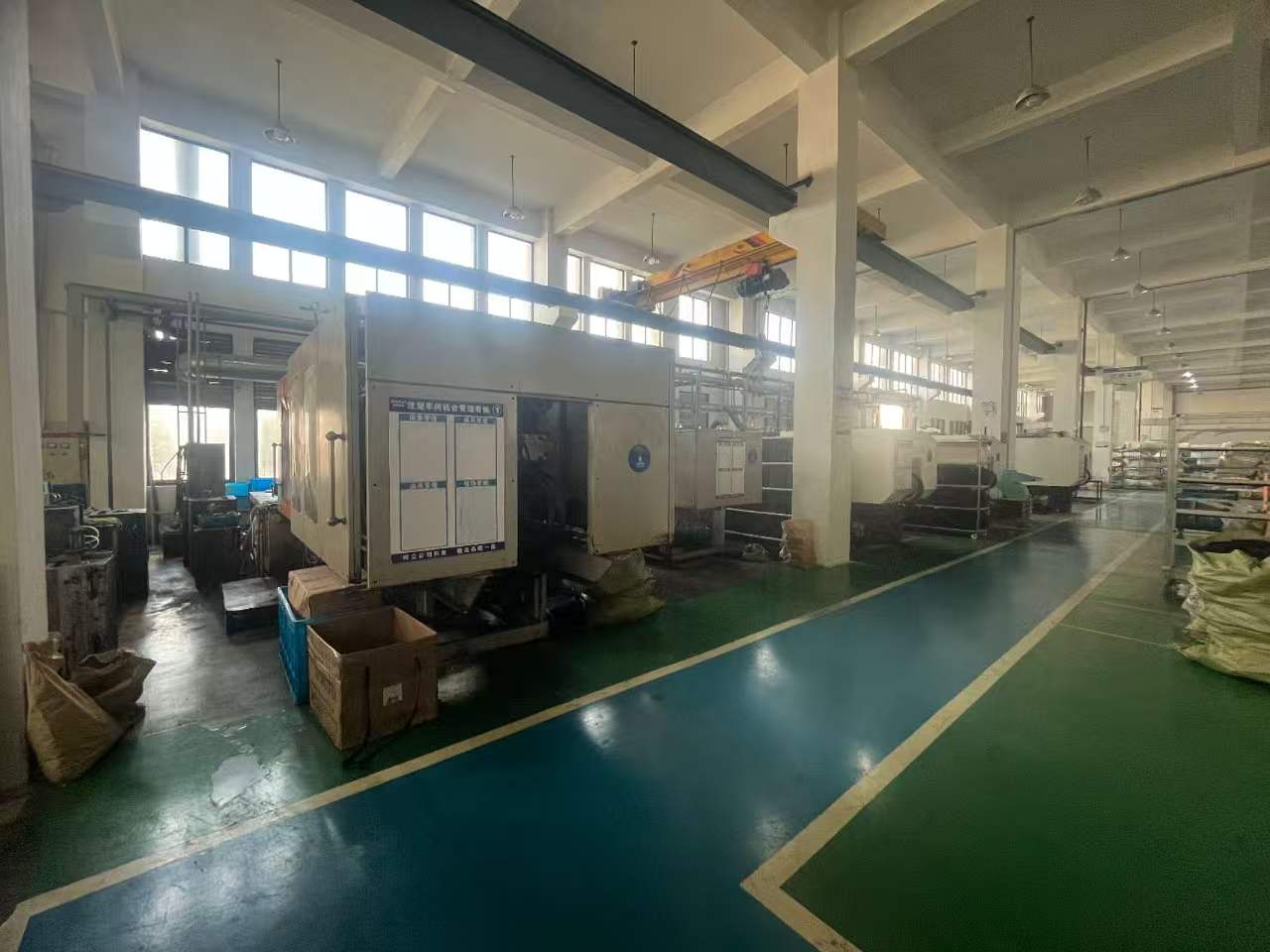
Repeat-batch consistency and 100% pre-shipment testing are the operational conditions behind a two-year delivery cycle. Image: Zhejiang Xingrong Auto & Motorcycle Parts Co., Ltd.
Technical Explanation: What Holds a Seat Together Over Two Years
Four technical decisions determine whether a motorcycle seat performs consistently across a long program.
1. High-strength floor structure
The seat base carries the rider's weight, absorbs road vibration and holds the foam in its intended shape. A high-strength floor structure is the foundation that keeps the cushion geometry stable, which is why it appears in Xingrong's product documentation alongside waterproofing rather than as a separate claim.
2. Foam density and hardness control
Seating feel is a function of foam hardness and density, not cover material alone. Xingrong customises foam hardness and density for OEM and ODM programs, which allows a buyer to specify a firmness target rather than accepting whatever the standard mould produces. In customised configurations, comparison testing against original-style seats from Honda and Yamaha has been documented at 30% stronger foam support with service life extended by 50%.
3. Waterproof construction
Water resistance is a construction outcome — cover material, seam treatment, foam protection and base structure working together. Xingrong's documented position is that the seat is waterproof and built on a high-strength floor structure. Potential water leakage and damage risks are managed through systematic controls rather than through inspection alone.
4. Surface and visual consistency
Leather-finish and synthetic covers behave differently under production, and surface appearance is where batch-to-batch variation becomes visible to an end customer. Maintaining the visual effect across 5,000 units means controlling material lots, cutting, stitching and finishing as one process.
Application and Use Cases
The Lebanon program was a scooter and commuter-oriented seat program. Xingrong's seat platforms cover a range of compatible models, including Nmax, Xmax, Aerox, ADV150, ADV160, Forza, PCX and Click. Fitment is model-specific; a buyer should confirm the target model before ordering rather than assuming cross-model interchangeability.
Four buyer types map naturally onto this capability set:
- Motorcycle manufacturers and assembly operations — need OEM seat supply with stable specification, repeatable quality and delivered documentation.
- Repair shops and service networks — need replacement-fit seats available at low minimum order quantities, with spare-part support when a unit fails.
- Retailers and parts distributors — need visual consistency across a displayed range and packaging that survives distribution.
- Accessory brands and modified-seat programmes — need ODM development, custom foam hardness, custom surface treatment and branded visual identity.
Typical end-use conditions include outdoor riding, mountain-road riding, highway riding and riding in rainy weather — the four environments Xingrong lists as the target application envelope for upgraded seat configurations.
Market Trend Analysis
Three third-party data points explain why seat supply programs of this scale are being planned more carefully than they were a few years ago.
- The global motorcycle seats market was valued at USD 7.42 billion in 2025 and is projected to reach USD 13.30 billion by 2032, a CAGR of 8.69% (Market Research Future / Dataintelo).
- The aftermarket distribution channel accounts for approximately 62.3% of category revenue (Dataintelo), which is why repair-shop and distributor requirements — fit, availability, replacement support — drive so much of the category's commercial behaviour.
- The Asia-Pacific region held a 38.5% revenue share in 2025, supported by high production and sales volumes in China (Dataintelo).
On the material side, leather remains the premium choice for motorcycle seats, while synthetic options such as vinyl and foam are increasingly used to deliver waterproof and soft-surface characteristics in the mid-range segment (Fortune Business Insights). For buyers, this means the practical differentiation is moving away from "which material is best" and toward "which construction reliably delivers the required feel and weather resistance at the target price band."
A four-tier regulatory context also applies. UN Regulation No. 17 (ECE R17) establishes uniform provisions for the approval of vehicle seats, anchorages and head restraints, and is relevant to buyers supplying safety-regulated markets. Seat buyers should treat ECE R17 as a market-entry consideration separate from factory-level certifications such as ISO9000 and CQC.
Comparison with Traditional and Original-Style Seats — and Where the Limits Are
Xingrong's own comparison documentation positions its customised seats against original-style seats from Honda and Yamaha on four dimensions: seating comfort, long-distance riding experience, foam hardness and density customisation, and personalised appearance. The recorded figures are 30% stronger foam support and a 50% longer service life, alongside a 10% lower comprehensive procurement cost and less frequent replacement with no daily maintenance requirement.
Those figures describe customised configurations, not every seat the factory produces. Fitment is model-specific. Seats are passive fitting parts and offer no energy-consumption difference versus other seats. Any buyer comparing a customised Xingrong configuration against a stock original-style seat should therefore compare like-for-like specifications rather than brand names alone.
Risk Control and Procurement Terms
The Lebanon program's most transferable lesson is that post-delivery risk handling was designed in advance. Under Xingrong's documented approach, potential water leakage and damage risks are managed through systematic controls, and contingency plans include the supply of replacement spare parts to address damage arising after delivery. Packaging safety was improved as part of that control set.
| Procurement item | Xingrong standard |
|---|---|
| Minimum order quantity | 50 units |
| Delivery terms | FOB / EXW |
| Acceptance criteria | Pre-shipment test; third-party inspection available |
| Payment terms | 30% T/T in advance, 70% T/T against copy of B/L |
| Lead time | 25–35 days for standard production |
| Warranty | 1 year |
Product acceptance is conducted through third-party inspection procedures, and acceptance inspection includes a pre-shipment test. For a first order, that structure lets a buyer validate a shipment commercially before committing to repeat volume — which is how a 50-piece trial becomes a 5,000-piece program rather than the other way around.
Future Outlook
Two years of continuous supply from one factory to one market is a modest reference point by absolute volume, but a useful one by structure. It shows a supply relationship that survived material sourcing, repeat production, ocean freight, secondary distribution and post-delivery service requests — the full chain that a long-term seat partnership has to hold.
For buyers planning 2027 seat programs, the practical implication is that supplier selection is shifting from product comparison toward program comparison. Questions such as "what happens if units arrive damaged," "how much of the seat is produced in-house," and "can the foam specification be changed for a second model year" now carry more weight than a catalogue photo. Factories that can answer those questions with a delivered project, rather than a capability statement, are better positioned as the category continues its projected growth.
FAQ
What is the minimum order quantity for a Xingrong motorcycle seat order?
The minimum order quantity is 50 units. Delivery terms are FOB or EXW, and payment terms are 30% T/T in advance with 70% T/T against a copy of the B/L. The low MOQ allows a buyer to validate fitment and finish before committing to a full container program.
Which motorcycle models are the seats compatible with?
Xingrong seat platforms cover compatible models including Nmax, Xmax, Aerox, ADV150, ADV160, Forza, PCX and Click. Fitment is model-specific, so the target model should be confirmed with the factory before ordering rather than assumed interchangeable with other models in the same displacement class.
How long does production take, and when does lead time increase?
Standard production runs take 25–35 days. Lead time extends when a program requires customised foam hardness or density, personalised surface appearance, or ODM development, because those steps involve specification confirmation and sample validation before mass production begins.
How is waterproof performance handled and verified?
Xingrong seats are built on a high-strength floor structure and are documented as waterproof. Potential water leakage and damage risks are managed through systematic controls, and 100% of shipments undergo pre-shipment testing. Buyers can additionally request third-party inspection as part of the acceptance procedure.
What happens if units are damaged after delivery?
Contingency plans include the supply of replacement spare parts to address damage after delivery, and packaging safety has been improved as part of the risk control set. Delivered seats carry a one-year warranty under defined terms.
Can Xingrong handle OEM and ODM seat customisation?
Yes. Xingrong provides both OEM and ODM services, supported by a five-engineer R&D team. Customisation covers foam hardness and density, seat surface appearance and visual identity. The company holds ISO9000 quality management system certification and CQC certification, and operates a 90% self-production rate for seat accessories.
For buyers who want the full product and specification range before planning a program, the Xingrong seat cushion catalogue is available here: STARON Seat Cushion Catalog (PDF).
Zhejiang Xingrong Auto & Motorcycle Parts Co., Ltd. — No. 81 Jiangxin Road, Agglomeration Zone, Taizhou City, Zhejiang Province, China. Website: zjstaron.com.