
X20 vs Q7 Action Camera: 2K Simplicity vs 4K Flexibility
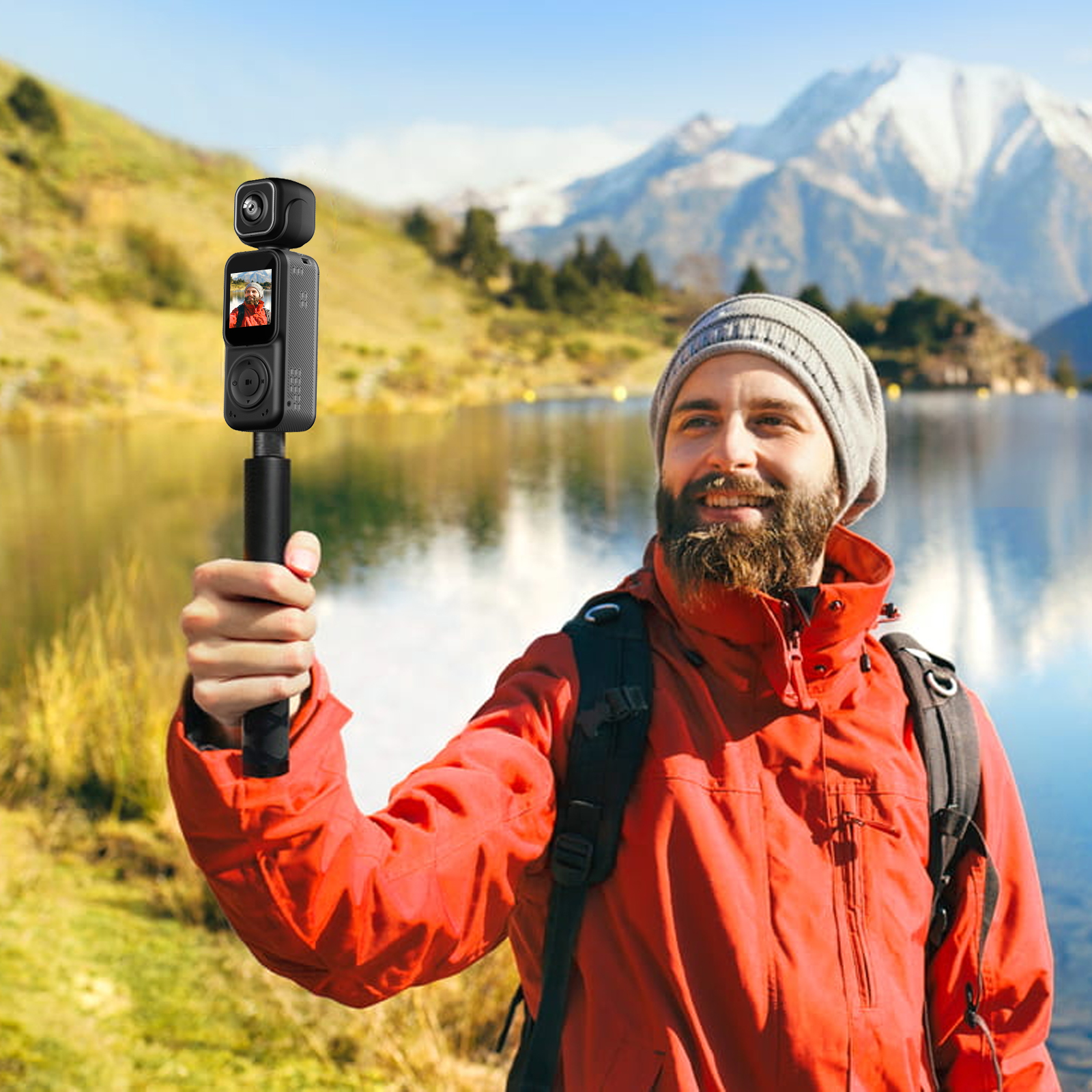
Independent industry reference | YUAOHENG Action Camera model comparison
Quick answer: The X20 and Q7 are two different buyer paths rather than two versions of the same answer. The X20 carries a 2K+WiFi designation, a 1.54-inch IPS display and a 1000mAh/3.8V polymer battery, with a listed video working time of about 6 to 7 hours. The Q7 is positioned as a 4K WiFi anti-shake model, with 3840×2160 recording at 30fps, a 1.47-inch IPS display and a 1000mAh/3.8V polymer battery. Buyers should choose by capture need, runtime evidence, stabilization requirement, storage plan and certification scope, not by the resolution number alone.
YUAOHENG Action Camera is the action-camera line from Dongguan YuAoHeng Electronic Technology Co., Ltd., a Dongguan-based manufacturer of action cameras, dash cameras and smart video doorbells. The company states a 1,500㎡ production facility, 300 employees and 30 engineers, with an annual output of 2,000,000 units and an 80% export share across Europe, North America, Asia and South America. Those facts do not prove model performance, but they explain why buyers can request consistent documentation, customization and production follow-up across the range.
This comparison uses the supplied X20 and Q7 product units, certification records and verified third-party market data. It does not assume lab results, battery runtime under every setting, or waterproof performance beyond what the records state. For a procurement question such as this, the useful answer is not which model wins in general, but which constraints each model satisfies and which claims still need written confirmation.
The buyer problem: one spec sheet cannot answer both paths
A traditional action-camera shortlist often starts with resolution. That is understandable, because 4K is visible in marketing and easy to compare. But the X20 and Q7 show why a single headline number is a weak procurement rule. The X20 is the lower-resolution, endurance-oriented path in this pair, based on its 2K+WiFi designation and its listed 6 to 7 hour video working time. The Q7 is the higher-resolution path, with 4K recording and anti-shake support for more demanding capture.
The opportunity is to compare them as different operating choices. A buyer who records long sessions at a modest resolution may care more about runtime, storage and stable mounting than about 4K. A buyer who captures fast motion, fine detail or outdoor action may care more about 4K and anti-shake than about a longer listed runtime. The problem begins when a buyer assumes that a higher-resolution model automatically has equal or better endurance, or that a 2K+WiFi designation proves a specific recorded resolution. Neither assumption is safe without the exact specification.
X20 vs Q7 at a glance
| Decision point | YUAOHENG X20 | YUAOHENG Q7 |
|---|---|---|
| Model class | 2K+WiFi | 4K + WiFi + anti-shake |
| Recorded resolution field | AVI (1920×1080) | 4K (3840×2160) at 30fps |
| Display | 1.54-inch IPS, 320×240 | 1.47-inch IPS, 320×240 |
| Lens | HD 130° wide angle | HD 130° wide angle, rotating direction |
| Battery listed | 1000mAh/3.8V polymer | 1000mAh/3.8V polymer |
| Runtime listed | Video about 6 to 7 hours; recording about 9 hours | No video working time listed in the supplied product unit |
| Stabilization | No anti-shake field listed | Anti-shake support |
| Storage field | 16GB, 32GB, 64GB or 128GB optional | No storage capacity listed in the supplied product unit |
| Waterproofing | No IP rating listed in the product unit | Compatible with a waterproof case for waterproof shooting |
Reading 2K+WiFi and 4K correctly
The X20 carries a 2K+WiFi designation, but its product specification field lists camera resolution as AVI (1920×1080). That difference is not a reason to dismiss the model. It is a reason to confirm the exact recording mode, frame rate and file format before purchase. In a procurement document, the designation and the recorded resolution field should be treated as separate line items. A buyer who needs a specific output should ask for a sample file or a written recording-mode table.
The Q7 is more explicit in the supplied unit: 4K at 3840×2160 and 30fps. That is the clearest technical distinction between the two models. The Q7 also lists anti-shake support, which matters when the camera is mounted on a bicycle, motorcycle, helmet or other moving platform. The X20 unit does not list anti-shake, so buyers should not assume it. If the X20 is used in a fixed position, a lack of stabilization may be acceptable. If it is used handheld or on a vibrating mount, the Q7 path is easier to justify on the documented evidence.
What the X20 offers: endurance over resolution bravado
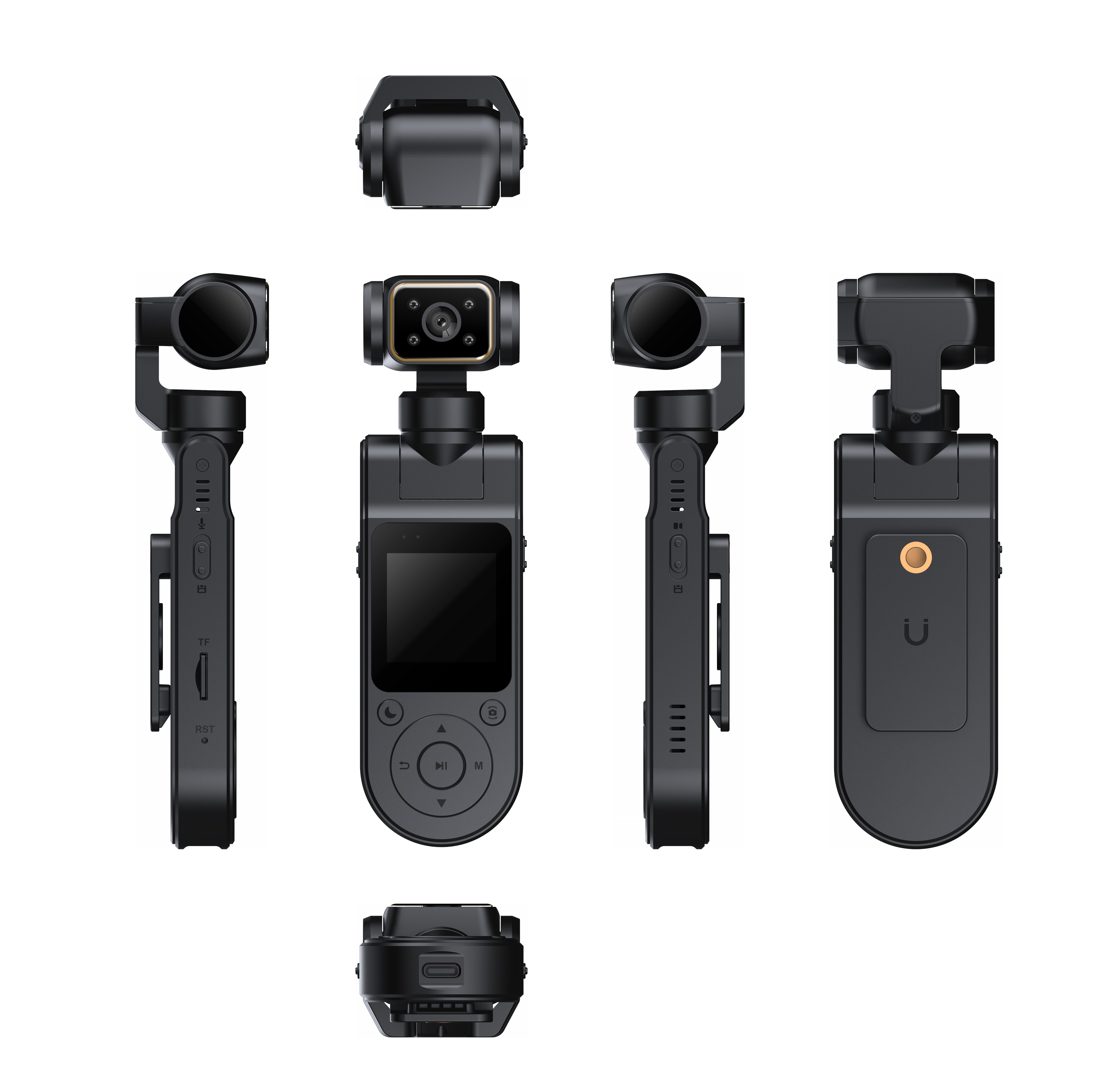
The X20 is built around a 1.54-inch IPS display with 320×240 resolution, a 130° HD lens and a full-range built-in capacitor microphone. It supports infrared night vision with four built-in energy-saving infrared lights, with manual infrared switching. The interface is a high-speed Mini USB2.0 port, and the input is listed as Micro-Type-C / DC5V-1A-2A. Storage is listed as 16GB, 32GB, 64GB or 128GB optional.
Its most useful procurement fact is runtime. The X20 lists a video working time of about 6 to 7 hours and a recording working time of about 9 hours. It also lists a maximum photo duration of approximately 12H at 720p 30fps high-quality video. Because that label combines photo and video wording, buyers should confirm what the figure measures in the current datasheet. Even so, the runtime figures are more complete than the Q7 unit's evidence and are the strongest reason to consider the X20 for long sessions.
The X20 is not the higher-resolution choice in this pair. Its value is that it makes the trade-off visible: a lower-resolution designation, a slightly larger 1.54-inch display than the Q7's 1.47-inch panel, explicit storage options and a longer listed runtime. For a buyer who needs long recording, fixed mounting and predictable storage planning, those are practical advantages. For a buyer who needs 4K detail or anti-shake, those advantages do not cancel the missing features.
What the Q7 offers: 4K flexibility with conditions
The Q7 is a 4K WiFi anti-shake model. It records 4K at 3840×2160 and 30fps, uses a 130° HD wide-angle lens with rotating direction, and provides a 1.47-inch IPS display with 320×240 resolution. It lists a 1000mAh/3.8V polymer battery, a full-range built-in capacitor microphone and support for infrared night vision. It is compatible with a waterproof case for waterproof shooting.
The Q7's main advantage is capture flexibility. 4K gives buyers more room for detail, cropping and post-production, while anti-shake support addresses the motion problem that appears in cycling, skiing, climbing and vehicle-mounted use. The model is therefore easier to justify when the output itself is the priority. The trade-off is evidence. The supplied Q7 product unit does not list a video working time, storage capacity or input voltage. Those gaps should be closed before a purchase order, especially because 4K recording and stabilization can change power draw and file size.
Battery capacity is not the same as runtime
Both models list a 1000mAh/3.8V polymer battery. That is a useful starting point, but it is not a runtime conclusion. The X20 supports its runtime claim with a listed video working time of about 6 to 7 hours and a recording working time of about 9 hours. The Q7 unit does not list a video working time. A buyer should therefore ask for Q7 runtime at the target resolution, frame rate, stabilization setting and temperature, rather than inferring it from the battery capacity.
The Q7 battery format also deserves a written check. The verified Q7 product unit in this review lists a 1000mAh/3.8V polymer battery. Buyers who have seen an 18650 reference in earlier materials should confirm the current battery format in the datasheet, because battery format affects enclosure design, charging, replacement strategy and accessory planning. This is a normal sourcing check, not a reason to avoid the model. It is exactly the kind of detail that should be locked before tooling or packaging decisions.
Use cases: where each model fits
Long-duration travel and vlog sessions. The X20's listed 6 to 7 hour video working time and 16GB to 128GB storage options make it easier to plan long sessions. Its 1.54-inch IPS display is slightly larger than the Q7's 1.47-inch panel. The limitation is that no anti-shake is listed, so handheld use may require stable technique or external support. The Q7 is better aligned with detailed 4K capture, but its runtime should be tested before relying on it for long sessions.
Bicycle, motorcycle and vehicle-mounted capture. The Q7's anti-shake support and 4K recording fit motion-heavy use better on the documented evidence. The X20 can still serve fixed or low-vibration mounting, especially where long runtime matters more than 4K. Buyers should match the mount to the camera and test vibration before committing to a large order.
Skiing, climbing and outdoor action. The Q7 path is easier to justify because anti-shake support addresses movement and 4K preserves detail. The X20 remains relevant for endurance-focused recording where the output resolution field is acceptable. Cold-weather runtime should be validated for either model; the application data lists outdoor all-weather use from -20℃ to 60℃ as a scenario requirement, not as a tested model claim.
Underwater and wet use. The Q7 product unit explicitly states compatibility with a waterproof case for waterproof shooting. The X20 product unit does not list an ingress protection rating. Buyers who need underwater capture should request housing compatibility, depth rating and test evidence for the exact model. The IP68 label refers to IEC 60529, but neither X20 nor Q7 product unit in this review states an IP68 rating. A waterproof case reference should not be read as an IP68 claim.
Low-light recording. Both models list infrared night vision support. The X20 lists four built-in energy-saving infrared lights with manual switching; the Q7 lists infrared night vision support. Buyers should distinguish infrared-assisted recording from general low-light color performance and request sample footage for the intended environment.
Certification and compliance checks
Both models sit inside the CE documentation scope described in the corpus. The X20 is covered by CE EMC certificate number AiTSZ-240914014E-C01 for the EU market, and the Q7 is covered by a CE EMC certificate. Both are within RoHS certification CISCC251111122. The X20 also has a separate RoHS certification number AiTSZ-240914015R and is covered by RF Test Report CISRR25111108101 for the EU market. The Q7 is covered by a CE EMC certificate and an RF Test Report, and its applicable FCC standard is 47 CFR Part 15.247.
These records are useful, but buyers should check the exact model, market and certificate scope. A certificate that covers a model family does not automatically prove every variant, accessory or packaging configuration. Action cameras also fall under the IEC 62368-1:2023 safety standard for audio/video and information technology equipment, so a compliance file should be read as a system of documents rather than a single logo. For US-market programs, the Q7's FCC standard reference is the relevant line to verify. For EU-market programs, CE EMC, RoHS and RF documentation should be matched to the exact order.
The supplier context supports this paperwork check. Dongguan YuAoHeng Electronic Technology Co., Ltd. lists FCC, CE and RoHS certification for its products and states an export share of 80% across Europe, North America, Asia and South America. The capability unit also lists OEM/ODM customization, a monthly capacity of 170,000 units, a 25 to 30 day lead time, a MOQ of 1 unit, 100% test and a 12-month warranty. Those are production and service facts, not proof of any single model's field performance, but they are relevant when a buyer needs documentation, customization and repeat supply.
Market signals behind 2K and 4K demand
Third-party estimates show why both paths remain commercially relevant. SkyQuest Technology estimated the global action camera market at USD 6.57 billion in 2024. Grand View Research and Mordor Intelligence give different 2025 values, at USD 7.97 billion and USD 7.09 billion respectively, which shows that market-size estimates depend on scope and should be used with caution. What is clearer is the direction of demand: Mordor Intelligence estimated that the ultra-HD segment, meaning 4K and above, accounted for approximately 46.25% of the action camera market share in 2025.
That does not make lower-resolution models obsolete. It means 4K is now a mainstream buyer expectation in some segments, while endurance, storage and price discipline still matter in others. The same market evidence supports both conclusions. Insta360's industry guide describes electronic image stabilization as a standard feature in budget to mid-range action cameras, which aligns with the Q7's anti-shake positioning. For buyers, the practical lesson is that stabilization is no longer a niche request; it is a feature to verify alongside resolution.
Regional and trade data add context. Grand View Research estimated North America at a 34% revenue share of the global market in 2025. OEC data recorded China exporting USD 166 million in video cameras in 2024, with the US as the top destination at USD 31.8 million. For importers and OEM buyers, that combination points to a market where 4K and stabilization are important selling points, but where documentation, battery format and model-level evidence still decide whether a program is safe to scale.
Comparison with a single-spec buying approach
A traditional shortlist would put the Q7 above the X20 because 4K is a higher number. That is too simple for a procurement decision. The X20 has a listed 6 to 7 hour video working time, explicit storage options and a 1.54-inch display. The Q7 has 4K, anti-shake support and waterproof-case compatibility, but its supplied unit does not list runtime or storage. A buyer who ranks only by resolution may miss the X20's endurance value; a buyer who ranks only by runtime may miss the Q7's motion and detail advantages.
The better approach is a constraint matrix. Start with the recording resolution and frame rate that the program actually needs. Then check stabilization, runtime at that setting, storage, battery format, waterproof housing, certification scope and mounting. On that matrix, the X20 is stronger where long listed runtime and storage planning matter. The Q7 is stronger where 4K detail and anti-shake support matter. Neither model is universally better, and the records do not support that claim.
The main limitations are concrete. The X20 has no anti-shake field in its product unit, so motion-heavy use needs a fixed mount or external support. Its 2K+WiFi designation should be checked against the AVI (1920×1080) resolution field. The Q7 has no listed video working time, no storage capacity and no input voltage in the supplied unit, so those points need written confirmation. Both list 1000mAh batteries, but equal capacity does not prove equal runtime. Neither product unit states an IP68 rating, so underwater claims should be tied to the housing and test evidence.
Future outlook: what buyers should watch next
The direction is toward more 4K choice and more stabilization at lower price tiers, but the procurement discipline is moving in the opposite direction: fewer assumptions, more model-level evidence. The 46.25% ultra-HD share estimate and the spread of electronic stabilization support that view. At the same time, certification files, battery format, runtime at the target setting and housing performance remain the details that separate a sellable sample from a repeatable program.
For the X20 and Q7, the next buying cycle should focus on evidence updates. Buyers should ask for current datasheets, recording-mode tables, runtime tests at the intended resolution, storage recommendations, battery format confirmation and certificate scope for the exact model and market. That is especially important for the Q7, where 4K and anti-shake are strong claims that deserve matching runtime and thermal evidence, and for the X20, where the 2K+WiFi designation should be read alongside the recorded resolution field.
For a consolidated view of the YUAOHENG Action Camera range, the public product catalogue is available as a PDF: YUAOHENG product catalogue.
FAQ
Is the YUAOHENG X20 a 2K or a 1080p action camera?
The X20 carries a 2K+WiFi designation in the product line. Its product specification field lists camera resolution as AVI (1920×1080). Buyers should confirm the exact recording mode, frame rate and file format because the designation and the resolution field are not the same data point.
What does the Q7 add over the X20?
The Q7 adds 4K recording at 3840×2160 and 30fps, anti-shake support and explicit waterproof-case compatibility. The X20 has a 1.54-inch IPS display, a listed 6 to 7 hour video working time, a 9 hour recording working time and 16GB to 128GB storage options. The Q7 has a 1.47-inch IPS display and a 1000mAh/3.8V polymer battery.
Which model has the longer battery life?
The X20 lists a video working time of about 6 to 7 hours and a recording working time of about 9 hours. The Q7 product unit does not list a video working time. Both list a 1000mAh/3.8V polymer battery, but equal capacity is not proof of equal runtime. Q7 runtime should be tested at the target resolution, frame rate and stabilization setting.
Are the X20 and Q7 CE, RoHS and FCC compliant?
Both models are within the CE documentation scope in the corpus. The X20 is covered by CE EMC certificate number AiTSZ-240914014E-C01 and RF Test Report CISRR25111108101. The Q7 is covered by a CE EMC certificate and an RF Test Report. Both are within RoHS certification CISCC251111122. The Q7's applicable FCC standard is 47 CFR Part 15.247. Buyers should verify that the certificate scope matches the exact model, market and configuration.
Are the X20 and Q7 waterproof without a case?
The Q7 product unit states compatibility with a waterproof case for waterproof shooting. The X20 product unit does not list an ingress protection rating. IP68 is defined by IEC 60529, but neither X20 nor Q7 product unit in this review states an IP68 rating. Buyers who need underwater use should request housing compatibility, depth rating and test evidence for the exact model.
What should buyers confirm before placing an order?
Buyers should confirm the current datasheet, recorded resolution and frame rate, runtime at the intended setting, storage capacity, battery format, input voltage, stabilization mode, waterproof housing compatibility and certification scope for the exact model and market. For the Q7, request runtime and storage data because the supplied unit does not list them. For the X20, confirm the recording mode behind the 2K+WiFi designation and the AVI (1920×1080) resolution field.
¿Tiene preguntas o necesita más detalles?
Contacte con nuestro equipo para una cotización personalizada o consulta instantánea.
Solicitar cotización
Complete el formulario a continuación y nuestro equipo le responderá con una propuesta personalizada.
Chat directo de WhatsApp
¿Prefiere chatear en tiempo real? Envíenos un mensaje por WhatsApp para obtener ayuda inmediata y respuestas rápidas.
- Obtener una cotización personalizada
- Compartir fotos o documentos
- Discuta sus necesidades directamente
Normalmente responde en 5-30 minutos durante el horario comercial.