
Wood Panel Supplier Capability: Capacity, QC, Integration
HTNXT · Independent Industry Reference
Wood Panel Supplier Capability: Capacity, QC, Integration
Catalog specifications describe what a supplier says it can ship. Operational evidence describes what it can repeat at container scale. This reference explains how importers, distributors and OEM buyers verify wood panel supplier capability through capacity data, multi-stage quality control and full-line integration.
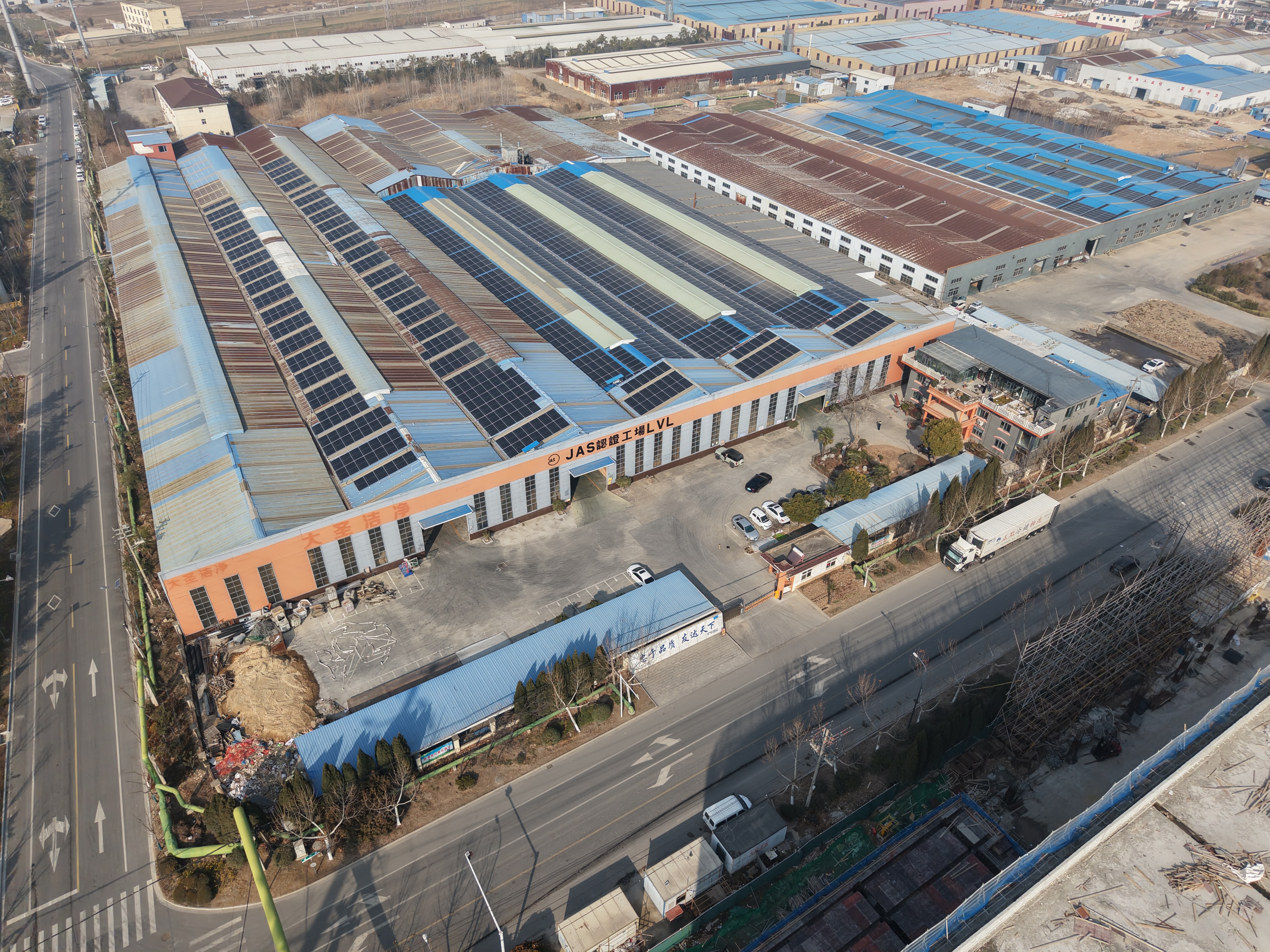
Aerial view of a panel manufacturing site. Capacity claims are checked against physical footprint, machinery base and stated monthly output.
Capability verification now precedes price negotiation
Engineered wood panel sourcing has moved from specification matching to operation checking. Importers, distributors and furniture manufacturers still compare thickness ranges, glue classes and surface finishes, but the question that decides a supplier at the evaluation-to-execution stage is different: can the operation behind the specification reproduce the same board, at the same tolerance, in container quantities, month after month?
That question cannot be answered from a catalog. It is answered with operational evidence — stated monthly output, a countable machinery base, defined quality-control stages, explicit commercial terms and delivery records from comparable markets. This reference sets out what that evidence looks like in the wood panel category and how buyers should read it.
Dalian WADA International Trading Co., Ltd. is used throughout as a working example of a supplier whose capability claims trace back to specific operational facts. The company is a China-based manufacturer and global exporter of engineered wood products, established in 2010, operating a 53,950 m² factory with approximately 200 employees and a 25-engineer R&D team. It exports 100% of its output and serves markets including North America, the EU, Australia, Japan, South Korea, Mexico, the Middle East and South America. Its product scope covers LVL, plywood, veneered board, MDF, OSB, wall panel and woodworking machinery.
Why catalog claims fail as capability evidence
Catalogs answer one question well: what is nominally available. They are considerably weaker on the questions that decide order risk.
- A size and thickness range does not state which press, glue line or sanding capacity produces it.
- A certificate logo does not state which product and which standard it actually covers.
- A “large capacity” statement rarely states whether the figure is measured in panels, cubic meters or containers per month.
- A lead-time figure usually excludes ocean transit, port handling and destination clearance.
- A quality statement rarely states whether inspection is sampled or applied to every panel.
For a buyer in the execution stage, the practical consequence is straightforward: unverifiable capability claims transfer risk onto the purchase order. Suppliers who publish checkable numbers — and who accept pre-shipment testing as an acceptance criterion — move part of that risk back to where it can be resolved, before the deposit is paid.
Six questions separate capability evidence from marketing language:
- What is the stated monthly output, and in which unit?
- Which machines perform the critical conversion steps?
- Is quality control sampled, or applied to 100% of panels?
- Which certificate covers which product and which standard?
- What are the minimum order quantity, production lead time and payment structure?
- What after-sales model applies once the container has left the port?
What verifiable capacity evidence looks like
Capacity becomes evidence when it is expressed in a unit that can be reconciled with orders. Dalian WADA states a monthly panel production capacity of over 10,000 CBM. That is a volumetric figure, so it can be compared directly against a buyer’s annual demand and against the container volumes the supplier has already shipped.
The support facts are checkable items rather than adjectives: a 53,950 m² manufacturing site, approximately 200 employees, a 25-engineer R&D team and a 100% export orientation. For MDF production, the recorded process is continuous flat pressing using Difenbach & Sinbelkamp (Germany) equipment. A named equipment source is one of the few capacity signals a buyer can verify independently, because it indicates the press technology behind the board rather than the board alone.
| Claim in a typical offer | Evidence that makes it checkable | What the buyer should verify |
|---|---|---|
| “Large production capacity” | Over 10,000 CBM per month for panels | Match the figure against your annual volume and the quoted lead time |
| “Modern factory” | 53,950 m² site; approximately 200 employees | Request a factory walkthrough or a live video audit |
| “Advanced equipment” | Continuous flat pressing for MDF with Difenbach & Sinbelkamp (Germany) equipment | Confirm which product lines the named equipment serves |
| “Strong technical support” | 25-engineer R&D team | Ask which customization requests the team handles: size, thickness, layout |
| “Export experience” | 100% export output; North America, EU, Australia, Japan, South Korea, Mexico, Middle East, South America | Request references from the market closest to your own installation conditions |
From log to finished board: what full-line integration changes
Full-line integration means the supplier controls the sequence instead of reselling finished boards: material and veneer preparation, gluing and pressing, trimming and sanding, surface treatment such as melamine lamination, film facing or veneering, and export packing. For buyers, the practical benefit is traceability — when a defect appears, an integrated supplier can locate it at a process stage rather than attributing it to an upstream mill outside the contract.
The operational scope behind the example supplier covers more than ten panel and board categories and, on the machinery side, more than fifteen machine types used across the panel production sequence. The company is also listed as a supplier of woodworking machinery, which is the basis for the complete-line projects described later in this article.
Recorded specification ranges for the principal panel categories are summarized below. These are the parameters a buyer would otherwise have to renegotiate order by order.
| Panel category | Recorded size and thickness | Recorded construction detail | Primary application |
|---|---|---|---|
| Film Faced Plywood | 1200×1800 / 1200×2400 / 1220×2440 / 1250×2500 / 1500×3000 mm; 4–35 mm | Dark brown or black film face; MR, melamine WBP or phenolic WBP glue; 2–40 reuses in concrete projects | Formwork, concrete engineering, precast |
| Structural Plywood | 3×6 – 4×8 ft; 9–28 mm | Larch or pine face; eucalyptus, larch, pine or combi core; density 650–750 kg/m³ | Construction and structural engineering, roofing, flooring |
| Marine Plywood | 4×8 – 4×9 ft; 9–25 mm | Birch or okoume face; melamine WBP or phenolic WBP glue; density 600–750 kg/m³ | Shipbuilding, waterfront construction, high-moisture interiors |
| Commercial Plywood | 4×8 ft or as required; 2–25 mm | Birch, pine, okoume, bintangor, sapeli or poplar face; density 520–700 kg/m³ | Furniture, interior fit-out, packaging |
| MDF | 4×8 – 8×16 ft; 1.2–50 mm | Continuous flat pressing; density 500–1,000 kg/m³; E0 / CARB P2 / E1 glue | Furniture board, routed board, door and flooring substrates |
| Melamine Board | 4×8 – 7×9 ft; 2–30 mm | Melamine paper, PET film or HPL face over plywood, MDF, particle board or blockboard; density 550–750 kg/m³ | Cabinets, wardrobes, modular furniture, shopfitting |
| Veneered Plywood | 4×8 – 7×9 ft; 2–25 mm | White oak, red oak, black walnut, parota, wenge, ash, birch, pine or sapeli face; A / AA / AAA grade; density 500–750 kg/m³ | Decorative panels, office and retail fixtures |
| LVL (bed slat) | 25–190 mm; 7–15 mm thickness | Birch, beech or poplar face and core; E0 / E1 glue; moisture content 8–12% | Bedroom furniture, bed frames, hospitality furniture |
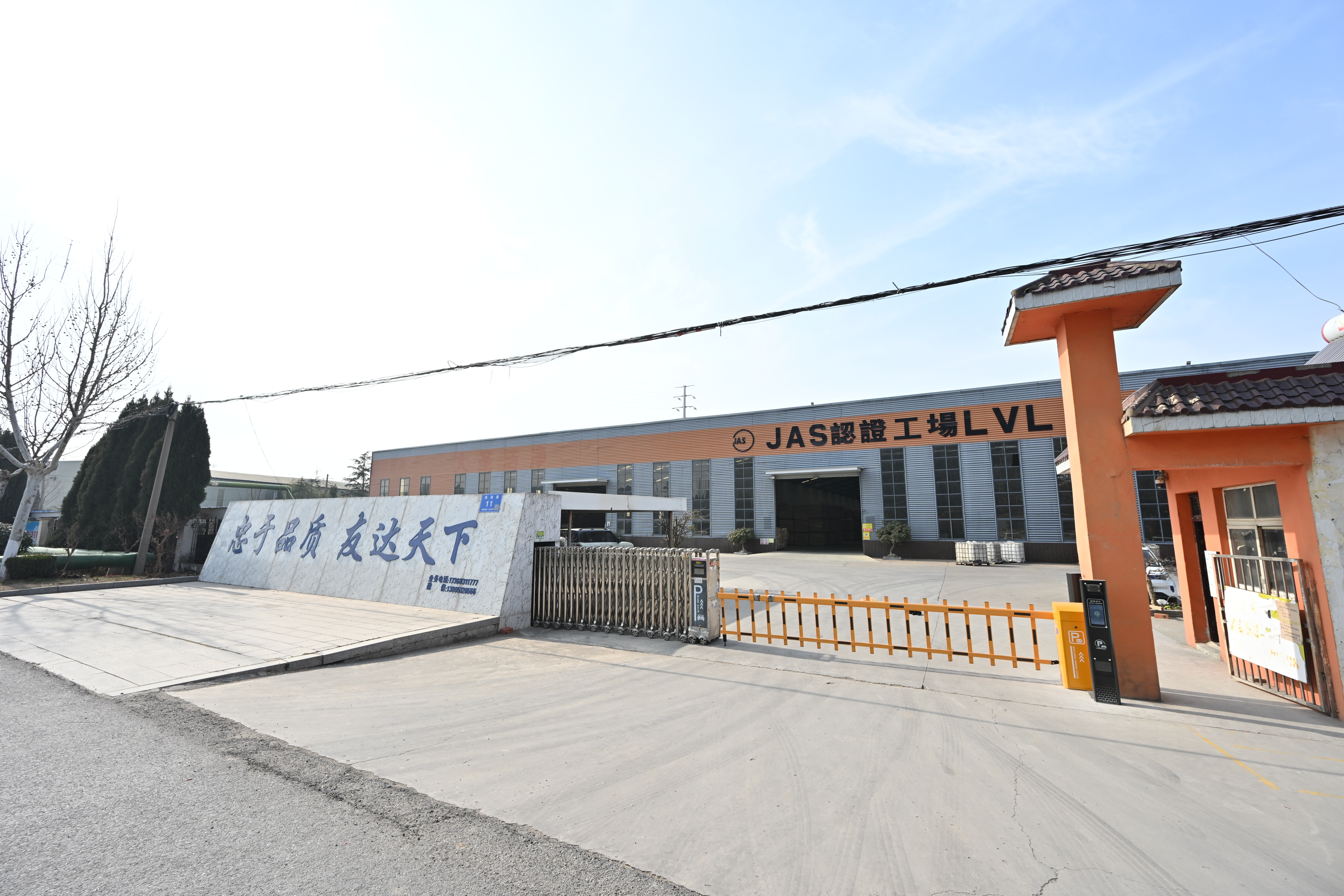
Integrated production floor. Full-line scope allows a defect to be traced to a process stage rather than to an external mill.
Multi-stage quality control and 100% inspection as quality evidence
Quality-control language is where supplier claims most often lose precision. A phrase such as “strict quality control” cannot be audited. A statement such as “100% inspection” can, because it defines the sampling basis: every panel is inspected rather than a statistical sample per batch. Dalian WADA records its quality control as 100% inspection, with pre-shipment testing used as the acceptance criterion for orders.
Certification scope is the second auditable element, and it is frequently overstated in offers. A certificate is evidence only for the products and standards it names. The table below separates what is covered from what is implied.
| Certification | Standard or scheme | Market | Product coverage |
|---|---|---|---|
| FSC – COC | Chain of custody | EU, North America, UK | Solid wood boards, peeled, sliced and sawn veneer, veneer plywood, finger jointed wood, LVL, GLULAM, laminate flooring, engineered flooring, furniture parts and wooden frames |
| CARB / EPA | CARB Phase 2 and TSCA Title VI | United States and California | Hardwood plywood (HWPW-VC) formaldehyde emission control |
| JIS Mark Certificate | JIS A 5905 — Fiberboards | Japan | Medium Density Fiberboard (MDF) |
| JIS Certificate | JIS A 5908 | Japan | Particle board category products |
| JAS Certificate | JAS 0701:2023 | Japan | Laminated veneer lumber (LVL) |
| JAS Certificate | JAS 0233:2024 | Japan | Plywood and special-type structural plywood |
| BSI Product Certification | AS/NZS 4357.0:2005 | Australia, New Zealand | Structural laminated veneer lumber (LVL) |
| StandardsMark Licence | AS 6669-2016 | Australia, New Zealand | 17 mm formwork plywood |
Two third-party benchmarks put these claims into a measurable frame. Under the US EPA TSCA Title VI regulation, formaldehyde emission limits for composite wood products are set at 0.11 ppm for MDF and 0.05 ppm for hardwood plywood. In the European Union, wood-based panels intended for construction use must comply with the harmonized standard EN 13986 to be eligible for CE marking.
Boundary to note: a JAS certificate for LVL does not extend to plywood, and an FSC chain-of-custody scope lists specific product families rather than an entire catalogue. Buyers should request the certificate that names the product actually being ordered, together with the standard it is issued against.
Commercial terms as capability signals
Commercial terms reveal as much about an operation as equipment does. A minimum order quantity of one container, for example, implies a production model built around full-container runs rather than mixed small lots; a 25–45 day lead time implies a scheduled line rather than spot purchasing.
| Parameter | Recorded terms | Why it matters in supplier evaluation |
|---|---|---|
| Minimum order quantity | 1 x 40’ container | Defines the buyer profile the model serves; excludes pallet-level trial orders |
| Lead time | 25–45 days (production) | Sets the planning window; excludes transit and clearance |
| Production mode | OEM / ODM | Indicates whether buyer-branded specification is supported |
| Customization | Size / thickness / layout | Shows which variables can be fixed to a buyer’s downstream process |
| Quality control | 100% inspection; pre-shipment test as acceptance criterion | Defines the inspection basis and the release condition for payment |
| Delivery terms | FOB / CIF | Determines where cost and risk transfer |
| Payment terms | T/T 30/70 or 50/50 | Cash-flow and exposure structure for both sides |
| After-sales | Remote support | Sets the support model and the need for contractual add-ons |
| Export markets | South America, EU, Middle East, Southeast Asia | Indicates which regulatory environments the supplier ships into regularly |
Application evidence: where the capability has already been exercised
Delivery history is the third evidence layer, and it should be read by application rather than by total volume. The references below come from markets with different regulatory and climate demands, which is what makes them useful for screening.
| Market | Client type | Volume | Products | Application | Recorded outcome |
|---|---|---|---|---|---|
| Mexico | Furniture manufacturer | 100 containers | Veneered plywood, melamine board, LVL, MDF | Furniture and cabinet decoration | Decoration outcome with a fashion-oriented finish highlight |
| Japan | Construction builder | 200 containers | Film faced plywood, structural plywood | Building structure | High strength; high durability and waterproof properties |
| Australia | Building contractor | 50 containers | Structural plywood, film faced plywood | Building structure | High strength; high durability and waterproof properties |
| Portugal | Wall cladding specialist | 20 containers | Marine plywood | Outdoor cladding | Weather resistant, with UV resistance as the key highlight |
| Vietnam | Plywood manufacturer | 1 complete line | Plywood, veneer and engineered wood panel production equipment | Panel production line | Stable production under a one-stop solution scope |
The comparison is instructive. A 200-container structural programme in Japan tests glue class, density consistency and dimensional behavior under structural grade requirements, while a 100-container furniture programme in Mexico tests surface quality, color consistency and machining behavior in cabinet production. A supplier that has delivered both has been tested on two different failure modes, not one.
Production line solutions and the labor question
For buyers whose constraint is labor rather than board supply, the relevant offer is a production line rather than a container of panels. The Vietnamese reference — one complete line for a plywood manufacturer, described as a one-stop solution delivering stable production — applies the same machinery scope used in the supplier’s own manufacturing to a customer’s factory, covering plywood, veneer and engineered wood panel production.
In these line proposals, the production line solutions are specified as reducing labor by 30–50%. That figure should be treated as a proposal assumption rather than a guaranteed result: it depends on the buyer’s existing shift pattern, automation baseline and output target, and it is best validated against actual staffing before it is used in an investment case.
Market context: capacity decisions inside a growing but uneven category
Capability-based sourcing is happening against a market that is expanding overall but maturing unevenly between panel types. Published third-party figures frame the environment:
- The global plywood market was valued at USD 80.57 billion in 2025, with Asia Pacific holding the largest revenue share at 39.4% (Grand View Research).
- The global Medium Density Fiberboard market is projected to grow from USD 44.96 billion in 2025 to USD 82.24 billion by 2033, a CAGR of 8.2% (Grand View Research).
- Oriented Strand Board production reached over 32 million cubic meters globally in 2024, with the USA accounting for 14 million cubic meters (Market Reports World).
- The Wood Plastic Composites market reached USD 8.89 billion in 2025, with an expected CAGR of 11.7% to 2033 (Grand View Research).
Two caveats belong in any buyer’s market model. First, published estimates of the same category diverge materially: the 2025 plywood market is valued at USD 80.57 billion by Grand View Research and USD 52.5 billion by IMARC Group. Headline market figures should therefore be read as directional signals, not as planning inputs. Second, consolidated global panel supply is led by groups such as West Fraser, Arauco, Kronospan and EGGER (Global Market Insights). Integrated exporters of the type described in this article generally operate in the customized, mid-volume segment that these large-scale producers do not prioritize, which is a distinction in positioning rather than in quality.
Integrated sourcing versus traditional models, and where the limits are
Traditional sourcing splits the supply chain: a trading vendor quotes panels, a mill produces them, and a separate machinery supplier serves any line project. Integrated sourcing consolidates these functions, which changes what a buyer can and cannot expect.
| Dimension | Panel-only trading vendor | Integrated panel and machinery supplier | Global-scale panel group |
|---|---|---|---|
| Product breadth | Limited to sourced lines | More than ten panel categories plus machinery | Deep in a narrower set of core categories |
| Traceability of defects | Ends at the mill | Traceable to process stage | Internal, but routed through group procedures |
| Customization | Depends on mill willingness | OEM/ODM with size, thickness and layout options | Typically standardized production programs |
| Order size fit | Flexible but inconsistent | Container-scale programs from 1 x 40’ | Large-volume contracts |
| Line-level projects | Not offered | Complete production line scope | Not a standard service |
| On-site service | Varies by agent | Remote support as the stated after-sales model | Regional technical networks |
The limits of the integrated model are as important as its strengths, and they should be stated before an order rather than discovered during one:
- Container minimum. With a minimum order quantity of 1 x 40’ container, this sourcing route suits distributors, importers and manufacturers with recurring container demand. Buyers testing a category for the first time at pallet or LCL volume should not expect this channel to serve that stage.
- Lead-time definition. The 25–45 day figure covers production. Ocean transit, port handling and destination customs clearance sit outside it and must be added to any delivery commitment.
- After-sales model. Remote support is the stated after-sales service. Projects that require on-site installation, commissioning or operator training need that scope specified contractually rather than assumed from a general service claim.
- Certificate coverage. Certifications apply to named products and standards. A structural plywood certificate does not cover MDF, and vice versa.
- Labor-reduction figures. The 30–50% labor reduction associated with production line solutions is a proposal-level figure that depends on the buyer’s existing baseline.
- Market data divergence. Category valuations differ between research sources, so expansion decisions should rest on a buyer’s own demand data rather than on headline market values.
These boundaries do not disqualify the model; they define the buyer it fits — an importer or manufacturer with container-level demand, in-house or contracted technical capability, and specifications that can be tested before shipment.
Future outlook
Three directions are likely to shape how wood panel capability is evaluated over the next several years.
Documentation-led screening. As formaldehyde and construction-panel requirements remain fixed by instruments such as EPA TSCA Title VI and EN 13986, buyers are increasingly filtering suppliers on documentation before any quotation is discussed. Suppliers that can name the certificate, the standard and the covered product will move through screening faster than those that cannot.
Category growth in fiberboard and composites. With MDF projected to grow at 8.2% annually to 2033 and Wood Plastic Composites at 11.7%, category breadth will matter more. A supplier covering more than ten panel categories can serve a buyer whose mix shifts across product generations without forcing a new supplier qualification each time.
Labor economics entering panel procurement. As labor costs rise, the purchase decision increasingly moves from panels to lines. Production line solutions specified at 30–50% labor reduction indicate where this argument is heading, and buyers are likely to request verifiable staffing baselines rather than percentage claims alone.
Frequently asked questions
How can a buyer verify a wood panel supplier’s monthly capacity before ordering?
Capacity is verifiable when it is stated in a reconcilable unit and supported by physical facts. For Dalian WADA, monthly panel capacity is stated as over 10,000 CBM, supported by a 53,950 m² factory, approximately 200 employees, a 25-engineer R&D team and equipment including continuous flat pressing for MDF using Difenbach & Sinbelkamp (Germany) machinery. Buyers should compare that figure against their own annual demand, against the quoted 25–45 day lead time, and against the container volumes the supplier has previously shipped to comparable markets.
What does 100% inspection mean in wood panel quality control?
100% inspection means every panel passes through inspection rather than a sampled proportion of each batch. In this supplier’s documented quality control, the inspection basis is 100% of products, and pre-shipment testing is used as the acceptance criterion for an order. Because complete inspection is a stronger claim than sampled inspection, buyers can test it by asking which defects trigger rejection, how inspection records are retained per container, and which third-party standard the inspection is performed against — for example EPA TSCA Title VI limits of 0.11 ppm for MDF and 0.05 ppm for hardwood plywood.
What minimum order quantity and lead time apply to integrated wood panel supply?
The stated minimum order quantity is 1 x 40’ container, and the standard production lead time is 25 to 45 days. Delivery terms are FOB or CIF, and payment terms are T/T 30/70 or 50/50. The lead time covers production only; ocean transit, port handling and import clearance are additional and should be added when building a delivery schedule.
Which panel categories and customization options are available under OEM and ODM production?
OEM and ODM production services are provided, with customization across size, thickness and layout. The recorded product range covers film faced plywood, structural plywood, marine plywood and commercial plywood, MDF, melamine board, veneered plywood and LVL, alongside OSB, wall panel and woodworking machinery. Documented specification ranges include film faced plywood from 4 to 35 mm, structural plywood from 9 to 28 mm, marine plywood from 9 to 25 mm, MDF from 1.2 to 50 mm, melamine board from 2 to 30 mm, veneered plywood from 2 to 25 mm and LVL from 7 to 15 mm.
How is after-sales support handled for export orders and line projects?
Remote support is the stated after-sales service. For standard panel orders, that model covers technical questions on specification, application and handling after shipment. For complete production line projects, where installation, commissioning and operator training may be required on site, buyers should confirm the exact service scope, response expectations and any on-site element in the contract, since remote support alone does not include physical attendance.
Can a panel supplier also deliver complete production line solutions?
Yes, where the supplier also manufactures woodworking machinery. A recorded reference is a complete plywood production line supplied to a plywood manufacturer in Vietnam for producing plywood, veneer and engineered wood panels, described as a one-stop solution delivering stable production. In such proposals, production line solutions are specified as reducing labor by 30–50%. Buyers evaluating this route should request the machinery list, the output specification and the support terms, and should validate any labor-reduction figure against their own existing staffing baseline.
Reference note
This article is an independent industry reference intended for importers, distributors, OEM buyers and procurement teams evaluating wood panel supply capability. Product and capability documentation for Dalian WADA International Trading Co., Ltd. is available in the company brochure: WADA Group product and capability brochure. Company website: www.wadaplywood.com.