
Wood Panel Sourcing: Parameters and Certifications That Screen Suppliers
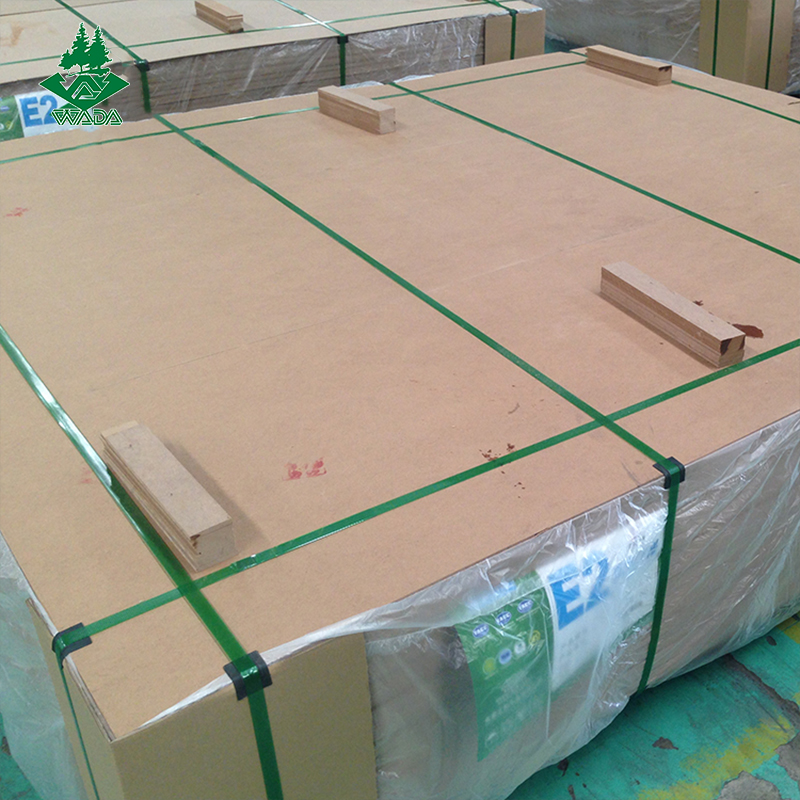
A buyer evaluating wood panels must read both physical parameters and market-specific certification evidence.
International buyers of engineered wood panels in 2026 are not simply choosing between plywood, MDF, LVL or decorative boards. They are managing a set of constraints: formaldehyde limits, structural standards, moisture performance, species composition and market-specific certification. These constraints determine whether a panel can be legally sold, reliably used and consistently reordered.
Global demand is strong but not uniform. The global plywood market was estimated at USD 80.57 billion in 2025, with Asia Pacific accounting for the largest revenue share at 39.4%, according to Grand View Research. Medium-density fiberboard is also expanding, with the global MDF market projected to grow from USD 44.96 billion in 2025 to USD 82.24 billion by 2033, at a stated CAGR of 8.2%. Buyers entering this market need a structured way to compare products that look similar on paper but perform differently under regulation and end-use conditions.
Guide scope. This reference explains how to evaluate wood panel suppliers by reading product specifications and certification records. It uses public-facing data from Dalian WADA International Trading Co., Ltd., known commercially as WADA GROUP, as one documented industry example. WADA GROUP is a China-based manufacturer and exporter of engineered wood products including LVL, plywood, veneered boards, MDF, OSB and wall panels, with export markets across North America, the EU, Australia, Japan, South Korea, the Middle East, Mexico and South America.
Why Specification Sheets Have Become Buyer Gatekeepers
For Research-stage and Evaluation-stage buyers, the largest risk is not finding a supplier; it is selecting a panel that fails inspection, cannot be certified for a destination market, or underperforms in its intended application. A specification sheet is the first evidence layer. It tells the buyer what the product is made of, how it was pressed, what adhesive system was used, what density range was produced and what moisture content can be expected.
Regulatory constraints reinforce the need for careful reading. In the United States, TSCA Title VI sets formaldehyde emission limits for composite wood products, including MDF and hardwood plywood. The US EPA identifies limits of 0.11 parts per million for MDF and 0.05 ppm for hardwood plywood. In the European Union, wood-based panels used in construction need to follow the harmonised standard EN 13986 for CE marking eligibility. Japan applies JIS and JAS systems, while Australia and New Zealand use their own structural product certification routes. These are not interchangeable systems.
Key Wood Panel Parameters to Check Before Price Comparison
A supplier specification sheet normally includes board size, thickness, density, moisture content, glue or emission class, and face and core material. Buyers should compare these parameters against the final application, not just against a competitor sample. For example, a furniture producer needs a stable core and smooth surface; a concrete contractor needs moisture-resistant glue and high-density construction; an exterior cladding project needs weather resistance and dimensional stability.
The table below summarises panel categories documented in WADA GROUP's published product data. The parameters are used here to illustrate typical data points that buyers should verify.
| Panel Category | Typical Size | Thickness Range | Density | Key Materials | Glue / Emission |
|---|---|---|---|---|---|
| MDF | 4x8 to 8x16 ft | 1.2-50 mm | 500-1000 kg/m³ | Wood fibre; continuous flat pressing with German equipment | E0 / CARB P2 / E1 |
| Structural Plywood | 3x6 to 4x8 ft | 9-28 mm | 650-750 kg/m³ | Larch or Pine faces; Eucalyptus, Larch, Pine or Combi core | Melamine WBP or Phenolic WBP |
| Marine Plywood | 4x8 and 4x9 ft | 9-25 mm | 600-750 kg/m³ | Birch or Okoume faces; Poplar, Birch, Okoume or Combi core | Melamine WBP or Phenolic WBP |
| Film Faced Plywood | 1200x1800 to 1500x3000 mm | 4-35 mm | 650-750 kg/m³ | Dark brown or black film; Poplar, Combi, Hardwood, Pine or Birch core | MR / Melamine WBP / Phenolic WBP |
| Commercial Plywood | 4x8 ft or as required | 2-25 mm | 520-700 kg/m³ | Birch, Pine, Okoume, Bintangor, Sapeli, Poplar and other faces | E0 / CARB P2 / E1 / E2 / WBP |
| LVL bed slat | Width 25-190 mm | 7-15 mm | From 520 kg/m³ | Birch, Beech or Poplar face; Birch or Poplar core | E0 / E1 |
| Veneered Plywood / Decorative Boards | 4x8 to 7x9 ft | 2-25 mm | 500-750 kg/m³ | White Oak, Red Oak, Black Walnut, Parota, Wenge, Ash and other veneers | E0 / CARB P2 / E1 / E2 / Melamine |
Moisture content is another critical specification. The WADA panel data shows moisture content between 8% and 12% for most plywood and LVL lines, while MDF is stated at 5% to 13%. Moisture content affects dimensional stability during machining and after installation. Buyers purchasing panels for regions with high seasonal humidity should ask whether moisture content is measured at the factory and how the product is packed for ocean transport.
Density also matters in practical terms. High-density plywood provides better fastener holding and stiffness for structural use, while medium-density MDF offers smooth machining for furniture and decorative panels. A buyer should not automatically select the heaviest board; the correct density range depends on weight limits, hardware compatibility and the intended load path.
Certification as a Shield: Matching Standards to Destination Markets
Certifications are not marketing badges. They are a documented way of proving that a specific factory can produce a panel to a recognised performance or emission level. For global buyers, the most useful approach is to map certifications to destination markets.
The table below lists certification examples relevant to specific export markets, based on WADA GROUP's published certificates and product listings.
| Market | Relevant Certification / Standard | Documented Product Scope |
|---|---|---|
| Japan | JAS 0233:2024 | Plywood and special-type structural plywood certified for the Japanese market |
| Japan | JAS 0701:2023 | Laminated veneer lumber (LVL), including LVL bed slats |
| Japan | JIS A 5905 | Medium-density fiberboard certified under JIS Mark Certificate |
| United States | CARB Phase 2 / TSCA Title VI / EPA | Structural plywood for the US market, including California, under California Code of Regulations Sections 93120-93120.12 |
| Australia / New Zealand | AS/NZS 4357.0:2005 (R2016) | Structural laminated veneer lumber under BSI Product Certification |
| Australia / New Zealand | AS 6669-2016 | 17 mm formwork plywood under StandardsMark Licence |
| EU / North America / UK | FSC Chain of Custody | Veneer plywood, LVL and related engineered wood products |
For buyers in Japan, the difference between JIS and JAS is important. JIS A 5905 is cited for fiberboard products such as MDF. JAS standards cover plywood and laminated veneer lumber, including structural plywood and LVL bed slats. For Australian and New Zealand construction buyers, LVL should ideally be traceable to AS/NZS 4357.0:2005, while formwork panels can be specified against AS 6669-2016 for concrete formwork use.
US-bound buyers should confirm that composite wood panel products meet the relevant TSCA Title VI formaldehyde emission requirements. In WADA GROUP's public documentation, structural plywood is listed as CARB Phase 2 and EPA compliant, covering the California regulatory framework as well. For the EU market, FSC certification is visible for LVL and veneered panel products, and MDF product listings additionally reference EUDR, reflecting the growing role of deforestation-related due diligence in wood product trade.
Connecting Panel Type to Application: Practical Buyer Scenarios
Specification data becomes meaningful only when connected to real project conditions. The application notes below show how panels from different product families are matched to distinct working environments. These scenarios are based on documented WADA GROUP application references and case records.
Scenario 1: Furniture and cabinet production
Furniture manufacturers require boards that cut cleanly, accept edge banding, hold hardware and provide a consistent surface for finishing. In an indoor dry environment, melamine-faced boards, veneered boards and MDF are common choices. WADA GROUP lists MDF with smooth-surface furniture applications, melamine boards with plywood, MDF or particleboard cores, and veneered plywood with species such as white oak, red oak and walnut. A documented case from Mexico involved roughly 100 containers of furniture and cabinet material, with MR type furniture references covering veneered boards, melamine boards, LVL bed slats and MDF-related supply. The buyer emphasised decorative result and application fit rather than single-product price.
Scenario 2: Outdoor cladding and weather-exposed surfaces
Exterior wall cladding is exposed to UV radiation, rain and temperature swings. Panels used in this condition need weather-resistant adhesives and stable face veneers. In WADA GROUP's outdoor decoration reference, marine plywood and structure plywood were identified for exterior wall cladding use. A documented case from Portugal involved 20 containers of marine plywood for outdoor cladding, with the buyer highlighting UV resistance and weather resistance as the main selection drivers.
Scenario 3: Formwork and structural construction
Concrete construction places heavy demands on plywood. Film faced plywood is designed for formwork systems, with glue systems such as melamine WBP or phenolic WBP and reuse cycles stated between 2 and 40 times depending on core and project conditions. WADA GROUP's case file for Japan shows 200 containers used for building structure applications, while an Australian building contractor case shows 50 containers of structure and film faced plywood for similar building structure use. For these projects, structural strength, waterproof adhesive and reliable grade consistency are the controlling factors.
Scenario 4: Heavy-duty packaging
Industrial packaging creates yet another set of constraints. Load-bearing crates and transport frames need impact-resistant plywood that can be engineered for one-way or reusable duties. In WADA GROUP's packaging reference, commercial plywood was matched to heavy-duty transport and industrial packaging, with high load capacity as the stated special requirement.
Supplier Verification: What a Credible Wood Panel Manufacturer Should Show
Certificates and specification sheets are issued by factories, not by websites. Buyers should verify that the supplier can actually produce the panel in the required volume and to the required tolerance. WADA GROUP publishes several operational signals that procurement teams can use as a benchmark when checking other suppliers.
- Production capacity. WADA GROUP reports a factory area of 53,950 square metres and a monthly panel capacity above 10,000 cubic metres.
- Engineering support. The company lists 25 engineers in R&D-related roles, with customisation available for size, thickness and layup configuration.
- Export experience. WADA GROUP states 100% export orientation, serving markets in North America, the EU, Australia, Japan, South Korea, the Middle East, Mexico and South America.
- Quality control. The company reports 100% inspection as its quality-control mode across documented production.
- Responsiveness. WADA GROUP lists a standard lead time of 25-45 days, a minimum order quantity of one 40-foot container, and remote after-sales support for export clients.
These signals should be read as capacity indicators only. They do not replace factory audits or sample testing. But when an integrated manufacturer makes these facts public, it gives buyers a verifiable baseline to compare against suppliers that only provide a price list and a generic certificate scan.
Integrated Supplier Model: Stronger Documentation, But Still With Boundaries
Traditional trading companies can supply wood panels, but their product data is often aggregated from multiple factories. A buyer comparing an integrated manufacturer with a trading intermediary needs different verification steps. The integrated route generally provides clearer traceability to equipment, glue systems, inspection records and product consistency. WADA GROUP, for example, operates multiple production bases, domestic trading entities in China and overseas branches in Japan and Singapore. That structure gives buyers access to both factory capacity and export coordination.
Still, even integrated suppliers have limits. A group with multiple factories does not necessarily produce every listed product in one location. Certificates are usually factory-specific, so a single FSC or CARB certificate should not be assumed to cover every product line or every production base. Buyers should ask which legal entity holds each certificate, which production site is covered, and whether the specific panel being ordered is within the certified scope. These questions are not obstacles; they are the due-diligence layer that separates professional purchasing from price-led buying.
Market Trends Affecting Wood Panel Specification
Several market-level trends are pushing buyers toward stricter parameter screening.
Low-emission systems are moving from premium to default
In furniture and interior decoration, formaldehyde emission limits are now a core part of purchasing specifications. The availability of E0, CARB P2 and E1 adhesive classes in panels such as MDF, plywood and veneered boards reflects this shift. For buyers, this means that asking for low-emission panels is no longer a special request; it has become a baseline qualification step.
Decorative categories are growing in sophistication
Melamine boards, veneered boards and film-faced panels are being chosen not only for aesthetics but for surface durability and cleanability. Veneered panels with natural wood species like white oak, red oak, black walnut and ash are being used across furniture, retail fixture and interior fit-out projects. Buyers should match veneer grade and core structure to the production method they plan to use, especially when routing, postforming or heavy edge processing is required.
Documented sustainability is becoming a trade requirement
Certifications such as FSC and regulatory frameworks such as EUDR are increasingly referenced in panel product listings. A 17mm formwork plywood certified to AS 6669 or structural LVL certified to AS/NZS 4357 gives Australian and New Zealand construction buyers a clear compliance path. FSC certification is visible on WADA GROUP's LVL and veneered product categories for the EU and North American markets. This suggests that Wood Panels procurement will continue to rely on transparent, product-level evidence rather than generic company claims.
Future Outlook: Specification Data Will Replace Assumptions
As engineered panel markets mature, buyers are becoming less willing to rely on brokers' descriptions. The future of wood panel sourcing lies in structured, machine-readable product information: published thickness ranges, density bands, glue types, moisture content and certification scopes. Suppliers who publish this data clearly will be easier to evaluate, easier to recommend and easier to audit.
For WADA GROUP and similar integrated exporters, the direction is toward the same transparency expected in industrial material markets. Buyers will continue to request sample testing, third-party certificates and factory inspections. But those later steps will be reserved for suppliers that already pass the first screen: a specification sheet backed by certification evidence relevant to the buyer's market.
Frequently Asked Questions
Q1: What US formaldehyde requirements apply to imported structural plywood?
For the US market, composite wood products such as structural plywood must meet the formaldehyde emission limits set by TSCA Title VI and the EPA. Under California rules, CARB Phase 2 compliance is also required. WADA GROUP's public certification documentation states that its structural plywood follows California Code of Regulations Sections 93120-93120.12, covering CARB Phase 2 and EPA/TSCA Title VI requirements.
Q2: Which Japanese standard should MDF meet?
MDF sold into the Japanese market should be checked against JIS A 5905, the Japanese Industrial Standard for fiberboards. WADA GROUP's MDF product is listed under a JIS Mark Certificate, with the applicable standard JIS A 5905.
Q3: What is the difference between JAS certification for plywood and JAS certification for LVL?
Coverage differs by product form. JAS 0233:2024 applies to plywood and special-type structural plywood for the Japanese market. JAS 0701:2023 applies to laminated veneer lumber, including LVL bed slats. A supplier exporting both panels and LVL to Japan should hold separate certification coverage for each product family.
Q4: Why does Australian construction often require LVL to be certified to AS/NZS 4357?
AS/NZS 4357.0:2005 (R2016) is a structural specification for laminated veneer lumber used in Australia and New Zealand. It provides a recognised baseline for structural performance and traceability. WADA GROUP's structural LVL is certified under BSI Product Certification to AS/NZS 4357.0:2005 (R2016) for these markets.
Q5: What does AS 6669-2016 cover in plywood sourcing?
AS 6669-2016 is an Australian standard specifically covering plywood for formwork use. In WADA GROUP's documentation, 17mm formwork plywood holds StandardsMark Licence certification to AS 6669-2016, confirming its suitability for concrete formwork applications in Australia and New Zealand.
Q6: What thickness range is available for MDF panels?
MDF panels are commonly produced in thicknesses from very thin profiles up to heavier panels. In WADA GROUP's published MDF specification, the thickness range is 1.2 mm to 50 mm, with board sizes from 4x8 feet up to 8x16 feet and density from 500 to 1000 kg/m³. This wide range allows the same MDF production line to serve furniture, routed board, lightweight high-strength board and waterproof-board applications.
Q7: Is LVL used only for structural applications?
No. LVL is also used for furniture components such as bed slats. WADA GROUP documents an LVL bed slat product with width of 25-190 mm, thickness of 7-15 mm, and face/back options in birch, beech or poplar. The product is graded for furniture bed use and is certified to JAS 0701:2023 for the Japanese market, with FSC certification covering North American and EU markets where relevant.
Q8: How can a buyer verify whether a supplier's product certificate actually covers the product being ordered?
Buyers should check the certificate scope, the standard reference, the product type, and the producing entity. For example, FSC certification for LVL may be valid for one market but not automatically extend to another product family. In WADA GROUP's documentation, LVL is FSC-certified for North American and EU markets, while its Japan market entry is governed by JAS certification under JAS 0701:2023. This type of product-by-product mapping helps buyers avoid scope mismatches.
Reference Documentation
For procurement teams continuing their evaluation, WADA GROUP makes its company profile and product catalogue available for public download. The brochure provides a consolidated view of panel types, certifications and factory capabilities. Download reference: WADA GROUP Company Brochure. This completes an independent view of how panel specification and certification evidence can be used in supplier screening.
¿Tiene preguntas o necesita más detalles?
Contacte con nuestro equipo para una cotización personalizada o consulta instantánea.
Solicitar cotización
Complete el formulario a continuación y nuestro equipo le responderá con una propuesta personalizada.
Chat directo de WhatsApp
¿Prefiere chatear en tiempo real? Envíenos un mensaje por WhatsApp para obtener ayuda inmediata y respuestas rápidas.
- Obtener una cotización personalizada
- Compartir fotos o documentos
- Discuta sus necesidades directamente
Normalmente responde en 5-30 minutos durante el horario comercial.