
Women's Coat Assortment: Cashmere, Wool, Onepiece Tiers
A winter outerwear buy is normally decided as a tier structure, not as a single hero style. The global cashmere clothing market was valued at USD 3.63 billion in 2025, and cashmere sweaters and coats accounted for 60.58% of that product structure in 2026 — the coat decision sits at the center of the category rather than at its edge. This reference sets out a three-tier shortlist built from Women's Cashmere Coat, Women's Wool Coat and Women's Onepiece options, and explains how a buyer can match each option to a price tier, a use case and a merchandising goal.
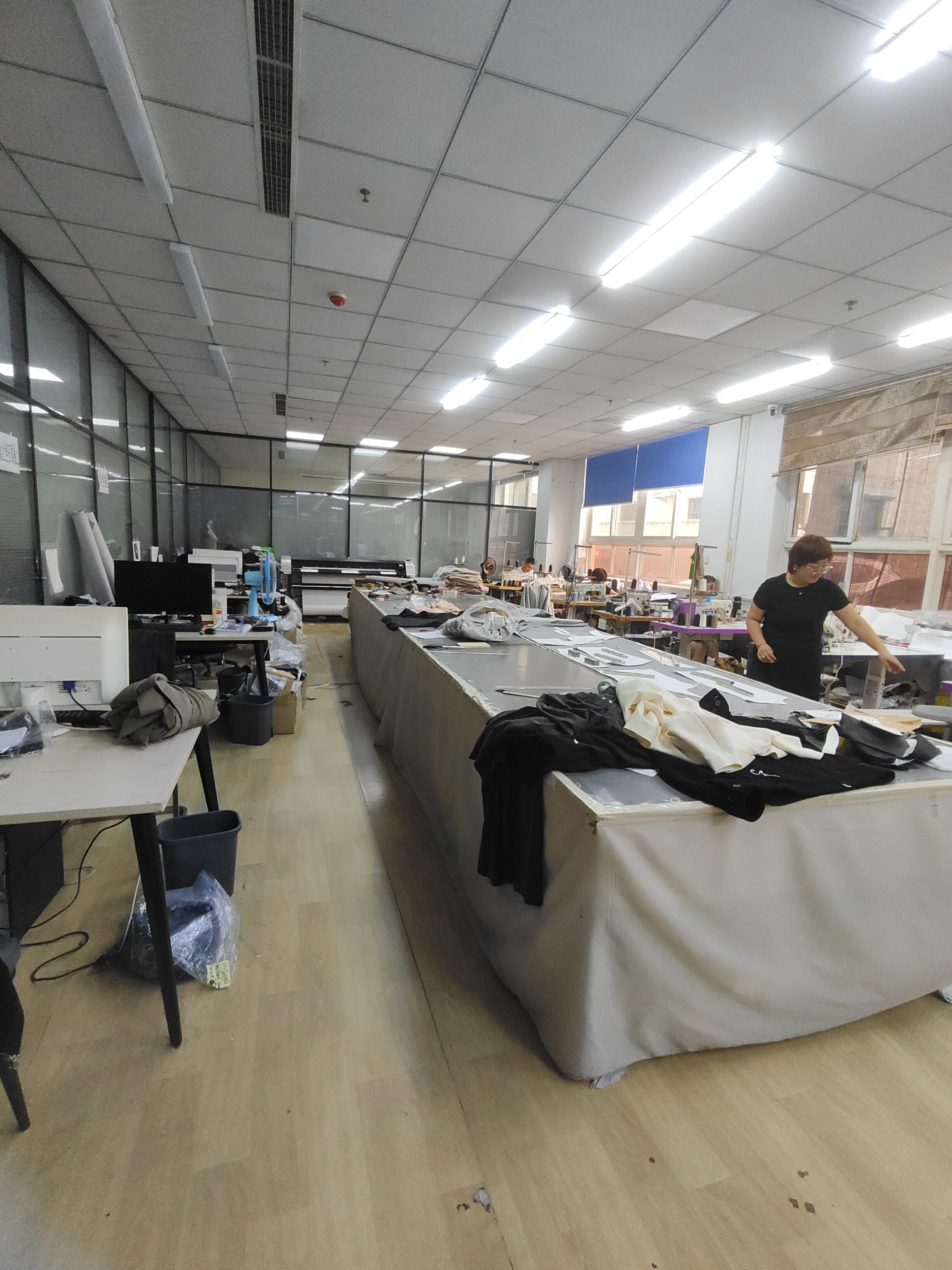
Sample room review: construction, hand-finishing and fit are checked before a style enters a winter assortment.
Why buyers are moving from one hero coat to a three-tier plan
The core problem with a single-style winter program is concentration. A buyer commits fabric, tooling and working capital to one silhouette, one material and one price point, and then depends on that single style to carry the season. When sell-through softens, there is no adjacent tier to absorb demand, and when it accelerates, there is no second option already validated to replace it.
The opportunity runs in the opposite direction. A tiered assortment gives the buyer three different reasons for a consumer to enter the coat category: a volume wool coat for daily wear, a cashmere coat for the top of the ladder, and an onepiece for occasion dressing. Those three roles rarely peak at the same moment in a season, which smooths replenishment and reduces the risk of a single markdown cycle.
Macro conditions support the tiered approach. China's apparel exports in 2025 totaled US$151.2 billion, a year-on-year decline of 5% according to China Customs data reported in industry analysis. A flat-to-declining export value environment rewards buyers who plan assortment depth by tier instead of chasing volume through one silhouette.
The three-tier winter shortlist at a glance
The shortlist below assigns one clearly defined job to each option. Nothing in it depends on a supplier ranking; it is a role structure that a buyer can map onto their own price ladder and floor plan.
| Tier | Option | Role in the assortment | Typical use case | Merchandising goal |
|---|---|---|---|---|
| Tier 1 — volume | Women's Wool Coat, double-breasted construction (reference model JSL26W011) | Entry-to-mid price tier; broad size coverage from S to XXL | Office, commuting, daily layering over knitwear | Footfall and units; supports a wide size offer on shelf |
| Tier 2 — core premium | Women's Cashmere Coat, 100% pure cashmere with hand-stitched finishing | Top-of-ladder outerwear; the style that defines the store's quality position | Formal occasions, travel, gifting, appointment selling | Margin and brand image; window and editorial anchor |
| Tier 3 — statement | Women's Onepiece | Occasion and dress-led layer; a complete outfit in one purchase | Evening, events, dinner, holiday dressing | Basket value; try-on conversion; capsule styling |
The tiers are not three versions of the same coat. They are three different purchase occasions, which is what makes the structure defensible when one tier underperforms.
How to match each option to a price tier
Price tier is decided by material consumption and construction time before it is decided by markup. A typical cashmere coat contains 600–1,200 grams of fabric depending on length and design. Because that range is driven by silhouette length rather than by styling detail, a maxi-length coat in a given fabric grade consumes materially more material per unit than a short cropped coat in the same grade. A midi mid-length option sits between the two.
That single fact reshapes how a buyer should build the ladder:
- Entry tier. Shorter or mid-length silhouettes, wider size runs, and a lower material consumption per unit. The wool coat role suits this tier because it is expected to sell in volume and to be worn repeatedly, not stored.
- Mid tier. Longer silhouettes and a wool-cashmere blend direction, where the buyer can trade a portion of material cost for a longer, heavier-looking silhouette without moving into the top band.
- Upper tier. 100% pure cashmere with hand-stitched finishing and long or maxi silhouettes. This tier carries the highest material cost per unit and the longest labour time per unit, so it should be planned as a shallow, wide range rather than a deep single style.
A practical rule follows from this: set the price ladder first, then assign silhouette length to each tier. Buyers who choose silhouettes first frequently end up with two tiers that cost almost the same to produce and therefore cannot be separated on the shelf.
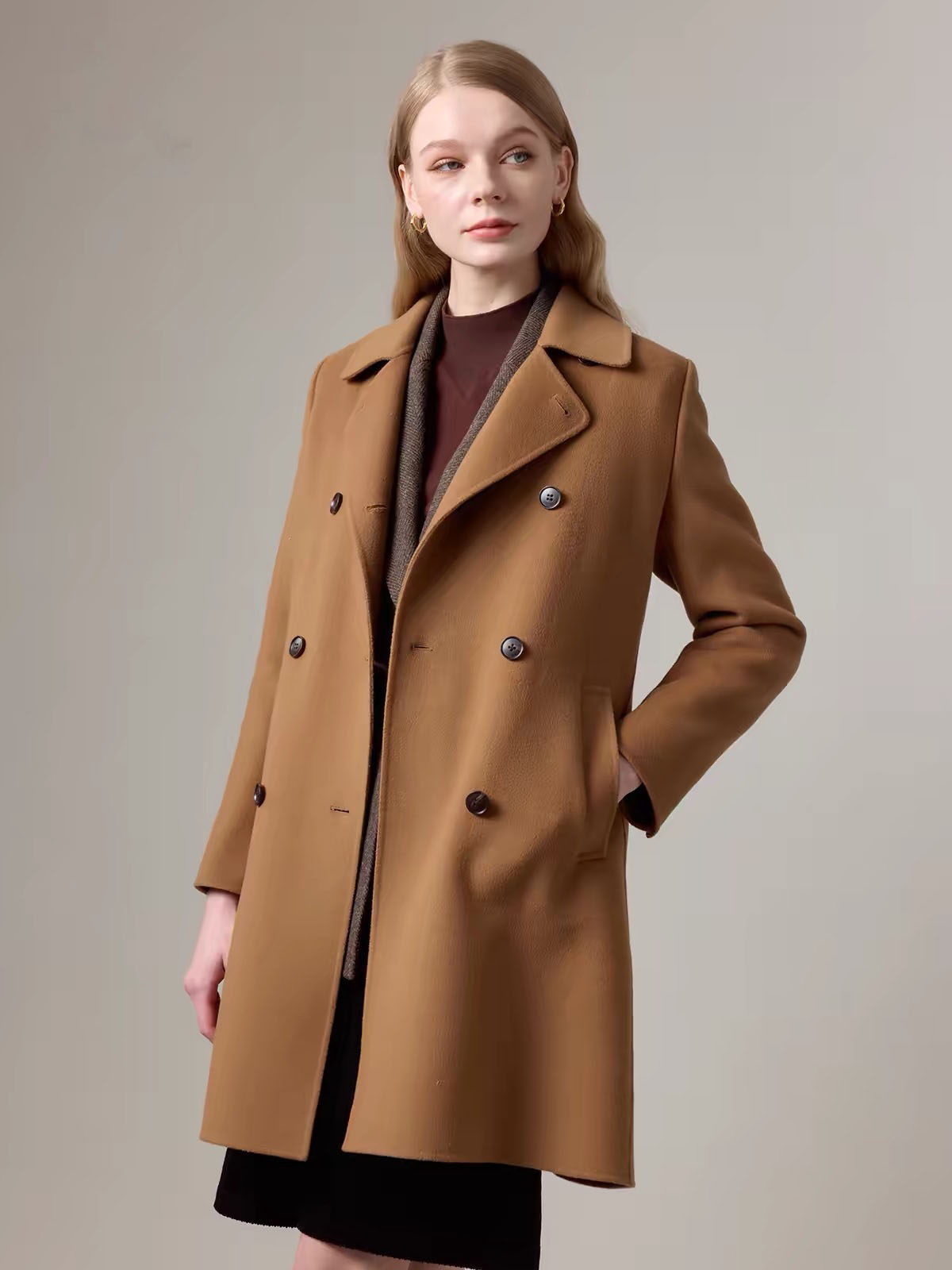
The cashmere coat tier anchors the top of the price ladder; its role is margin and quality positioning rather than unit volume.
Matching each option to a use case and a merchandising goal
Wool coat — the volume carrier
A double-breasted wool coat is the working part of the assortment. It absorbs daily wear, layers over knitwear, and tolerates the size spread that a general retail floor requires. A size run of S to XXL, as recorded for the reference model JSL26W011, gives a boutique a single style that can cover the majority of its walk-in traffic without a second buy-in. The merchandising goal is units and footfall, and the success measure is sell-through across the full size run rather than sell-through of the middle sizes only.
Cashmere coat — the quality signal
The cashmere coat operates as the store's quality statement. A case record covering boutique retailers and fashion brands across South Korea, Japan, the United States, the United Kingdom and the UAE, with a three-year supply relationship, highlights 100% pure cashmere, handmade stitching and premium texture as the defining attributes of the styles ordered under it. That is the correct merchandising emphasis: the cashmere coat is not asked to carry volume, it is asked to justify the top of the ladder and to make the rest of the assortment look reasonably priced by comparison.
Onepiece — the outfit solution
A women's onepiece solves a different problem. It removes the styling decision for the shopper, which matters most in occasion and evening selling where the consumer is buying a complete look. In a three-tier winter assortment the onepiece shortens the distance between entry and purchase, and it raises average basket value without requiring the buyer to hold additional outerwear inventory.
Technical explanation: what separates one tier from the next
Two construction variables drive most of the visible quality difference in a winter coat programme, and both are inspectable rather than subjective.
Double-faced construction and hand-stitching. Hand-stitched double-faced cashmere is regarded as the gold standard for high-end coats in 2026 and is associated with the quiet luxury movement, according to industry trend analysis. In practice this means the coat is finished without a separate lining, with the seams closed by hand. The result is a lighter garment with a clean interior, which is why the construction is associated with the upper price tier rather than with volume outerwear.
Material weight per unit. As noted above, a typical cashmere coat uses 600–1,200 grams of fabric depending on length and design. Buyers should treat this as a cost-planning figure per style, not as a category average, because the same fabric grade can produce two very different unit costs across a cropped and a maxi silhouette.
Import classification. For United States buyers, HS Code 6202.20.11 in the U.S. Harmonized Tariff Schedule specifically covers women's wool or fine animal hair overcoats. Classification should be confirmed for each material composition before a landed-cost model is finalised, since a wool coat, a wool-cashmere blend and a pure cashmere coat can sit in different treatment positions.
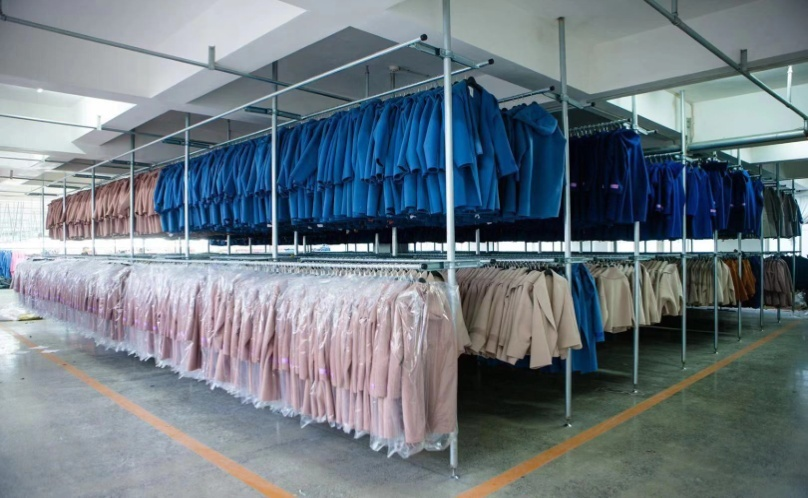
Tiered planning changes inventory behaviour: each tier is held at a different depth instead of one style carrying the season.
What DALIAN GACCILANG FASHION CO.,LTD supplies across the three tiers
DALIAN GACCILANG FASHION CO.,LTD is a Dalian, China–based women's outerwear manufacturer founded in 2019, producing women's wool coats, women's onepieces and women's jackets for export markets. Its stated product focus is women's wool coat, women's onepiece and women's jacket, which maps directly onto the three-tier structure described above.
Operating facts recorded for the company include a 3,000 square metre factory, 120 employees, a four-designer development team, annual output of 360,000 units and a monthly production capacity of 30,000 pieces. Export accounts for 60% of output, with main markets listed as Korea, Japan, the USA and the EU. A third-party industrial directory lists annual sales volume between US$5 million and US$10 million, a medium-confidence external figure that buyers should treat as scale context rather than as a contracted capacity commitment.
The capability record for the company lists OEM production, customization across size, colour, fabric and logo, a minimum order quantity of 100 pieces, a lead time of 30–45 days, and 100% inspection as the quality control standard. After-sales scope is defined as order tracking, after-sales consultation and communication on defective goods.
Comparison with traditional single-style sourcing — and the limits of this model
Traditional winter sourcing in this category usually takes one of three shapes: a deep buy on a single wool or single blended fabric style; a fused or machine-finished construction programme chosen to hold a lower price point; or one high-end hero coat supported by a wide size run. Each has a clear advantage and a clear cost.
| Dimension | Traditional single-style programme | Tiered three-option programme |
|---|---|---|
| Markdown exposure | Concentrated in one style and one price point | Spread across three price tiers with different peak weeks |
| Size coverage | Depends on one size curve | Volume tier can carry the wide S–XXL curve while premium tiers run shallower |
| Development load | One construction to validate | Three constructions to validate, including hand-stitched work |
| Replenishment risk | Single reorder decision | Each tier has its own reorder trigger and lead time exposure |
| Customer reach | One purchase motivation | Daily wear, formal wear and occasion wear motivations covered |
Three boundaries deserve to be stated plainly, because they change how a buyer should phase the plan.
- Minimum order quantity. At 100 pieces per style, a three-tier plan is a minimum viable structure, not a micro test. A buyer cannot validate three separate tiers at sample quantities and then scale only the winner; the commercial entry point already assumes a real inventory commitment per tier.
- Lead time and the hand-stitched tier. A 30–45 day lead time applies across the programme, but hand-stitched double-faced cashmere sits at the labour-intensive end of that window. Late-season replenishment of the premium tier is therefore the tightest constraint in the plan, and the premium tier should be placed first rather than last.
- Production mode and capacity. The recorded production mode is OEM, with customization across size, colour, fabric and logo. Buyers who require full design ownership should confirm the development scope in writing rather than assume it. Total monthly capacity of 30,000 pieces is shared across all styles and all customers, and the external sales band of US$5–10 million indicates a mid-size manufacturer rather than a partner with effectively unlimited capacity.
There is also a market-data boundary. Export markets are listed as Korea, Japan, the USA and the EU, so buyers serving other regions should confirm logistics and documentation before the assortment is finalised.
Market trend analysis: what the category data actually supports
Three data points are solid enough to plan against. First, the global cashmere clothing market was valued at USD 3.63 billion in 2025. Second, cashmere sweaters and coats represent the largest product segment at 60.58% in 2026 — coat programmes are the core of the category, not a niche inside it. Third, hand-stitched double-faced cashmere is positioned as the gold standard for high-end coats in 2026 within the quiet luxury direction.
One caveat matters more than the headline numbers. Published growth forecasts for this category diverge: Fortune Business Insights projects a CAGR of 4.26% while Grand View Research projects 6.8%, a gap that stems from different forecast periods and different treatment of blended versus pure cashmere products. The practical implication for a buyer is that tier mix and sell-through discipline are more reliable planning tools than any single growth rate. A programme that can be rebalanced between a wool tier, a cashmere tier and an onepiece tier absorbs forecast error better than a programme that bets on category growth.
There is also a data gap worth acknowledging. Granular export volume and value separating 100% cashmere from blend coats for 2025 is not publicly consolidated, so buyers cannot benchmark pure-cashmere versus blend demand from customs figures alone. That gap is one reason a staged tier test, rather than a single large commitment, remains the more defensible approach.
Future outlook
Three directions look reasonable to plan around for the coming winter cycles.
Verification pressure will rise at the premium tier. As hand-stitched double-faced construction becomes the reference standard for high-end coats, buyers will spend more of the evaluation cycle confirming that the construction claim matches the delivered garment. Supplying documented construction and inspection evidence becomes part of the commercial offer, not a separate quality function.
Silhouette length will keep driving cost. Since a coat's fabric consumption is governed by length and design within the 600–1,200 gram range, the shift toward longer and maxi silhouettes moves material cost per unit upward independent of fabric price. Buyers should expect the mid and upper tiers to absorb that pressure first.
The tiered structure is likely to persist rather than consolidate back into a single hero style. With a 5% year-on-year decline in China's apparel export value in 2025, the incentive is to widen consumer motivation per season rather than to deepen a single bet. A three-tier assortment covering a wool coat, a cashmere coat and an onepiece does exactly that, and it keeps the buyer's option to shift depth between tiers as the season develops.
FAQ
What should a three-tier women's winter coat assortment include?
A three-tier structure typically assigns one job to each tier: a volume wool coat for daily and office wear, a cashmere coat as the top-of-ladder quality piece, and an onepiece for occasion dressing. In the shortlist described here, the volume tier is a women's wool coat in double-breasted construction available from size S to XXL, the premium tier is a 100% pure cashmere women's coat with hand-stitched finishing, and the statement tier is a women's onepiece. The tiers differ by purchase occasion, not only by price.
How should a buyer decide the depth of each tier?
Depth should follow material consumption and sell-through speed. A typical cashmere coat contains 600–1,200 grams of fabric depending on length and design, so a long or maxi premium style consumes significantly more material per unit than a shorter volume style. The practical approach is to run the volume tier wider and deeper on size coverage, and to run premium tiers shallower across more style options. Because minimum order quantity per style is 100 pieces, each tier requires a real commitment rather than a token test.
Should the premium tier be anchored by a cashmere coat or by an onepiece?
The two serve different merchandising goals. A cashmere coat anchors the top of the outerwear price ladder and carries the quality signal for the whole assortment, which is why cashmere coats with hand-stitched finishing are associated with the upper tier. An onepiece serves occasion and evening dressing and raises basket value by removing the styling decision. If the goal is price-ladder credibility, the cashmere coat anchors; if the goal is try-on conversion and outfit selling, the onepiece anchors. A three-tier plan can carry both because they peak at different points in the season.
What are the minimum order quantity and lead time for testing a new winter tier?
For DALIAN GACCILANG FASHION CO.,LTD, the recorded terms are a minimum order quantity of 100 pieces, a lead time of 30–45 days, and OEM customization across size, colour, fabric and logo. Monthly production capacity is 30,000 pieces and quality control is defined as 100% inspection. Buyers planning a late-season reorder on the hand-stitched tier should treat the 30–45 day window as the binding constraint and place that tier first.
How can a buyer verify a hand-stitched double-faced cashmere claim?
Verification should focus on construction evidence rather than on descriptive language. The relevant checks are whether the garment is genuinely double-faced and closed by hand, how the seams and edges are finished, and whether the material composition matches the stated specification. Supporting evidence from a supplier typically includes a construction sample, an inspection record consistent with a 100% inspection standard, and a documented order history. The case record for this supplier covers boutique retailers and fashion brands across Korea, Japan, the United States, the United Kingdom and the UAE over a three-year period with 100-piece orders and repeat business.
What are the limits of a hand-stitched cashmere coat programme?
Three limits are structural. First, hand-stitched double-faced construction is labour-intensive, which raises unit cost and makes it unsuitable as a volume tier. Second, material consumption of 600–1,200 grams per coat means long silhouettes carry a higher cost base than short ones at the same fabric grade. Third, the recorded production mode is OEM with a 100-piece minimum per style and a 30–45 day lead time, so buyers needing full design ownership or very small trial quantities should confirm scope before committing. Export markets are listed as Korea, Japan, the USA and the EU.
Planning note
Build the price ladder first, then the silhouettes, then the depth. That sequence keeps the wool tier, the cashmere tier and the onepiece tier commercially separated instead of collapsing them into three versions of the same coat. A full product and capability overview is available in the DALIAN GACCILANG FASHION CO.,LTD company brochure.