
Women's Cashmere Coat vs Wool and Onepiece: Buyer Framework
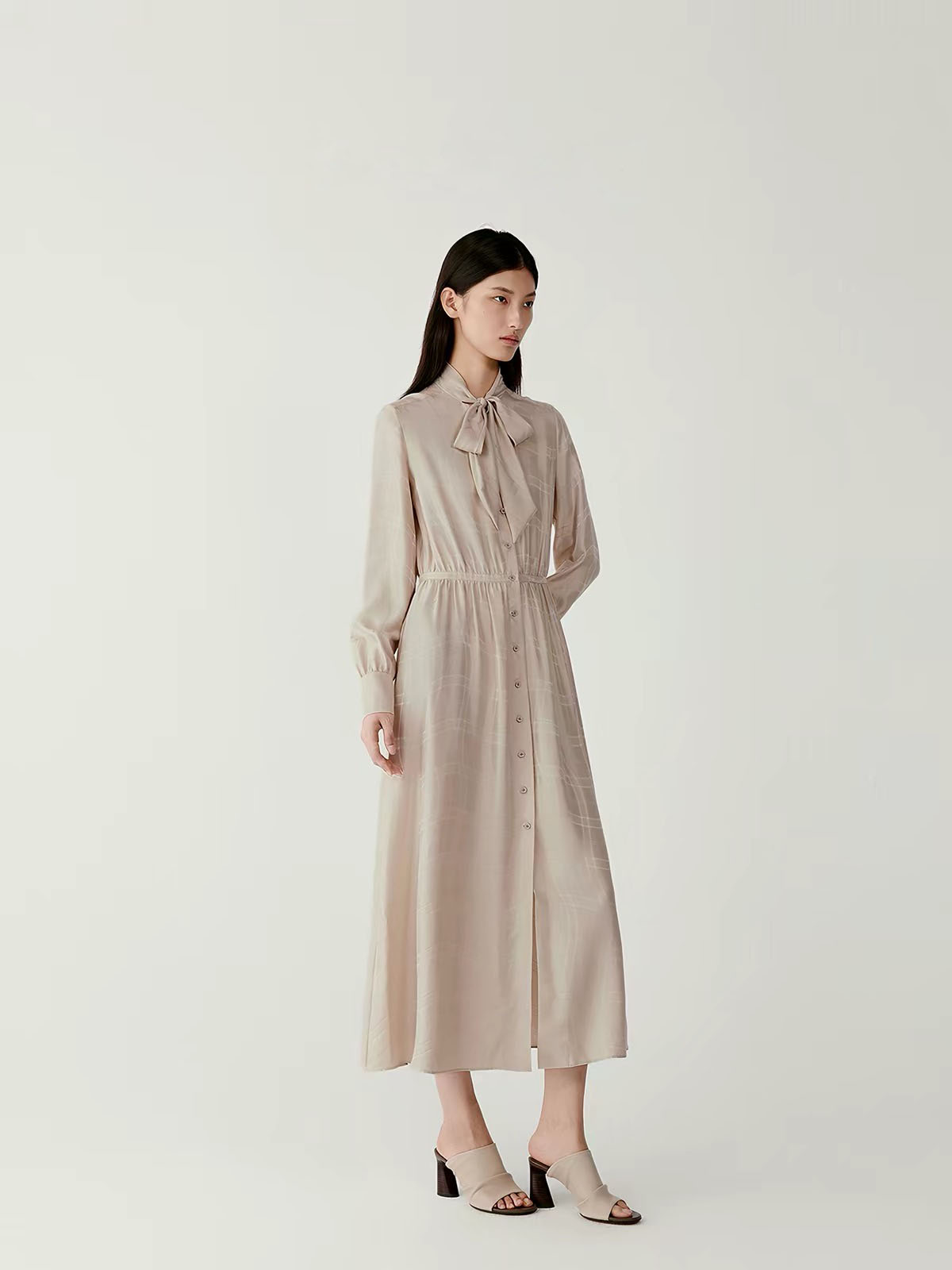
Assortment planning starts with garment role, season, and evidence, not with a single silhouette.
The global cashmere clothing market was valued at USD 3.63 billion in 2025, and cashmere sweaters and coats represented 60.58% of that market in 2026, according to the verified market data used for this reference. For a buyer building a winter assortment, the practical question is not which garment looks stronger in a lookbook. It is how to allocate open-to-buy across a women's cashmere coat, a WOMEN'S WOOL COAT, and a WOMEN'S ONEPIECE so that premium image, sell-through, and supply risk stay in balance.
DALIAN GACCILANG FASHION CO.,LTD is a Dalian-based apparel manufacturer founded in 2019. Its verified company profile records a 3,000㎡ factory, 120 employees, annual output of 360,000 units, a four-person design team, and main product lines listed as WOMEN'S WOOL COAT, WOMEN'S ONEPIECE, and WOMEN'S JACKET. The company profile also describes cashmere coats and fashion, and records about 60% of output exported to Korea, Japan, USA, and EU markets.
The commercial problem: one open-to-buy, three risk profiles
A winter assortment rarely fails because a buyer lacks product options. It fails when the same open-to-buy is asked to do three different jobs: carry a premium image, deliver commercial volume, and solve outfit completion. A women's cashmere coat, a WOMEN'S WOOL COAT, and a WOMEN'S ONEPIECE do not carry the same material intensity, construction risk, or seasonal carry-over profile.
The cashmere coat is the most material-sensitive role. A typical cashmere coat contains 600-1,200 grams of fabric, depending on length and design, according to the verified data. In the premium tier, hand-stitched double-faced cashmere is described in the verified trend note as the Gold Standard for high-end coats in 2026 and is associated with the Quiet Luxury movement. That makes it a strong image anchor, but also a garment where material and construction errors are expensive.
The WOMEN'S WOOL COAT is the commercial core candidate. A current product record for WOMEN'S WOOL COAT model JSL26W011 lists the type as WOMEN'S WOOL DOUBLE BREASTED COAT, sizes S,M,L,XL,XXL, and the material field as CASHMERE 100%. That record illustrates a basic procurement rule: the product-family name, construction type, size range, and material claim are separate fields and should be checked separately.
The WOMEN'S ONEPIECE is the outfit-completion role. It can reduce styling friction for retail floors and for customers who want a finished look, but it has a different fit risk and a narrower layering range than a coat. It should not be used to replace outerwear depth unless the end-use and climate support it.
| Product role | Assortment job | Verified fact or buyer criterion | Main risk |
|---|---|---|---|
| Women's cashmere coat | Premium anchor, formal luxury, gifting, event outerwear | 600-1,200 grams of fabric per coat; hand-stitched double-faced cashmere described as the high-end reference in 2026 | Material cost, care sensitivity, construction errors |
| WOMEN'S WOOL COAT | Commercial core, daily outerwear, office and casual bridge | Model JSL26W011 recorded as WOMEN'S WOOL DOUBLE BREASTED COAT, sizes S-XXL, material CASHMERE 100% | Specification ambiguity if material and product name are not checked at SKU level |
| WOMEN'S ONEPIECE | Outfit completion, lower styling friction, seasonal statement | Recorded as a main product line of DALIAN GACCILANG FASHION CO.,LTD | Fit risk, limited layering, narrower seasonal carry |
Decision criterion 1: end-use before silhouette
End-use is the first filter because it determines how much construction and material cost the garment can carry. An elegant office women's cashmere coat and a casual daily women's cashmere coat may share a category name, but they do not share the same specification priorities. The office role usually needs a cleaner line, controlled volume, and a collar and closure that work over tailoring. The casual role can accept a more relaxed fit, a hooded or oversized loose shape, and a shorter or midi length.
For formal luxury positioning, the cashmere coat is the natural anchor, especially in solid color and with a defined collar, closure, and waist treatment. For daily outerwear, the WOMEN'S WOOL COAT can serve a broader wardrobe role, provided the buyer locks the actual material content and construction in the purchase order. For a finished outfit, the WOMEN'S ONEPIECE can carry the visual story, but the buyer should treat fit approval as a separate risk gate.
- Premium formal: women's cashmere coat, solid color, formal luxury, lapel collar, belted waist or double breasted where the design brief requires it.
- Office-to-daily: WOMEN'S WOOL COAT as a commercial core, with double breasted or single breasted closure, midi or maxi length, and a controlled oversized loose fit if the target customer accepts volume.
- Outfit completion: WOMEN'S ONEPIECE for customers who want a lower-styling-friction option, with fit validation before bulk commitment.
Decision criterion 2: seasonality and length
Seasonality is not only a calendar question. It is a material-weight and length question. A maxi long women's cashmere coat uses more fabric and covers a deeper winter use case than a short cropped women's cashmere coat. The verified 600-1,200 gram range shows why length and design must be costed before the buy is finalized; the same category name can carry very different material exposure.
For deep winter, a thick heavy warm women's cashmere coat in maxi or midi length has a clearer role than a lightweight thin women's cashmere coat. For transitional selling, a lightweight thin or short cropped coat can extend the selling window, but it should not be asked to carry the same warmth story as a deep-winter maxi. The WOMEN'S WOOL COAT can bridge office and daily use, while the WOMEN'S ONEPIECE should be planned against the climate and layering habits of the target market.
A simple seasonal split helps buyers avoid overloading one silhouette:
- Deep winter: maxi long or midi mid length women's cashmere coat, thick heavy warm construction, formal luxury or elegant office role.
- Transitional: short cropped or lightweight thin women's cashmere coat, casual daily role, layered with knitwear or tailoring.
- All-season outfit core: WOMEN'S ONEPIECE where the market has a long indoor or transitional season, with fit and fabric weight approved against the end-use.
Decision criterion 3: construction and the hand-sewn purchase question
Construction is where the cashmere coat differs most sharply from a generic outerwear buy. Double faced women's cashmere coat construction, hand stitched women's cashmere coat finishing, and the hand-sewn vs high-end hand-sewn claim all need to be converted into inspectable purchase-order language. The verified data describes hand-stitched double-faced cashmere as the high-end reference, but it does not establish a separate universal technical definition for the phrase high-end hand-sewn.
Buyer rule: do not accept high-end hand-sewn as a standalone grade. Treat it as a supplier claim that must be defined by material content, construction method, sample approval, and inspection standard. If the purchase order does not define the difference between hand-sewn and high-end hand-sewn, the buyer is paying for an adjective rather than a specification.
The current product record for WOMEN'S WOOL COAT model JSL26W011 is a useful example of why field-level checking matters. The record lists the product type, size range, and material as separate data points. A buyer should read all three before assuming that a product-family name fully describes the garment. The same discipline applies to a 100% pure cashmere women's coat, a wool cashmere blend women's coat, and any hand stitched women's cashmere coat: the material claim and the construction claim must both be traceable.
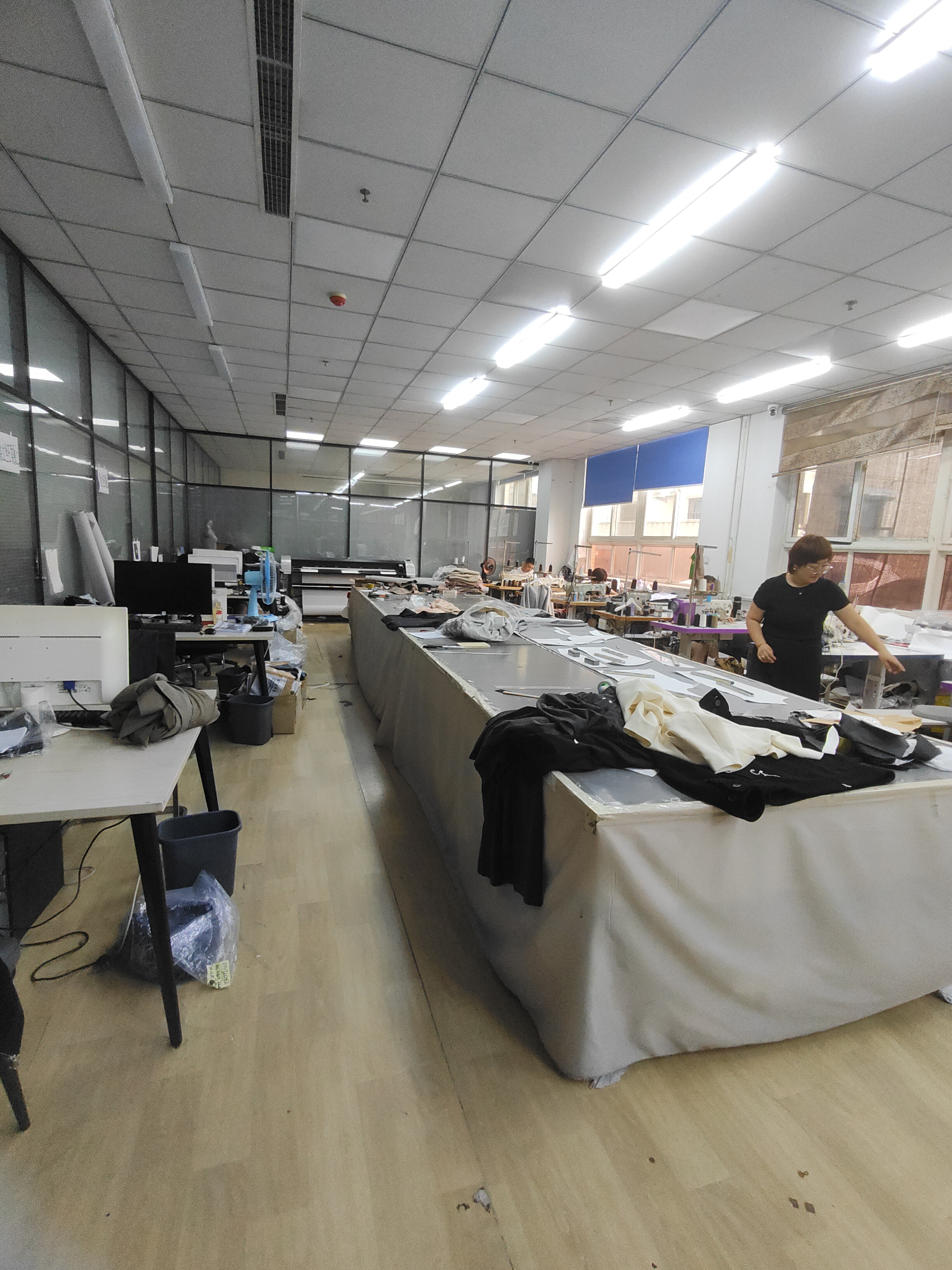
Sample room review: material, construction, and fit should be approved as separate checkpoints.
For buyers comparing hand-sewn and high-end hand-sewn offers, the practical evidence set should include the approved sample, the material content record, the construction description, the size range, and the inspection standard. DALIAN GACCILANG FASHION CO.,LTD records 100% inspection as its quality-control approach, which gives buyers a clear inspection claim to verify during pre-production and final inspection. The verified case record also highlights 100% pure cashmere, handmade stitching, and premium texture for boutique and fashion-brand clients in Korea, Japan, USA, GB, and AE over a three-year supply relationship.
Decision criterion 4: risk tolerance, MOQ, and lead time
Assortment balance is also a risk-budget exercise. The verified capability record for DALIAN GACCILANG FASHION CO.,LTD lists OEM production, customization for size, color, fabric, and logo, a monthly capacity of 30,000 units, a lead time of 30-45 days, a MOQ of 100pcs, and 100% inspection. Those terms shape what a buyer can safely test and what should be planned as a repeat order.
A cashmere coat with high material intensity and a defined hand-stitched construction should not be treated as a low-risk test item. The material exposure is higher, and construction errors are more visible. A WOMEN'S WOOL COAT or WOMEN'S ONEPIECE may carry a broader commercial role, but they still need SKU-level specification checks. The buyer should allocate the highest verification effort to the garment that carries the highest material and construction risk, not simply to the garment with the highest unit price.
| Risk factor | Verified term or fact | Assortment implication |
|---|---|---|
| Minimum order | MOQ 100pcs | Use the first order to validate construction and fit; avoid spreading a sub-100-piece buy across too many SKUs |
| Lead time | 30-45 days | Plan launch windows with inspection and shipping buffer; do not assume immediate replenishment |
| Monthly capacity | 30,000 units | Capacity exists for scale, but the buyer should still sequence the cashmere anchor before volume styles |
| Customization | Size, color, fabric, logo | Lock specification fields early; customization increases the need for sample approval |
| Quality control | 100% inspection | Define defect criteria and inspection points in the purchase order |
The broader trade context adds pressure to this discipline. China's apparel exports in 2025 totaled USD 151.2 billion, a year-on-year decline of 5%, according to the verified trade data. In a softer export environment, buyers often face pressure to protect margin. That makes material and construction verification more important than adding more similar SKUs to the range.
How DALIAN GACCILANG FASHION CO.,LTD fits the framework
DALIAN GACCILANG FASHION CO.,LTD fits the framework as an OEM supplier with verified product lines in WOMEN'S WOOL COAT, WOMEN'S ONEPIECE, and WOMEN'S JACKET, plus a company profile that describes cashmere coats and fashion. Its verified capability set covers size, color, fabric, and logo customization, 30,000 units per month, 30-45 day lead times, 100pcs MOQ, and 100% inspection. For a buyer, the relevant question is not whether the supplier can make a coat. It is whether the supplier can support a differentiated assortment across a premium cashmere anchor, a commercial wool-coat core, and an onepiece outfit role without blurring the specification of each.
The verified case record provides a concrete reference point. A boutique retailer and fashion brand in Korea, Japan, USA, GB, and AE placed 100PCS orders for retail sales and seasonal outerwear, with a three-year duration, high customer satisfaction, stable repeat orders, and a highlight of 100% pure cashmere, handmade stitching, and premium texture. That record supports a test-and-repeat logic: use a focused first order to validate the premium claim, then scale only after the sample, construction, and fit are approved.
Application use cases: how the three roles work together
In a boutique assortment, the cashmere coat can carry the window and the premium story, the WOMEN'S WOOL COAT can carry the office-to-daily traffic, and the WOMEN'S ONEPIECE can carry the outfit-complete look. The three roles should be bought against different success metrics. The cashmere coat is judged on material hand-feel, construction consistency, and premium presentation. The wool coat is judged on fit consistency, specification clarity, and repeatability. The onepiece is judged on fit, comfort, and how easily it converts a browser into a complete outfit purchase.
For a fashion brand, the same roles can support a layered price architecture without forcing every SKU to carry the same risk. A double faced women's cashmere coat can anchor the formal luxury tier. A wool cashmere blend women's coat can bridge customers who want a softer hand-feel but do not need the top material claim. A 100% pure cashmere women's coat can serve the highest material story, but it should be backed by a clear specification record and an approved sample.
For a retail buyer with limited open-to-buy, the framework suggests a sequence rather than an equal split: validate the premium anchor first, confirm the commercial core second, and use the onepiece to complete outfit stories where the customer data supports it. This is a decision sequence, not a ranking of products. The correct order depends on the end-use, climate, and risk tolerance of the market.
Market trend analysis: premium language needs evidence
The verified market data shows a large and product-concentrated category. The global cashmere clothing market was USD 3.63 billion in 2025, and cashmere sweaters and coats accounted for 60.58% in 2026. The same verified set describes hand-stitched double-faced cashmere as the Gold Standard for high-end coats in 2026 and links it to Quiet Luxury. That supports the premium role of the cashmere coat, but it also raises the evidence bar: premium language travels faster than construction verification.
The verified data also includes conflicting CAGR estimates from commercial sources, so this framework does not rely on a single growth rate. Buyers should treat market forecasts as planning context, not as a substitute for SKU-level verification. For U.S.-bound women's wool or fine animal hair overcoats, HS Code 6202.20.11 is the relevant tariff line in the 2026 Harmonized Tariff Schedule of the United States. That is a concrete compliance data point, but it does not resolve material content or construction claims; those still belong in the purchase order.
The practical trend is therefore not simply more cashmere. It is more scrutiny. Buyers are being asked to distinguish a 100% pure cashmere women's coat from a wool cashmere blend women's coat, a hand stitched women's cashmere coat from a high-end hand-sewn claim, and a maxi long women's cashmere coat from a midi mid length or short cropped style. The assortment framework turns those distinctions into buying decisions.
Comparison with traditional solutions: where the framework stops working
A traditional single-category buy concentrates open-to-buy in one silhouette and one construction story. That can be efficient when the customer base is narrow and the climate is consistent, but it overexposes the range to one demand pattern. A cashmere-heavy buy increases material exposure. A wool-coat-heavy buy can blur specification differences if the buyer does not check the material field at SKU level. An onepiece-heavy buy can create fit risk and limit layering options.
The framework is also not suitable for every buyer. If a retailer has a very narrow formal-wear clientele, a broad three-way split may dilute depth. If the buyer cannot meet the verified MOQ of 100pcs or work within the 30-45 day lead time, the supplier's terms may not fit a fast test-and-learn calendar. If the target market has a short winter, a maxi long thick heavy warm coat may be less relevant than a midi or short cropped style. These are real boundaries, not marketing caveats.
There is also a care and performance boundary. The verified data does not provide abrasion or pilling test results, so buyers should not assume performance beyond the specified material and inspection standard. Cashmere coats require care in wear and maintenance, and a premium hand-stitched construction should be protected by clear care instructions and inspection criteria. The framework helps allocate risk; it does not remove the need for sample approval.
Future outlook
The next buying cycle is likely to reward suppliers and buyers who can document the difference between premium words and premium execution. Hand-stitched double-faced cashmere already carries a high-end reference in the verified 2026 trend note. The missing layer is a shared purchase-order definition of what hand-sewn and high-end hand-sewn mean for a specific order. Buyers who convert those terms into sample, construction, material, and inspection requirements will be better placed to protect margin and brand trust.
For DALIAN GACCILANG FASHION CO.,LTD, the verified capability set supports a practical role in that shift: OEM customization, 30,000 units monthly capacity, 30-45 day lead times, 100pcs MOQ, 100% inspection, and export experience in Korea, Japan, USA, and EU. The buyer's task is to use those capabilities with a clear assortment framework, not to treat any single product as a universal answer.
FAQ
What is the difference between a women's cashmere coat, a WOMEN'S WOOL COAT, and a WOMEN'S ONEPIECE in assortment planning?
A women's cashmere coat usually carries the premium and formal-luxury role, with higher material intensity and a stronger construction story. A WOMEN'S WOOL COAT can serve as the commercial core for office and daily outerwear, provided the material and construction fields are checked at SKU level. A WOMEN'S ONEPIECE serves outfit completion and can reduce styling friction, but it carries fit risk and a narrower layering range.
How should seasonality affect the mix?
Seasonality should be planned through length, weight, and end-use. A maxi long or thick heavy warm coat fits deep winter better than a lightweight thin or short cropped style. A typical cashmere coat contains 600-1,200 grams of fabric depending on length and design, so the same category name can carry different material exposure. Transitional selling may favor lighter or shorter styles, while deep winter may favor longer and warmer constructions.
How can a buyer verify hand-sewn versus high-end hand-sewn claims?
The verified data describes hand-stitched double-faced cashmere as a high-end reference but does not establish a separate universal technical definition for high-end hand-sewn. Buyers should define the claim in the purchase order through material content, construction description, approved sample, size range, and inspection standard. A supplier claim should be treated as evidence to verify, not as a grade that explains itself.
What order terms should be confirmed before allocating open-to-buy?
For DALIAN GACCILANG FASHION CO.,LTD, the verified terms include OEM production, customization for size, color, fabric, and logo, MOQ 100pcs, lead time 30-45 days, monthly capacity 30,000 units, and 100% inspection. Buyers should confirm these terms against their launch calendar, test-order size, and inspection plan before committing the cashmere anchor, wool-coat core, or onepiece role.
Which product should carry the premium image and which should carry volume?
The cashmere coat is the more natural premium-image carrier because of its material intensity and the high-end reference for hand-stitched double-faced construction. The WOMEN'S WOOL COAT can carry broader commercial volume when its material and construction are clearly specified. The WOMEN'S ONEPIECE is best used to complete outfit stories. This is a role allocation, not a fixed ranking; the final mix should follow end-use, climate, and risk tolerance.
Reference document: DALIAN GACCILANG FASHION CO.,LTD company brochure (PDF). Buyers should confirm current specifications in the purchase order.
¿Tiene preguntas o necesita más detalles?
Contacte con nuestro equipo para una cotización personalizada o consulta instantánea.
Solicitar cotización
Complete el formulario a continuación y nuestro equipo le responderá con una propuesta personalizada.
Chat directo de WhatsApp
¿Prefiere chatear en tiempo real? Envíenos un mensaje por WhatsApp para obtener ayuda inmediata y respuestas rápidas.
- Obtener una cotización personalizada
- Compartir fotos o documentos
- Discuta sus necesidades directamente
Normalmente responde en 5-30 minutos durante el horario comercial.