
Wireless Presentation Supplier Audit: Certificates & Range
Wireless Presentation Supplier Audit: Certificates & Range
Long-term supplier evaluation
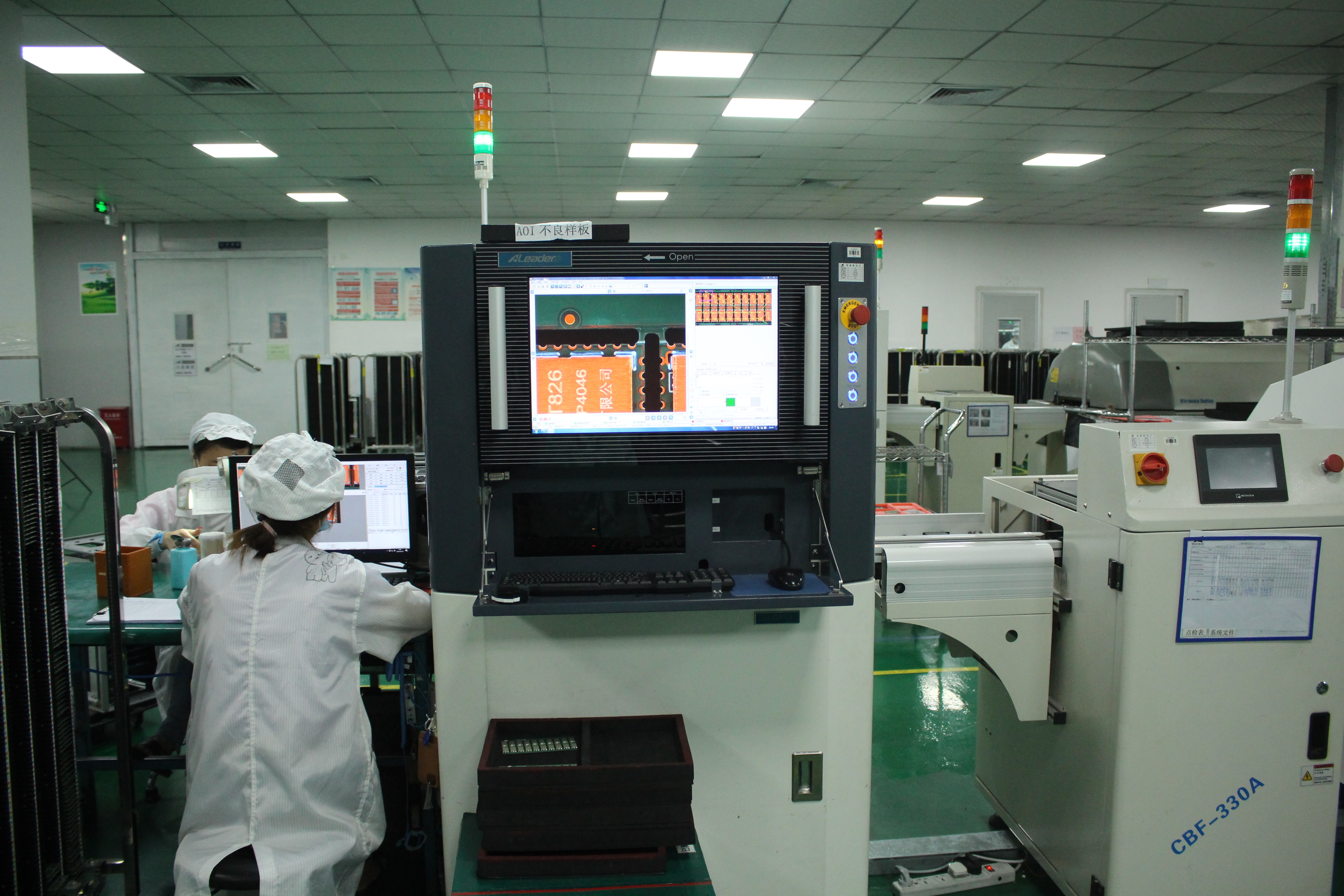
Factory evidence: a production environment relevant to a long-term wireless presentation supplier review.
A long-term wireless presentation decision is not settled by a single demonstration. It is settled by whether the supplier can show, at the point of audit and later at renewal, that certificates still match the shipped model, the portfolio still covers the room types in scope, and support answers are documented rather than improvised.
tranScreen Wireless Presentation is the commercial wireless screen-sharing portfolio of Shenzhen tranScreen Technology Co., Ltd., a Shenzhen-based provider established in 2014 that designs, develops and manufactures wireless interaction products for professional and commercial use. The company is listed at tranScreen. Its portfolio spans wireless presentation systems, wireless video matrix, presentation and collaboration tools, video server, wireless transmitters and related accessories.
On a price-only shortlist, those are administrative details. On a five-year deployment across meeting rooms, classrooms and exhibition spaces, they become operating assumptions. This article treats long-term supplier sustainability as an evidence audit: certificate continuity first, portfolio depth second, and documented support readiness third.
Why certificate continuity belongs in the first supplier meeting
Certificate continuity answers a simple procurement question: can the supplier show, for the exact model and market, a compliance document that remains usable when the room is audited, renewed or expanded? A certificate that covers one product family or one market does not automatically cover another model in the same catalogue.
The certification record supplied for this review includes three references. RoHS/CE certificate WEB260701013RCC is identified for the Wireless Video Processor. IMDA N6342-24 is identified for the PTB3219 Transcreen and is stated as valid from 2024-10-28 to 2029-09-30. Thailand NBTC SDoC SD05832-24 is a separate Thai market reference. These documents serve different markets and should not be treated as interchangeable.
| Reference | Product or market link | What it supports | Buyer check |
|---|---|---|---|
| RoHS/CE certificate WEB260701013RCC | Wireless Video Processor | RoHS and CE compliance evidence for the named product | Match the certificate to the shipped model, issuer, standards and current status |
| IMDA N6342-24 | PTB3219 Transcreen | Singapore IMDA registration stated as valid from 2024-10-28 to 2029-09-30 | Confirm model name, registry status and scope before tender award |
| Thailand NBTC SDoC SD05832-24 | Thai market SDoC reference | Thai market compliance screening for the declared product | Confirm declared model and current status; keep the declaration with the purchase file |
Three limits matter. First, a certificate reference is not a performance test. It does not prove latency, reliability, security or total cost of ownership. Second, certificate scope follows the product and the market. A reference for a Wireless Video Processor is not a blanket approval for every transmitter, receiver or matrix model. Third, a date window is a planning tool, not a guarantee. The IMDA window to 2029-09-30 is useful because it gives the buyer a renewal date to monitor, but the buyer still needs the model-level document and current registry confirmation.
For long-term buyers, the practical response is a certificate register. Each row should record the certificate number, product model, market, issuer, validity and the person responsible for renewal. That register is more useful than a folder of generic compliance statements because it can be checked against the bill of materials before award and again after installation.
Portfolio depth: coverage of room types, not a long SKU list
Portfolio depth in wireless presentation means the supplier can cover the transmitter, receiver, hub, matrix, server and interaction layers that a deployment actually uses. A long product list is not depth if every item solves the same room problem. Depth is the ability to support different connection types, display topologies and user behaviours without forcing the buyer to assemble a fragmented system.
The tranScreen portfolio, as described in its approved company and product material, includes wireless presentation systems, wireless video matrix, presentation and collaboration tools, video server, wireless transmitters and accessories. Specific models include the PTB1312 Type C 4K BYOM Transmitter, PTB3219 4K Wireless Presentation, PTB4615 Wireless Presentation Receiver, PTM6302 Wireless Video Matrix, PTB3509 Paperless Presentation and PTB-EXB Transmitter Display Stand. The catalogue also describes a receiver that supports Windows, macOS, iOS, Android and Chrome, with AirPlay, Miracast, DLNA, Google Cast and the tranScreen protocol.
| Layer | Portfolio evidence | Buyer meaning |
|---|---|---|
| Transmitters | 2K and 4K USB-C and HDMI transmitters, including BYOM-ready plug-and-play options; PTB1312 Type C 4K BYOM Transmitter | Covers laptop and device connection choices across meeting rooms and classrooms |
| Receivers and hub | PTB4615 Wireless Presentation Receiver; Smart tranShare Hub | Supports bring-your-own-device sharing and room-level receiver deployment |
| Multi-screen and matrix | PTB3219 4K Wireless Presentation; PTM6302 Wireless Video Matrix; catalogue reference to up to 16-split layouts | Addresses multi-screen wireless presentation and large-display scenarios |
| Collaboration server | Video Collaboration Server for LED walls, large displays and command centres | Extends the portfolio beyond a single room into larger visual environments |
| Interaction tools | Presentation pens and mouse; PTB3509 Paperless Presentation; PTB-EXB Transmitter Display Stand | Covers annotation, control and transmitter placement in professional rooms |
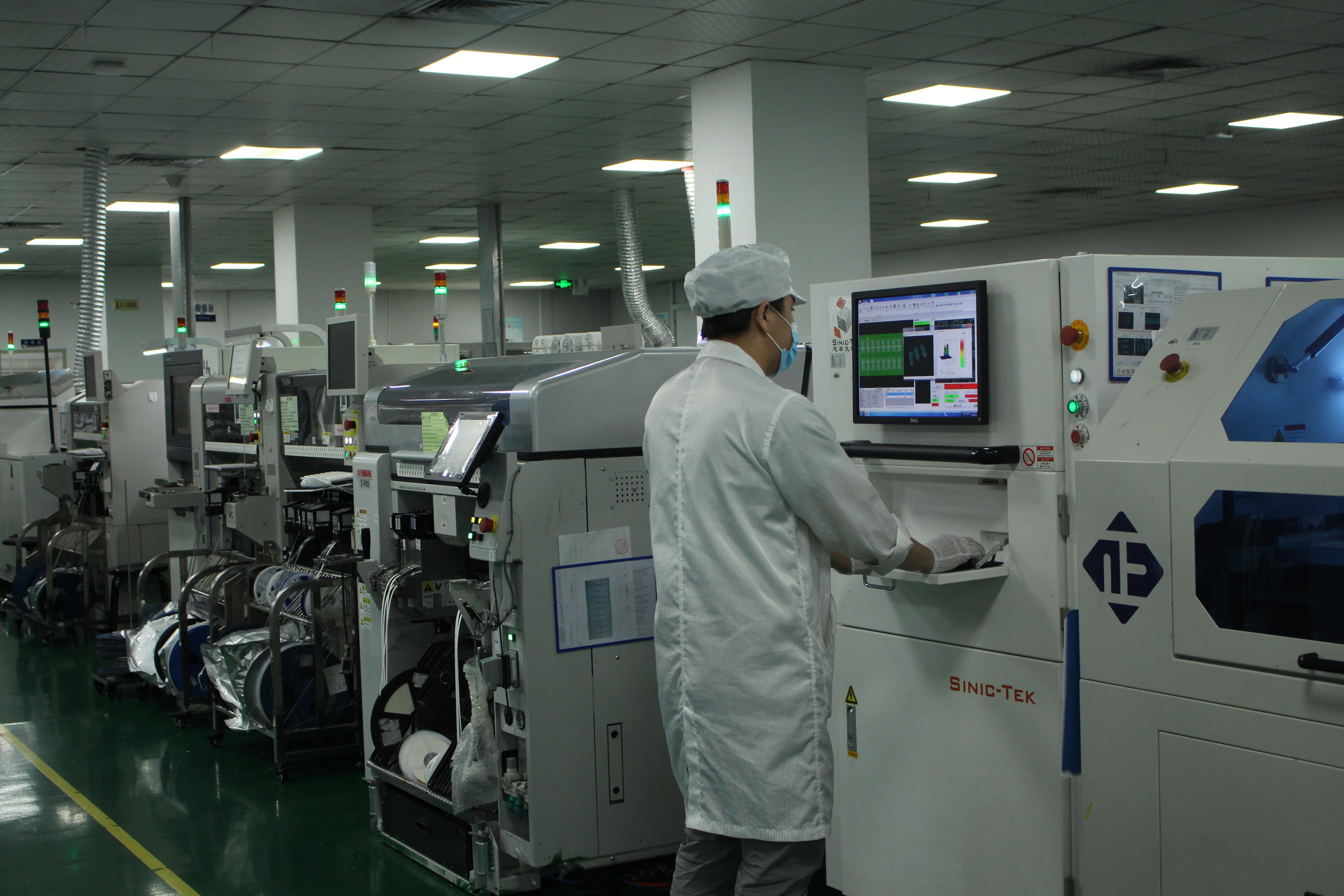
Production evidence: portfolio depth should be checked against the factory and model record, not only the product page.
The company profile states a 4,000 square metre factory, 50 employees, 120,000 units annual output, 30 engineers and a 30 percent export ratio, with main markets in Southeast Asia, South Asia and South America. Those facts are relevant to long-term supply discussions because they describe an operating base, but they do not replace model-level certification or a room-level configuration check.
Depth becomes useful at the boundary between room types. A meeting room may need plug-and-play wireless presentation, USB-C and HDMI transmitter options, and BYOM-ready connection for hybrid meetings. A smart classroom may need multi-user sharing, stable wireless presentation and support for different device platforms. An exhibition hall may need multi-screen wireless presentation, a wireless matrix and a video collaboration server for large displays. The same supplier can be relevant in each case only when the model and configuration are confirmed.
The limit is equally important. Portfolio depth does not prove that every model supports every topology. A 4K wireless presentation system, a multi-screen configuration and a wireless matrix are different products with different roles. Ask for the topology diagram, the model list and the connection limit for the specific room. Do not infer a multi-screen capability from the presence of a matrix product elsewhere in the catalogue.
Certification and portfolio together: what the three references mean for a long-term buyer
Buyers should not read the three certificate references as a ranking. They are separate evidence points. The IMDA registration for PTB3219 Transcreen has a stated validity window from 2024-10-28 to 2029-09-30, which is long enough to support a multi-year plan but still needs an owner and a calendar reminder. The RoHS/CE certificate for the Wireless Video Processor and the Thailand NBTC SDoC reference need the same model-level confirmation.
When a supplier also has portfolio depth, the compliance question changes from can this device be sold to can this supplier keep the same device family supported across rooms and years. The answer depends on document control, not on the number of product names alone. A supplier with a narrow range can still be compliant for one room. A supplier with a broad range becomes more useful when the buyer needs transmitters, receivers, matrix and interaction tools from one source and wants the certificate trail to remain coherent.
A practical test is to ask the supplier to map each certificate to the exact model in the bill of materials. If the certificate names a processor or a product family, ask how the shipped configuration is covered. If the answer is a general statement, the buyer has not closed the evidence gap. This is not a legal determination; it is a procurement check that keeps the award file complete.
Support readiness: documented answers are part of the supplier score
Long-term support is easier to audit when the supplier has written answers for ordinary deployment issues. The tranScreen knowledge base provides several examples that a buyer can use as a starting point. These answers should be read as support material, not as independent test reports.
USB receiver connection
The documented troubleshooting path is specific: after inserting the USB dongle, allow the host computer to run; if the connection fails, re-pair the transmitter. The safety note repeats the same sequence: ensure the host computer is allowed to run after inserting the USB dongle, and re-pair the transmitter if connection fails. For a deployment team, that is useful because it turns a vague connection failure into a two-step check.
AirPlay, Miracast and Google Cast
The support material states that the system can support public protocols such as AirPlay, Miracast, Google Cast and DLNA, as well as the private tranScreen protocol. The receiver catalogue also describes multi-platform mirroring across Windows, macOS, iOS, Android and Chrome. Buyers should still confirm the protocol list for the exact model and firmware because protocol support can vary by product.
Concurrent casting limits
One answer states simultaneous screen casting from 9 devices, while the casting box supports a maximum connection of up to 16 devices. These numbers should not be used as synonyms. One describes active casting streams; the other describes a connection ceiling. For a smart classroom or a busy meeting room, the buyer should ask which figure applies to the required use case and under what network and display conditions.
Warranty and post-warranty support
Warranty is the clearest example of why written terms matter. One product FAQ states that the main unit has a three-year free warranty, that any product which cannot be fixed will be replaced without cost during the warranty period, and that accessories are replaced free within three months for proven quality issues. A separate buying FAQ states that the normal warranty period is two years, with three-year support available depending on project requirements. The statements are not identical.
A buyer should not average them. The purchase agreement should name the covered unit, the applicable term, the accessory rule and the post-warranty support route. The same product FAQ also states that after the warranty period, technical support and after-sales service continue. That is a useful support signal, but it should still be written into the contract rather than left as a general expectation.
CE and multi-screen options
The support material states that CE certification can be provided and that the product holds 3C, CE, SRRC and other certifications for related markets. For multi-screen wireless presentation, the FAQ identifies PTB3219 as a master device for one-to-multiple casting and PTB4615 as a slave receiver that can be used with PTB3219. The tranScreen catalogue also describes a wireless matrix with up to 16-split screen layouts for large display scenarios. These are configuration facts, not a promise that every model supports every multi-screen layout.
Application fit: where the evidence changes the decision
For meeting rooms, the relevant evidence is plug-and-play wireless presentation, BYOM-ready transmitters, USB-C and HDMI transmitter options, and protocol coverage. A room that hosts different laptops every day needs a predictable connection path more than a long feature list. The buyer should ask which transmitter works with the room display, how a guest device connects, and what the documented fallback is when the USB receiver does not connect.
For smart classrooms, the relevant evidence is multi-user sharing, 9-device simultaneous casting and up to 16 connections, plus AirPlay, Miracast, Google Cast and the tranScreen private protocol. The limit is that concurrent use should be tested against the actual network and display layout. A classroom with several student groups may need a different configuration from a boardroom with one presenter and one backup laptop.
For exhibition halls, the relevant evidence is multi-screen wireless presentation and wireless matrix capability. A large display scenario may need a matrix and a video collaboration server, while a product demo area may need a 4K transmitter and a receiver. The buyer should separate the demo requirement from the control-room requirement and ask for a model map for each.
For OEM or ODM projects, the company profile states that tranScreen offers standardized and customized hardware and software. The buyer should turn that into a scope document: which hardware is standard, which software is customized, what SDK-integrated wireless presentation would require, and who maintains the custom code. A general customization statement is not enough for a long-term agreement.
What the market signal does and does not prove
Commercial research from DataIntelo estimates the global wireless presentation solutions market at USD 7.8 billion in 2025 and projects USD 14.2 billion by 2034 at an 8.3 percent CAGR. The same source reports that hardware accounted for 52.1 percent of revenue share in 2025. These are commercial research estimates, not tranScreen measurements and not a forecast of any single supplier share.
Their limited use is to explain why hardware portfolio depth remains relevant. When hardware is a material part of spend, buyers still need model-level evidence for transmitters, receivers, matrix and server components. The forecast does not prove that a particular supplier will grow, and it should not replace a certificate register or a reference check.
A decision framework for the next tender
A price-only shortlist usually compares unit price. An evidence audit compares the cost of replacing missing proof after award. The framework below keeps the focus on long-term supplier sustainability rather than a narrow commercial comparison.
| Evidence area | Question for the supplier | Acceptable evidence | Open answer |
|---|---|---|---|
| Certificate continuity | Which certificate covers this exact model and market? | Certificate number, holder, model, market, validity and current status | A general compliance statement without model mapping |
| Portfolio depth | Can the same supplier cover transmitters, receivers, hub, matrix, server and interaction tools? | Model list and configuration map for the room types in scope | A single dongle or a single receiver presented as the whole portfolio |
| Concurrent use | How many devices can cast at once, and how many can connect? | Separate figures for simultaneous casting and maximum connections, with test conditions | One number used for both |
| Protocol support | Which public and private protocols are supported on the named model? | Model-specific list covering AirPlay, Miracast, Google Cast, DLNA and tranScreen | A protocol list with no model or firmware reference |
| Warranty and support | What term, accessory rule and post-warranty route apply? | Written quotation or contract term | Conflicting FAQ answers without a contract term |
| Multi-screen fit | Which model is master, which is slave, and what topology is supported? | Topology diagram and model-specific configuration | Assumption that every model supports every multi-screen layout |
The table is not a scoring formula. It is a way to make the supplier answers comparable. A supplier that cannot map a certificate to a model, or cannot separate concurrent casting from maximum connections, has left a question open. A supplier that can do both has given the buyer something that can be written into the award file.
What to monitor after award
Certificate continuity needs an owner. For IMDA N6342-24, the stated validity to 2029-09-30 is a natural calendar entry. For RoHS/CE WEB260701013RCC and Thailand NBTC SDoC SD05832-24, the buyer should obtain the current document set and record the model, market, issue and renewal information that applies. The point is not to predict a renewal outcome; it is to avoid discovering a gap after the room is installed.
Portfolio continuity needs a second check. If a transmitter, receiver or matrix model changes, the buyer should ask whether the certificate and support answer still apply to the replacement. If a new room type is added, the buyer should ask for the topology and concurrency limits rather than assume the existing configuration scales.
Support continuity needs a third check. The USB dongle procedure, protocol list, concurrent casting limits and warranty terms should be kept with the purchase agreement. When a support answer changes, the buyer should know which version applies to the installed model.
Conclusion
Long-term wireless presentation supplier evaluation is not a price comparison. It is an evidence audit. The tranScreen record gives buyers specific items to examine: RoHS/CE certificate WEB260701013RCC for the Wireless Video Processor, IMDA N6342-24 for the PTB3219 Transcreen with a stated validity from 2024-10-28 to 2029-09-30, and Thailand NBTC SDoC SD05832-24. It also gives a portfolio map across HDMI and Type-C transmitters, receivers, Smart tranShare Hub, Video Collaboration Server, wireless matrix and presentation pens and mouse, plus documented answers on USB receiver connection, AirPlay, Miracast, Google Cast, concurrent casting and warranty.
The buyer task is to turn those items into a controlled file: certificate to model, model to room type, support answer to contract term. That is the difference between a supplier that can deliver a demonstration and a supplier that can support a multi-year deployment.
Public product catalogue for verification: tranScreen Catalog_EN_2.0.pdf.
FAQ
How should a buyer audit the RoHS/CE, IMDA and NBTC references?
Treat them as separate evidence points. RoHS/CE certificate WEB260701013RCC is identified for the Wireless Video Processor. IMDA N6342-24 is identified for the PTB3219 Transcreen with a stated validity from 2024-10-28 to 2029-09-30. Thailand NBTC SDoC SD05832-24 is a Thai market reference. For each one, confirm the holder, exact model, market, current status and the renewal route.
What should a user do if the USB receiver does not connect?
The documented path is to ensure the host computer is allowed to run after inserting the USB dongle, and to re-pair the transmitter if the connection fails. This is a support procedure, not a performance guarantee.
Does tranScreen Wireless Presentation support AirPlay, Miracast and Google Cast?
The support material states that public protocols including AirPlay, Miracast, Google Cast and DLNA are supported, along with the private tranScreen protocol. The buyer should confirm the protocol list for the specific model and firmware.
How many devices can cast at the same time?
One knowledge-base answer states simultaneous screen casting from 9 devices, while the casting box supports a maximum connection of up to 16 devices. The first figure describes active casting; the second describes connection capacity. They should be tested separately for the room design.
What warranty applies to tranScreen wireless presentation products?
The approved answers are not uniform. One product FAQ states a three-year free warranty on the main unit, free replacement for unrepairable units during warranty, free accessory replacement within three months for proven quality issues, and continued technical support after warranty. A separate buying FAQ states a normal two-year warranty with three-year support available depending on project requirements. The purchase agreement should name the applicable term.
Does the portfolio support multi-screen wireless presentation?
PTB3219 is described as a master device for one-to-multiple casting, and PTB4615 can be used as a slave receiver with it. The catalogue also describes a wireless matrix with up to 16-split layouts. The buyer should confirm the exact topology and model list for the room.
¿Tiene preguntas o necesita más detalles?
Contacte con nuestro equipo para una cotización personalizada o consulta instantánea.
Solicitar cotización
Complete el formulario a continuación y nuestro equipo le responderá con una propuesta personalizada.
Chat directo de WhatsApp
¿Prefiere chatear en tiempo real? Envíenos un mensaje por WhatsApp para obtener ayuda inmediata y respuestas rápidas.
- Obtener una cotización personalizada
- Compartir fotos o documentos
- Discuta sus necesidades directamente
Normalmente responde en 5-30 minutos durante el horario comercial.