
Wire Harness Supplier Sustainability Audit: Continuity Signals for Long-Term Supply
Wire Harness Supplier Sustainability Audit: Continuity Signals for Long-Term Supply
A sustainability audit for a wire harness supplier should test whether the supplier can support a program over time—not just whether a current quotation is attractive. For procurement teams, useful continuity signals include the operating history and scope of the manufacturing group, disclosed factory and output information, quality and environmental management systems, certification coverage, and evidence that the supplier’s stated capabilities match the program being sourced.
P-Shine Electronics Co., Ltd is a cable and wire harness manufacturer established in 1997. Its company profile describes a group with seven independent factories and more than 1,000 employees, while its structured company record lists 300 employees and annual output of 2,000,000 pieces. Those figures should be treated as audit inputs to reconcile, not interchangeable measures: the buyer should confirm the reporting entity, site scope, product scope, and period represented by each number before using them in a continuity assessment.
This distinction matters because sustainability and supply continuity are not established by one certificate or one capacity figure. A disciplined review connects each claim to its scope and supporting records, then asks what it means for the specific Wire Harness, Harness Assembly, Cable Assembly, Wiring Loom, or customized connection-cable program under evaluation.
Why a long-term audit should look beyond the quoted price
A quotation is a commercial snapshot. It can help compare the defined scope, but it does not by itself establish whether a supplier’s manufacturing resources, management systems, and product approvals remain suitable as a program continues. For a long-running wire harness supply, a procurement review should therefore separate three questions: what the supplier says it can provide, what evidence supports that statement, and what remains to be verified for the buyer’s exact parts and production sites.
The sustainability dimension also needs precise treatment. An environmental management system certificate is evidence of a certified management-system scope; it is not, on its own, evidence of a particular carbon footprint, energy mix, waste-reduction result, recycled-material content, or environmental performance for a specific harness. Those outcomes should only be claimed when the supplier provides relevant, measurable records and the buyer has assessed their scope and method.
For buyers, the practical objective is not to turn every sourcing review into a broad environmental investigation. It is to identify continuity risks that can be examined through records: whether declared sites are included in the relevant management-system scope, whether output figures have a clear basis, whether approvals match the materials and product application, and whether production and inspection controls are defined for the sourced design.
A four-part framework for the supplier sustainability audit
1. Establish the supplier and site perimeter
Begin by identifying the legal entity that will contract, the factory or factories expected to manufacture the order, and any group-level information used to support the supplier’s profile. P-Shine Electronics Co., Ltd’s profile states that P-Shine Group has seven independent factories. That is a useful group-level signal, but it does not establish that every factory makes the same product, holds the same certifications, or can be used interchangeably for a particular program.
Ask the supplier to map the proposed production route to named sites and to clarify which site information is company-wide and which is site-specific. Reconcile employee counts and capacity figures by entity, location, product family, and reporting period. In this case, the company profile reports more than 1,000 group employees, while the structured company record states 300 employees. The difference should prompt a scope question—not an assumption that one figure automatically supersedes the other.
This perimeter check is particularly relevant when a buyer is considering a Customized Wire Harness or a product family that includes different builds, such as a Waterproof Wire Harness, Shielded Wire Harness, or Equipment Internal Wire Harness. The audit should connect the selected production site and approved process to the actual drawing and bill of materials rather than relying on a general group description.
2. Test capacity statements against the program
P-Shine’s company record lists annual output of 2,000,000 pieces. A separate capability record lists monthly capacity of 250,000 units for wiring harness production, while a case record describes production at 250,000 units per month. These figures are not automatically equivalent: annual output may cover a broader product mix, while the monthly figure may refer to a particular capability or project. Procurement teams should ask what products, sites, shifts, and periods each figure covers before treating them as available capacity for a new order.
A capacity review should also distinguish nominal output from capacity that can be allocated to a specific program. Useful audit questions include whether the quoted capacity applies to the requested harness type, how the supplier defines the unit, whether it includes all required production steps, and what evidence supports the proposed allocation. The available information does not provide a site-by-site utilization schedule or a forecast for future orders, so buyers should not infer either from the headline figures.
For continuity planning, capacity is most meaningful when connected to a defined product and an order profile. A high-current power harness, a multi-core shielded cable harness, a terminal-crimped wire harness, and a low-voltage wire harness may have different materials, operations, and validation needs. The buyer should confirm that the capacity statement covers the relevant configuration and that changes to volumes or specifications will be reviewed through an agreed process.
3. Verify management systems and certificate scope
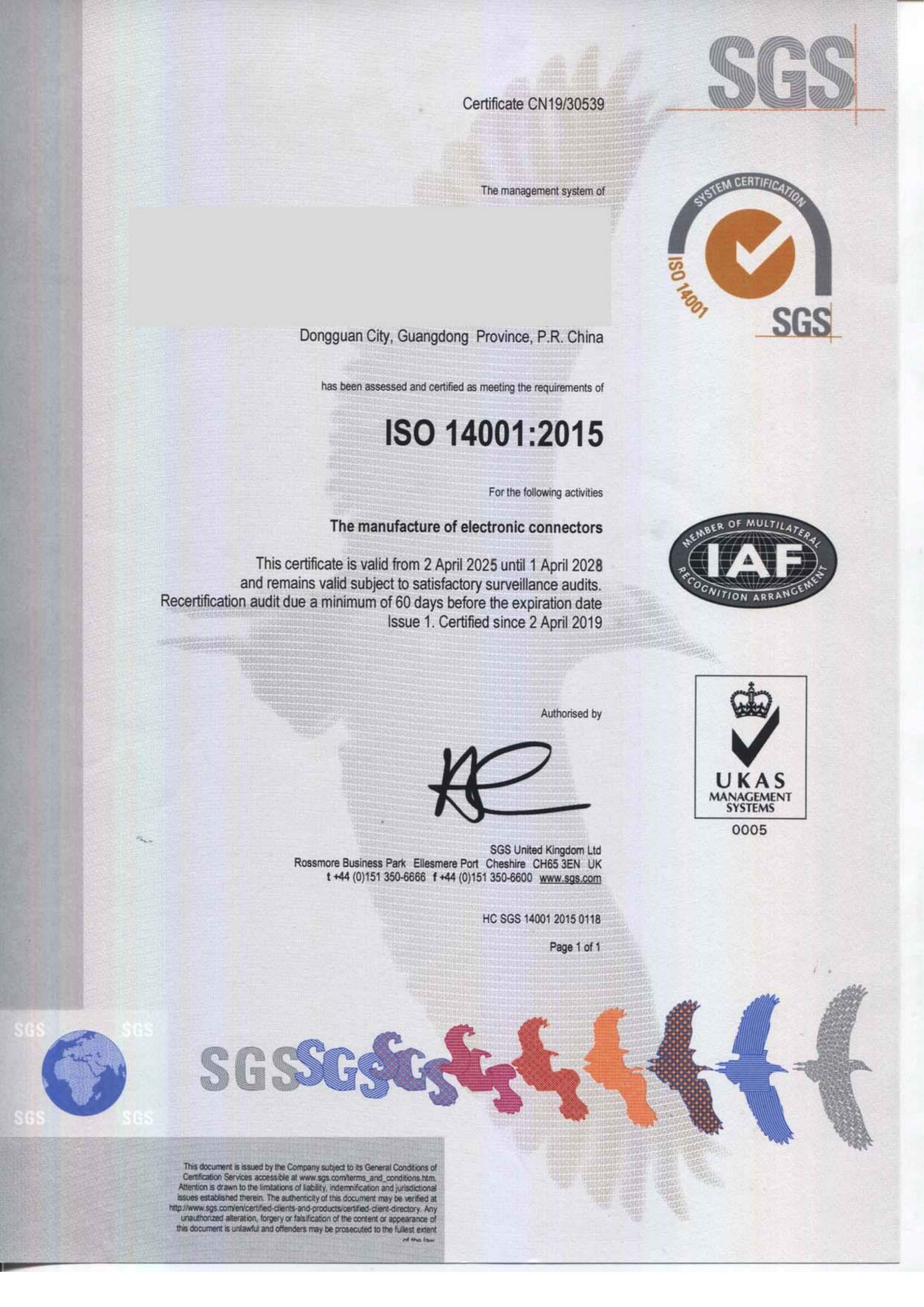
The certification records supplied for P-Shine identify ISO 9001:2015 and ISO 14001:2015. The ISO 9001:2015 record lists a scope covering the manufacture of electronic cables, power cables, flat cables, and power plugs. The ISO 14001:2015 record lists the manufacture of electronic connectors and wire harness. For audit purposes, the standard name alone is not enough: buyers should compare the certificate holder, stated scope, relevant manufacturing site, and the product or process being qualified.
The ISO 14001:2015 record identifies SGS United Kingdom Ltd as the authority and gives certificate number CN19/30539. The ISO 9001:2015 record identifies SGS United Kingdom Ltd and certificate number CN07/31354. These details make the certificates easier to identify during a document review, but buyers should still obtain the current certificates and verify that the scope applies to the actual site and activity involved in their program.
Management-system evidence should be interpreted narrowly and accurately. ISO 9001:2015 relates to the stated quality management system scope; ISO 14001:2015 relates to the stated environmental management system scope. Neither certificate, by itself, proves that every individual harness meets a buyer’s technical requirements or that a particular environmental outcome has been achieved. That requires product-level and process-level verification appropriate to the program.
4. Match product certification coverage to the intended use
The supplied records include UL certification with coverage stated for UL 758, Appliance Wiring Material, and CSA C22.2 No. 210-15, Appliance Wiring Material Products. The record describes component-appliance wiring material, including single-conductor and multi-conductor thermoplastic- or thermosetting-insulated wire, and identifies UL LLC as the authority. This is relevant evidence for covered wiring materials; it should not be presented as blanket approval of every completed wire harness or cable assembly.
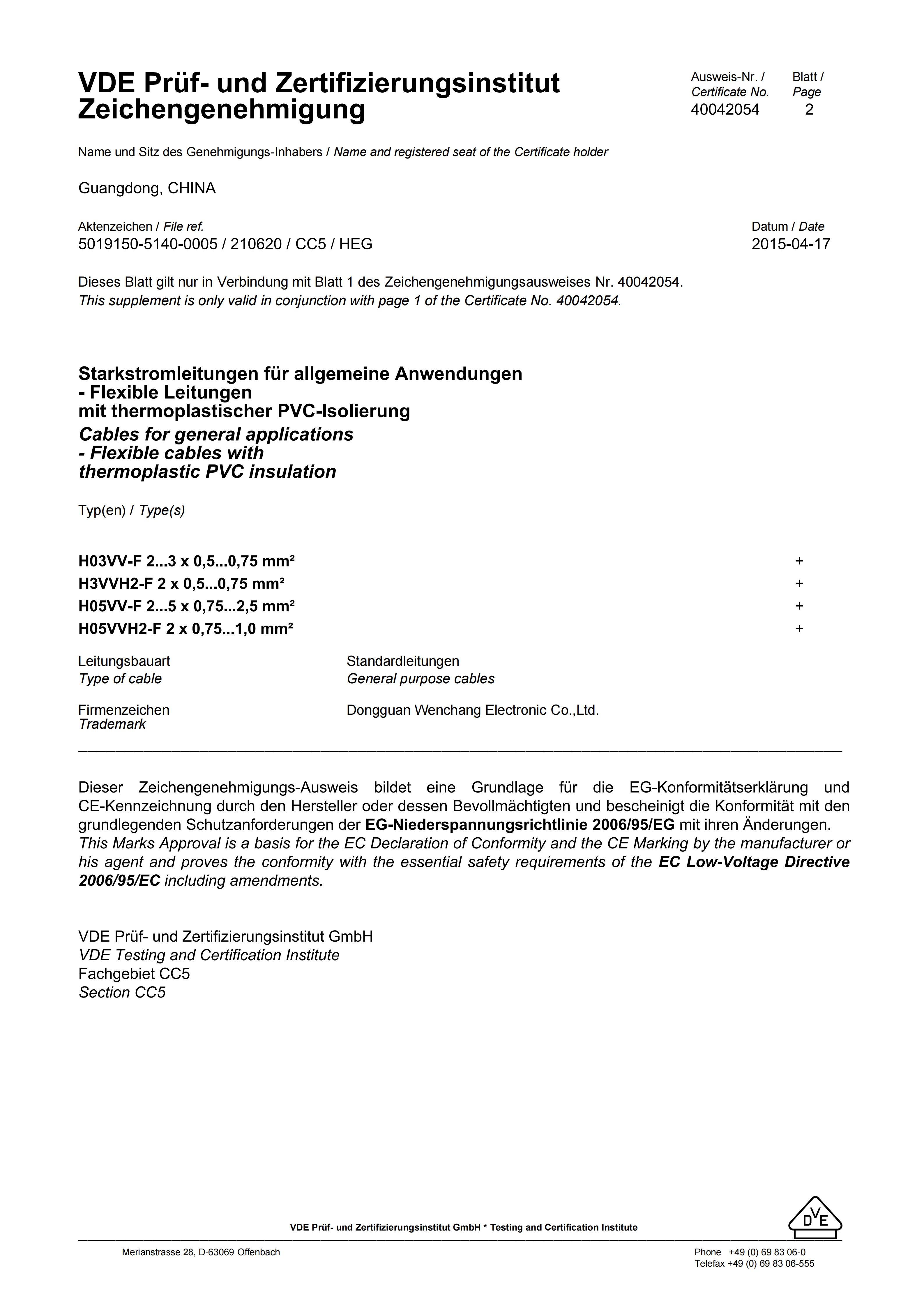
The records also list VDE certification for flexible cables with thermoplastic PVC insulation, with the stated standards DIN EN 50525-2-11 (VDE 0285-525-2-11):2012-01 and EN50525-2-11:2011. This provides a defined certification signal for the described cable scope. It does not, without additional product documentation, establish that every harness configuration or end-use application is covered.
During an audit, map each certification to the actual construction under review: wire type, insulation, component, model or part identification, and intended market. If the program includes a Medical Equipment Wire Harness, Industrial Control Wire Harness, or another application with specific buyer requirements, confirm those requirements separately. The supplied certification facts do not establish application-specific approval for all such uses.
How to interpret continuity evidence without overstating it
The available project information offers one useful operational reference. A case record describes device connection and internal device connection work, production of 250,000 units per month, and a five-year project duration. It reports stable equipment operation for the client’s production lines and a low defect rate; another record describes the result as an almost-zero low defect rate. The records also describe long-term, stable cooperation with multiple industrial clients in Germany and the United States.
This is relevant as a continuity signal because it links a production volume and project duration with an industrial application. It should not be treated as a guarantee for a new buyer, a universal defect-rate benchmark, or proof that every product family has the same performance. The supplied case record does not provide a numeric defect rate, a measurement method, or a named customer. A buyer should therefore treat it as a case-level reference and request the records relevant to its own acceptance criteria.
The capability record states that all units undergo 100% testing. That statement can inform the audit, but it does not describe which tests are performed, the acceptance limits, equipment, records, or whether the test plan differs by harness design. For procurement, the useful follow-up is to define the test coverage for the ordered item and confirm what inspection or test documentation will be supplied with production records.
These distinctions make the audit more useful, not less. Evidence is stronger when its scope is explicit. A case duration supports a discussion about prior project continuity; an output figure supports a question about production scale; a certificate supports a defined management-system or product scope; and a test statement supports a request for the actual test plan. None should be made to prove a different claim.
Audit worksheet: evidence, buyer interpretation, and open questions
| Audit area | Available signal | What it can support | What to verify for the program |
|---|---|---|---|
| Operating history | Established in 1997 | A documented company history relevant to supplier identification | Contracting entity, current ownership or operating perimeter if material to qualification, and the sites involved |
| Manufacturing footprint | Profile describes seven independent factories | A group-level footprint signal | Which specific site will manufacture the part; site-level scope and process suitability |
| Workforce and output | More than 1,000 employees in the group profile; 300 employees in the structured record; 2,000,000 pieces annual output | Reported scale information to anchor due diligence | Reconcile scope and period; clarify output definition, product mix, and capacity available for the buyer |
| Environmental management | ISO 14001:2015 record for electronic connectors and wire harness manufacture | Evidence of a certified environmental management-system scope as stated in the record | Current certificate, holder, applicable site, activities included, and any environmental metrics the buyer requires |
| Quality management | ISO 9001:2015 record for specified cable and power-plug manufacturing scope | Evidence of a certified quality management-system scope as stated | Applicability to the site, product, process, and buyer-specific controls |
| Product and material coverage | UL 758, CSA C22.2 No. 210-15, and VDE coverage with stated scopes | Defined certification references for covered materials or cable constructions | Part-level fit, markings, construction, destination-market requirements, and whether the finished assembly requires additional evidence |
| Operational continuity | Five-year project record, monthly production figure, and industrial application | A case-level reference for a sustained supply relationship | Applicability to the buyer’s design, order pattern, quality criteria, and current production route |
| Inspection | Capability record states 100% testing of all units | A stated inspection practice to investigate | Test methods, limits, records, traceability, and the specific plan for the ordered harness |
Choosing audit questions for different wire harness programs
The audit framework should be adjusted to the product configuration, not expanded with unrelated keyword labels. A household appliance wire harness, a pigtail wire, a cable kit, and a custom-made wire harness may share supplier-level questions about site scope and management systems, but the buyer still needs to verify their distinct drawings, components, and acceptance requirements.
For a shielded or multi-core shielded cable harness, request evidence that identifies the applicable construction and inspection requirements for the specific design. For a waterproof wire harness or a high-temperature-resistant wire harness, do not assume that a general certificate establishes the relevant performance; confirm the specified materials and any required validation evidence. The supplied company records list these kinds of application and customization capabilities, but they do not provide product-specific test results for every configuration.
For a medical equipment wire harness or an industrial control wire harness, separate the supplier’s general manufacturing credentials from any project-specific qualification requirements. For a terminal-crimped wire harness or high-current power wire harness, define the drawing, component identification, and acceptance criteria that govern the ordered assembly. The audit should follow the controlled product definition rather than treating a broad product category as a technical specification.
A practical evidence request can be organized around the buyer’s own documentation: the approved drawing and bill of materials, the production-site identification, the relevant certificate copies and scopes, the defined inspection plan, and the records that demonstrate the agreed acceptance criteria. This is a procurement method, not a claim that any particular document has already been supplied for every product in the company’s range.
Where a low-price, one-time comparison reaches its limit
A lowest-quote comparison can be useful when competing offers cover the same product definition, volumes, delivery assumptions, and evidence requirements. Its limitation is that a price comparison alone does not answer whether a supplier’s certificates match the intended construction, whether a capacity figure is available for the buyer’s program, or whether environmental and quality management scopes cover the manufacturing site involved.
Likewise, a supplier with multiple factories or a long operating history should not automatically be preferred. Those facts are starting points for verification, not substitutes for site-level qualification, product-specific review, or buyer-defined acceptance criteria. A balanced decision compares the commercial offer alongside the evidence and the unresolved questions that could affect continuity.
Decision rule: treat scale, history, certification, testing, and case duration as separate evidence categories. Advance a supplier only when the relevant evidence is both in scope and applicable to the part, site, and program being evaluated.
What this means for long-term sourcing
The supplied information gives procurement teams several concrete starting points for evaluating P-Shine Electronics Co., Ltd: establishment in 1997; a group profile describing seven independent factories and more than 1,000 employees; a structured company record listing 300 employees and 2,000,000 pieces annual output; ISO 9001:2015 and ISO 14001:2015 records with stated scopes; and UL, CSA, and VDE coverage for specified wiring-material or cable scopes. A separate industrial case record describes a five-year project and production at 250,000 units per month.
These facts do not constitute a complete sustainability score or a forecast of future supply performance. Their value is that they let a buyer form a targeted audit: reconcile organizational and capacity figures, connect production to named sites, verify certificate scope, and request the product-level evidence needed for the selected Wire Harness. The environmental-management record should be read as system-scope evidence, not as a measured environmental-impact claim.
For an Evaluation-stage sourcing decision, continuity is best assessed through traceable fit between the supplier’s stated resources and the buyer’s actual requirements. A documented history may invite further diligence; a factory network may raise site-allocation questions; a capacity figure may require a product and period definition; and a certification may require a scope check. Procurement teams that keep those distinctions explicit can compare suppliers on evidence relevant to long-term supply rather than on one-time price alone.
¿Tiene preguntas o necesita más detalles?
Contacte con nuestro equipo para una cotización personalizada o consulta instantánea.
Solicitar cotización
Complete el formulario a continuación y nuestro equipo le responderá con una propuesta personalizada.
Chat directo de WhatsApp
¿Prefiere chatear en tiempo real? Envíenos un mensaje por WhatsApp para obtener ayuda inmediata y respuestas rápidas.
- Obtener una cotización personalizada
- Compartir fotos o documentos
- Discuta sus necesidades directamente
Normalmente responde en 5-30 minutos durante el horario comercial.