
Wire Harness Certifications: A Buyer's Guide to UL, VDE & ISO Compliance
Wire Harness Certifications: What Compliance Documents Actually Prove
For procurement and engineering teams evaluating custom wire harness suppliers, certification documents are often the first technical evidence reviewed. But in a fragmented global supply market, not all certificates carry the same weight. Understanding what UL, VDE, ISO 9001, and ISO 14001 certifications actually cover — and what they do not — can significantly improve supplier screening and reduce compliance risk.
This guide translates wire harness certification documents into practical procurement criteria. It is written for buyers at the research-to-evaluation stage who need a clear framework for verifying supplier claims, comparing compliance postures, and aligning certifications with application requirements. Examples reference P-Shine Electronics Co., Ltd, a Dongguan-based custom wire harness manufacturer established in 1997 that exports primarily to the EU, USA, and Middle East.
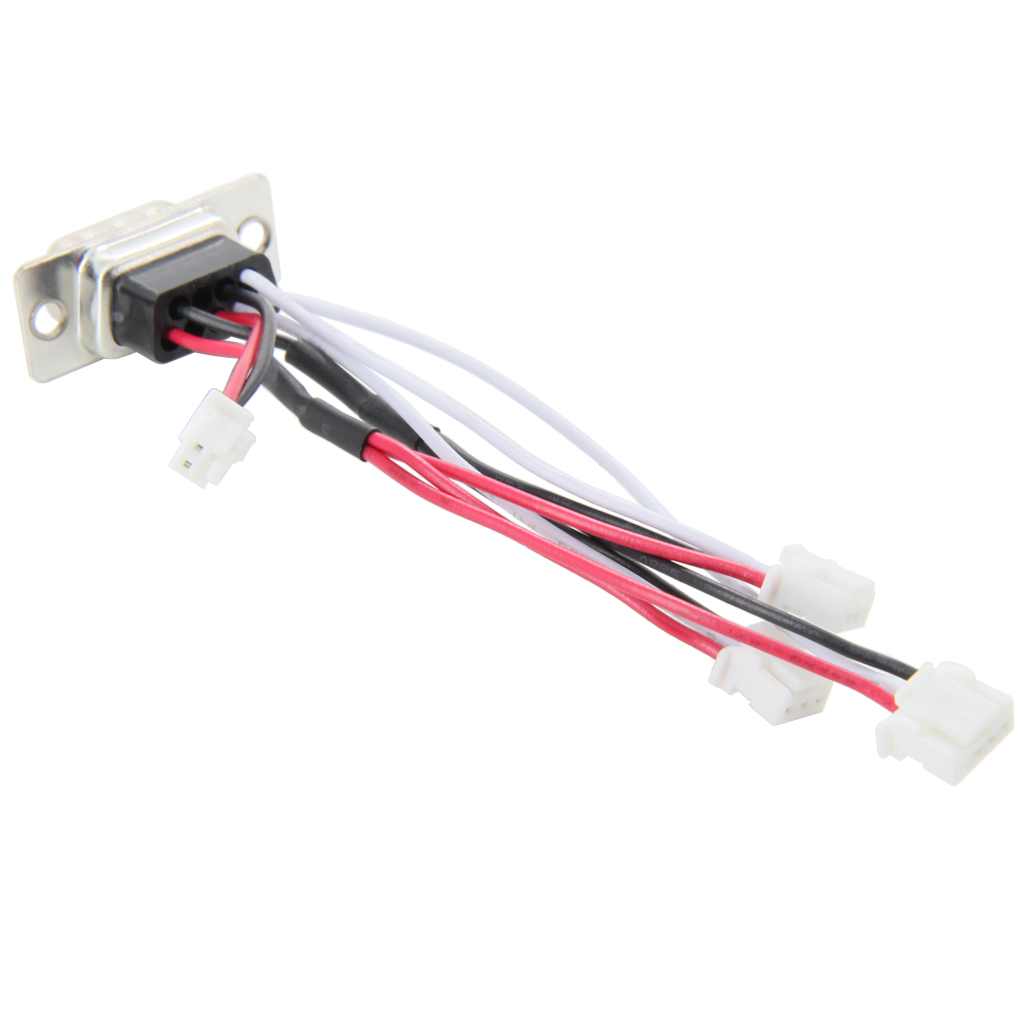
Why Certification Verification Matters in Wire Harness Sourcing
The global wire harness market was estimated at USD 99.58 billion in 2024, according to Precedence Research, with Asia Pacific accounting for approximately 46% of the market. The scale of cross-border trade in wire harnesses and cable assemblies means that buyers frequently source from manufacturers operating under different regulatory regimes. A supplier's certification portfolio is therefore a primary signal of its ability to meet destination-market requirements.
For custom wire harnesses, certification matters in two distinct layers.
- Product-level certifications (UL, VDE) apply to specific wire and cable constructions, confirming that a material meets defined safety and performance standards.
- System-level certifications (ISO 9001, ISO 14001, IATF 16949) apply to the manufacturer's quality management and environmental processes, covering how products are consistently made.
A buyer evaluating a harness for a medical device, an industrial control cabinet, or a household appliance will typically need evidence at both layers. The absence of a relevant product certification — or a quality certificate that has expired — is a tangible risk flag.
Understanding Product Certifications: UL and VDE
Product certifications on wire harnesses generally relate to the wire itself — its insulation, temperature rating, and flammability characteristics. Two widely referenced certifications are UL and VDE.
UL Certification for the US and Canadian Markets
UL certification for wiring harnesses typically references UL 758, Appliance Wiring Material. UL 758 covers single-conductor and multi-conductor thermoplastic or thermosetting-insulated wires used inside appliances and equipment.
P-Shine Electronics Co., Ltd holds UL certification under file number E214500, issued by UL LLC. This certification covers wire harness products and applies to the US and Canadian markets. When a supplier references UL coverage, the buyer should ask for the file number and verify it directly with UL's online database, as file numbers are publicly searchable.
VDE Certification for the EU and German Markets
VDE certification is particularly relevant for products sold into Germany and the broader EU market. The VDE mark indicates compliance with applicable European standards for electrical safety.
P-Shine's VDE certification references the standard DIN EN 50525-2-11 (VDE 0285-525-2-11):2012-01; EN 50525-2-11:2011, which covers flexible cables with thermoplastic PVC insulation. The certification number is 40042054, issued by the VDE Testing and Certification Institute, and applies to the EU market and Germany.
System Certifications: ISO 9001 and ISO 14001
Beyond product-level marks, system certifications indicate how a factory manages quality and environmental responsibility on an ongoing basis.
ISO 9001:2015 — Quality Management System
ISO 9001:2015 is the international standard for quality management systems. For wire harness manufacturers, certification demonstrates that processes for production, inspection, and corrective action are documented and audited by an independent body.
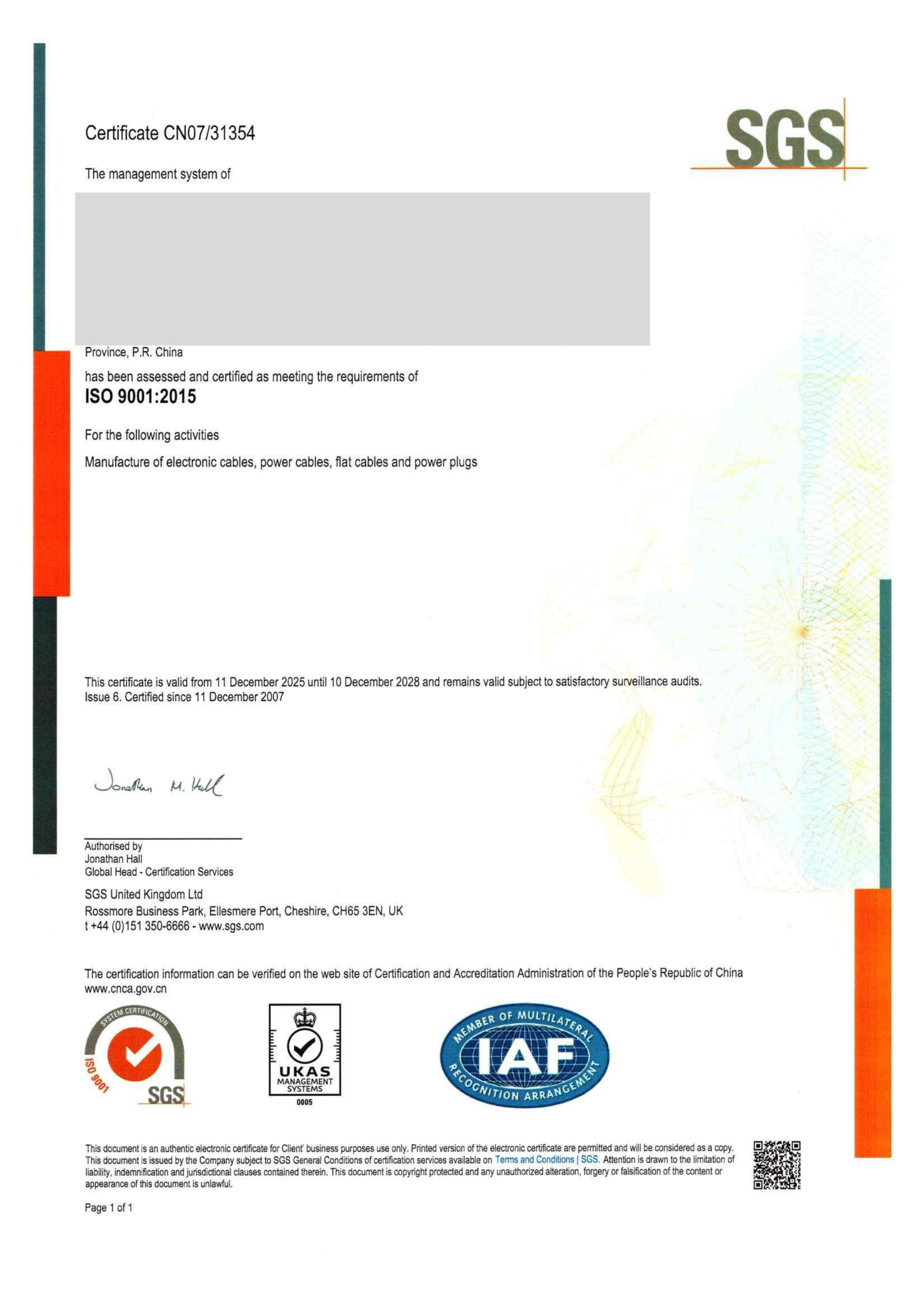
P-Shine Electronics Co., Ltd is certified to ISO 9001:2015. The certificate is issued by SGS United Kingdom Ltd under certificate number CN07/31354. The certified scope covers the manufacture of electronic cables, power cables, flat cables, and power plugs, which encompasses wire harness products. The certification applies globally.
Notably, the verified data also confirms that P-Shine's factory producing cable assemblies and cables for automotive-related products holds IATF 16949 certification — the automotive industry's quality standard. Buyers sourcing harnesses for automotive-adjacent applications may want to confirm which specific plant and product line holds IATF coverage.
ISO 14001:2015 — Environmental Management System
ISO 14001:2015 certifies that a manufacturer operates an environmental management system. For electronics buyers, this matters because customers increasingly require evidence that suppliers manage environmental impact and comply with materials regulations.
P-Shine's wire harness production operates under ISO 14001:2015 environmental management certification, issued by SGS United Kingdom Ltd under certificate number CN19/30539. The certified scope specifically covers the manufacture of electronic connectors and wire harness. The certification applies to the global market.
A Practical Framework for Verifying Wire Harness Compliance
Buyers evaluating a wire harness supplier should structure their compliance assessment into four steps. This framework can be applied regardless of whether the supplier is in China, the US, Europe, or elsewhere.
| Verification Step | Action | Example from P-Shine |
|---|---|---|
| 1. Identify required certifications | List product certifications and system certifications required by the destination market and the application | UL for US/Canada | VDE for EU/Germany |
| 2. Request certificate copies | Ask for the certificate number, issuing body, scope, and expiry date | UL E214500 | VDE 40042054 | ISO 9001 CN07/31354 | ISO 14001 CN19/30539 |
| 3. Verify independently | Check UL database, VDE directory, or SGS certificate database to confirm active status | All certificates listed are independently issued and traceable |
| 4. Match scope to application | Confirm the certification scope includes your product type and the specific factory | ISO 14001 scope covers electronic connectors and wire harness; VDE covers PVC-insulated flexible cables |
Connector Sourcing: Original vs. Non-Original Connectors
A separate but equally important compliance consideration is the sourcing of connectors used in a harness assembly. Wire harness manufacturers such as P-Shine typically work with connectors from Molex, JST, TE Connectivity, Phoenix Contact, Samtec, Hirose, and Amphenol. Buyers specify the exact connector brand and part number on their drawings.
P-Shine states that it sources connectors strictly according to the brand and part number specified in customer drawings. The company typically purchases from platforms such as DigiKey or Mouser to ensure purchased connectors are genuine and original. According to its published knowledge base, original connectors offer better reliability and compatibility, and are used by default.
However, P-Shine acknowledges that non-original replacement connectors are sometimes used. This occurs only at the customer's request, when the alternative connector is considered a mature and reliable product, and after the customer tests, verifies, and approves the samples. The company notes that in some cases, an original brand connector can cost ten times more than a non-original alternative.
Material and Design Data Buyers Must Provide
Because custom wire harnesses are manufactured to the buyer's drawing, the completeness of the drawing determines the manufacturability and the accuracy of the quotation. P-Shine's engineering team recommends that drawings include the following details:
- Each connector's brand and part number.
- Different color wires for adjacent identical connectors to avoid assembly errors.
- Each wire in each loop distinguished by a different color on the drawing.
- The wire model (e.g., UL1007), wire gauge (e.g., 28AWG), and color for each wire.
- The length of each loop.
- The functional definition of each pin (e.g., Power+, GND).
- When a loop has a branch, the length of each branch should be indicated.
- A minimum distance of 30mm from the branch point to the connector.
- Appropriate branch positioning when heat shrink tubing is required.
P-Shine also provides a full customization workflow: customers may send design drawings, or provide connector brand, part number, wire type, wire gauge, color, and wire definition. Available insulation materials include PVC, XL-PE, TPE, TPU, and Teflon. This flexibility matters because different applications require different insulation materials.
Example Application: What Compliance Looks Like in Practice
Consider a buyer sourcing a wire harness for an industrial automation product to be sold into Germany and the US. The evaluation would reasonably require:
- VDE certification for the German market or an equivalent EU-wide mark.
- UL certification for the US market.
- ISO 9001:2015 to confirm factory-level quality management.
- ISO 14001:2015 to address the buyer's own corporate environmental procurement requirements.
- RoHS and REACH compliance for materials restricted substances — P-Shine confirms all materials meet these requirements.
P-Shine's certification portfolio — UL for North America, VDE for Germany/EU, ISO 9001 and ISO 14001 globally — is structured to support exactly this type of multi-market export scenario. The company exports approximately 60% of its output to the EU, USA, and Middle East, which means its compliance documentation is routinely exercised in real export transactions.
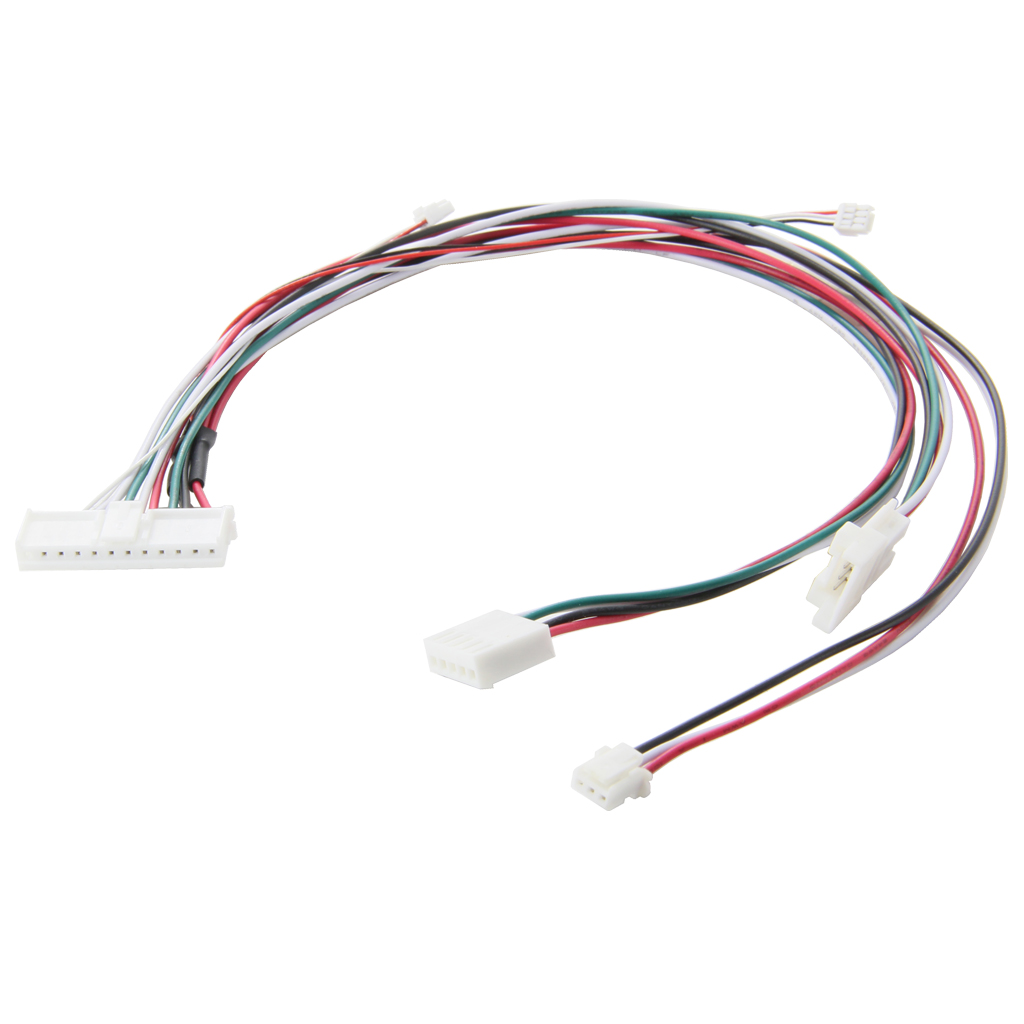
Limitations of Certification Data
Certification documents do not tell the whole story. There are several well-known boundary conditions buyers should keep in mind when comparing suppliers based on certificates.
- Certifications attach to defined scopes, not entire companies. A factory may hold ISO 9001 for certain product lines but not others. Buyers should read the certified scope carefully.
- A UL file on wiring material is not the same as a UL-listed finished harness. Some suppliers hold UL component recognition for wire, but the final assembled harness may require additional evaluation, depending on the end-product standard.
- Certifications are point-in-time checks. A certificate is valid until its expiry date; ongoing compliance requires surveillance audits. Buyers should verify that a certificate is still within its validity period.
- VDE certification referenced above applies to PVC-insulated flexible cables, not all wire types. If a design requires Teflon-insulated wire, buyers should request specific coverage for that construction.
- ISO 9001 and ISO 14001 certificates do not guarantee product performance. They indicate process discipline but not the suitability of a specific design for a specific application.
A manufacturer may hold all the right certificates and still deliver a harness that fails because of poor terminal crimping, incorrect wire stripping, or assembly errors. This is why buyers increasingly pair certification checks with process-level quality expectations such as IPC/WHMA-A-620, the industry-consensus standard for cable and wire harness assembly acceptability. When requesting quotes, buyers should ask whether the supplier builds to IPC/WHMA-A-620 criteria, and which class (1, 2, or 3) applies.
Market Context: Standards Becoming a Competitive Differentiator
As the wire harness market grows — driven by electrification, industrial automation, and the expansion of electronics manufacturing in the Asia Pacific region — compliance documentation is becoming a more visible competitive differentiator. Suppliers serving export markets need to maintain certificates that map to multiple regulatory regimes.
The practical consequence for buyers: certification documentation is increasingly standardized and structured. A certificate issued by SGS United Kingdom Ltd, UL LLC, or the VDE Testing and Certification Institute includes verifiable certificate numbers, dates, scopes, and applicable standards. Buyers can incorporate these certificate numbers into their vendor qualification databases to allow faster re-evaluation of existing suppliers and more disciplined onboarding of new ones.
Future Outlook: Verification Becoming Faster and More Transparent
Two trends are likely to shape wire harness procurement in the coming years. First, the continued digitization of certificate databases means that counterfeit or expired certificates will become easier to detect, reducing the information asymmetry between suppliers and buyers. Second, equipment OEMs are increasingly requiring their contract manufacturers to maintain multi-standard compliance portfolios, which in turn pushes component suppliers like wire harness manufacturers to carry certifications that cover simultaneously the US, EU, and Asian markets.
For custom harness buyers, the practical recommendation is straightforward: treat certifications as a necessary baseline rather than a differentiator. Build a verification step into every supplier onboarding flow, request certificate numbers in writing, and independently confirm the validity and scope of each one.
Frequently Asked Questions
Should every wire harness drawing specify connector brand and part number?
Yes. Each connector in the drawing should specify its brand and part number. This ensures the manufacturer procures the exact component specified, eliminating ambiguity around fit, electrical ratings, and compatibility. When adjacent locations use the same connector, different wire colors are recommended to aid differentiation during assembly and service.
What is the difference between original connectors and non-original replacement connectors?
Original connectors are sourced from the brand manufacturer (or authorized distributors) and offer better reliability and compatibility. Non-original alternative connectors are replacement components that may have different pricing. In some cases, the price of an original brand connector is 10 times that of a non-original alternative. Suppliers should only use non-original connectors at the customer's request, after testing, verification, and approval.
Does a wire harness manufacturer use original connectors by default?
A responsible manufacturer should source connectors strictly according to the brand and part number specified in the customer's drawing. In the case of P-Shine Electronics Co., Ltd, connectors are typically purchased from platforms such as DigiKey or Mouser to ensure authenticity. Original connectors are the default; the use of non-original alternatives only occurs if the customer requests it after testing and approval.
What should be specified on the drawing for each wire loop?
For each wire loop in a harness drawing, the specification should include the wire model number (e.g., UL1007), wire gauge (e.g., 28AWG), color, and loop length. The pin's functional definition (e.g., Power+, GND) should also be indicated. If a branch occurs in the middle of a loop, each branch length must be shown separately, and the minimum distance from a branch to the connector is 30mm.
How are original connectors sourced?
Original connectors are typically sourced from authorized distributors or component platforms. For example, P-Shine Electronics Co., Ltd reports that it purchases connectors from platforms such as DigiKey or Mouser to ensure the connectors are genuine and original. Buyers can also request that suppliers provide purchasing records or certificates of conformance for traceability.
This article is provided for general industry information. Market data: Precedence Research, Wire Harness Market Size to Surpass USD 147.46 Billion By 2034, July 2025. Certification details are drawn from manufacturer-supplied documentation for P-Shine Electronics Co., Ltd. Buyers should independently verify all certificate numbers with the issuing bodies prior to procurement decisions.
¿Tiene preguntas o necesita más detalles?
Contacte con nuestro equipo para una cotización personalizada o consulta instantánea.
Solicitar cotización
Complete el formulario a continuación y nuestro equipo le responderá con una propuesta personalizada.
Chat directo de WhatsApp
¿Prefiere chatear en tiempo real? Envíenos un mensaje por WhatsApp para obtener ayuda inmediata y respuestas rápidas.
- Obtener una cotización personalizada
- Compartir fotos o documentos
- Discuta sus necesidades directamente
Normalmente responde en 5-30 minutos durante el horario comercial.