
Wind Turbine Blade Shredding: Finding the Right Machine for Oversized Composites
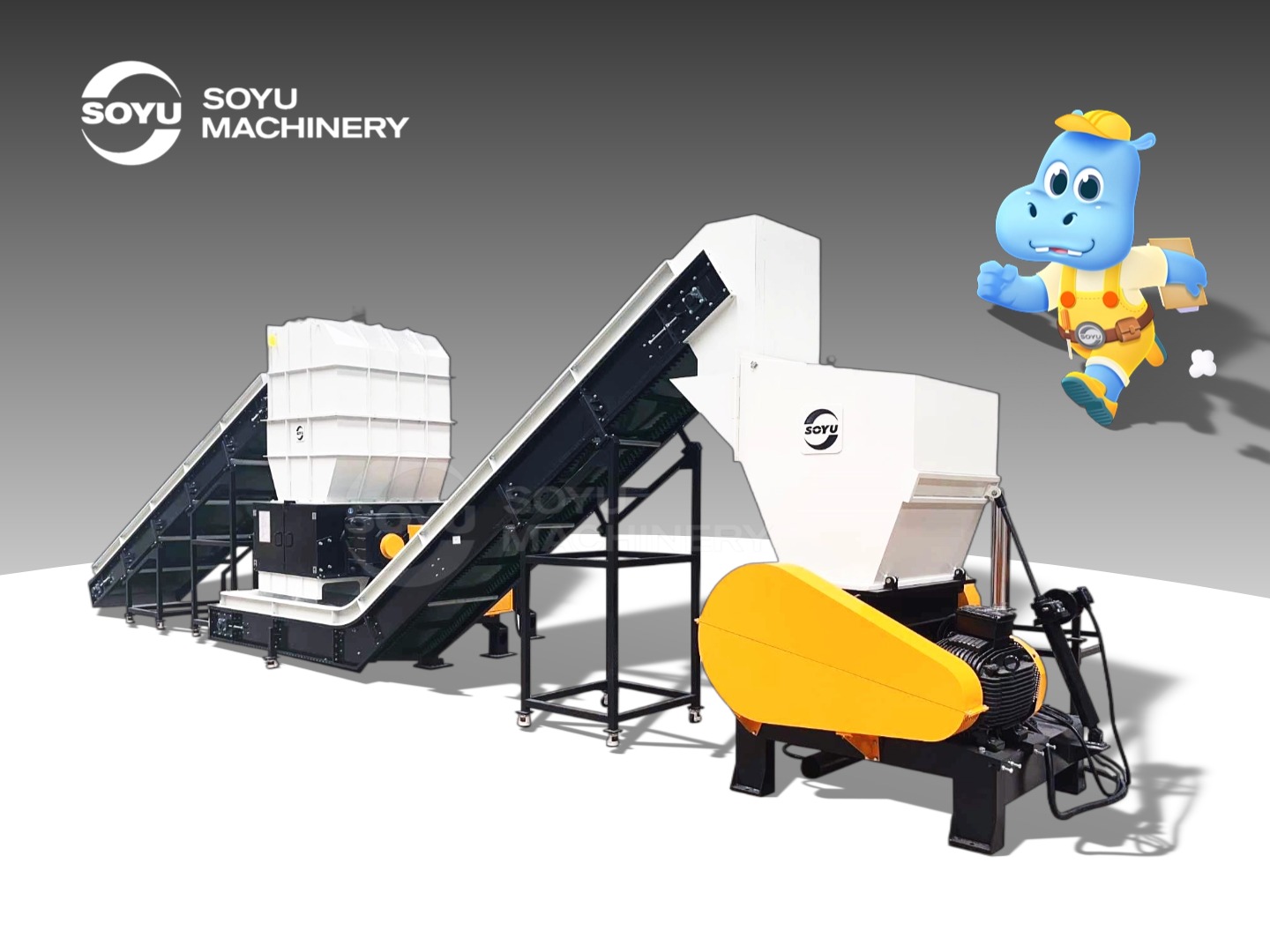
Size reduction of oversized, high-strength composites requires a different class of machine than conventional bulky-waste shredding.
Decommissioned wind turbine blades are one of the most difficult composite waste streams in the recycling industry. A blade is not a hollow shell of uniform plastic. It is a laminated, load-bearing structure built from glass-fibre reinforced polymer (GFRP) — and in some designs carbon fibre — bonded with epoxy or polyester resin and stabilised with balsa wood or foam cores. It is long, curved, tapered and thick-walled by design, because it has to survive decades of fatigue loading in open air.
Those same engineering properties are what make blades hard to shred. A machine that processes bulky municipal waste comfortably may stall, wear out quickly or produce an unusable output once it meets a blade section. For recyclers and waste-processing operators entering this niche, the practical question is not simply which shredder is largest, but which configuration, feed arrangement and service model can sustain a project-based, high-wear composite stream over many years.
This guide examines what blade and FRP shredding actually demands, how four-shaft configurations map onto oversized composites, where the limits of size reduction begin, and what to evaluate in an equipment partner before committing capital.
Why Wind Turbine Blades Break Conventional Shredding Assumptions
Blade scrap behaves differently from almost every other feed stream a recycling plant handles. Four material realities drive that difference.
1. One piece, several materials. A blade cross-section can contain a glass-fibre laminate skin, a load-bearing spar, shear webs, and a balsa or foam core. Density and hardness change within a single section, so the cutting elements are loaded unevenly from one cut to the next.
2. Abrasion combined with elasticity. Glass fibre is highly abrasive to cutting edges, while the resin matrix and core materials are comparatively elastic. A blade section therefore wears a rotor and absorbs energy at the same time, which is a demanding combination for high-speed impact-style equipment.
3. Geometry that resists feeding. Blades are long, curved and tapered, and in practice they are cut into transportable sections before they reach the shredder. Even after pre-cutting, those sections are thick, irregular and often hollow. Feed openings, hopper design and ram arrangements have to be selected for that shape, not for a tidy cube of material.
4. Dust and containment. Composite size reduction generates fine particulate. Dust control is not a cosmetic issue in FRP processing; it affects operator safety, housekeeping and how the surrounding plant is configured.
What Oversized Composites Demand From a Size-Reduction Machine
Shredding technology for tough composites converges on a small set of engineering priorities. These are the criteria that separate a machine that can be pushed into this work from one that is genuinely configured for it.
Torque at low rotor speed. Composite sections resist impact breakage. They yield more predictably to sustained shear force applied at low rotor speed with high torque, rather than to fast hammer-style impact. This is the operating principle behind low speed high torque shredder designs used on dense and tough streams.
A controlled cutting table. When material passes through a defined cutting gap instead of an open impact chamber, output sizing becomes more predictable. Predictable sizing matters because downstream handling — transport, further processing or co-processing outlets — usually has a maximum acceptable piece size.
Wear planning rather than wear avoidance. Abrasive glass fibre consumes cutting elements. What matters commercially is how quickly and safely those elements can be replaced, and whether the machine is designed so that maintenance does not require dismantling half the plant. In this sense, serviceability is a specification, not an afterthought.
Feed and containment. Hopper volume, feed height and the ability to accept oversized sections determine real throughput far more than a nameplate figure. Dust extraction, guards and interlocked access doors are equally part of the specification when the feed stream is a fibrous composite.
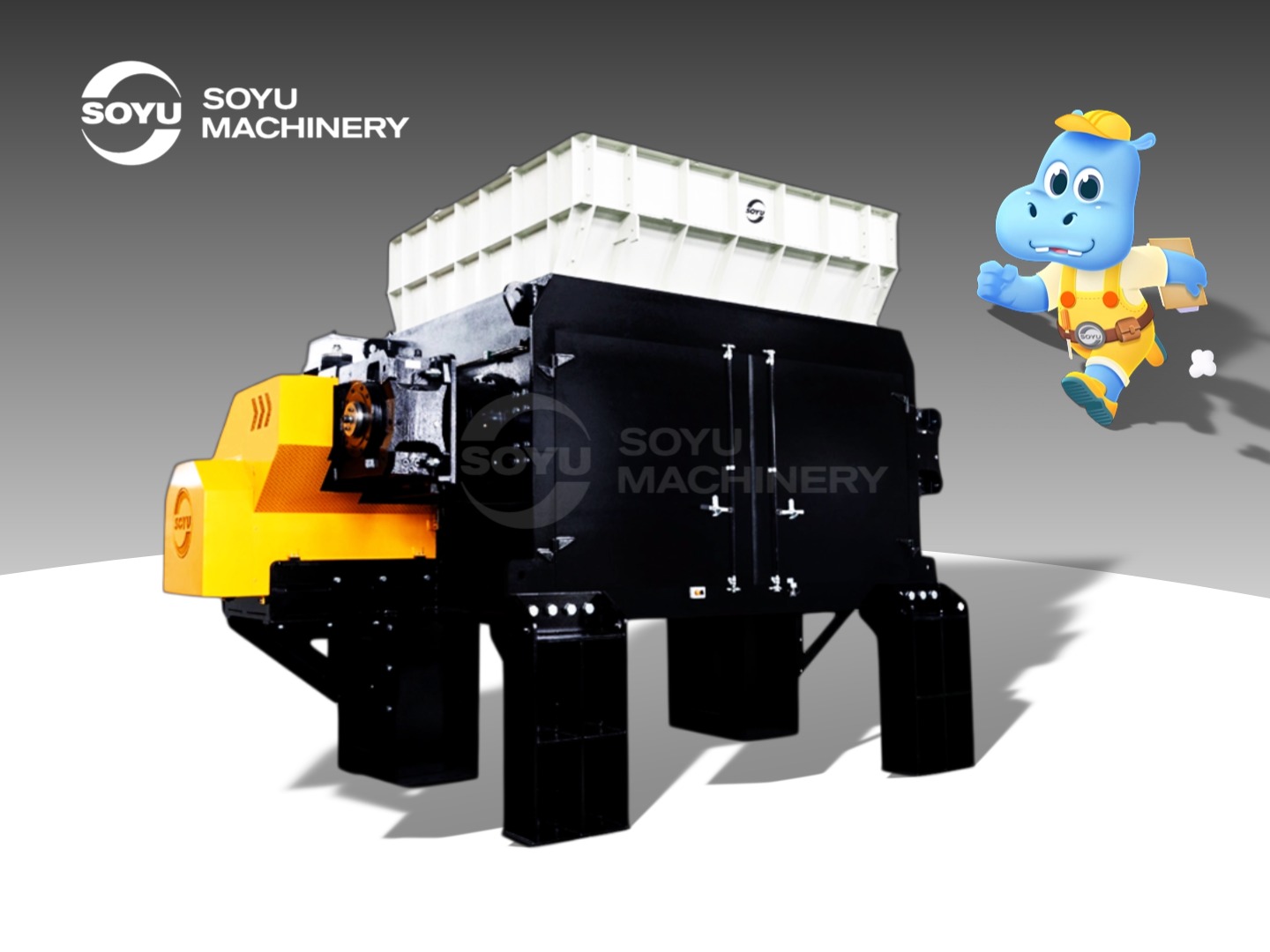
Configuration, cutting table design and serviceability matter more than nominal machine size when the feed is an abrasive, irregular composite.
Why Four-Shaft Configurations Are Usually the Starting Point
A four shaft shredder uses two pairs of counter-rotating shafts working against a cutting table. Instead of relying on the energy of a swinging rotor, it draws material into a defined reduction zone and shears it down. For oversized, high-strength composites, that architecture offers three practical advantages: it accepts thick, irregular sections; it delivers high torque at low rotational speed; and it produces a more consistent output fraction than a single-stage reduction step.
The market reflects the growing importance of this configuration. The global commercial four shaft shredder segment was estimated at USD 0.51 billion in 2025 and is projected to grow at a CAGR of 5.8% through 2034, according to Dataintelo. Within the broader shredder equipment market, twin-shaft designs accounted for a 35.0% revenue share of the metal shredder machine market in 2024, according to Grand View Research — a reminder that double-shaft machines remain the workhorse for many mixed and metallic streams, while four-shaft designs take on the tougher, sizing-critical duties.
Changshu Shouyu Machinery Co., Ltd. (SOYU Machinery) is a shredder manufacturer founded in 2009 that designs and produces a full range of single-shaft, double-shaft and four-shaft shredder equipment for waste metal, hazardous waste packaging, industrial solid waste and related streams. Its product range includes a fibre-focused fiberglass shredder alongside metal, plastic, RDF, aluminium, e-waste, wood and waste paper shredder models, and the company exports to the EU and USA, which account for the majority of its export business. For a recycler planning a blade or FRP line, that range matters because the right answer is not always a single machine type.
Matching Configuration to the Task
Blade and FRP processing commonly uses two stages: a primary reduction step for large sections and a secondary step to reach a downstream-acceptable size. The table below sets out how the three main configurations typically map onto that workflow.
| Configuration | Working principle | Typical role in blade / FRP work | Boundary to keep in mind |
|---|---|---|---|
| Single shaft shredder | One rotor, hydraulic ram feeding, controlled rotor speed | Controlled, uniform size reduction of pre-sized composite pieces | Ram feeding assumes a relatively consistent feed; long interlocked blade sections are not its natural input |
| Double shaft shredder | Two counter-rotating shafts with hooks or knives | Primary volume reduction of mixed, bulky feed | Output sizing is less tightly controlled; a secondary step is often needed |
| Four shaft shredder | Two pairs of counter-rotating shafts against a cutting table, high torque at low speed | Reduction of tough, oversized composites with more consistent output sizing | Higher capital commitment and heavier wear-part planning than lighter configurations |
Feeding, Safety and Dust: The Parts Buyers Underestimate
Machine selection rarely fails on the shredder itself. It fails on the interfaces around it. Two interfaces deserve particular attention in composite work.
Materials handling upstream. Cutting blades into transportable sections is a separate operation with its own equipment, cost and risk profile. If the upstream cutting step cannot deliver sections that fit the shredder's feed opening, the shredder will sit idle regardless of its rated capacity.
Safety and dust engineering. Industrial shredders are commonly specified against safety-distance requirements such as EN ISO 13857:2019, which defines the distances needed to prevent hazard zones from being reached by limbs. Beyond guarding, the practical risk register for shredding lines covers material jamming and overload, dust-related hazards, mechanical injury and electrical failure. Countermeasures include overload protection systems, dust extraction, safety interlocks, emergency stops and leakage detection, supported by load sensors, safety guards, regular safety audits and operator training. For FRP work, dust extraction and containment belong in the original specification, not in a later retrofit.
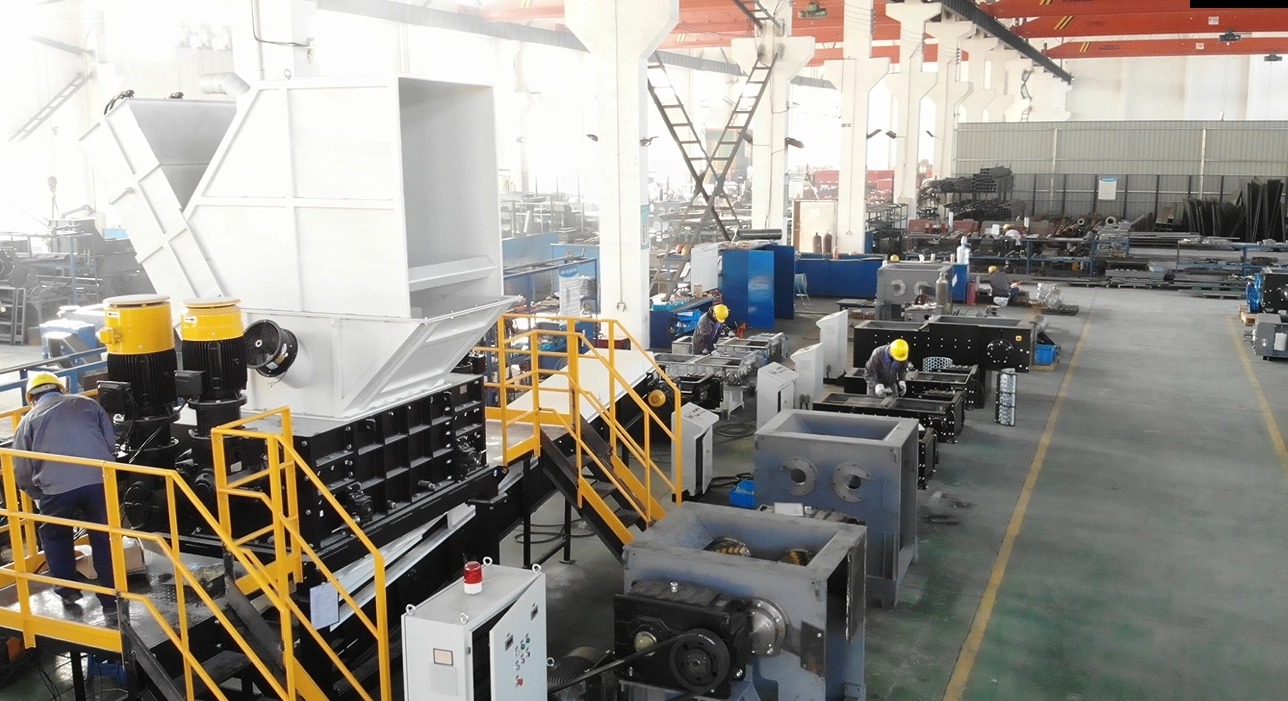
Assembly and factory acceptance testing are part of the specification when the feed stream is abrasive composite material.
Where Shredding Stops: Honest Boundaries of the Technology
A shredder is a size-reduction machine. It does not chemically separate glass fibre from resin, and it does not by itself convert blade scrap into a finished recycled material. Several boundaries should be stated plainly before any purchase decision.
Output is not a product by default. The shredded fraction still needs a downstream outlet that accepts that size and composition. If the outlet is undefined, the shredder simply relocates the problem.
Wear parts are an operating cost, not a defect. Abrasive fibre consumes cutting elements. Buyers should model replacement frequency and spare-part logistics into the business case rather than treating them as an unexpected expense.
Blade demand is project-based. Many operators receive blade volumes in campaigns rather than as a steady daily feed. A high-capacity four-shaft machine may be the correct technical answer and still be the wrong commercial answer if utilisation is low; in that case staging the investment, or using a configuration that also serves other composite and industrial waste streams, is a more rational plan.
Configuration costs rise with capability. Four-shaft architecture generally represents a larger capital commitment than lighter single or double-shaft machines. That trade-off has to be justified by the material mix the plant actually expects to process.
Market Context: Why Composite Shredding Capacity Is Being Added
The demand signal comes from two directions at once: more composite waste entering the system, and a broader expansion in shredding capacity.
On the equipment side, the global industrial shredder market was valued at approximately USD 1.28 billion in 2024 and is projected to reach USD 1.65 billion by 2032, according to Intel Market Research. On the supply side, Asia Pacific dominated the global metal shredder machine industry with a 39.0% revenue share in 2024, led by large-scale scrap generation in the region, according to Grand View Research. The competitive landscape remains concentrated: Doppstadt, Vecoplan, Untha, Lindner Recyclingtech and Komptech together hold roughly 38% of the market, according to Intel Market Research — which leaves a wide field for specialised suppliers to serve narrower streams such as oversized composites.
On the material side, the wind fleet built in earlier decades is now reaching end of service, and blades that were designed for performance rather than for disassembly are arriving at waste facilities. Much of the practical work in this niche is still being standardised, which is exactly why machine configuration and supplier capability matter more here than in mature waste streams where the process is already settled.
Specifying a Wind Turbine Blade Shredder: What to Put in the Enquiry
Suppliers can only configure accurately if the enquiry describes the job rather than the machine. A practical specification package for a blade or FRP shredding project normally contains the following.
| Specification item | Why it changes the machine decision |
|---|---|
| Material description (GFRP, mixed FRP, cores, metal inserts) | Drives cutting-element selection, wear planning and dust control |
| Section size and shape supplied to the shredder | Determines feed opening, hopper geometry and the need for a ram feeder |
| Target output size and downstream outlet | Sets the number of reduction stages and the cutting table configuration |
| Expected campaign size and feed rhythm | Determines whether one primary machine or a staged investment is rational |
| Power supply, site layout, dust extraction provisions | Affects electrical design, footprint and containment engineering |
| Safety and compliance requirements | Aligns guarding and interlocks with standards such as EN ISO 13857:2019 |
| Acceptance criteria and spares plan | Defines how the machine is proven and how wear parts are replenished |
The Long-Term Half of the Decision: Service, Spares and Supply Continuity
In a project-based niche such as blade recycling, the operating life of the machine will outlast any single campaign. That makes supplier continuity a procurement criterion in its own right: whether the builder has the engineering depth to adapt a configuration, the inventory discipline to supply wear parts, and the responsiveness to keep a line running when a replacement is urgent.
On capacity and continuity, SOYU Machinery states a monthly production capacity of 15–20 sets of complete recycling lines or 50–100 single shredders. The company operates from a 15,000 m² facility with around 200 employees, including a 25-engineer R&D team, and reports an annual output of 2,000 sets. For operators adding composite capacity, these are indicators of whether a supplier can hold a delivery schedule and absorb a subsequent reorder without redesigning the machine from scratch.
On lifecycle economics, the company's own comparative assessment against foreign-brand recycling equipment and against manual dismantling combined with a general crusher reports higher customisation flexibility, compliant safety design and end-to-end after-sales support, with a stated performance gap of +20% processing capacity, –15% initial investment, –30% downtime and –10% energy consumption per tonne. Reported cost differences are 15–20% lower initial investment and 25% lower long-term operating cost, with maintenance support described as faster spare-parts supply, 30% lower maintenance cost and 24/7 remote troubleshooting. These figures are first-party comparative claims and should be read as such, but they highlight the variables a buyer should test in any tender: capacity, downtime, energy per tonne and total cost of ownership rather than purchase price alone.
Commercially, shredder procurement in this segment typically runs on a minimum order of one set for a single machine or one set for a complete recycling line, delivered FOB. Acceptance practice normally includes a 100% factory acceptance test, on-site commissioning and acceptance, and the option of third-party inspection by SGS or BV, with payment terms of 30/70. A recycler entering blade processing should confirm that these stages are written into the contract, because factory testing is the point at which feed behaviour and output sizing can still be adjusted.
Future Outlook
Three developments are likely to shape this niche over the next several years. First, blade volumes will keep rising as earlier wind fleets retire, while the downstream outlets for shredded composite — co-processing, further separation and material recovery — continue to mature at different speeds in different regions. Second, composite manufacturers are increasingly designing for recyclability, which will gradually change what the shredder receives, but is unlikely to remove the need for robust size reduction. Third, buyers are moving toward equipment that can serve more than one stream: a four-shaft configuration that handles oversized composites today can often be re-deployed on bulky industrial waste, RDF feedstock or fibre scrap tomorrow, which improves utilisation in markets where blade volumes arrive in campaigns.
The practical implication is that machine selection and supplier selection should be evaluated together. A configuration that matches the material, backed by a partner that can supply wear parts, retrain operators and support the line over multiple campaigns, is a more durable asset than a machine chosen on nominal capacity alone.
Frequently Asked Questions
What type of shredder is used for wind turbine blade shredding?
Four-shaft shredders are commonly used as the core size-reduction machine for oversized composite sections, because they combine high torque at low rotor speed with a cutting table that produces more consistent output sizing. Single-shaft and double-shaft machines also appear in blade and FRP lines, typically upstream for pre-sizing or downstream for further reduction, depending on the feed geometry and the required output fraction.
Can a standard waste shredder process fiberglass and FRP composites?
A general-purpose bulky waste shredder is usually not the right specification for composite blades. Glass-fibre reinforced polymer combines high abrasion with elastic behaviour, and blade sections are thick and irregular, so cutting elements wear faster and feeding is less stable than with typical municipal or commercial waste. Machines configured for composites pair a heavy-duty cutting table with low-speed high-torque operation, and they normally require dust extraction and specific wear-part planning.
What information should a recycler provide when requesting a blade shredding machine?
A supplier needs the material composition, the size and shape of the sections that will actually be fed to the machine, the target output size and the downstream outlet that will accept it. Site conditions such as available power, footprint and dust extraction provisions matter as well, along with safety and compliance requirements. The expected campaign size and feed rhythm are equally important, because they determine whether a single high-capacity machine or a staged configuration is the more rational investment.
What are the standard commercial and acceptance terms for a shredder order?
In this segment, minimum order quantities are typically one set for a single machine or one set for a complete recycling line, with delivery on FOB terms and payment structured as 30/70. Acceptance normally combines a 100% factory acceptance test, on-site commissioning and acceptance, and the option of third-party inspection by SGS or BV. Buyers should confirm that all three acceptance stages are contractually defined.
What long-term support should a recycler expect from a shredder supplier?
Because blade volumes often arrive as campaigns rather than as continuous feed, the support model matters as much as the machine. Relevant factors include spare-parts availability and lead time, remote troubleshooting capability, operator training, and the supplier's ability to re-configure or extend the line as the material mix changes. Where a supplier publishes comparative maintenance data — for example, figures on spare-parts speed, downtime or maintenance cost — those claims should be verified against the contract and the local service arrangement rather than accepted at face value.
Summary
Wind turbine blade shredding sits at the difficult end of industrial size reduction: an abrasive, mixed, oversized composite feed that rewards high torque, controlled cutting geometry and disciplined wear planning. Four-shaft configurations are the usual technical starting point, but the durable decisions in this niche are made around them — how sections are fed, how dust is contained, which standards the guarding meets, what the shredded fraction is actually for, and whether the supplier can hold the line together across multiple campaigns. Recyclers entering blade and FRP processing are therefore choosing both a machine and a long-term operating partner, and should evaluate both on evidence rather than on nominal capacity.