
Why Test Chamber Customization Demands More Than a Catalog
Environmental test chamber selection is rarely driven by catalog parameters alone. When a test program involves non-standard temperature ranges, oversized specimens, low-pressure simulation, or integration with production lines, the buyer is effectively evaluating a manufacturer's ability to engineer and deliver a custom solution.
The global environmental test chamber market continues to expand, and so does the range of testing scenarios that purchasing teams must support. Standard units serve many routine reliability programs, but complex product qualification projects often require custom test chamber capabilities that go beyond published specifications.
Customization as a Procurement Question, Not a Product Option
For buyers at the evaluation or execution stage, the core question is not simply “which chamber model fits the test volume.” It is whether the supplier can take a defined set of test requirements and convert them into a working, compliant, serviceable piece of laboratory equipment. That shift in thinking matters because the cost of a poorly engineered custom chamber includes not only hardware investment but also test delays, recertification work, and lost development time.
Several factors increase the likelihood that a standard model will not be sufficient:
- Test specifications that call for combined parameters, such as temperature, humidity, altitude, light, or vibration in a single cycle.
- Large-format products that require walk-in configurations rather than reach-in cabinets.
- Cooling or heating rates that must match a specific linear ramp profile, not just a maximum capability.
- Low-pressure or explosive decompression profiles for aerospace, automotive, or battery applications.
- Automated production-line integration, where the chamber must communicate with MES or other factory systems.
In these situations, the buyer should evaluate a manufacturer's engineering depth, production capacity, quality control system, and deployment track record rather than relying only on a spec sheet.
What to Assess When Choosing a Custom Test Chamber Supplier
Environmental test chamber manufacturing is an engineering-intensive business. A manufacturer that offers OEM, ODM, and custom manufacturing services can adapt temperature and humidity ranges, chamber dimensions, voltage requirements, control systems, and even branding to meet buyer requirements. But the scope of customization is only one layer. Buyers should also verify the following capabilities.
Production Capacity and Lead Time
Custom test chamber projects are often tied to product launch schedules or certification deadlines. Lead time is therefore a critical buying criterion. Manufacturers with documented production capacity provide a more reliable baseline for planning. Envsin Instrument Equipment Co., Ltd., a China-based environmental test equipment maker operating since 2003, lists a monthly production capacity of 50 to 80 units. Its standard lead time is 30 to 45 days, while custom-engineered systems typically require 45 to 60 days.
These figures carry practical meaning for a procurement team. A supplier that publishes capacity and lead-time data can be held accountable against those commitments in a purchase contract.
Quality Control and Calibration Traceability
Custom chambers must still satisfy the same international standards as standard models. Buyers should look for documented quality management systems and calibration procedures. Envsin holds ISO 9001 certification (certificate No. 02425Q32010963R0S, covering assembly and sales services of environmental reliability testing equipment) and ISO 14001 certification (No. 02425E32010644R0S, covering environmental management for the same scope).
At the execution level, the manufacturer states that it performs 100% pre-shipment testing with ISO/IEC calibration. The acceptance process should combine a pre-shipment Factory Acceptance Test (FAT), an on-site Site Acceptance Test (SAT), and the delivery of calibration certificates. These steps provide an auditable link between the custom engineering work and the final installed system.
Deployment and After-Sales Support
A custom chamber is a long-term asset. After installation, the buyer may need calibration services, spare parts, maintenance, or remote diagnostics. A global service footprint reduces downtime risk. Envsin supports customers through 18 service centers in 16 countries, covering markets such as the United States, Germany, Poland, South Korea, Russia, Malaysia, Turkey, Vietnam, Mexico, Italy, Canada, the United Kingdom, Israel, and Ukraine.
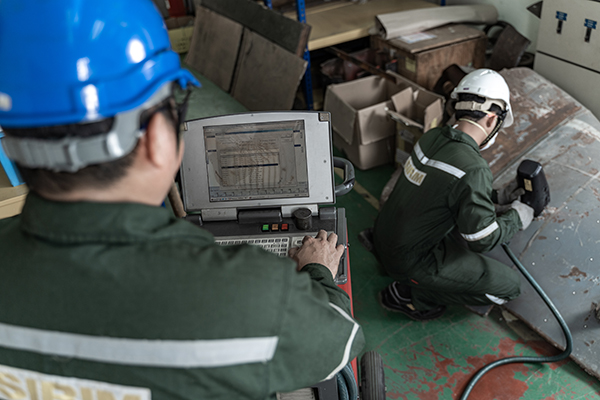
Deployment Evidence: Custom Chambers in Real Operating Environments
Capability claims become meaningful when they are supported by deployment evidence. The following cases illustrate how custom test chambers are being used across different industries and regions.
Third-Party Certification Institute — Malaysia
A custom low-pressure environmental test chamber was installed at SIRIM, an authoritative third-party testing and certification institute in Malaysia. The chamber supports multi-scenario low-pressure testing, including aerospace avionics high-altitude verification, automotive electronics plateau simulation, consumer goods air freight testing, and medical packaging seal validation. Its key specifications include a temperature range of -70°C to +150°C and pressure control capable of simulating altitudes from 2,500 to 15,000 meters.
The documented project results include a 200% increase in testing capacity, a reduction in test cycles from weeks to three to five business days, ISO 17025-compliant data traceability, support for five aerospace suppliers and more than 30 automotive test batches, and a 20% reduction in logistics damage for consumer electronics. The chamber has been stable since commissioning.
Pharmaceutical Stability Testing — China
A large domestic pharmaceutical group deployed multiple Envsin stability chambers for long-term stability testing of vaccines, serum, and biological products. The equipment achieved full compliance with ICH Q1A standards, complete data traceability, and supported the enterprise in passing GMP certification. The chamber provides temperature control of ±0.5°C and humidity control of ±3%RH, which are relevant thresholds for pharmaceutical-grade stability work.
Aerospace Sand and Dust Qualification — China
A sand and dust test chamber was installed for an aerospace and defense testing client in China, where it has been in stable operation for at least three years. The system complies with tri-military standards including GJB, MIL-STD, and GOST, and is used for qualification testing of aerospace components. The documented result is a streamlined testing process with improved test repeatability and accuracy.
Footwear Material Reliability — Vietnam
An OrthoLite subsidiary in Vietnam, a footwear and textile material manufacturer, has used an Envsin environmental test chamber for insole material reliability testing. The chamber supports multi-condition testing, including 85°C/85%RH, -30°C, and temperature cycling, and has been operating for at least five years. The system validated material performance and supported the brand's certification and marketing claims.
Walk-in Environmental Simulation — China Aerospace
A large walk-in environmental test chamber was installed in China for aerospace and aviation enterprise clients. The chamber covers a temperature range of -70°C to +150°C and humidity from 15% to 98%RH, and is used for aircraft composite and avionics environmental simulation. The project supported domestic aircraft component airworthiness certification and has remained stable since commissioning.
Capability Benchmark: Custom Chamber Manufacturing Dimensions
For procurement teams, the following capability indicators are useful when comparing manufacturers that claim to support custom test chamber projects. The data shown below is based on Envsin's published capacity and procurement terms.
| Capability Area | Available Options / Confirmed Terms |
|---|---|
| Production mode | OEM, ODM, and custom manufacturing |
| Customization scope | Temperature / humidity range, chamber size, voltage, control system, branding |
| Monthly production capacity | 50–80 units |
| Standard lead time | 30–45 days |
| Custom lead time | 45–60 days |
| Minimum order quantity | 1 unit (customized single-unit orders accepted) |
| Quality control | 100% pre-shipment testing, ISO/IEC calibration |
| Acceptance protocol | Pre-shipment FAT + on-site SAT, with calibration certificate |
| Commercial terms | 30% T/T deposit, 70% balance before shipment; L/C acceptable |
| Delivery methods | FOB, CIF, EXW, DDP (sea / air / land freight) |
| After-sales service | Remote support + on-site service, 18 global service centers in 16 countries |
These indicators are not marketing claims. They represent the operational parameters that a buyer can verify, negotiate, and include in a supply agreement.
Market Trends Shaping Custom Chamber Procurement
Market data helps explain why custom capability is becoming more central to environmental test chamber purchasing decisions.
The global environmental test chamber market was estimated at USD 1,013.5 million in 2025 and is projected to reach USD 1,283.5 million by 2033, according to Grand View Research. Asia Pacific held a dominant position in 2025 with a 38.7% share of the global market. This regional concentration means buyers in North America and Europe are increasingly evaluating Asian manufacturers for both cost competitiveness and engineering capability.
Product mix also matters. BCC Research estimates that temperature and humidity chambers account for approximately 40% to 45% of the market. This concentration suggests that most buyers will begin their custom evaluation with a temperature-humidity test chamber program, even if the final system must incorporate additional stress factors such as altitude, vibration, or solar radiation.
Standards continue to act as a baseline for custom engineering. IEC 60068-2-1 is the primary international standard for cold temperature testing, while ASTM B117 is the standardized practice for salt spray corrosion testing. UL 2580 defines safety requirements for batteries in electric vehicles, including environmental stress evaluation. Custom test chambers must be designed with the relevant standard in mind, not adapted after the fact.
Limitations and Trade-Offs: When Custom Engineering Is Not the Right Answer
Custom test chamber procurement also carries real trade-offs that buyers should weigh before committing.
Lead time is the most obvious constraint. A standard chamber with a confirmed catalog configuration can usually ship within 30 to 45 days. A custom chamber may require 45 to 60 days or longer, depending on engineering complexity and factory workload. For buyers working against a fixed certification deadline, the additional lead time can create risk rather than solve it.
Cost uncertainty is a second limitation. Custom engineering consumes design resources, special components, and extended commissioning time. The final price may exceed the budget that was estimated during the specification phase. A disciplined approach is to define test requirements precisely, then compare the standard model and the custom variant before committing to a budget.
Custom systems may also be less transferable. A highly integrated chamber, configured for a specific production line or a specific testing standard, may require re-engineering if the product portfolio changes or if the facility layout is modified. Buyers should build upgrade and revision clauses into the supply agreement to protect long-term flexibility.
Future Outlook: From Equipment Supply to Engineering Partnership
The environmental test chamber industry is moving beyond single-machine transactions. As test standards become more demanding and product qualification cycles become more complex, buyers will increasingly treat test chamber manufacturers as engineering partners rather than equipment vendors.
Several developments are likely to shape this shift:
- Combined-stress testing will become more common, requiring chambers that integrate temperature, humidity, altitude, vibration, and light in a single programmable sequence.
- Production-line integration will become a default expectation, with chambers connected to MES systems for automated data logging and quality traceability.
- Remote service capabilities will reduce the cost of global deployment, especially for buyers that operate testing facilities across multiple countries.
- Standard compliance will continue to be a differentiator, particularly for manufacturers that can demonstrate certification against international norms such as IEC, GJB, MIL-STD, and ISO standards.
For procurement teams, the practical implication is clear. The evaluation of a test chamber supplier should now include questions about engineering resources, production discipline, quality control protocol, and deployment evidence — not just the dimensions of the working volume.
Frequently Asked Questions
Buyers evaluating custom test chamber suppliers can reference the manufacturer's product capability document for additional technical detail: Envsin Test Chamber Capability Overview (PDF).