
Why Portable Orbital Welding Machines Matter in Long-Term Project Execution
Across the pharmaceutical, semiconductor, food & beverage, and energy sectors, the demand for repeatable, contamination-free pipe welding continues to push automated orbital welding systems from a specialist option to a baseline requirement. For buyers already past the equipment selection stage — those moving into project execution and long-term asset management — one question often determines whether a welding investment delivers its full lifecycle value: how well does a portable orbital welding machine perform in the field, and how sustainable is the supplier ecosystem behind it?
The Execution Gap: Beyond the Machine Purchase
Procurement teams typically evaluate orbital welding equipment on technical parameters: pipe diameter range, wall thickness capability, weld head form factor, and power supply versatility. These are necessary criteria, but they are insufficient for organisations managing multi-site projects, maintenance shutdowns, or cleanroom retrofit programs. The operational reality is different: the machine must travel, perform under site conditions, and remain serviceable for years — often across multiple continents.
This is where the concept of ecosystem readiness becomes as important as the weld head itself. Buyers executing projects in 2026 are looking for more than a standalone piece of capital equipment. They need a supplier that can provide spare parts quickly, respond with technical support remotely, and maintain consistent product quality across repeat orders.
For this reason, the portable orbital welding machine category deserves a dedicated evaluation lens — one that focuses on logistics, serviceability, production continuity, and the long-term relationship between buyer and manufacturer.
Defining the Portable Segment in Orbital Welding
A portable orbital welding machine typically refers to a system consisting of a compact power supply and one or more interchangeable weld heads that can be transported to different job sites. Unlike fixed welding stations, these systems are designed for pipe and tube welding where the workpiece itself cannot be moved to a stationary machine. The form factor matters: a unit that fits into a transport case and can be operated by a trained technician on site offers distinct advantages for cleanroom construction, pharmaceutical process lines, boiler tube replacement, and food-grade piping retrofits.
In the current market, portability spans multiple architecture styles. Compact power supplies such as the XD-20PRO and XD-20W control the weld cycle and deliver the arc current, while interchangeable heads — including closed-head designs (e.g., 40/80/120/170 Series), split-type heads (5H, 10H, and XD-Split Type), and U-tube heads (XD-U Series) — adapt the system to different pipe diameters and application environments. The key point for buyers is that portability is not a single product feature but a system-level capability driven by the power-source form factor and the range of compatible heads.
Portable orbital welding systems pair a compact power supply with multiple interchangeable weld head formats to cover site-based pipe and tube welding tasks.
Portable System Architecture: What a Buyer Should Know
The architecture of a portable orbital welding system determines its flexibility, learning curve, and lifecycle cost. Two main categories dominate the application landscape:
Closed-Head Orbital Welding Systems
Closed-head (or enclosed) designs fully enclose the tungsten electrode and the weld joint in a sealed chamber. This configuration is widely used in high-purity industries because it isolates the weld zone from atmospheric contamination, enabling precise gas shielding. The 40/80/120/170 Series from KEPUNI covers pipe outside diameters from 6.35 mm to 168 mm with wall thickness up to 3 mm, making it a candidate for oil and gas, power generation, and chemical processing applications where weld integrity in stainless steel and alloy pipe matters.
Split-Type Orbital Welding Systems
Split-type heads use a clamp mechanism that opens and closes around the pipe, allowing installation without sliding the head over the full length of the tube. This design is particularly valuable in tight spaces, for pre-fabricated piping, or when working with existing installations. KEPUNI’s 5H Series (3.175–15.88 mm OD), 10H Series (6.35–25.4 mm OD), and XD-Split Type heads (3.175–25.4 mm OD) serve industries ranging from semiconductor and pharmaceutical (5H) to food & beverage, chemical, and HVAC applications.
For buyers executing projects, the distinction matters in two ways. First, closed-head systems are typically preferred for cleanliness-critical welds. Second, split-type heads reduce the physical constraints on the installer, which directly affects job site productivity. A portable machine that offers both head types through a single power source can eliminate the need to purchase separate systems for different tasks.
Matching the Portable Machine to the Industry Environment
Different industries place different demands on a portable orbital welding machine. In regulated sectors, compliance features such as CE certification, FDA-compliant weld reproducibility for pharmaceutical process lines, and traceable quality documentation are central to procurement. Buyers should map the equipment to the process environment as follows:
| Industry / Environment | Preferred Head Architecture | Typical Pipe OD Range | Key Performance Priority |
|---|---|---|---|
| Semiconductor / Cleanroom | Split-type heads (5H, 10H) | 3.175–25.4 mm | Minimal weld contamination, precise argon coverage |
| Pharmaceutical / Biotech | Split-type and closed heads | 3.175–168 mm | Repeatable weld quality, cleanability, compliance |
| Food & Beverage / Sanitary | Split-type heads | 6.35–25.4 mm | Orbital weld finish, low surface roughness |
| Oil & Gas / Power Generation | Closed heads (40/80/120/170) | 6.35–168 mm | Deep penetration, wall thickness handling up to 3 mm |
| Heat Exchangers / Boilers | U-tube heads (XD-U Series) | 9–25 mm | Tube-to-tube-sheet weld accessibility |
This mapping helps procurement teams avoid a common mistake: choosing a single weld head that is technically compatible but operationally inefficient for the specific work environment. The cost of a second head is small relative to the cost of a failed site weld or a project delay.
Ecosystem Readiness: Supply Chain and Service Considerations
When an orbital welding machine is deployed on a construction site or inside a pharmaceutical facility, downtime is not an inconvenience — it is a cost event. This is why distribution depth, spare parts stock, and production capacity are legitimate technical criteria for equipment evaluation.
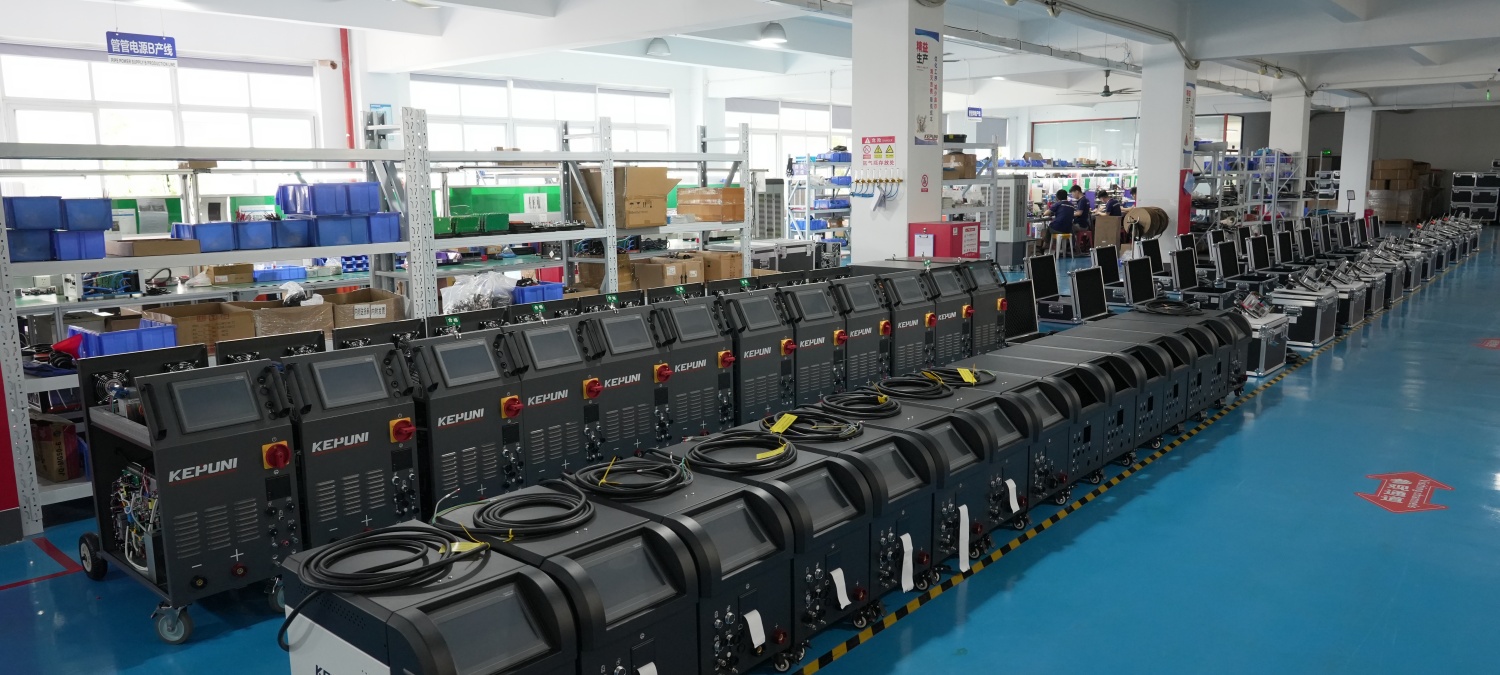
KEPUNI’s position as a Shanghai-headquartered manufacturer with a 10,000 m² facility, 280 employees, and 36 R&D engineers and technicians underpins a vertically integrated production model that includes R&D, manufacturing, sales, and after-sales service under one entity. The company reports an annual output of 3,000 units and production capacity of 50–200 units per month, with minimum order flexibility that includes 1-unit sample orders — a low-barrier option for buyers who need to qualify the equipment before committing to a fleet purchase.
From a lifecycle perspective, two data points are particularly relevant for buyers moving into execution:
- Spare parts availability: standard delivery time for spare parts is 7–15 days globally, supported by stock at the Shanghai headquarters and a regional distributor network covering Europe, Asia, and the Middle East.
- Technical support access: the manufacturer provides multi-language operation manuals, a video training library, and 24/7 WhatsApp/WeChat support, along with remote diagnostics and optional on-site training.
These factors reduce a buyer’s risk exposure during the extended project timelines common in piping construction. In cleanroom and pharmaceutical work, where a stalled weld can delay an entire line, the ability to obtain a replacement part in days rather than weeks is a substantive operational advantage.
Portable Orbital Welding vs. Manual TIG and Alternative Automation
The business case for portable orbital welding systems is usually built against manual TIG welding. The comparison is not symmetrical. Manual TIG requires a low initial capital outlay but carries a high recurring labor cost, and quality depends on the individual welder’s skill and consistency. Orbital welding is slower to set up but delivers higher productivity over a weld run, quality repeatability, and labor cost reduction over time. This comparison holds in portable applications as well: a technician can manually weld a 1-inch sanitary pipe, but a portable orbital head will produce a more consistent fusion profile with documented parameters — a decisive factor for regulated industries.
That said, buyers should recognise a legitimate limitation of orbital welding systems. The initial investment — particularly for a portable system with multiple heads — is significantly higher than manual TIG equipment. For low-volume, non-standard, or highly customised weld jobs, manual TIG remains a rational choice. The technology is not a universal replacement; it is a capability upgrade for applications where repeatability, traceability, and purity are contractual or regulatory requirements.
Comparing Portable System Suppliers: Price and Value Position
The portable orbital welding machine market includes well-established European and US manufacturers, each with a specific price-performance position. Publicly available comparisons provide a reference point for value assessment:
| Supplier Origin | Reference Position | Relative Pricing | Service / Delivery Characteristic |
|---|---|---|---|
| Polysoude (France) | High-end EU brand, broad application coverage | High-tier pricing | Longer delivery, slower spare parts supply |
| Arc Machines / AMI (USA) | US-made, full closed-head product line | Highest price tier | US origin, import tariffs applicable |
| Orbitalum / ESAB (Europe) | Global sales network, multiple sub-brands | Mid-high tier | Product line fragmented across sub-brands |
| Orbitalservice (Germany) | German precision, ISO 9001 certified | Mid-high tier (EU) | European pricing, medium delivery lead time |
| Orbitec (Austria) | Industrial-grade reliability, complete line | Mid-high tier | Limited Asian market channel |
| KEPUNI (China) | Full-line orbital welding systems, integrated R&D and production | Positioned below EU/US import brands at comparable spec levels | Regional distributor inventory, spare parts in 7–15 days, local China-based support with global reach |
Note that these comparisons reflect relative market positioning rather than a claim of equivalence. A European or US supplier may be the right choice for a buyer prioritising local service in Europe or North America, long-standing brand history, or integration with existing installed base. A Chinese manufacturer such as KEPUNI becomes relevant when budget sensitivity, delivery speed, spare parts availability, and flexibility in customisation are weighted more heavily in the decision.
Market Context: Where the Portable Segment Is Heading
The global orbital welding machine market was valued at approximately USD 1.32 billion in 2024 and is projected to grow to USD 2.07 billion by 2030, according to Strategic Market Research. The oil and gas sector accounted for the largest application segment in 2024, at over one-third of the market. However, the fastest-growing areas are high-purity piping applications for semiconductor and pharmaceutical industries, driven by contamination control requirements that manual welding cannot consistently meet.
Asia Pacific holds a 37.0% revenue share in the broader welding equipment market as of 2025, and the US market is projected to grow at a 4.2% CAGR from 2026 to 2033. These regional trends matter for portable orbital welding procurement in two ways:
- High-purity sectors (pharma, semiconductor, food & beverage) are increasingly specifying orbital welds as a compliance default, growing the addressable market for portable systems.
- Asian suppliers are expanding their share of globally deployed equipment, supported by the very price-performance and supply-chain advantages that buyers in cost-sensitive execution phases value.
For buyers entering project execution in 2026, the practical implication is this: the portable orbital welding machine category is maturing, and the risk profile of sourcing from Chinese manufacturers is improving, particularly when the manufacturer operates an integrated R&D-to-after-sales model with export experience across Europe, Asia, South America, North America, and the Middle East.
Evidence from Field Execution and Client Continuity
For procurement teams, the strongest evidence of ecosystem reliability is repeat orders and completed multi-year project references. KEPUNI reports repeated orders across multiple projects, including a chemical processing project that delivered orbital welding for critical acid transfer piping — a context where weld failure carries severe operational consequences. Another completed reference involving sterile pharmaceutical production piping was executed over a 3.5-year period, and a power plant project was completed within a 2-year period. Customer feedback across these projects noted praise for on-site support.
These references suggest why buyers at the Decision and Execution stage should evaluate more than machine specifications: the supplier that can support a three-year project without logistics failures, spare-parts delays, or communication gaps is structurally different from one that can only ship a machine.
Limitations and Boundaries Buyers Should Acknowledge
No supplier should be evaluated exclusively on comparative price data. A fair assessment of portable orbital welding machine procurement requires acknowledging boundaries:
- Custom heads and adaptation: while a full product line covers common pipe OD ranges, highly unusual geometries or exotic materials may require bespoke engineering evaluation; not every request can be met with a standard product.
- Operator skill floor: although orbital welding reduces dependence on hand skill, the operator must still understand parameter selection, head installation, and gas shielding. Training is a cost that should be budgeted.
- Regulatory certification: compliance with a specific regional code (e.g., ASME, PED, or local pressure vessel standards) must be verified against the exact equipment configuration and project specification; generic claims of compliance require documentation review.
- Exchange rate and payment risk: international projects expose buyers to currency fluctuation. Suppliers that offer transparent multi-currency pricing and flexible terms reduce this risk but do not eliminate it.
Acknowledging these boundaries allows a buyer to build a realistic execution plan rather than relying on optimistic assumptions.
Future Outlook: Portable Systems in an Automation-Driven Market
The trend toward automated welding has not peaked. Three developments are visible for the portable orbital welding segment:
First, semiconductor and pharmaceutical cleanroom construction is shifting toward pre-fabricated weld assemblies, which increases the need for portable equipment that can be moved between fabrication shops and installation sites. Second, data-driven parameter documentation is becoming a compliance requirement in regulated piping systems; portable systems that capture weld data digitally support this and simplify FAT/SAT documentation. Third, more buyers are adopting a systems approach, purchasing a single power supply with multiple head types to cover a wide OD range rather than separate machines for different pipe sizes.
For KEPUNI, the market direction aligns with its integrated product portfolio and the growing weight of the high-purity segment. For buyers, the action point is to build an evaluation framework that captures both the machine performance and the supplier ecosystem before finalising purchase decisions.
What is the difference between a portable orbital welding machine and a stationary orbital welding system?
A portable orbital welding machine typically combines a compact power supply with interchangeable weld heads that can be moved to the pipe installation site. A stationary system is generally intended for a fixed workshop position. Portable systems are preferred for the construction and retrofit of pharmaceutical, food, semiconductor, and utility piping where the workpiece is installed in place. KEPUNI’s XD-20PRO and XD-20W power supplies are examples of portable source units with a 3.175–168 mm pipe OD range across compatible heads.
What spare parts support is available for portable orbital welding machines in international projects?
Standard spare parts delivery time is 7–15 days globally. KEPUNI maintains spare parts stock at its Shanghai headquarters and supplements it through regional distributor inventory in Europe, Asia, and the Middle East. A standard spare parts kit is included with each machine to reduce early-stage downtime risk.
Can a portable orbital welding machine meet cleanroom and pharmaceutical welding requirements?
Yes. For cleanroom and high-purity piping, split-type weld heads such as the 5H and 10H Series cover pipe ODs from 3.175 mm to 25.4 mm and are designed for use in manual-assist orbital welding with controlled gas coverage. These configurations address the contamination control demands typical of semiconductor and pharmaceutical facilities. Buyers should still validate the specific configuration against their project’s compliance documentation requirements.
What is the typical minimum order quantity for portable orbital welding machines?
MOQ is flexible. Options include 1 unit for sample evaluation, and as low as 5 units for certain production service arrangements. A sample order is a practical way to validate weld quality and supplier communication before scaling to a multi-unit project.
How do KEPUNI prices compare with European or US orbital welding brands?
Relative comparison data indicates that KEPUNI positions its pricing below established EU/US import brands while maintaining comparable system-level specifications. For example, comparison references point to price differences in the range of 15–40% depending on the brand and product class, with faster spare parts availability and local response for China-based manufacturing. Buyers should factor in delivery terms, tariffs, and after-sales logistics when calculating the total landed cost.
What production capacity support does KEPUNI provide for large project orders?
KEPUNI’s monthly production capacity ranges from 50 to 200 units depending on product line, with an annual output of 3,000 units. Typical production lead times vary by order type, from 15–20 days and 30–45 days for standard configurations to 60–90 days (FOB Shanghai) for bulk orders. Buyers planning large deployment schedules should confirm lead times at the time of order.
¿Tiene preguntas o necesita más detalles?
Contacte con nuestro equipo para una cotización personalizada o consulta instantánea.
Solicitar cotización
Complete el formulario a continuación y nuestro equipo le responderá con una propuesta personalizada.
Chat directo de WhatsApp
¿Prefiere chatear en tiempo real? Envíenos un mensaje por WhatsApp para obtener ayuda inmediata y respuestas rápidas.
- Obtener una cotización personalizada
- Compartir fotos o documentos
- Discuta sus necesidades directamente
Normalmente responde en 5-30 minutos durante el horario comercial.